To the Class of 2030, welcome to the University of Virginia. As you will soon encounter, orientation is a medley of important introductions — the geography of Grounds, the best dining halls, the chaos of SIS and the friendly faces of your first year. However, one of the most complex introductions rarely makes it into orientation, nor into your endless training modules. As the Editorial Board of The Cavalier Daily, a collection of students who commentate weekly on University affairs, we seek to introduce you to the University as we have observed it over this past year — a transforming space shaped by the unsuccessful balance between institutional autonomy, political turbulence and shared governance. In doing so, we hope this introduction will not raise alarm, but instead empower you to represent our University and its values whenever and wherever they are threatened.
Just one year ago, this University was in an administrative, politically-driven tail-spin — knowing this recent history is necessary to successfully navigate Grounds and advocate for shared and balanced governance.
Before the University’s leadership made national headlines, partisan rifts developed between former Republican Gov. Glenn Youngkin and the University. In the Commonwealth of Virginia, the governor appoints members to the governing boards of Virginia public universities, which the Virginia General Assembly then confirms. The University’s Board of Visitors has 17 voting members with four-year terms, led by the rector and vice rector to shape the long-term administration of the institution. By January 2025, Youngkin appointed a majority of the members of the Board, and by July 2025, all were appointed under his remit. Partisan friction arose between some of the Republican-appointed Board members and Democrat-appointed former Rector Robert Hardie as Youngkin’s involvement with the Board heightened.
The Board entered 2025 facing multiple Youngkin-supported resolutions drafted by his office that received community attention. In one instance, the University dissolved the Office of Diversity, Equity and Inclusion March 7, 2025, in accordance with federal law and drafted directly from Youngkin’s office. Youngkin then praised this decision in a public statement. On the horizon of threats to DEI offices across higher education, the University community broadly supported the functions of its own office and regularly invested in its resources. Thus, this dissolution was met with significant backlash by the University community. Many cited the integral programs, community partnerships and resources that the office provided. This decision remains final — an early example of the Youngkin-appointed Board’s insidious interest in ignoring community input to appease federal and state leadership.
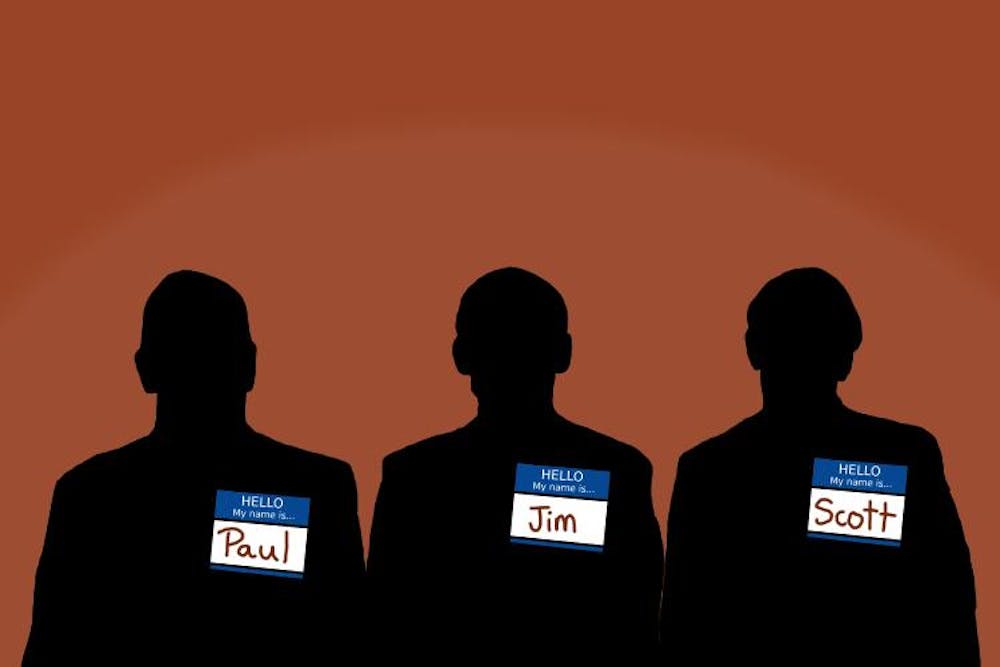
During this time, former University President Jim Ryan — a president significantly engaged with the University community and focused on the institution’s long-term success through his 2030 Plan — navigated changing federal and state government tides. Starting April 2025, the University began to receive a series of letters from the Department of Justice demanding evidence of its compliance with civil rights law. According to an account from Ryan, contested by former Rector Rachel Sheridan, this pressure intensified internally across weeks of collusion between members of the Board, legal counsel and the Justice Department, wherein Sheridan operated outside of her Board member capacity to advise Ryan to step down. Ryan then resigned June 27, 2025, a decision culminating from an unprecedented level of pressure from the Department of Justice. Stepping down from his role, Ryan’s resignation was the most public exemplification of federal overreach into our University community.
Students, faculty, staff and community members strongly condemned the actions of the Justice Department. The Cavalier Daily received dozens of letters and columns, carefully interrogating what this unprecedented action meant for our University’s stability. Both the Student Council and Faculty Senate passed significant votes of no confidence in the Board of Visitors. Other faculty, alumni and student groups expressed strong perspectives on this leadership change and cited their concern for the institution’s future. These demonstrations not only spoke to the frustration and uncertainty of that moment — they empowered an idea of shared governance and community output necessary in an era of institutional instability. When the future of this institution was uncertain as a result of administrative disorder, several members of our community fought for a stronger University.
And they continued to do so. Ryan’s resignation was followed by a semester-long stint by former Interim President Paul Mahoney. Mahoney received the Trump administration’s half-baked but full-throttle jump into education policy in the form of the “Compact for Academic Excellence in Higher Education.” This treatise would financially bind any agreeing university to a limitless set of the President’s expectations. Following community backlash and a significant protest on the Lawn, Mahoney refused to sign the Compact. However, days after this win for institutional autonomy, Mahoney signed institutional autonomy off in a different way — consenting to quarterly compliance reports with the Justice Department through an agreement, and placing our institution at the command of the Trump administration’s political whims through the threat of severe legal action. The University continues to publish these reports detailing civil rights compliance, and they are a not-so-distant reminder of the work still necessary to protect our institution’s autonomy.
Following Mahoney and a highly unpopular, expedited presidential search, University President Scott Beardsley was appointed as the University’s 10th president Dec. 19, 2025. At convocation, you will meet Beardsley, the University’s fourth president over the past year, and learn more about his perspective on University leadership. Beardsley retains a strategic approach to the University’s adaptable future — how that approach manifests is yet to be seen.
Now, you have the opportunity to engage with this information further, grapple with the complexities of subjective and objective retellings of the past year and carry this history with you. To understand the intersections between University president, Board member, student and governor is to equip yourself with the ability to lead informed and successful advocacy — advocacy that is sustained with true curiosity for this University’s future.
The Cavalier Daily Editorial Board is composed of the Executive Editor, the Editor-in-Chief, the two Opinion Editors, two Senior Associates and an Opinion Columnist. The board can be reached at eb@cavalierdaily.com.
Read More

DUTTENHOFER: A case for 287(g) agreements
By Lucy Duttenhofer | 12 hours agoICE is not going away. 287(g) agreements are not, either. Understanding and using them effectively must be a priority.

YOUNIS: University networks protect rapists
By Ayat Younis | 2 days agoWhen a university's response to sexual violence is limited, who is the institution actually protecting?

HAWKINS: The Cornell sexual assault scandal showcases the importance of student journalism
By Joshua Hawkins | 2 days agoWhile the Cornell University administration faltered, it was the students who rose to the occasion.