In an annual report attached to a May 11 email from Jeri Seidman, associate professor of Commerce, outgoing Faculty Senate chair and incoming faculty representative for the Board of Visitors, the Faculty Senate compiled reports from the chairs of its seven standing committees. The reports detailed several initiatives and discussions during the 2025-26 academic year — ranging from new academic program expansion and artificial intelligence to faculty governance and budget transparency regarding the University Financial Model.
The Faculty Senate — a body of approximately 82 elected faculty representatives from across the University’s schools — represents faculty on academic matters affecting multiple schools such as degree programs and major curriculum changes. The Senate also advises the University president and Board on issues affecting the University’s welfare.
The Senate’s work is divided among seven standing committees — including the Academic Affairs Committee, Diversity and Inclusion Committee, Faculty Grievance Committee, Faculty Life Committee, Finance Committee, Policy Committee and Research, Teaching and Scholarship Committee — whose membership and leadership change annually but whose responsibilities remain unchanged.
The Senate also retains the authority to establish or modify ad hoc committees to address specific issues if deemed necessary. In addition to its seven standing committees, the Senate’s annual report included the work of the ad hoc Representation and Governance Committee — which examined matters related to faculty representation and Senate governance.
According to the Faculty Senate Handbook, these committees are tasked with reviewing issues before they are considered by the full Senate. The committees oversee matters such as curriculum and academic programs, faculty support and grievances, budgeting and financial issues, governance and University policies, and matters related to research and teaching, and make recommendations to University leadership.
The committees’ work during the 2025-26 academic year spanned a range of issues affecting faculty and the broader University. The Senate addressed the effects of federal funding uncertainty through the work of the Finance Committee and Research, Teaching and Scholarship Committee. Other committees focused on topics such as academic program expansion, faculty wellbeing and representation and governing within the Faculty Senate itself.
Academic Affairs Committee
According to the annual report, the Academic Affairs Committee reviewed 23 proposals during the 2025-26 academic year. These proposals included new degrees, certificates, minors and program closures across the University. The committee reviewed a larger number of proposals in the previous two academic years, considering 38 proposals in 2024-25 and 29 proposals in 2023-24. The committee was co-chaired by Kinesiology Prof. Susan Saliba and Assoc. Data Science Prof. Brian Wright.
The AAC met every other week throughout the academic year and worked closely with the Vice Provost for Academic Affairs and the Institutional Research and Analytics team. According to the annual report, the workload required “a significant amount of preparation” due to State Council of Higher Education for Virginia deadlines and the high volume of proposals under review.
Most proposals listed in the AAC’s report were marked as “approved” by the AAC, the Executive Council and the Faculty Senate. According to the AAC’s proposal submission guidelines, proposals are first reviewed by the AAC — which evaluate their academic quality and alignment with the University’s mission. Proposals are reviewed by the AAC and then referred to the full Senate — where they are considered “passed” unless a senator requests discussion and a vote.
The AAC’s report indicates that most proposals were reviewed by the AAC, Executive Council and full Senate during the 2025-26 cycle and are scheduled to take effect during the fall 2026 semester. However, several items — including new computer science AI concentrations, American Studies concentration changes, a Medieval Studies program addition and a music minor proposal — were listed only with dates and did not explicitly indicate approval by all three bodies, making their status unclear from the report alone.
Among the proposals were a new music minor within the Bachelor of Arts in Music program and three Reserve Officers’ Training Corps minors in aerospace science and leadership, military science and naval science and leadership. The ROTC minors were listed as approved through the AAC, Executive Council and the Faculty Senate. However, the music minor was listed as “provisional,” subject to conditions related to performance requirements and credit adjustments.
The School of Data Science also had several proposals that will take effect during the fall 2026 semester. The School of Data Science proposed the elimination of the existing requirement for Bachelor of Science in Data Science students to complete a concentration while creating new concentrations in economics, global public health and public policy and leadership. The School of Data Science also proposed four new Master of Science in Data Science concentrations in AI, data visualization, genomics and sports data science.
Additional approved proposals included a new Master of Science in Data Analysis and Policy degree in the Frank Batten School of Leadership and Public Policy and new AI concentration options within computer science programs offered jointly by the College of Arts and Sciences and the School of Engineering and Applied Science. Both proposals were listed as approved by the AAC, the Executive Council and the Faculty Senate and will take effect during the fall 2026 semester.
Other programs — including a Master of Change Management degree through the School of Continuing and Professional Studies, a graduate certificate of implementation science through the School of Medicine and a biotechnology minor within chemical engineering — were also marked as approved.
The AAC also oversaw several program closures and concentration removals, including the discontinuation of the teacher education concentration within the mathematics majors and the removal of optional gender studies and sexuality studies concentrations from the Women, Gender and Sexuality Studies interdisciplinary program. Both proposals were also approved by the AAC, the Executive Council and the Faculty Senate and will take effect during the fall 2026 semester.
Diversity and Inclusion Committee
The Diversity and Inclusion Committee framed its work during the 2025-26 academic year around supporting faculty, staff and students during what the report described as “a tumultuous year of uncertainty and uncommon aggression.” The committee was co-chaired by Assoc. Spanish Prof. Anne Garland Mahler and Assoc. Art History Prof. Eric Ramírez-Weaver. According to the report, the committee focused on issues related to academic freedom, faculty safety and external political pressure surrounding diversity initiatives at the University.
The report specifically referenced challenges arising after the Board’s March 7, 2025 action regarding diversity, equity and inclusion policies at the University. In the report, Ramírez-Weaver referred to the Board’s resolution on changes to the University’s DEI policies as “an illegal document without merit or legal standing.” He wrote that the committee frequently worked behind the scenes to support individuals affected by policy changes and pressures from the Justice Department. According to the report, the committee’s work involved responding “in real time to the evolving political and social situation” at the University.
During the 2025-26 academic year, the committee met with Assoc. Sociology Prof. Ian Mullins to discuss legal definitions of harassment and slander, strategies for managing outside political actors and methods for preserving academic freedom while maintaining public safety, according to the report.
The committee also held discussions with Kevin McDonald, University vice president for Community Engagement and Equal Opportunity, regarding programs and initiatives sponsored by the Division for Community Engagement and Equal Opportunity and potential areas in which members of the Senate could provide assistance.
In addition, the committee met privately with Christa Acampora, dean of the College and Graduate School of Arts and Sciences, to address concerns involving doxxing, Freedom of Information Act requests and threats against faculty members. According to the report, the committee focused on protecting faculty, staff and students targeted by external groups through phone harassment, public campaigns and excessive FOIA requests.
Looking ahead, the committee plans to pursue initiatives involving the expansion of partnerships with Virginia community colleges, increases in collaboration with University Tribal Liaison Kody Grant and continued support for programs connected to the Community Engagement and Equal Opportunity office.
Finance Committee
According to the annual report, the Faculty Senate’s Finance Committee spent much of the 2025-26 academic year focused on financial uncertainty surrounding research funding and what members described as a lack of faculty involvement in a major review of the University’s Financial Model. The committee was chaired by Assoc. American Studies Prof. Jennifer Greeson.
The report states that members repeatedly sought to include Faculty Senate representatives in an ongoing review of the University Financial Model — which governs how revenues and expenses are allocated among schools and administration. The committee reported that those requests were unsuccessful and urged future Faculty Senate leadership to continue advocating for faculty participation in the process.
During Faculty Senate meetings in February and March, Brie Gertler, interim executive vice president and provost, discussed the University Financial Model review process with committee members and said a major objective was to evaluate funding allocations. According to the committee report, Gertler argued that the current system can reduce incentives for revenue generation by providing ongoing support to units that do not fully fund themselves.
Finance Committee members expressed concern that faculty were not included in the review process despite potential implications for academic programs and research. The report notes that Gertler said at the May 8 Faculty Senate meeting that faculty participation at the current stage of deliberations would be inappropriate, but indicated that faculty and deans may be invited to comment once a proposal is completed.
In addition to budget issues, the committee addressed growing concerns about federal research funding. In October, members convened 13 principal investigators from across the University whose grants had been suspended or canceled by federal agencies. Participants discussed difficulties navigating grant terminations and how research funding is treated under the current University Financial Model.
Faculty researchers also reported frustration with policies governing grant administration. According to the report, some principal investigators said support for maintaining challenged grants was inconsistent. The principal investigators also said that University efforts to assist researchers affected by funding disruptions did not work as intended, largely due to communication issues.
The Finance Committee also monitored financial pressures facing the University and U.Va. Health. In November, Dr. Mitch Rosner, chief executive officer of U.Va. Health, briefed members on the Health System’s financial structure and discussed challenges posed by federal funding uncertainty, infrastructure needs and population growth.
Looking ahead, the Finance Committee identified several priorities for the 2026-27 academic year, including monitoring the ongoing University Financial Model review, evaluating the impact of federal changes to indirect research cost reimbursements and examining how proposed Medicaid reductions could affect the Health System’s finances.
Faculty Life Committee
As part of its work during the 2025-26 academic year, the Faculty Life Committee focused on issues affecting faculty wellbeing and retention, including healthcare coverage, retirement planning, transportation costs and workplace support systems. The committee was chaired by Dr. Bradley Kesser, professor of otolaryngology in the School of Medicine. Working closely with University Human Resources, the FLC hosted informational sessions regarding healthcare options and retirement benefits while discussing ways faculty could gain greater input into health insurance decisions, according to the report.
The FLC also examined parking and transportation issues after receiving a presentation from Scott Wilsdorf, University director of parking and transportation. Members discussed parking costs and the Wahoo Commute program — which provides financial incentives to employees who walk, bike, use public transit or carpool instead of driving alone to Grounds.
The FLC also voted in January to pause development of a resolution affirming diversity, equity and inclusion consideration in faculty hiring, concluding that the timing was not ideal given ongoing political debates.
Additional committee efforts included reviewing faculty exit survey data, identifying underutilized employee benefits and compiling “hidden resources” available to faculty members, such as educational benefits, childcare resources and the Colonnade Club. The report also highlighted the idea of a partnership with Maïté Brandt-Pearce, vice provost for Faculty Affairs and professor of Electrical and Computer Engineering, to create a University-wide faculty “Connections” platform that would provide a centralized space with opportunities for faculty to build communities through activities.
Policy Committee
The Policy Committee reviewed approximately 35 University policies during the 2025-26 academic year, working closely with the Office of the Executive Vice President and the Provost and the University Policy Review Committee to provide faculty feedback on policies affecting academic life and employment. The Policy Committee was co-chaired by Assoc. Medicine Prof. Patrick Jackson and Engineering Prof. Lisa Peterson.
The committee’s review process consists of policy requests forwarded by the Provost’s Office or the University Policy Review Committee to the co-chairs, who distribute materials to committee members. The committee members were generally given three weeks to review documents before the co-chairs compiled and anonymized feedback into a single response submitted to the Provost’s Office or the University Policy Review Committee within the University’s 30-day review window.
Among the policies reviewed were those governing faculty misconduct and discipline, faculty leave and the employment of academic general faculty. The committee also participated in reviews of several policies regulating expressive activity and demonstration on Grounds.
According to the report, members specifically sought opportunities to provide feedback on protest-related policies that had been the subject of discussion within the Faculty Senate since fall 2024. The report stated that revisions to those policies had been implemented through what the report described as a “confidential [and] expedited process.”
The committee also continued efforts to increase transparency by maintaining a shared Box collection — an online repository hosted through the cloud-based file-sharing platform Box — containing policy documents and review materials. The collection was established during the 2024-25 academic year and allows members of the Faculty Senate and University community to access documents under review.
This year also marked the first time the committee operated with two co-chairs instead of one chair. The report described the arrangement as beneficial for distributing the committee’s workload, improving representation across academic departments and preserving institutional knowledge through staggered leadership transitions.
Representation and Governance Committee
Established in 2025, the ad hoc Representation and Governance Committee conducted a comprehensive survey examining how senators are selected across the University’s schools. The committee held approximately 15 Zoom meetings while pursuing objectives related to faculty representation, communication and governance partnerships.
As part of its initiatives, the committee conducted a comprehensive survey examining how Faculty Senate representatives are selected across schools. The survey revealed substantial inconsistencies in selection methods, with some senators elected by faculty while others were appointed through administration.
According to the report, the survey findings raised questions about the Faculty Senate’s legitimacy as an independent faculty representative body.
In response, the committee drafted a resolution affirming that democratic elections should serve as the preferred mechanism for selecting senators, arguing that democratic elections are necessary to ensure every senator possesses a clear faculty mandate. The resolution remains pending full Senate approval.
The committee also developed a guide outlining best practices for communicating between senators and their constituents. According to the report, the document aims to improve information sharing and ensure faculty members remain informed about Senate activities. Additionally, members created an informational guide for prospective Senate candidates, outlining the responsibilities and expectations associated with serving in the Faculty Senate.
Beyond representation, the committee also passed a resolution April 28, 2025 in support of former University President Jim Ryan’s “leadership and vision,” and in opposition to the Compact for Academic Excellence in Higher Education Oct. 3, 2025. These resolutions were approved by the full Faculty Senate.
According to the report, the committee is also developing a “formal framework” intended to redefine relationships between the Faculty Senate, University administration and the Board. Members have additionally worked with University leadership to establish expectations for faculty participation on high-level University committees and to identify ways to improve communication between Senate representatives and faculty serving on “Provost-level committees.”
Research, Teaching and Scholarship Committee
The Faculty Senate’s Research, Teaching and Scholarship Committee spent much of the 2025-26 academic year evaluating the University’s One Access initiative and examining the role of artificial intelligence in teaching and research. The RTS Committee describes its role as an important forum for faculty engagement on issues affecting research, teaching and academic governance. The RTS Committee was chaired by School of Medicine Prof. Huiwang Ai.
According to the RTS Committee’s annual report, committee members focused on the University’s proposed One Access initiative — a digital-first course materials program developed through the U.Va. Bookstore. The program was designed as a flat-rate model for undergraduate course materials and would have automatically provided students with digital access to required instructional materials.
The report states that members of the RTS Committee met with U.Va. Bookstore representatives and University leadership to better understand the proposal before preparing a summary for faculty review. The RTS Committee subsequently worked through the Faculty Senate to conduct a survey gathering faculty feedback on the One Access initiative. The survey asked faculty to evaluate course suitability, accessibility, academic freedom concerns, student equity implications, price considerations and opt-out procedures.
According to the report, faculty members raised concerns in the survey about whether the program could lead to upward price increases over time and whether students in different academic disciplines would bear unequal costs. Survey respondents also expressed concerns such as the effectiveness of opt-out mechanisms, the handling of student data by third-party vendors and the potential influence of publishers over course material decisions.
Following the survey, the RTS Committee drafted a letter to bookstore officials and University leadership outlining concerns identified by faculty. The letter argued that a program of such scale should be developed through faculty consultation and supported by clear evidence that students would benefit. Members of the RTS Committee also called for stronger protections for academic freedom, greater transparency regarding pricing, safeguards for student data and closer examination of equity across schools and majors.
The Bookstore had announced it was no longer pursuing One Access Jan. 29. According to the report, University administrators acknowledged faculty concerns and indicated that any future effort should be approached as a broader University-wide initiative involving substantial faculty participation.
Beyond the One Access initiative, the RTS Committee focused on AI and its impact on the University’s academic mission. During an April meeting, the RTS Committee hosted Christian McMillen, interim vice provost for academic affairs, Ryan Wright, co-director of AI Research at U.Va., special advisor to the provost on AI Research and professor of Commerce and Leo Lo, dean of libraries and advisor to the provost on AI Literacy. McMillen, Wright and Lo presented updates on University efforts related to AI in teaching, learning and research throughout the academic year.
Lo introduced the University’s AI Literacy and Action Lab — which aims to support faculty and students through hands-on projects, course modules, assessments and consulting services designed to improve discipline-specific AI literacy. Wright discussed efforts to build AI research communities across Grounds, expand faculty development opportunities and improve communication about AI-related resources to instructors.
The RTS Committee also emphasized the need for greater coordination among existing initiatives and faculty awareness of AI resources. The report notes that members also discussed programming opportunities, including seminars and workshops focused on AI practices in higher education.
As part of its broader research mission, the RTS Committee maintained regular communication with Vice President for Research Lori McMahon. Members received updates regarding the University’s research rankings, federal funding conditions, grant drawdowns during federal government disruptions and advocacy efforts involving federal agencies such as the National Institutes of Health.
Faculty Grievance Committee
The Faculty Grievance Committee continued its role as the University’s primary faculty dispute resolution body. The FGC reviews and addresses grievances brought by faculty members concerning professional disputes with faculty and administrators. The FGC evaluates submitted grievances, determines whether to accept for review, conducts investigations and issues recommendations to the University president and other relevant University leadership.
The committee was chaired by Neurology and Nursing Prof. Carol Manning. The report did not disclose details of any of the grievances to maintain confidentiality in personnel matters. According to the annual report, the FGC remains "committed to upholding principles of fairness, due process and academic integrity in the resolution of faculty disputes.”
During the 2025-26 academic year, the FGC reviewed two actionable grievances. One case completed the full review process and resulted in a final report submitted to University leadership, while another remains under active investigation. The FGC also received an additional grievance request that remains under consideration.
According to Chair-elect Aaron Bloomfield, the Faculty Senate is scheduled to convene in August for its Executive Council meeting and September for its full Senate meeting.

Jaylynn Perez is a third-year College student from Chesapeake, Va., majoring in government and Public Policy and Leadership. She currently serves as a news senior writer and video staffer, after previously serving as senior associate editor for the news desk. She enjoys covering topics such as University governance and local politics.
Read More
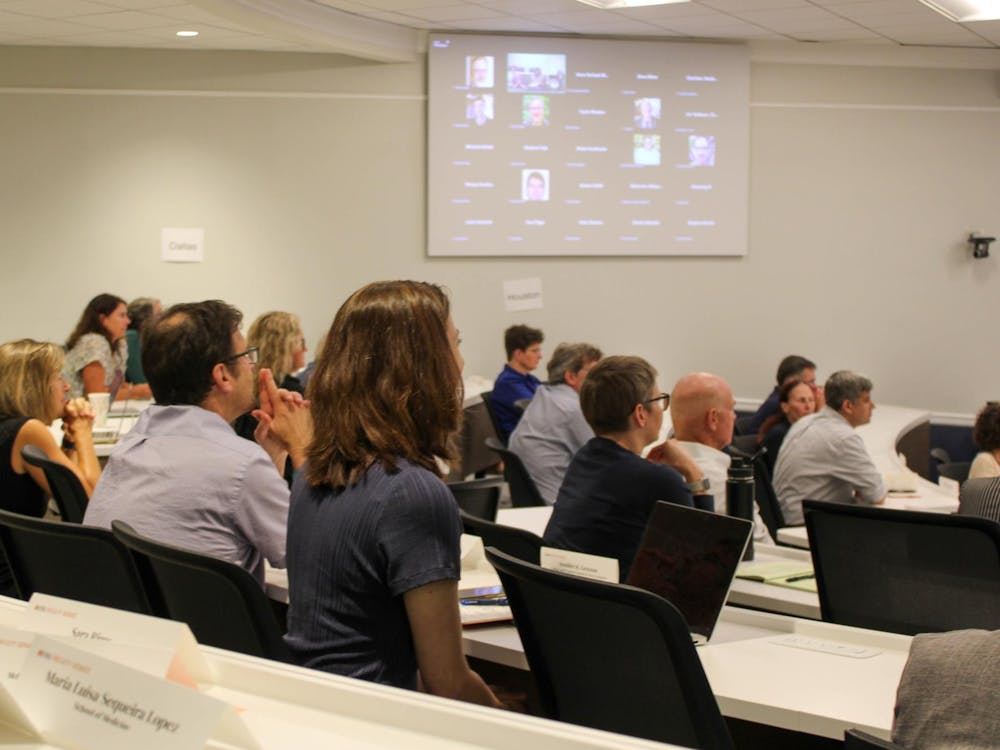
Provost search committee seeks Faculty Senate’s Executive Council input on qualities for next provost
By Jaylynn Perez and Cassidy Hazel | 10 hours agoBrie Gertler, interim executive vice president and provost, also provided updates on the University’s developing approach to artificial intelligence.

U.Va.’s Larry Sabato weighs in on midterms, issues warnings for Democrats ahead of 2028
By Luca Bailey | 11 hours agoSabato shared his insights into how the country’s 2026 midterm elections are unfolding heading into the final weeks of the campaign.
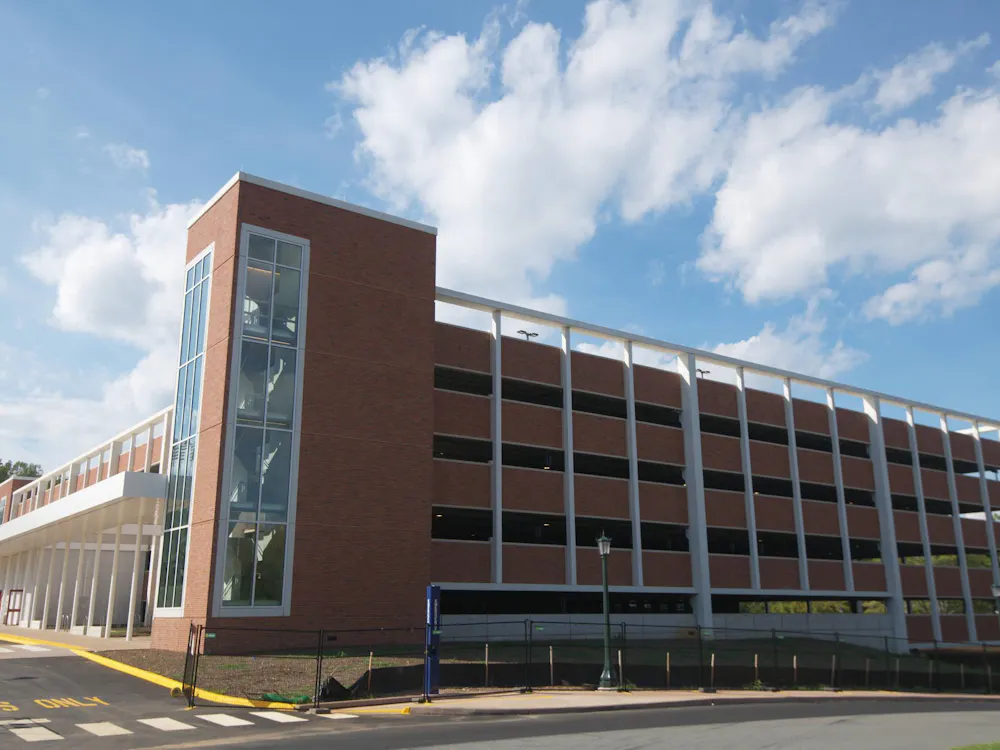
Parking on Grounds — what has changed this semester?
By Charlotte Gabriel | YesterdayAccording to University students interviewed by The Cavalier Daily, several expressed frustration with high parking prices on Grounds, as well as the difficulty in finding available parking in general.