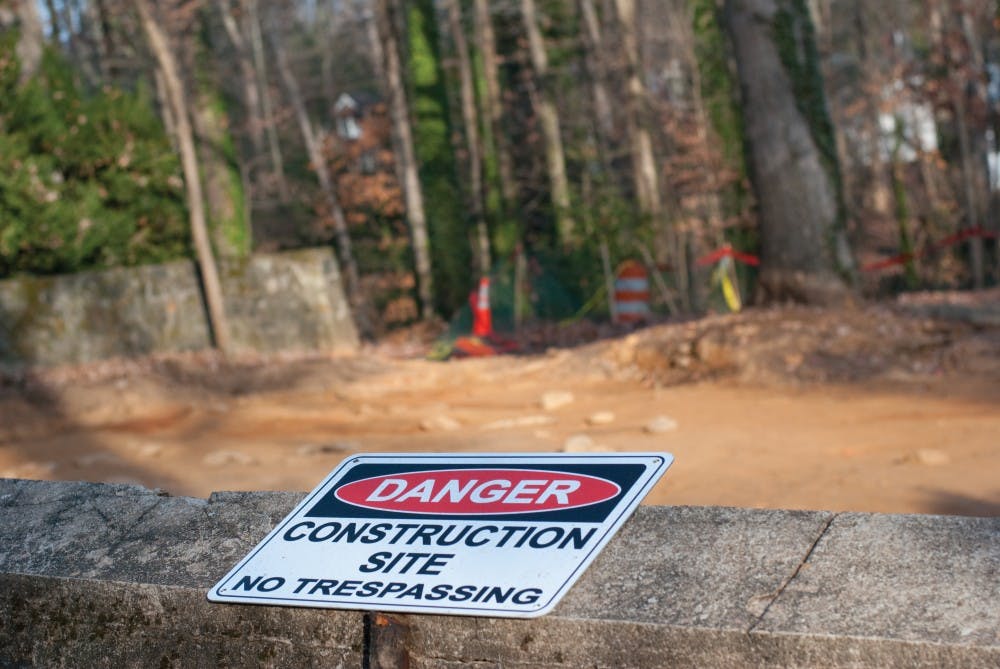
The 67 unidentified graves found outside the University cemetery in late October have yet to be identified, according to a University news statement released Tuesday. Researchers speculate that the unidentified remains are probably those of black slaves, but they have yet to confirm it.
The graves were discovered by Rivanna Archaeological Services during the second phase of an archaeological survey for a planned expansion of the cemetery that began Oct. 22.
Only about eight of the shafts had markers, but none indicated names or dates. Because the second-largest group on Grounds in the 19th century would have been enslaved African-Americans — behind University students — the sheer number of graves discovered suggests the unmarked tombs belong to the University’s former slaves, Principal Rivanna investigator Benjamin Ford said in the release.
No plans have been made to excavate the remains, as University officials want to respect the remains of the dead and prevent any further damage to the shafts.
Researchers are looking to uncover the identities of the unmarked graves by determining a specific date of the burials and examining census data and personal documents. They also plan to take aerial photographs with the help of a camera tethered to a balloon.
After conducting more archival research, Rivanna Archaeological Services will issue a technical report that documents its research methods and findings and then make recommendations for future research and preservation of the gravesite. This documentation will be delivered to the Department of Historic Resources after the University approves the report.
Read More

From the Archives: Fraternity life
By Maisy Callahan and Emily Conway | YesterdayMore fraternities decide to partner with the Historic Renovation Corporation, a University-affiliated agency that provides tax credits for the restoration of historic buildings.

Center for Politics hosts Tom Perriello to discuss AI, congressional responsibilities
By Melody Yuan | 2 days agoAt the event, titled “The Deep Divide Between How the People and the Powerful Are Thinking About AI,” Perriello also referenced his Sept. 22 article “To Wary Working People, AI Preemption Is the New Nafta” in The New Republic during his discussion.

U.Va. Health’s telehealth program approaches 1 million visits
By Vrinda Vashisht | 2 days agoThe program arose from the challenge of U.Va. Health physicians traveling to communities across Virginia to treat patients who could not easily reach Charlottesville.