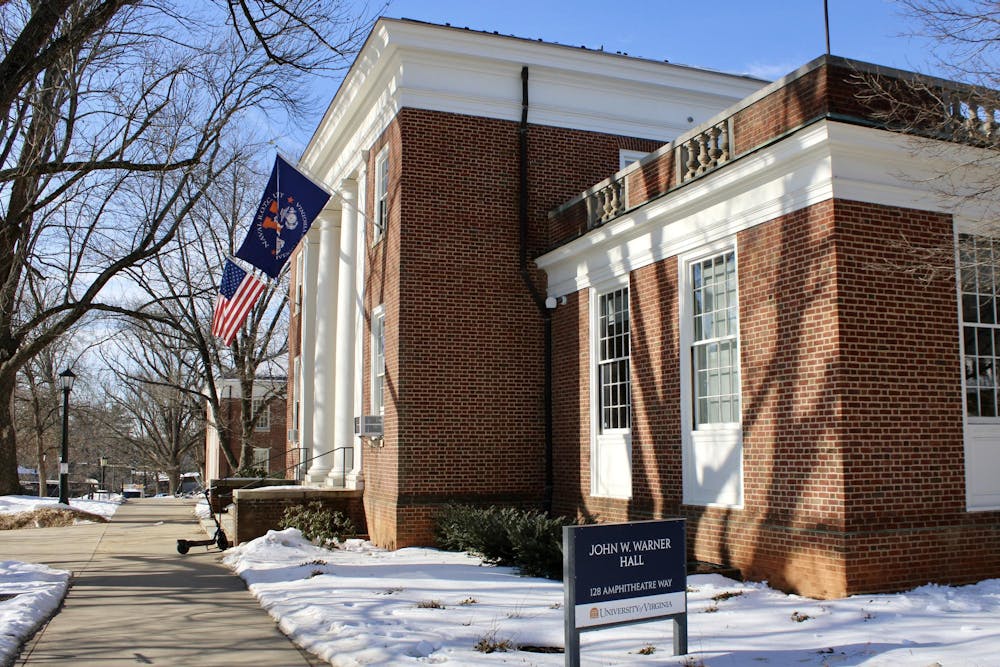
At the University and across the country, the branches of the Reserve Officer Training Corps — including the Naval, Air Force and Army branches — may focus on differing specialties, but they are united by one shared mission — to prepare young Americans to readily enter the armed forces, dedicated to service and leadership.
In the context of active global conflict, ROTC leadership at the University emphasize the importance of the foundational training program prior to entrance into the United States military.
Colonel Cary Mittelmark, commander of Detachment 890 — the Air Force ROTC branch for the University, James Madison University, Liberty University and Piedmont Virginia Community College — colonel in the U.S. Air Force and professor of Air Science at the University, said he believes that the work ROTC does is uniquely integral to the United States military, and ultimately the country. Mittelmark said that service in the military “oftentimes ends up being a front row seat to history,” which, in his view, has increasingly proven to be true.
“We are in a uniquely consequential time right now … for the nation, for the international, global environment. And so I really feel passionate that there's not a more relevant mission than to build future leaders for our military right now,” Mittelmark said. “What we’re doing here matters.”
On Grounds, Naval ROTC was established in 1940, making the University the 10th in the nation to have the program. Army ROTC was established in 1948 at the University, and Air Force ROTC was the final program to be established in 1951.
Prospective University students can apply directly into the program upon initial entrance into the University. Transfer students or current students who did not apply directly into the program from high school may join the program during their first or second years. The Army, Air Force and Navy programs at the University most often require four years of specialized military science coursework, and the branches vary in additional requirements including physical training, summer sessions and weekly leadership labs.
The chief purpose of the ROTC programs at colleges and universities across the country is to expand the number of dedicated and properly trained officers entering the United States military each year beyond just the output from the five official service academies. Captain Marvin Scott, commanding officer of U.Va. Naval ROTC and captain in the United States Navy, explained that the nationwide purpose of ROTC programs similarly guides the ROTC programs on Grounds. According to Scott, students from the Naval ROTC go on to become warfighters and marines and eventually ensigns in the Navy or Second Lieutenants in the Marine Corps.
The ROTC was established over a century ago in the National Defense Act of 1916. In addition to outlining adjustments to the National Guard’s structure and expanding the Army, the Act empowered the President to establish ROTC units, at this point only for the Army, at “civil education institutions” across the country. Ten years later, the first six Naval ROTC units were set up following a 1925 act in Congress.
While the Army Reorganization Act of 1920 set up Air ROTC units at several universities — at this point, United States air power was centralized within the Army as the “Army Air Forces” — a lack of funding failed to keep these programs afloat. Air Force ROTC, as it is known today, was not established until 1948, a year after the branch’s official separation from the Army and independent establishment in 1947.
Mittelmark said that a life in the military is one rooted in "purpose, connection and growth,” and the ROTC programs on Grounds echo a similar pursuit.
Across the Navy, Air Force and Army branches of ROTC at the University, the program asks its participants to rise to the best of their physical and mental ability in leadership and in service. In the application cycle, Captain Marvin Scott said the program looks for a “propensity to serve” and a strong showing in and outside the classroom through high school in applicants.
“Being an officer is a tremendous responsibility … it requires you to invest your entire self into it, so we need you to want it first and foremost,” Scott said. “Then we're looking for people that have the humility to grow and learn and have the potential to become leaders and followers in the Navy or the Marine Corps.”
Lieutenant Colonel Elizabeth Eaton-Ferenzi, the Commander of U.Va. Army ROTC and a lieutenant colonel in the United States Army, explained that the program particularly looks for students who work well in teams and are excited to excel as leaders. Eaton-Ferenzi said humility and curiosity are all also part of what makes a strong applicant in the Army ROTC program.
Josephine Genereux, Army ROTC member and fourth-year Architecture student, similarly emphasized the importance of teamwork in the program and the integral role it has played in her experience. Additionally, Genereux explained that the program has missions where students are in the woods for two hours with the goal of getting from point A to point B and must destroy the enemy on the way. She said that those tasks increase her leadership abilities because part of the requirement is to make a plan and “manage the people,” and also said that they have been a great catalyst for her own personal growth.
“I think that [the missions have] helped me improve my communication with people, my confidence [and] decisiveness — all these things that are qualities that you need beyond just ROTC,” Genereux said. “I think [I have] grown a lot as a leader and … learned a lot from my peers. My class is really strong, and they're all good at things that maybe I'm not as good at.”
Though Genereux joined Army ROTC in the spring semester of her second year, many students in ROTC arrive on Grounds already admitted and enrolled in the program. Genereux also said many applicants to the University’s program consider a future at one of the country’s formal military academies.
In comparison to a military education, Captain Scott said the ROTC programs enforce less structure onto students. Scott said an applicant’s decision between ROTC and military programs depends on what they are looking for in this regard in their college experience.
“You get more and more autonomy here at [Naval ROTC]. At U.Va. and at any other university, the structure is there, and we have a lot of support in place,” Scott said. “But for outside of the 12 to 15 hours a week … you're making all the same prioritization decisions that you are as a [University student].”
Mittelmark further said that across all branches of the military ROTC and Academies, graduates enter service with the same credentials — physical ability, military science education and general preparation for service in the armed forces — and are viewed on equal footing to each other. Ultimately, students deciding between attending a military school or a ROTC program should assess simply what they want their four undergraduate years to look like, Mittelmark said.
“When [the graduates] come out, when [they] commission … there is no difference. The Air Force does not see you differently from the person that went to the academy. So it's more up to what experience [the prospective applicants] want,” Mittelmark said.
Speaking to ROTC’s connection to the University more broadly, Scott said he believes that the integration of ROTC programs into the larger University community is mutually beneficial. Scott said he sees immense value in the opportunity for non-ROTC students to observe various aspects of military training and preparation, as well as for ROTC students to interact with students entirely outside the program. He further explained that these interactions may have an even greater impact on students who go on to work in government service and policy making or for NGOs where they may continue to collaborate with military personnel.
“I think it's important to realize that there are a lot of intangible benefits to the non-ROTC students, to have that presence here on Grounds, to kind of see those types of things and interact with … their peers that are doing those military training exercises,” Scott said.
Eaton-Ferenzi emphasized her belief in the necessity and importance of ROTC programs at the University and across the country, explaining that each of these programs has an integral role in contributing to the defense of the U.S..
“[ROTC programs] are an important … core and essential part of the defense of our country,” Eaton-Ferenzi said. “And I think that’s really important.”
Read More
Center for Politics hosts Jordan ambassador to speak about global relationships
By Melody Yuan | 15 hours agoThe Ambassador Series event was hosted by the Center’s Global Perspectives on Democracy program in partnership with U.Va. Global.

General Assembly reconvened Wednesday, vetoed many amendments for marquee bills
By Grace Little | 15 hours agoThe House of Delegates and state Senate accepted the majority of Spanberger’s recommendations, according to VPM, but legislators did not accept amendments to marquee bills on gun control, drug affordability and collective bargaining.
3TP Ventures recommends increasing fees for student housing at City Council meeting
By Luca Bailey | YesterdayThe report suggested increasing the fees private student housing developers pay to support affordable housing in the City.