Following an international trend over the last decade, gender studies have been under attack across the United States, with bans and efforts at defunding the field proposed by state legislatures from Wyoming to Florida. In 2023, New College of Florida made headlines for its conservative shift, marked by the outright elimination of its gender studies program and the closing of its Gender and Diversity Center. In January of this year, Texas A&M followed suit.
Even in Virginia, where talk of outright bans has not yet occurred, the field has been framed as hyperpolitical — more so ideology than true academic discipline. When Virginia Commonwealth University and George Mason University attempted to develop required race and gender studies courses, former Gov. Glenn Youngkin’s administration requested to review the syllabi, going on to decry the universities’ goals as a “thinly veiled attempt to incorporate the progressive left’s groupthink on Virginia’s students.” In either case, the requirements never came to fruition. However, the threat to women, gender and sexuality studies is more prevalent than ever — a threat that must be met by critical engagement from University students of all backgrounds.
Some scholars, such as University of Toronto Philosophy and American Studies Prof. Jason Stanley, note the elimination or delegitimization of gender studies programs as a hallmark characteristic of fascist politics — an attempt to bolster and affirm social hierarchies by limiting whose perspectives and histories we grant legitimacy to. Indeed, it is by no coincidence that opposition to gender studies and attacks on transgender identity have materialized in tandem with the targeting of racial and ethnic studies. Given this context, gender studies comes to appear as a kind of bulwark for independent scholarship. And for all attempts at its delegitimization, its cultural relevance endures, its study providing students with tools to meaningfully analyze and engage with some of our country’s — and indeed, our world’s — most pressing issues.
WGS is, at its core, an interdisciplinary program. Students work with texts spanning science, literature, philosophy and history to better glean the manifold ways that gender and sexuality impact our politics and personal identity. That is, they study its relations to law, media, politics, race and culture, making its teachings valuable across a variety of fields and potential careers. At the University, WGS courses are taken by students across majors and schools to fulfill general-education requirements — from Science & Society, to Social and Economic Systems, to Artistic, Interpretative & Philosophical Inquiry — underscoring the program’s broad relevance within a liberal arts education.
Indeed, the skills a WGS course provides transcend any particular vocational path, as students learn to critically examine diverse perspectives surrounding gender across time and location. Perhaps a source of its controversy, students of WGS courses learn to challenge and inquire about the structures of power — whether they be gender, sex, race, class or nationality — which touch nearly every element of our lives. Far from a mere ideology, gender studies provides a critical framework for engaging with a variety of real-world issues.
Gender and sexuality permeate and inform so much of our political discourse. As a field, Gender Studies has seen increased popularity in recent years, which some attribute to changing abortion legislation. Discussions of transgender identity, too, have become seemingly ubiquitous in politics today, including here in Virginia. What is clear is that engagement with WGS is relevant for meaningful engagement with our particular moment, with marriage, love, healthcare, labor and freedom all marked by our understanding of gender. Thus, students in WGS courses challenge their preconceptions and deepen awareness of how gender and sexuality shape private and public life.
Subfields like Queer Studies go deeper to explore notions of the self and the body, and courses such as WGS 3125, “Transnational Feminism” and WGS 3220, “Global Perspectives on Gender & Sport” draw attention to how gender and sexuality take shape within geopolitical, economic and cultural institutions, providing an intersectional lens. In this way, WGS sharpens understanding and provides tools to evaluate social policies, participate in debates and approach personal relationships with greater nuance and equity.
Further, students in WGS courses have a chance to support free inquiry amid nationwide suppression. While the University’s program still stands strong, recent years have shown how politically contingent academic disciplines have become. Here, in a relatively open intellectual environment — a public university committed to free inquiry — we have the wonderful opportunity for rich engagement with a hotly contested field of study. Each one of us can play a small part in the sustaining of an increasingly targeted discipline and contribute to an ever more open, varied intellectual environment here at the University.
No doubt there are concerns in popular media of Gender Studies’ alleged political bias, unseriousness and lack of rigor. While the field is certainly politically situated, this does not preclude rigor, nor require agreement with scholars’ normative claims. WGS does not dictate how students must engage with content. Students in WGS courses study theory and scholarship to draw their own conclusions about gender, sexuality, power and social structures more broadly — often through debate, disagreement and close critical analysis of texts. Whatever the narrative surrounding them, WGS courses are serious — precisely because they take seriously the political, social and historical forces that shape lived experience.
Regardless of one’s partisan stance, a WGS class offers a valuable opportunity to grapple with the knowledge and theory that play a significant role in shaping contemporary life. Courses do not tell students what to think, but how to think, and how to rigorously interrogate and inquire about power, identity and history. The University’s Women, Gender & Sexuality program offers students conscientious analytical tools, real-world insight and a chance to engage with contested knowledge within a University committed to open inquiry — an opportunity all should embrace within their four years on Grounds.
Try just one course — or however many suit your fancy.
Grace Clippinger is an opinion columnist who writes about politics for The Cavalier Daily. She can be reached at opinion@cavalierdaily.com.
The opinions represented in this column are not necessarily those of The Cavalier Daily. Columns represent the views of the authors alone.
Read More

HAWKINS: SJP’s animosity toward Darden’s new dean is patently absurd
By Joshua Hawkins | YesterdayNo, Grushka-Cockayne should not be forced to resign before Darden even opens its doors for the fall, and SJP should seriously reconsider suggesting such a dramatic step.

ELJAZZAR: The University’s growing lobbying budget should worry you
By Farah Eljazzar | 4 days agoA public research university having to negotiate for its independence is, on its face, an indictment of the system it operates within.
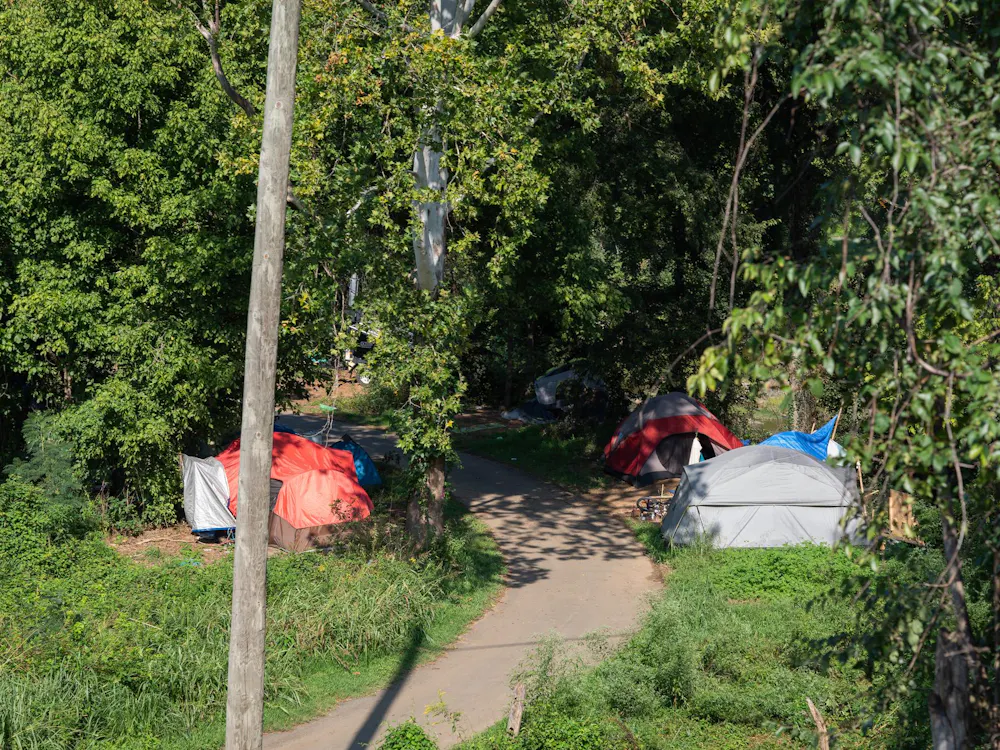
TAYLOR: The Free Bridge encampment removal and the issues with homelessness ‘solutions’
By Nat Taylor | August 19, 2026If we are to solve homelessness, temporary band-aid solutions like expelling or breaking up homeless communities will only displace more residents, alienate them from local governance and end up merely criminalizing this predicament.