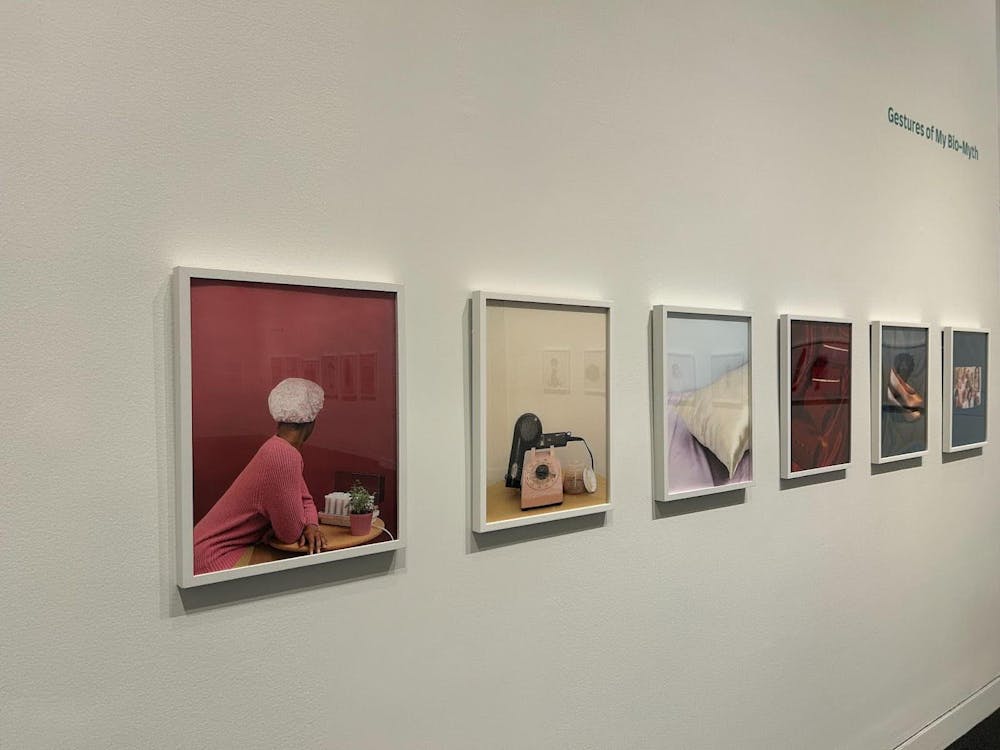
For photographer Nakeya Brown, hair has always been a path of self-expression. Growing up, she saw how it shaped the exteriors of herself and those around her, choosing to go natural in college as a way to explore her self-identity. Through her photography, Brown is guided by this link between hair and self-presentation, fighting the societal perceptions of “good hair.” Her new exhibit at The Fralin Museum of Art, “Refutations,” evokes themes of self-expression and memory, documenting Black hair and the women who lived with it.
The exhibit features six of Brown’s photo series, each of which uses photography to highlight the ways in which identities remain in the face of pressure to adapt and fit into a mold. The objects and models tell stories of refusals and nonconformities, highlighting Black experiences that are not often showcased in art and photography. To Brown, the name “Refutations” holds an important message to tie the pieces together.
“[“Refutations”] is the right to make a choice about what serves you and what doesn't serve you. It's the right to make a choice about how you choose to show up in the world,” Brown said.
Entering the exhibit, every wall of photos has a clear throughline and message to grapple with. Brown’s photos are most often a single subject — whether an object or human model — with vibrant and colorful backgrounds. Photos identify objects as banal as lamps, hair dryers or a pair of shoes with a degree of faceless universality. The series have an entrancing repetition to their compositions, with the pastel-colored backgrounds that distinguish one photograph from the next. This singularity urges viewers to look deeper into the details of each individual photograph, or perhaps take a step back to examine it in the context of the entire series. With Brown’s photos, every decision seems intentional, staged to evoke emotion and spark memories of the hair products and processes she uses as subjects.
While she is the subject of a couple of the photos, the stories she is sharing are broader than just herself. In several photos, Brown includes older photos of Black models, documenting the history of Black hair through the medium of photography. By highlighting domestic spaces and those who inhabit them, Brown creates a journey through beauty standards over time. Much of her work is about honoring these shared experiences, with histories of Black women ranging from journalists to entrepreneurs to political activists.
“[I was] thinking of Ayana Byrd's work about hair histories and Madam C.J. Walker and how she made a way for herself out of caring for what Black women needed,” Brown said. “I do think that the work is in part about me, but it is connected to a larger collective experience and collective memory.”
Although the photographs focus specifically on Black and female identities, Brown believes that any viewer can find ways to connect themselves into the messages about individuality and self-expression. Brown noted that these pressures of conformity — be it to a specific hairstyle or to a broader cultural identity — are also not unique to only one group, but a common feeling for most people throughout their lives.
“The experiences and the ideas that I am talking about are universal, and they cut across gender, they cut across body size, they cut across skin color, they cut across hair texture,” Brown said. “We are constantly negotiating difference, and I think that this exhibition is an opportunity to have an open dialogue about difference.”
One of the details that helps with expanding the impact of her message is hiding the faces of models, utilized in portraits and photographs of hair products, such as hair relaxers, across her “Facade Objects” and “Hair Stories Untold” series. In turn, there is a sense of broadness over who is subject to the expectations she is combating — generations of people have hidden behind pieces of themselves and follow trends in commercial products out of fear of expressing their true identities. The resulting effect removes some of the power that these picture-perfect figures, ornately posed but shying away from the spectator, have in convincing people that changing and damaging their hair — or any part of themselves, for that matter — is necessary to feel beautiful.
The objects Brown photographs don’t only capture expressions of identity, but also of love and memories of the Black culture they represent. In the series “Mass Production Comes Home” and “If Nostalgia Were Colored Brown,” the artist sourced objects both from her own home and from vintage thrift stores, bringing to the present the lives of generations that came before her. Pulling from her own memories, the photographs — such as kitchen goods or homeware items — bring a sense of comfort and nostalgia, but also push the viewer to consider how they carry these memories with them.
“Memory is something that all of the series are touching on … What are the memories that shape you, and how are you using those memories today?” Brown said. “How are you using them to build a better world, a more inclusive world?”
Looking forward, Brown plans to continue documenting object histories with her next focus on more 17th and 18th century stories. She has already begun researching this period in Black women’s history, looking for connections between the people and the objects they left behind. Her goal is to find objects not typically tied to Black women of that period, citing a Russian imperial watch owned by writer Nancy Prince as an example. Additionally, her work from this series will be displayed in March at the Bozar Centre for Fine Arts in Brussels, Belgium, as a part of the “Picture Perfect: Beauty Through a Contemporary Lens” exhibit.
For the full experience of seeing “Refutations,” Brown recommends not going alone — rather, she says to bring friends, siblings, grandparents and people of all different backgrounds. There is a takeaway for every viewer, both as an individual reflection of identity and a larger discussion on how people perceive one another, enhancing the messaging of the exhibit itself.
These conversations are already flowing in the Fralin, apparent by the display just outside the exhibition room. Here, the museum asks visitors to reflect on the themes of “Refutations” and how they view beauty and self-care by writing their messages on pieces of paper and hanging them on the display. Already, messages have begun to appear, ranging from inspirational quotes like “From within, you are beautiful,” to personal anecdotes, like “I love my curly hair when I let go of societal expectations.” These small notes are a testament to Brown’s ultimate message, empowering people with the choice to define themselves by their own standards.
“Refutations” will be available to view for free in the Fralin until May 31.
Read More

On Repeat: Nostalgic songs to celebrate the waning of summer
By Kelsey McIntyre | 3 days agoWith less than a month until students return to Grounds, this soundtrack can be used to rest and relax before the stressful semester by reminiscing on familiar times.
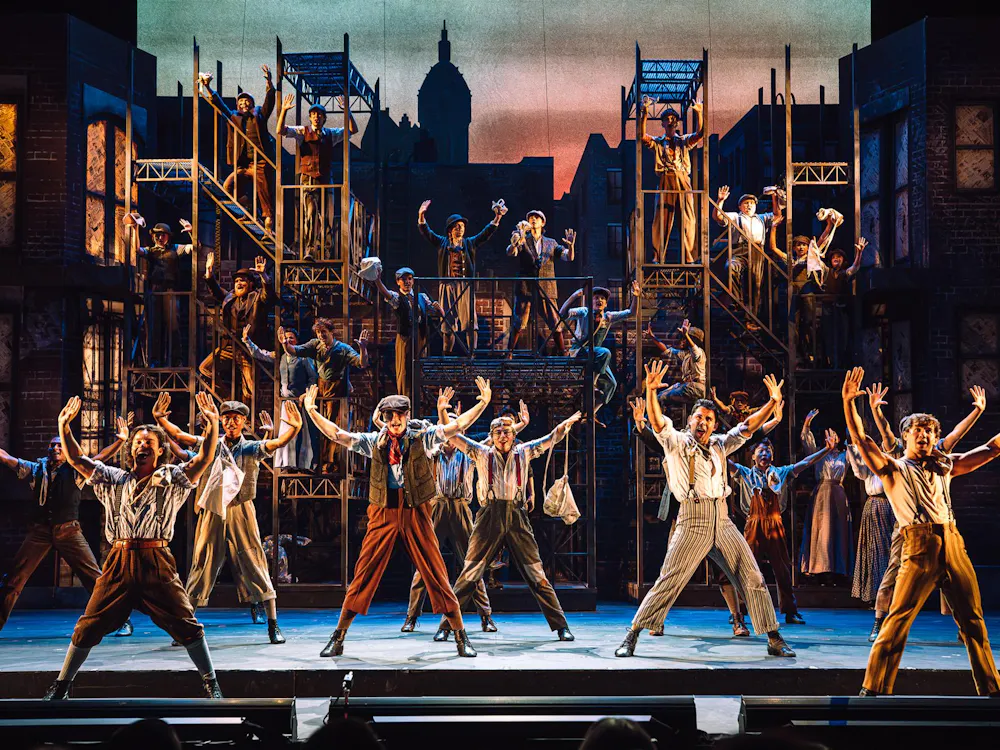
Virginia Theatre Festival unites Charlottesville and Broadway talent
By Carter Horner | 6 days agoThe Virginia Theatre Festival began in 1974 as a University semi-professional drama program and recently returned to Charlottesville for its 52nd iteration.

‘Spider-Man: Brand New Day’ soars despite a few tangled threads
By Preet Manukonda | 6 days agoAlthough “Spider-Man: Brand New Day” occasionally gets caught in the web of uneven pacing and franchise expectations, the film excels in returning Peter Parker to the qualities that make him a beloved hero.