

This week’s From the Archives looks at the historical achievements and involvements of women at the University in honor of Women’s History Month. From the University’s first official coed class to the women’s basketball team being a “beacon of hope” for the University in the 1990s, women have made a profound impact on the University. As we look back on 56 years of coeducation, we celebrate the achievements of women at U.Va. and the hard work and sacrifice it took to get there.
1950s
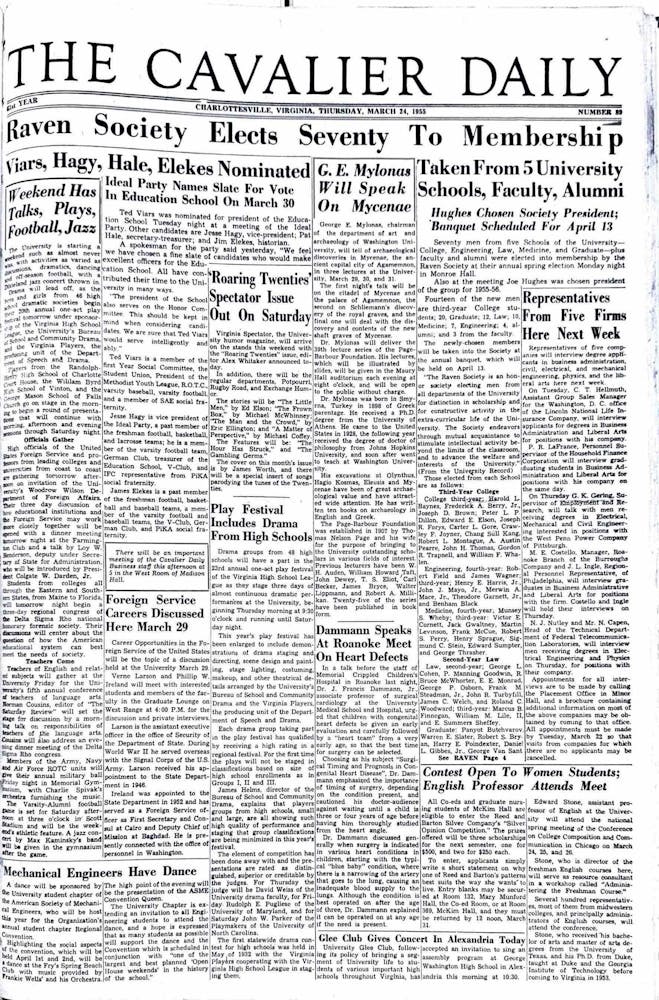
March 24, 1955
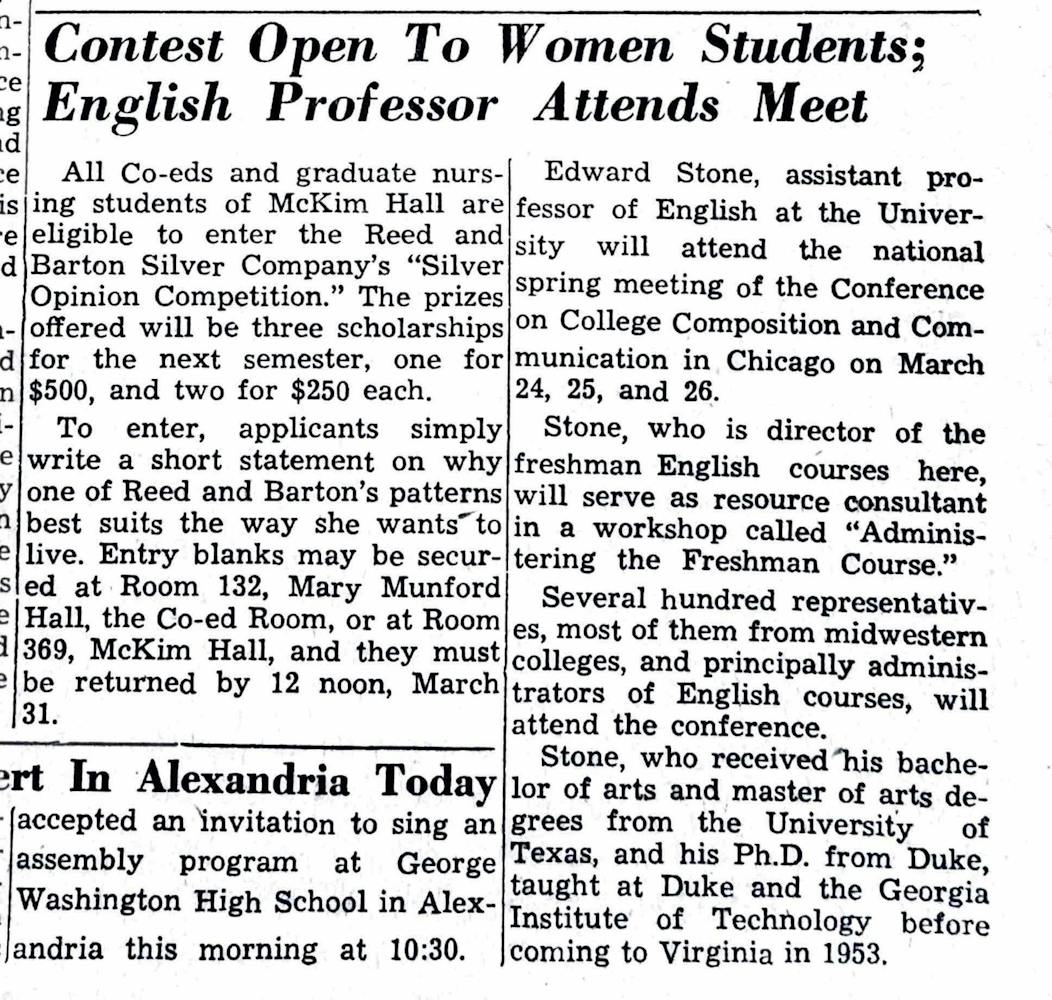
“Contest Open to Women Students; English Professor Attends Meet”
By unlisted author
Women were extended an invitation to participate in the Reed and Barton Silver Company’s “Silver Opinion Competition” in 1955. Co-ed and graduate nursing students were called to deliver speeches on how Reed and Barton silver patterns best suit their lifestyle.
1960s
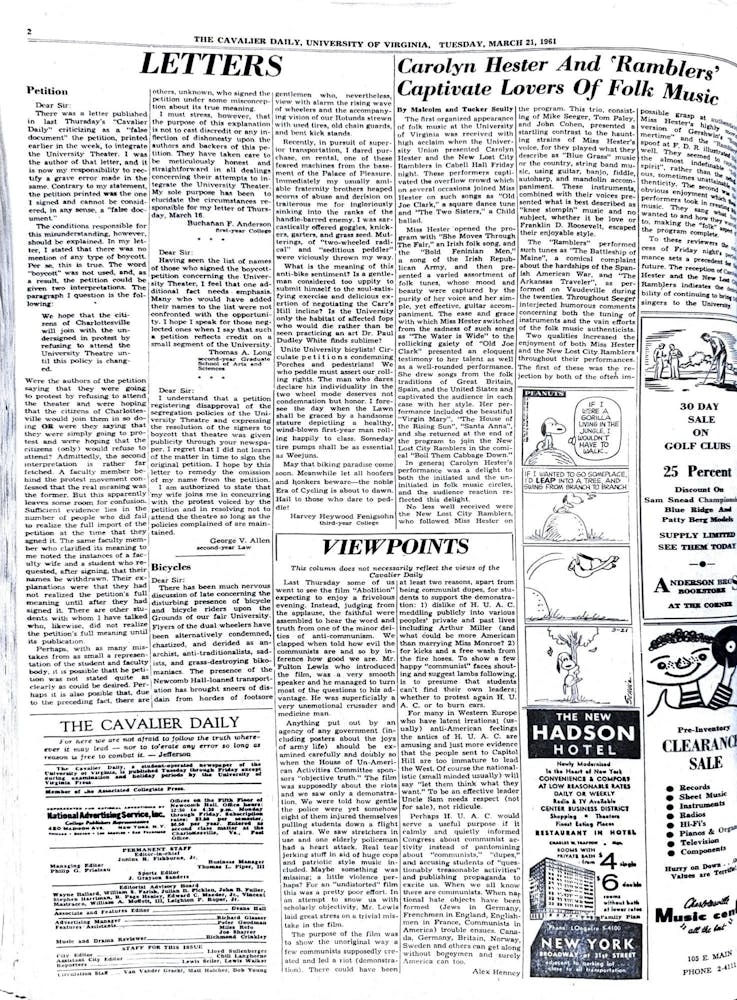
March 21, 1961
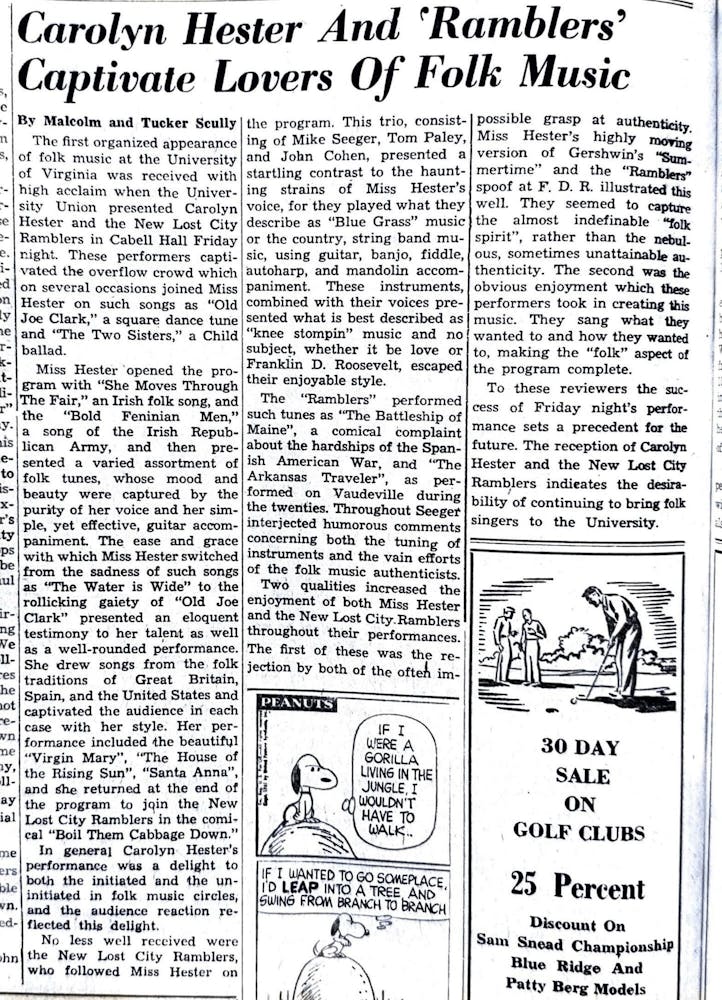
“Carolyn Hester and ‘Ramblers’ Captivate Lovers of Folk Music”
By Malcom and Tucker Scully
In the first organized appearance of folk music at the University, Carolyn Hester and the New Lost City Ramblers performed at Cabell Hall. Hester sang with an ease and grace that altered the sadness of the lyrics into inspirational tunes for listeners. The authentic entertainment and political spoofs encouraged the desirability of folk music on Grounds, paving the way for current bands and touring acts at the University.
1970s
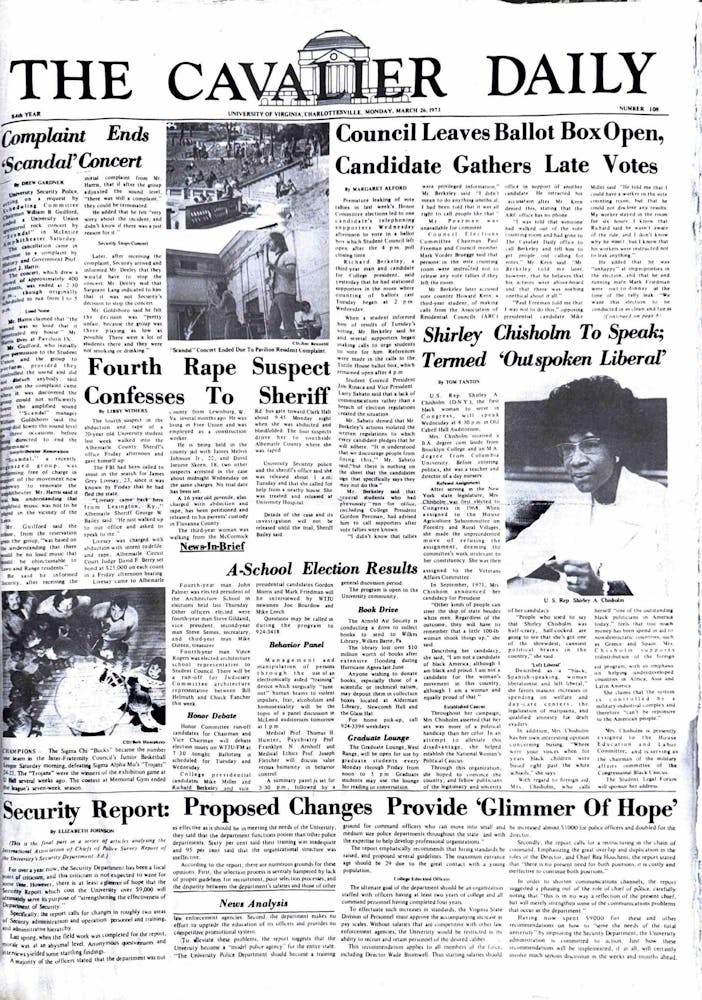
March 26, 1973
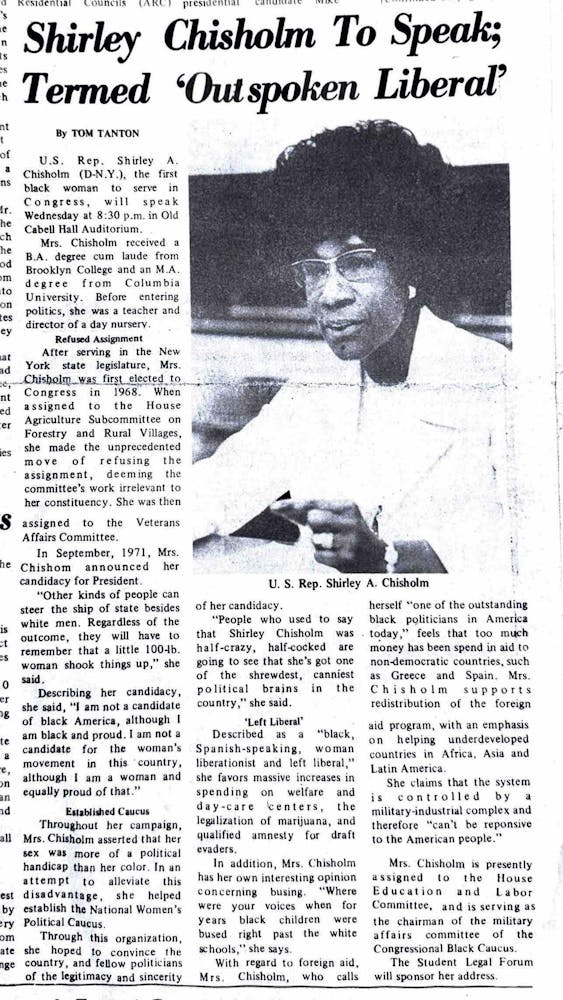
“Shirley Chisholm To Speak; Termed ‘Outspoken Liberal’”
By Tom Tanton
Photo by unlisted photographer
The first Black woman in Congress, Shirley Chisholm (D-N.Y.), planned to speak at Old Cabell Hall Auditorium. Congresswoman Chisholm faced numerous adversities in her career, including poor committee assignments, criticism of her liberal views and the negative role gender played in her presidential campaign. An emblematic character of advancement for Black women, Rep. Chisholm co-established the National Women’s Political Caucus and redefined womanhood in American politics.
1980s
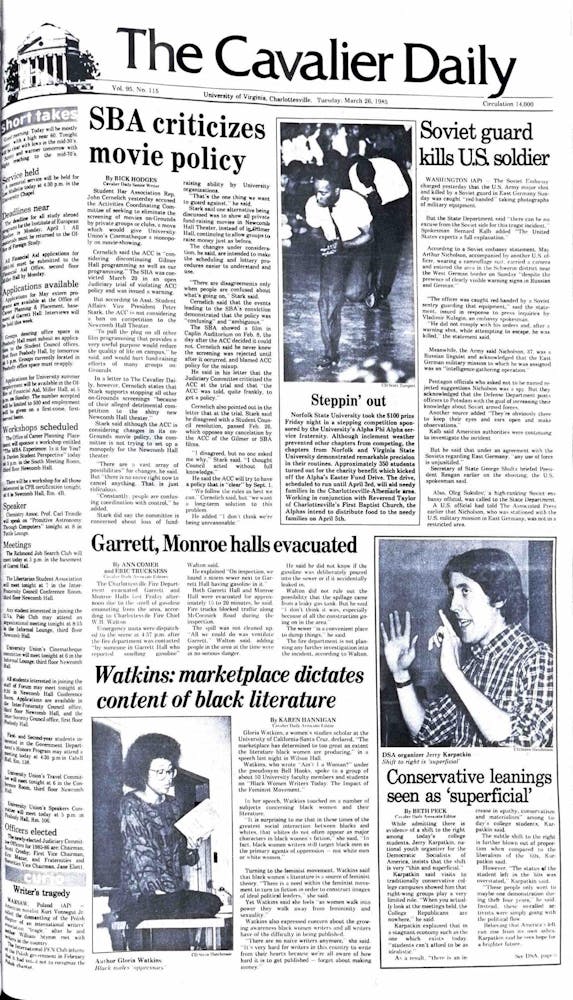
March 26, 1985
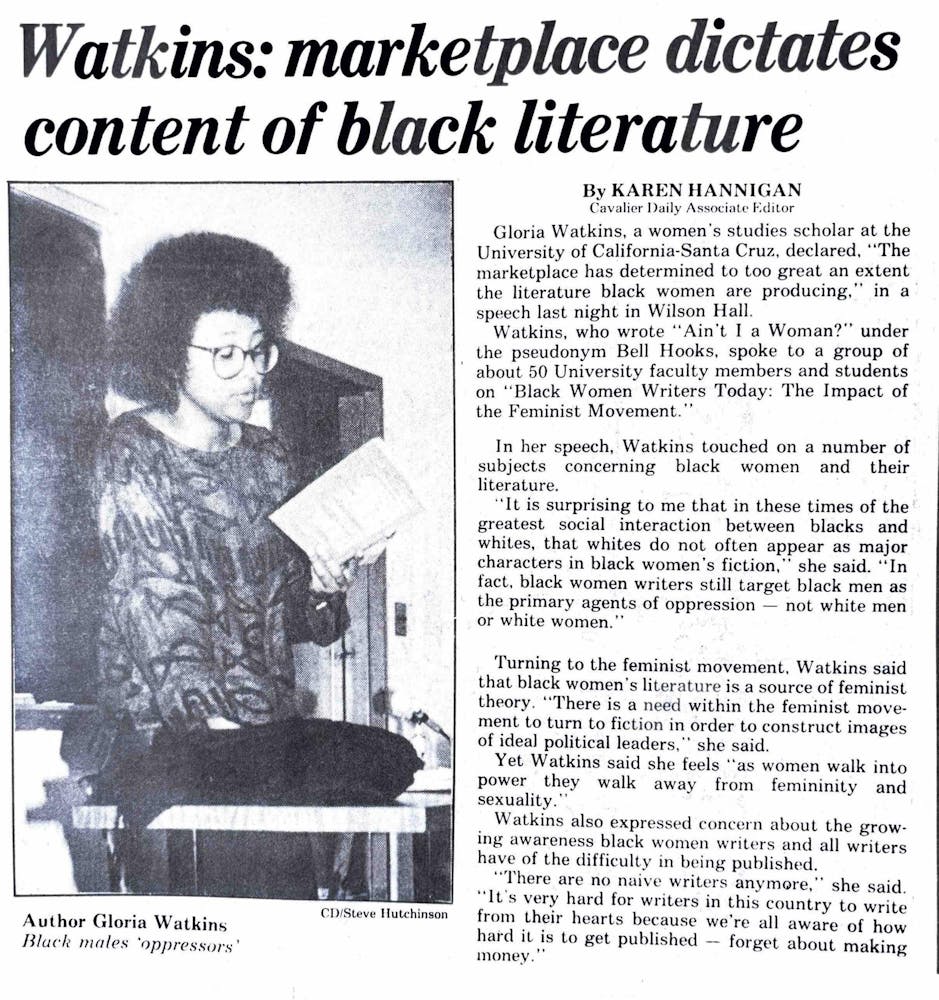
“Watkins: marketplace dictates content of black literature”
By Karen Hannigan
Photo by Steve Hutchinson
Gloria Jean Watkins, better known by her pen name “bell hook,” spoke at Wilson Hall on “Black Women Writers Today: The Impact of the Feminist Movement.” Watkins called upon the publishing industry to allow black female writers to express themselves authentically rather than conforming to the demands of profitability, and to stop portraying Black men as the primary oppressors instead of white men and women. She declared that “the marketplace has determined to too great an extent the literature Black women are producing.” Over the past 50 years, she has continued to publish writing that reflects this commitment to authenticity, including her most famous work “All About Love: New Visions.”
1990s
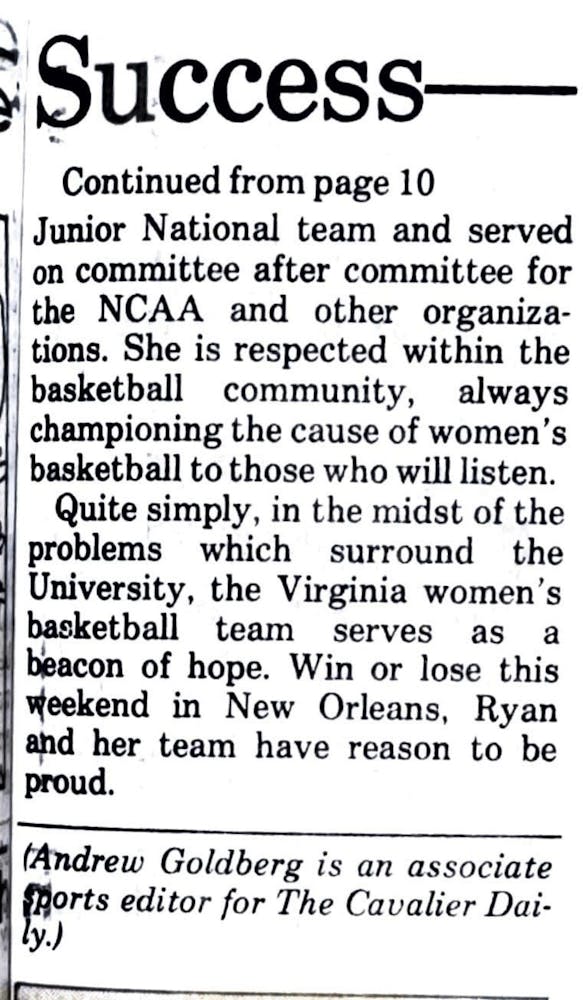
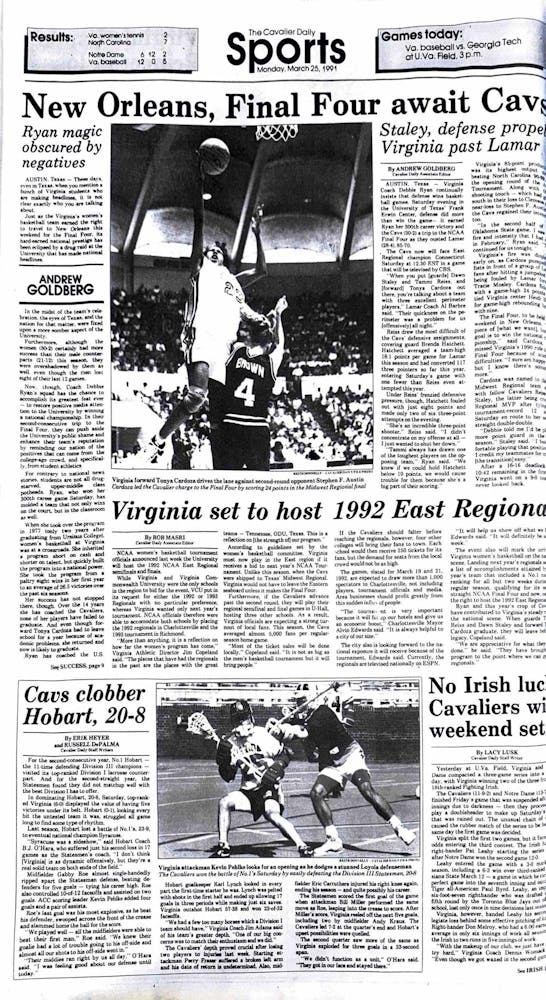
March 25, 1991
“Ryan magic obscured by negatives”
By Andrew Goldberg
Despite growing tensions surrounding the drug raid scandal at the University, students could now find the success of the women’s basketball team in reaching the Final Four tournament as a “beacon of hope.” Coach Debbie Ryan took over the program in 1977, with little cash and talent, and built a national basketball powerhouse. Ryan molded a team for athletic and academic success, later influencing their NCAA tournament finals against Tennessee.
2000s
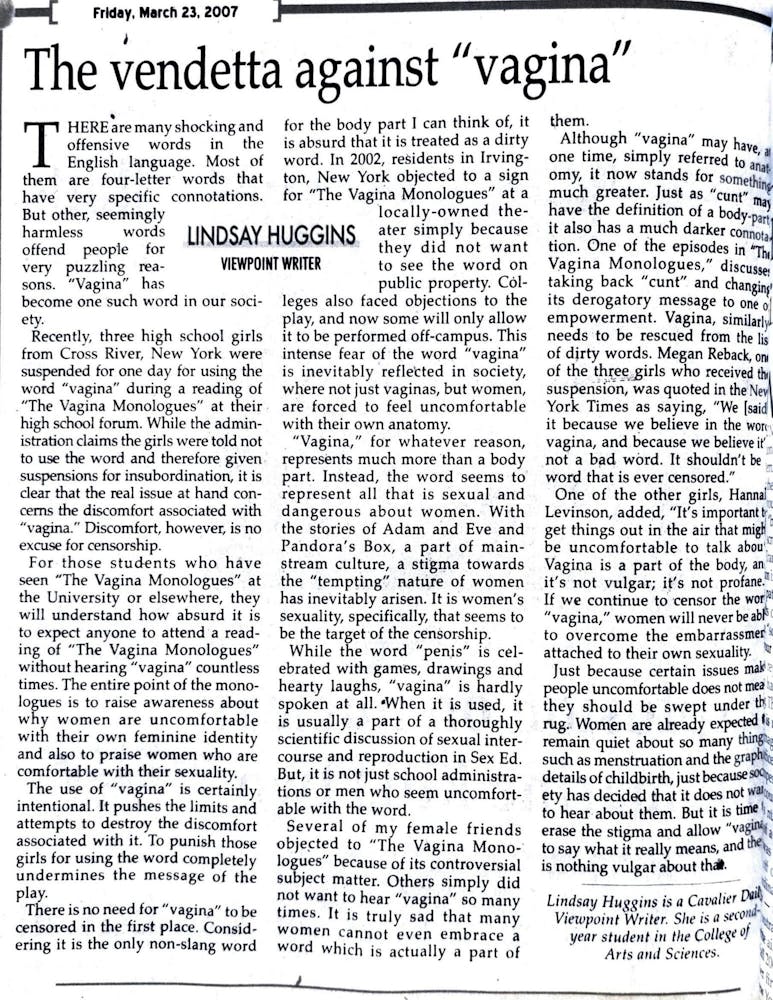
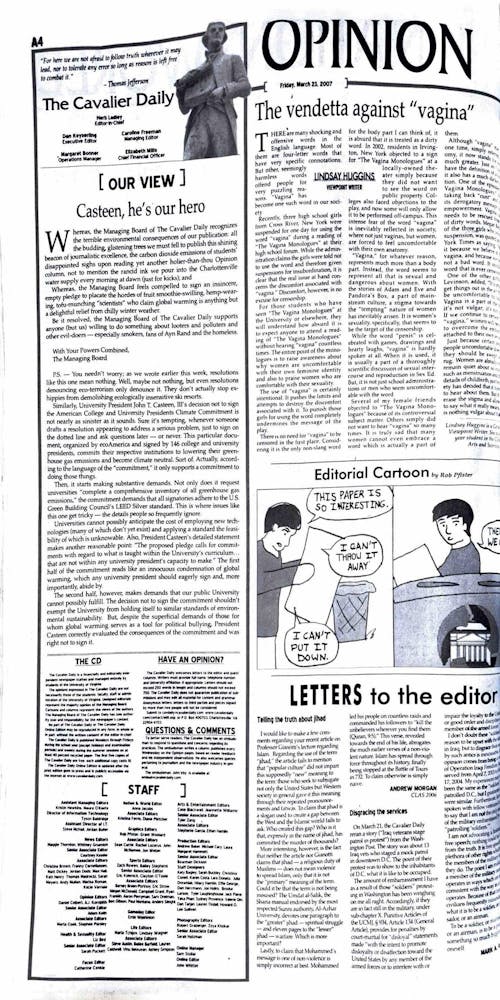
March 23, 2007
“The vendetta against ‘vagina’”
By Lindsay Huggins
In this 2007 opinion piece, Lindsay Huggins covers the unnecessary censorship of the word “vagina,” particularly in relation to “The Vagina Monologues” by Eve Ensler. This 1996 play promotes comfort with female sexuality — challenging the stigma surrounding women’s bodies — yet ironically, its script was consistently policed across the country. Huggins argues placing vagina on our “list of dirty words” frames women’s sexuality as shameful or vulgar. She calls on the public to reclaim the word and empower women to be confident in their sexuality.
Read More

The Cavalier Daily joins amicus brief supporting student press at University of Alabama
By Jaylynn Perez | 24 minutes agoThe Cavalier Daily joined 39 other collegiate news organizations and 15 student editors from across the country in signing an amicus brief Sept. 2.

Student Council considers creating an ad hoc committee to review UBE proceedings
By Lucia Gambacini | 14 hours agoConsideration of the bill was postponed until the next general body meeting.

Health System Board Finance Working Group passes remote participation policy
By Lily Kostro | 15 hours agoThe policy states that a member of HSB may participate remotely in meetings not open to the public, provided the member notifies the rector that they are unable to attend in-person due to an emergency, personal matters or a disability.


