
Breast Cancer by the Numbers
* 1/8 - A woman's lifetime chance of contacting breast cancer.
* 185,000 - Number of women diagnosed with breast cancer each year.
* 43,500 - Number of women who die from breast cancer each year.
* 1,600 - Number of men diagnosed with breast cancer each year.
* 400 - Number of men who die from breast cancer each year.
* 60 - Average age of women diagnosed with breast cancer.
* 20 - Age when women should begin doing monthly breast self-exams.
* 40 - Age when women should begin annual mammograms; earlier if have family history or unusual symptoms appear.
* $512 million - Federal funding for breast cancer research in 1997.
* $47 million - Endowment of University Cancer Center.
Stages of Breast Cancer
I. Tumor less than 2 cm in diameter, nodes not involved, no distant metastasis - spreading of the cancer to other organs
II. Tumor less than 5 cm in diameter, nodes not fixed, no distant metastasis
III. Tumor greater than 5 cm in diameter, invading the skin, or attached to the chest wall, or supraclavicular nodes noted, with no distant metastasis
IV. Tumor with distant metastasis
Breast Cancer Risk Factors
* Age (Risk increases exponentially with age after 30)
* BRAC gene
* Family history of breast cancer
* Past medical history of breast cancer, ovarian cancer, uterine cancer, or colon cancer
* Start of menstruation before age 12
* Menopause after age 55
* No pregnancies or first pregnancy after age 30
* Radiation exposure
* High fat diet
* Alcohol consumption
source: National Breast Cancer Foundation, A.D.A.M Internet Health Inc.
Read More

U.Va. and United Way of Greater Charlottesville launch ‘Give Where You Live’ donation partnership
By Vrinda Vashisht | 19 hours agoThe program is set to run through Dec. 18, and its start date coincided with United Way’s 35th annual Laurence E. Richardson Day of Caring.

Student Council passes bill to create ad hoc committee to review UBE proceedings
By Edward Christopher and Anna Ivanov | 19 hours agoThe Commission will craft a report on the University Board of Elections’ current structure and governance practices, putting forth proposals for corrective action based on its findings.
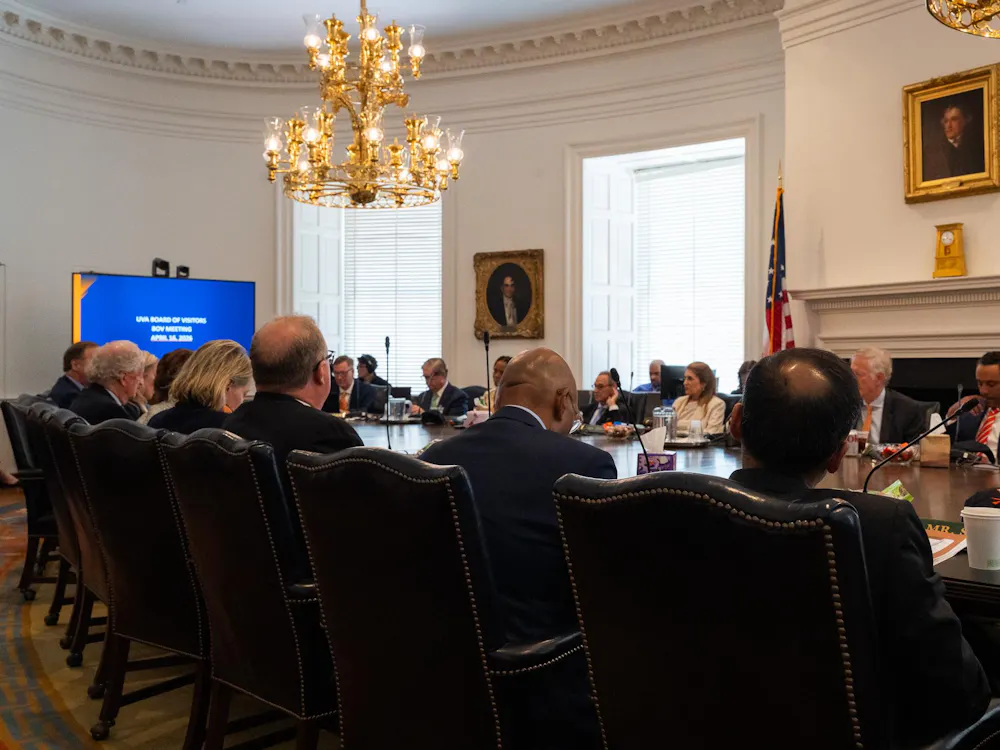
Board of Visitors discusses the implementation of AI in research and academics
By Jaylynn Perez | YesterdayThe Board also received an orientation on changes to NCAA athletics, completed its annual Atlantic Coast Conference certification, heard a report from Aaron Bloomfield, Faculty Senate chair and engineering professor, and discussed the University’s ongoing searches for a provost and several deans.


