Summers are often quantified by the moments that define them. Think of “Barbenheimer,” or “brat” — two phenomena that stand within the collective memory as relics of a unique cultural moment in time. If that is the case, then summer 2026 seemed determined to produce a new defining moment every week.
Its distinct energy first became evident way back in April during Coachella, or as it was colloquially dubbed, Bieberchella. Justin Bieber broke records when he delivered his first major live performance since 2022, a stripped-back, honest tribute to a life in the spotlight and a journey toward peace and healing. Hundreds of thousands of people attended his two headlining sets, and hundreds of millions tuned in online as Bieber streamed his performance live on YouTube while simultaneously scrolling through — and singing along with — clips of his younger self.
The joy that those performances inspired — captured as if in a time capsule by subsequent albums for each weekend, both titled “SWAG LIVE FROM COACHELLA” — has continued to reverberate throughout the media cycle, kicking off the summer in a shared state of cultural fulfillment where, as Bieber would put it, “everything hallelujah.”
Collective effervescence is a sociological concept coined by French sociologist Émile Durkheim, connoting the coming together of a community around an experience or emotional frequency. This shared joy is in turn conducive to a sort of unity — much like that which has been on display in the cultural zeitgeist over the past few months, where every new success seems to break an old record.
In May, this energy manifested most clearly at the box office, with Cinemark and AMC both delivering landmark performances. Such achievement was aided by a diverse and exciting state of releases, ranging from traditional blockbusters such as “Michael” and “The Devil Wears Prada 2” to original storytelling exemplified in “Backrooms” and “Obsession.”
No discussion of the summer box office can go without acknowledging the unprecedented and truly remarkable success of the latter film. Directed by YouTuber-turned-feature-filmmaker Curry Barker, against a production budget of under a million dollars, the indie horror sensation grossed over $400 million globally on a box office tenure that stretched far beyond its anticipated scope.
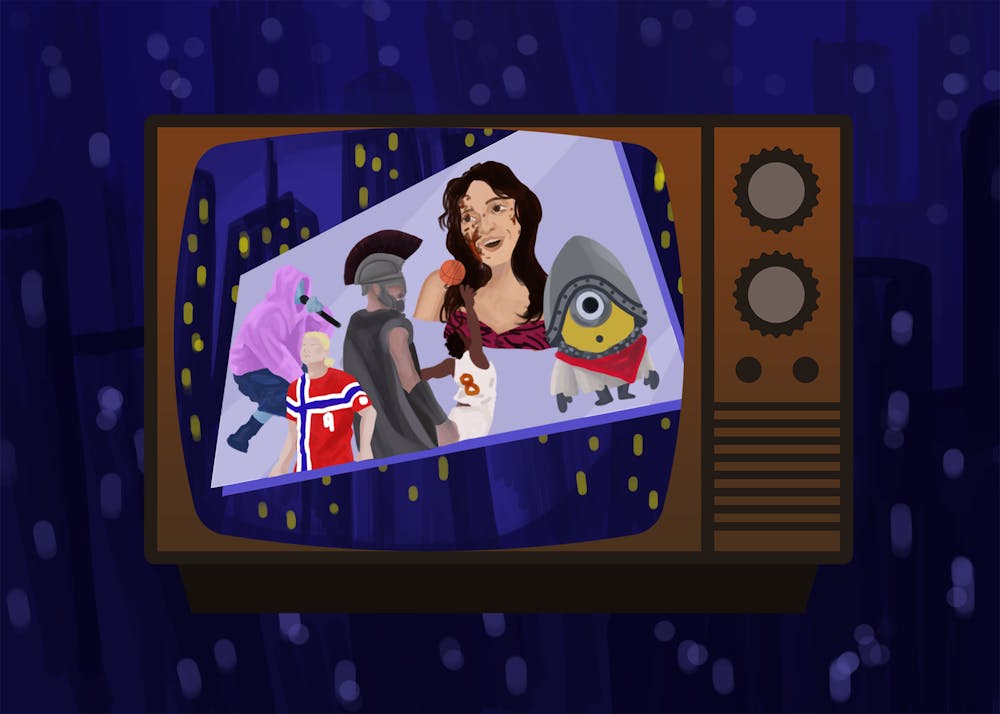
The film’s theatrical run extended well into June, a month which also saw audiences tuning in nightly to root for their favorite team, whether that was Trinity and Bryce on an overwhelmingly popular season of “Love Island USA,” or the New York Knicks on a historic championship run. The latter group made history both on and off the court, sparking a nationwide fever that spurred — pun intended — the most-watched NBA finals since Michael Jordan. Their potent chemistry and penchant for late-game heroics also drew in 15 billion views and counting across social media.
And, just when it felt as though the energy levels couldn’t get any higher, the World Cup kicked off, punting the momentum of June well into July. Not only did the sport draw in massive viewership, with the tournament — and particularly its final — shattering television rating expectations, so did the individuals at its helm.
Erling Haaland, the Norwegian striker who led his team to the quarterfinals, gained 32.1 million Instagram followers over the 39-day tournament, and his media traction has been compared to that of Travis Kelce following his relationship with Taylor Swift. Vozinha, the Cape Verde goalkeeper who gave a stellar performance during their opening 0-0 draw with Spain, shot up from 50,000 followers to over 29.6 million. Standout performances became shared cultural moments that reverberated across social media, stretching the impact of the World Cup far beyond the pitch.
The same weekend that Spain took home the tournament’s trophy, Christopher Nolan’s “The Odyssey” made its debut in theaters. With a market for IMAX tickets almost as competitive as that for playoff seats at Madison Square Garden, the film is already putting up a box office performance to rival some of Nolan’s best, and holds the latest monopoly on the pop culture media cycle.
Records are made to be broken, and “The Odyssey” will no doubt soon be dethroned by the next phenomenon to capture the public’s attention, and then the next. But what makes this summer remarkable is the nature of the cultural moments behind the numbers. Any discussion of what audiences were consuming this summer necessitates a conversation about how they were consuming it — about the live streams and the shares and the watch parties.
In all of these spaces, people showed up. They showed up in tartan kilts in Boston and Viking hats in New York. They showed up through heat and rain and smog. They waited in lines, packing into theaters and bars and stadiums and full city blocks, driven by simple desire to experience things together — to cry together, to celebrate together, to clutch onto complete strangers as OG Anunoby completed what can only be understood as a miracle.
This is the phenomenon Durkheim described as collective effervescence. It is easy to lament an increasingly fragmented culture, whose algorithms separate audiences and dilute opportunities for genuine connection. But the past few months are proof that the appetite for such shared experiences has not disappeared, that there remains joy to be found — in watching things, certainly, but in watching things together.
Perhaps it is fitting that a summer defined by broken records should also be the longest of the coming decade, as it stretches to its latest possible conclusion with Labor Day slated to fall on Sept. 7. Though many wish they could “do it all again,” as Bieber sings on “FIRST PLACE,” eventually the season must come to an end. As August ushers in autumn, the records and ratings of summer 2026 will remain a receipt of a cultural moment of time — and a reminder of the unique and collective effervescence that comes from showing up, together.
Read More

My affliction of cougar-ism
By Madigan Wirkus | 14 hours agoAlthough a fourth-year dating a third-year may seem like a minor discrepancy to most, I find myself subconsciously justifying the age gap constantly.

September Book Club: Challenging books to train the brain
By Matthew Wang | 3 days agoThese three books make for a challenge to even seasoned readers, rebuilding the cognitive strength that may have waned over time off.

‘Teeny Tiny Trifecta 9’ gives locals a small taste of Charlottesville’s art
By Siddharth Sharma | 4 days ago“Teeny Tiny Trifecta” stands as a beacon, and potential launchpad, for artists around Charlottesville.