More than 16,000 students applied to the University Early Action this year, representing a six percent increase from last year’s Early Action applicants. This is a record high for Early Action submissions in the four years since its inception.
The University’s Early Action applications were due through the Common Application last Friday.
“Students are able to receive an admission decision early, in January, and compare other admission offers and competing financial aid packages before making an enrollment decision by May 1,” Dean of Admission Greg Roberts said. “We believe this is the most student-friendly early admission option available to prospective students.”
The Office of Institutional Assessment determines the official statistics of each incoming class. Because Early Action applications have only been offered for four years, they have not yet established definite trends.
Last year, there were more than twice as many out-of-state applicants as in-state applicants. However, there was a 51.1 percent acceptance rate for in-state applicants, compared to a 23.5 percent acceptance rate for out-of-state applicants. In that class, 920 in-state applicants were deferred, compared to 2,851 out-of-state applicants.
“We have seen a larger and stronger Early Action applicant pool each year,” Roberts said, suggesting it likely that this years’ applications will be even more competitive than in previous years.
Early Action applicants will be notified of their decisions by Jan. 31.
Read More

Nursing Dean Marianne Baernholdt steps down amidst season of U.Va. Health leadership turnover
By Lauren Seeliger and Grace Little | 17 minutes agoBrie Gertler, interim executive vice president and provost, and Dr. Mitchell Rosner, chief executive officer of U.Va. Health and executive vice president for health affairs, wrote to the School of Nursing community Tuesday morning to announce Nursing Dean Dr. Marianne Baernholdt will be stepping down from her role.

U.Va.’s planned data center expands $30 million amid statewide debate over energy use
By Jaylynn Perez | YesterdayThe project has grown since it was initially approved by the Board of Visitors in June 2025 as a $72 million, two-story data center facility.
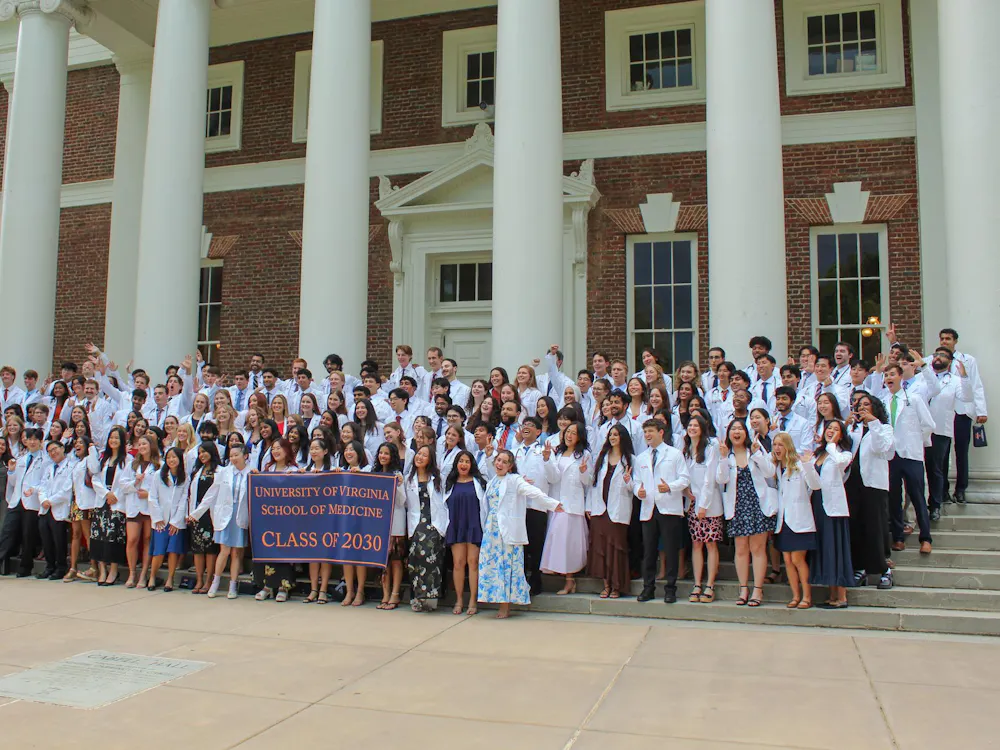
School of Medicine welcomes Class of 2030 with annual White Coat Ceremony
By Michael Racz | YesterdayThe ceremony is a longstanding tradition in medical schools across the country in which incoming first-year medical students receive their first white coat as they enter the medical profession.