To get to Rio de Janeiro from Charlottesville, one must take multiple flights totaling over 18 hours. Factoring in expenses such as the flights, a rental car or Uber, food and a place to stay, the journey becomes rather difficult — both financially and in terms of travel logistics. Even so, Virginia football has elected to play the first ever FBS college football game in Brazil, thousands of miles away from home.
An international trip is a rarity in college football, but it is becoming more common. According to the NCAA, programs are allowed one regular season international game every four years. The game in Brazil will be one of three international college football games in 2026, alongside Arizona versus Kansas in London and North Carolina versus TCU in Dublin.
Virginia’s matchup is against NC State, serving as the season opener with the Cavaliers designated as the home team. When informed of this news, several University community members were surprised. Some shared excitement about the growth of college football and Virginia’s brand, while others noted accessibility issues and concerns about losing a home game in Charlottesville.
As expressed through written statements, the game’s organizers believe the game will be a great opportunity for all parties. Those organizers — Athlete Advantage, Brasil Sports Business, Rio de Janeiro State Gov. Claudio Castro and Mayor Eduardo Paes, along with the Cavaliers and Wolfpack — hope the contest can grow the game of college football.
“College Football Brasil will be an incredible moment for our country, for the teams and student-athletes and for the fans who will join us in celebrating this historic experience,” Brazil Sports Business founder Bruno Guilherme said.
Yet, for students, attempting to travel to the game would cost well over a thousand dollars — which is a generous underestimate. According to third-year College student Georgina Stewart, that toll is not worth it.
“I don't think it's accessible at all, apart from watching it online,” Stewart said. “I can't imagine anyone would fly all the way to Brazil just to watch a football game in another country. That's an insane cost.”
Given the game's physical inaccessibility, most Cavalier fans will not be making the trip, potentially diminishing the home-field advantage that a host team would typically experience.
“I don't think there's anyone in Brazil waiting for us to come there,” Stewart said. “It's better for the football team to have people in the stands who are there and supporting them, like through the TV … They're not going to get that support.”
However, Rio is no stranger to hosting major athletic events. The city has hosted the FIFA World Cup, the 2016 Summer Olympics and other major soccer events, but has never hosted a college football game. Assoc. Media Studies Prof. David Nemer, who hails from Brazil, explained that Rio could be a valuable annexation for college football.
“The city offers a compelling narrative bridge: soccer culture, university athletics innovation and entry into a new continent’s sports imagination,” Nemer wrote in a written statement. “It allows U.Va. to engage a region that is a global sports stage, rather than competing for attention in markets already familiar with multiple U.S. college games.”
According to Guilherme, there could be some value to Virginia serving as the maiden home team in Brazil — potentially as international recruits consider where to play college football.
“We strongly believe that bringing this level of sporting excellence to Brazil will help elevate the quality of the game played here, raising the technical standards, inspiring young athletes and strengthening the entire football community in the country,” Guilherme said.
First-year College student Tomaz Lawson Forbes, also a Brazil native, agreed that international games can be good for the sport at large by drawing increased attention, especially in cities like Rio where college football games do not normally take place.
“There's a very big, growing American football community [in Brazil], so I'm sure there will be lots of people who, even though they don't know U.Va. football specifically, they go watch the game, just because there's not a lot of football games happening in Brazil,” Forbes said.
For Brazilian students like Forbes, seeing the Cavaliers play in their home country is a memorable experience.
“[I’m] most excited for … more exposure [to the game],” Forbes said. “I'm excited for my friends in Brazil who still didn't go to college or stay in Brazil for college, to get to know U.Va. and the football team and maybe start watching more American football and college football in general.”
There is also another variable at play — this game will count as an ACC contest, as the league is moving to nine conference games from the previous standard of eight. Before that change was instituted, Virginia and NC State were set to play this matchup as a non-conference game because they wanted to preserve a rivalry that lost its yearly renewal with the ACC’s scheduling model.
Normally, a Power Four team fills a non-conference game spot with an easier opponent like William & Mary, or perhaps a national contender from another conference like the Big Ten to boost a College Football Playoff resume. The Cavaliers and Wolfpack elected for neither.
Ultimately, given that the 2026 season opener will be played in Brazil, Virginia will have six games at Scott Stadium — one fewer than they had this year. According to Stewart, losing a gameday at Scott Stadium is a major cost.
“Having football games on Grounds creates atmosphere and community, and it attracts a lot more people to Grounds and just all around makes it a far more fun environment to be a part of,” Stewart said. “So I think losing a game here just means you're losing out on connection and community building that is necessary at a school like U.Va.”
Read More
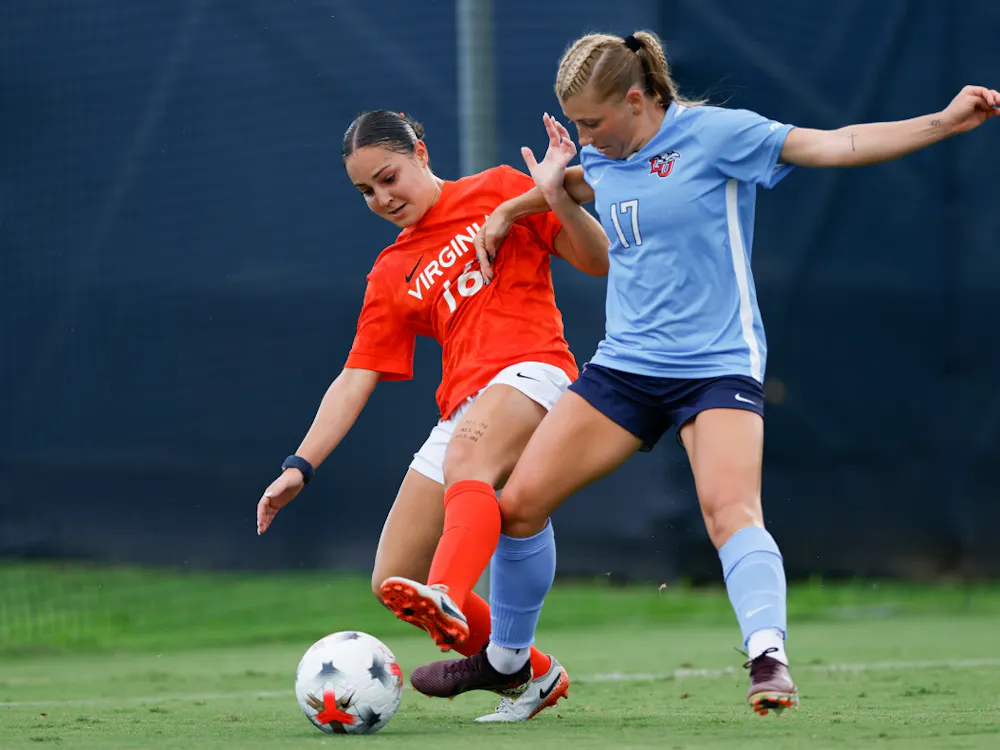
No. 11 women’s soccer earn hard-fought victory against Liberty
By Peter Kratz | 17 hours agoThe game showcased both great and lackluster moments for Virginia. The Cavaliers dominated the first half of proceedings, but came out of the break forgetting everything they had done right.

KEPPLER: The University’s lack of transparency in Agugua-Hamilton’s departure sets a dangerous precedent
By Sofie Keppler | 2 days agoFormer Virginia women’s basketball head coach Amaka Agugua-Hamilton has officially reached a settlement with the University following her departure April 4 after four years with the Cavaliers.
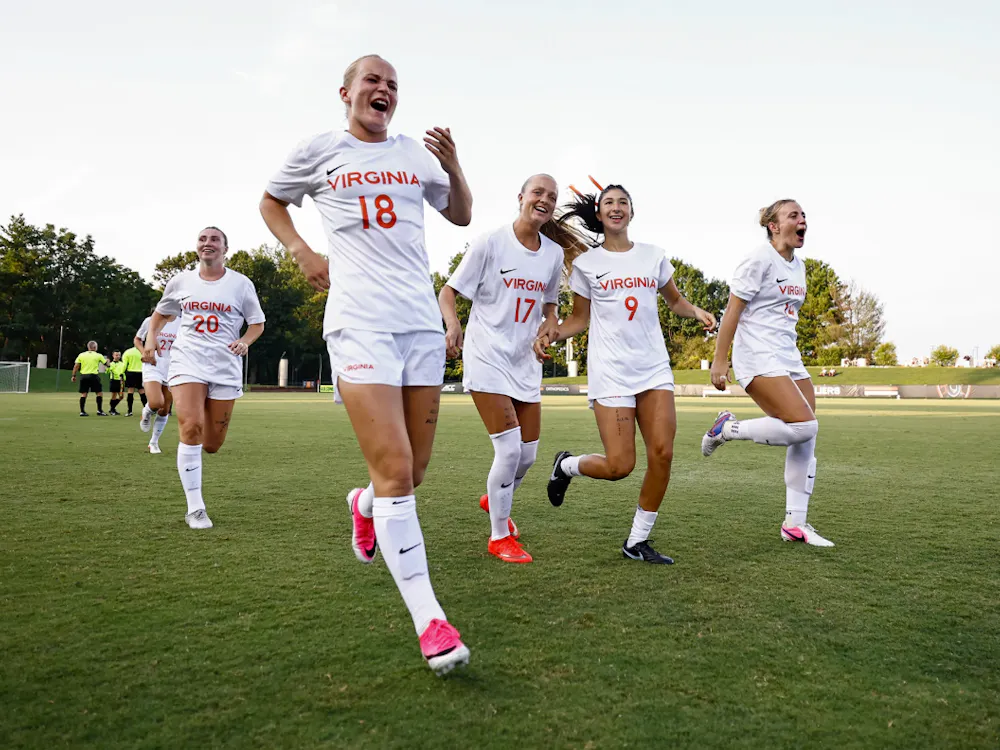
No. 11 women’s soccer defeats Northwestern in season opener
By Peter Kratz | 6 days agoWhen the Cavaliers had opportunities to attack on the wings, they attacked relentlessly. Great deliveries came from both sides of the pitch into the Northwestern box, putting duress on the Wildcats’ backline and not allowing them to regroup and counter.