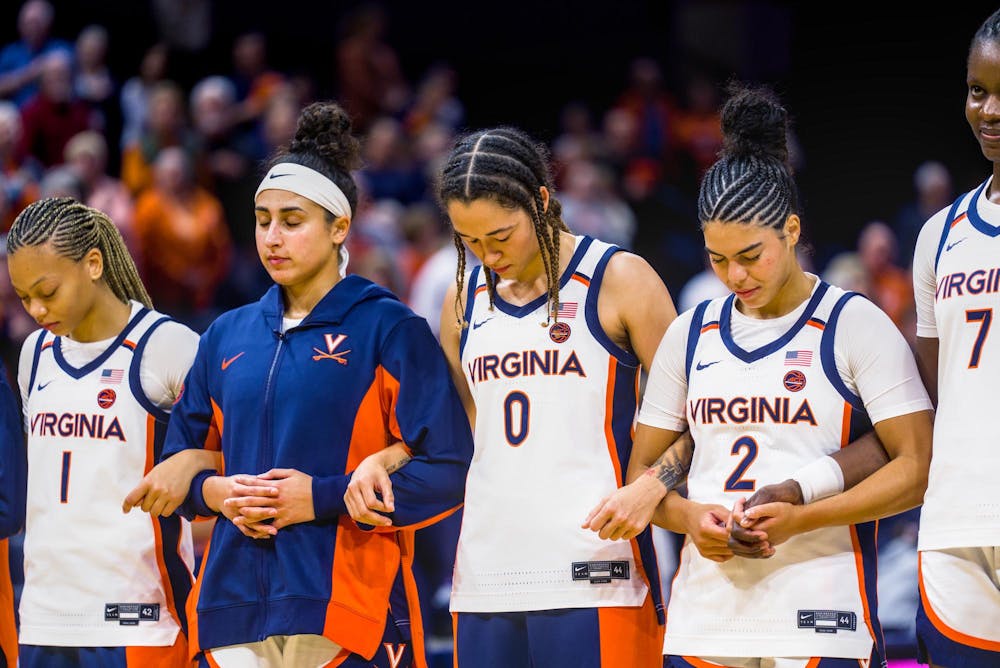
Early on in the 2025-26 season, Virginia women’s basketball has demonstrated its high ceiling. Veteran offseason additions have given Coach Amaka Agugua-Hamilton’s Cavaliers (8-3, 1-0 ACC) much-needed stability after a roller-coaster-like experience last season, which oscillated between ranked victories and grotesque losses.
Still, Virginia has struggled to put all of the pieces together — three early season losses, including one Nov. 13 to mid-major UMBC, have thrown the Cavaliers for a loop. With one ACC win in the rearview mirror and a full conference schedule looming, three beat writers assess Virginia’s performance and prospects for the rest of the season.
How worrisome are Virginia’s three losses?
Sofie Keppler, Staff Writer: The Cavaliers have shown their ability to dominate, recording several wins by 20 or more points. They have struggled in other games, including their first ranked matchup Dec. 3 against No. 14 Vanderbilt. The losses featured a troubling theme — inconsistency from the field. This often leads to extended shooting droughts that even late fourth-quarter efforts — such as cutting a 28-point Commodore lead down to 12 — cannot overcome. Losses of this type are especially worrisome, given the newfound depth of the Virginia squad this season. Regardless of their potential, especially in defense and rebounding intensity, the Cavaliers must find a consistent scoring rhythm to be a legitimate ACC contender.
Cierra Lyles, Staff Writer: Since the beginning of the Cavaliers’ season was supposed to be a pretty easy schedule, it is definitely worrisome that they have already dropped three games. The Nov. 25 loss to Nebraska is more acceptable given that the Cornhuskers are an undefeated Power Four team now ranked No. 24 in the country, and the loss against ranked Vanderbilt was understandable, but UMBC was borderline inexcusable. Virginia plays in a competitive conference, so early season wins provide an important cushion. The fact that they stumbled so early on to an unranked, mid-major team is concerning, but as long as they start ACC play off with a few wins, those losses can be easily forgotten.
Jordan Zimm, Staff Writer: Virginia’s three losses are definitely concerning, but not enough to redefine a season where only 10 games have been played. The UMBC loss stands out because it exposed a crucial problem for this team — when teams lock down junior guard Kymora Johnson, the Cavaliers need somebody else to step up. Conversely, Nebraska and Vanderbilt were clearly tougher matchups. Still, Virginia showed stretches of promising play against Power Four teams. Overall, the losses aren’t as substantial as how the team responds to those losses. This squad has enough talent to steady itself, and the coming weeks will reveal the Cavaliers’ growth.
What aspect of play should the Cavaliers focus on before ACC play?
SK: The Cavaliers have to shoot more efficiently from the free-throw line. Shooting 68 percent from the stripe, Virginia is often forced to execute under pressure in late-game situations, when just one or two extra points are most critical. The Cavaliers must improve their efforts at the line to give themselves a chance. Free throws will help offset their inevitable offensive woes. The ability to drive the lane and draw the foul can serve as a reset, allowing the clock to stop and gain free, crucial points in tough stretches — but only if Virginia can consistently capitalize on it.
CL: Although the Cavaliers did a great job rebounding in their Nov. 16 game against Radford, collecting 20 offensive rebounds, it is important for the team to make rebounding consistent. In order to compete against bigger, stronger ACC teams, the effort shown in the Radford game must become the standard. Additionally, with rebounding comes the importance of maximizing second-chance points, something that will become crucial against tougher defenses. Turning misses into second-chance opportunities could be the deciding factor in close games.
JZ: The Cavaliers should emphasize limiting the amount of turnovers before ACC play begins. Virginia currently sits at 13.5 turnovers per game, putting the team at an immediate disadvantage regardless of opponent. Against Vanderbilt, the Cavaliers turned the ball over 18 times, leading to 28 points off of those turnovers. Limiting turnovers in that game would have given Virginia a real shot at beating a top-15 opponent. There have been too many empty possessions, granting the opponent countless transition opportunities. These turnovers prevent the Cavaliers from establishing any sense of a rhythm. If Virginia can reduce its turnovers, its overall performance should improve quickly as well.
Who is Virginia’s X-factor the rest of the way?
SK: It might be obvious, but the Cavaliers have a leader in star junior guard Kymora Johnson. Averaging 16.4 points per game and 6 assists this season, Johnson’s veteran presence and clear on-court communication will continue to position Virginia for success in ACC play. Despite shooting struggles in the early-season loss to UMBC, her ability to orchestrate the offense and create opportunities for her teammates has been a stabilizing force. In a roster full of new additions, her two years of experience as a Cavalier will prove even more crucial. Fans know what she is capable of, and she has all the tools to deliver in clutch moments.
CL: Through early-season play, graduate guard Romi Levy has already proven that she is a critical piece going forward. Levy, a transfer student from the University of South Florida, has a field goal percentage of 55 percent, is shooting 35 percent from three and is averaging 8.7 points per game. She also contributes through excellent rebounding, holding the team’s second-highest mark at 65. Versus Longwood Nov. 20, Levy became the third player in Virginia history to record a triple-double. Overall, Levy provides the kind of two-way versatility that can shift the momentum of a game and help the Cavaliers win close games, especially heading into ACC play.
JZ: Senior forward Tabitha Amanze is Virginia’s ace in the hole for the rest of the season. Her in-season growth has been one of the most encouraging developments so far, and her versatility on the defensive side of the ball gives the Cavaliers something they desperately need. Amanze leads the team in rebounds at 76 while also scoring at the fourth-highest rate on the team, all while only playing 20 minutes per game. Amanze’s ability to rebound, finish around the rim and defend both in the paint and at the perimeter gives the guards space to develop plays. If she continues to trend upward, Virginia will have a frontcourt anchor who can influence games on both ends.

Sofie Keppler is a senior writer on the sports desk. She is a second-year Commerce student. Originally from Evansville, Ind., Sofie enjoys covering women’s basketball, soccer and golf.
Read More
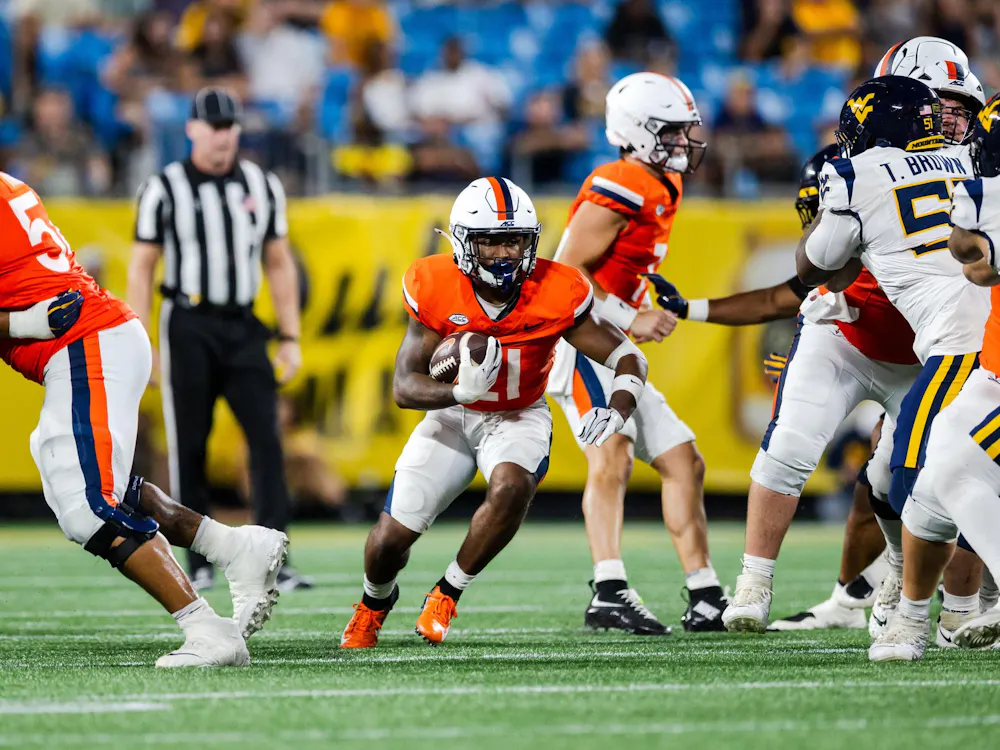
After loss, Virginia looks to ‘feed the monster’ — the Blue Hens are the first course
By Ben McNiff | 23 hours agoVirginia faces Delaware Saturday — the kickoff is slated for 6 p.m. at Scott Stadium. It will be their final non-conference matchup of the season, with a road trip against Florida State looming.

Cavaliers keep cards clean, cruise to victory at Canadian Collegiate Invitational
By Joby Jung | YesterdayWith three finishers in the top five and the overall individual and team win, the Cavaliers cleaned up on their trip up north.

SAAC aims to promote connection, advocacy and citizen-athlete development
By Adair Reid | 2 days agoPresident Noah Dyer will represent Virginia on the ACC SAAC, interacting with the NCAA on policies and regulations that impact student-athletes.