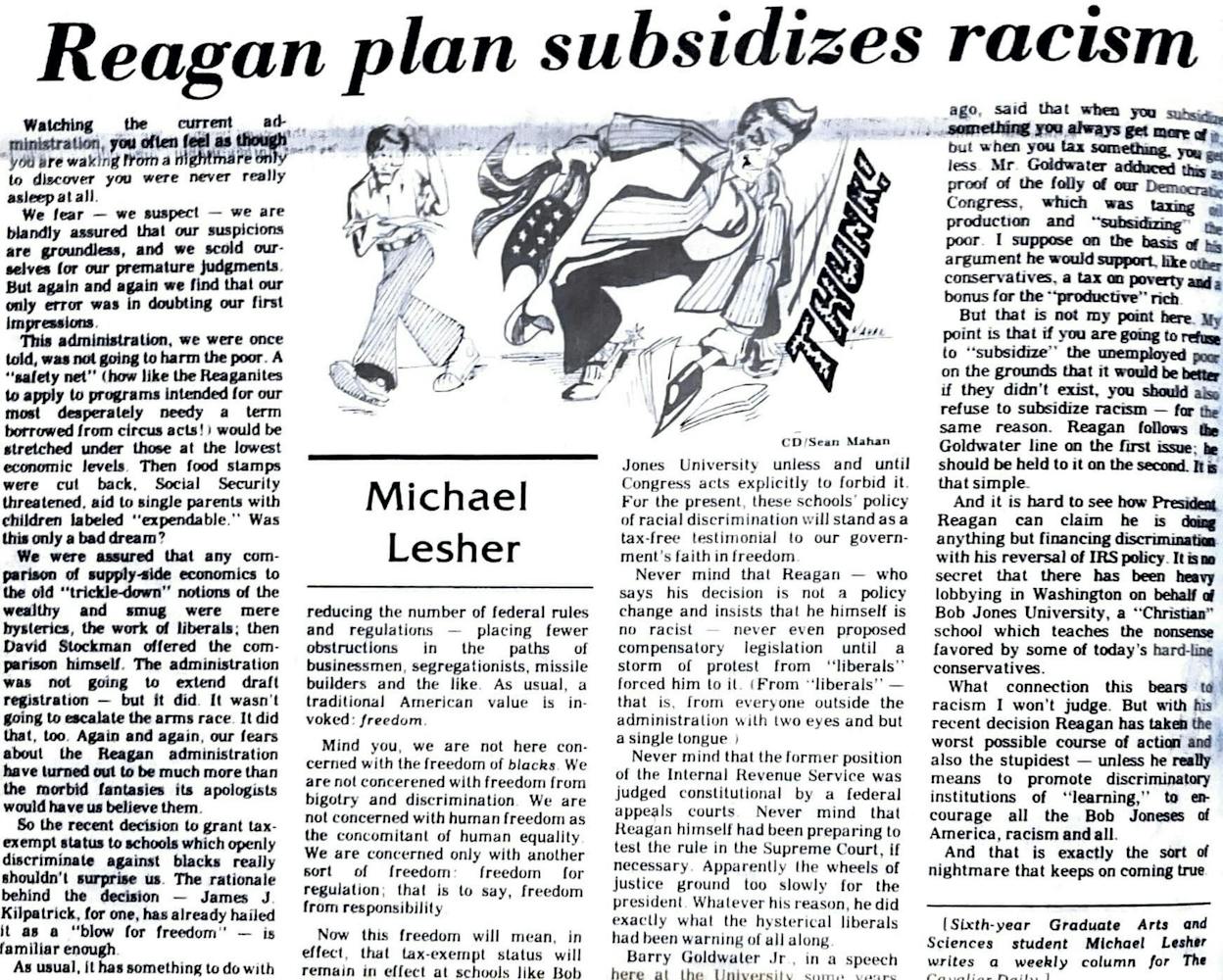
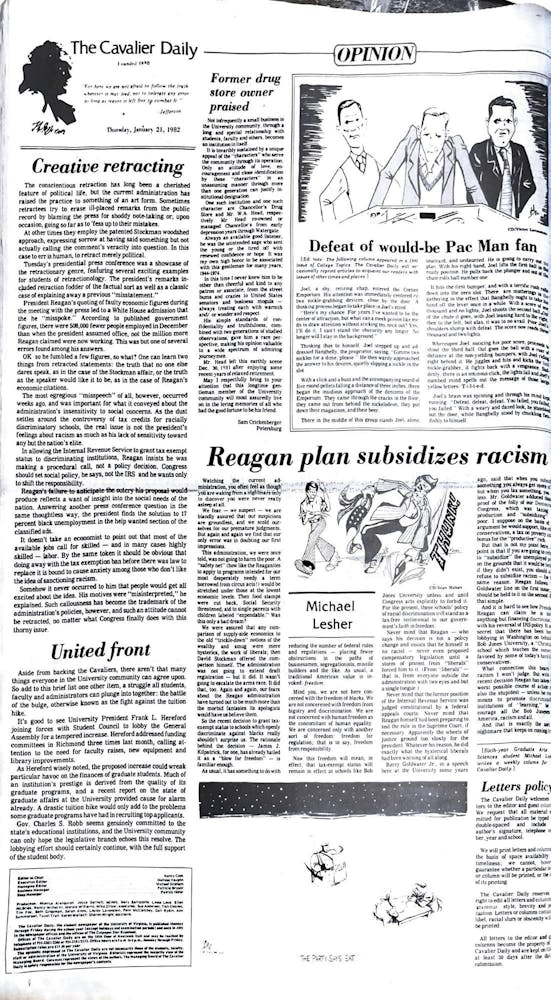
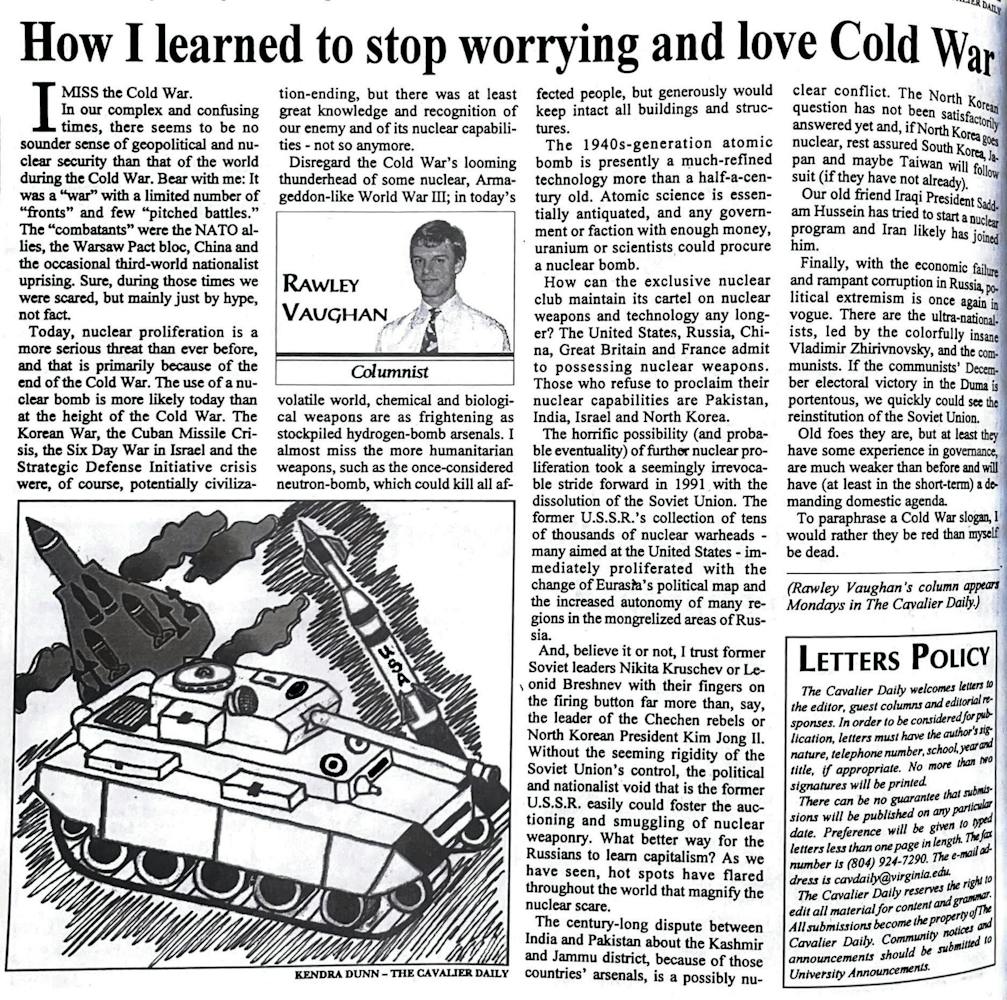
This week’s From the Archives looks at strange, provocative or misleading headlines published in The Cavalier Daily over the years. From rock ’n’ roll pranks in the 1950s to passionate op-eds in the 1960s, freakish music reviews in the 70s to tax cuts for bigotry in the 80s and nostalgia for the Cold War in the 90s to defense of affirmative action in the 2000s, the articles show how much work a headline can do.
1950s
Jan. 10, 1957
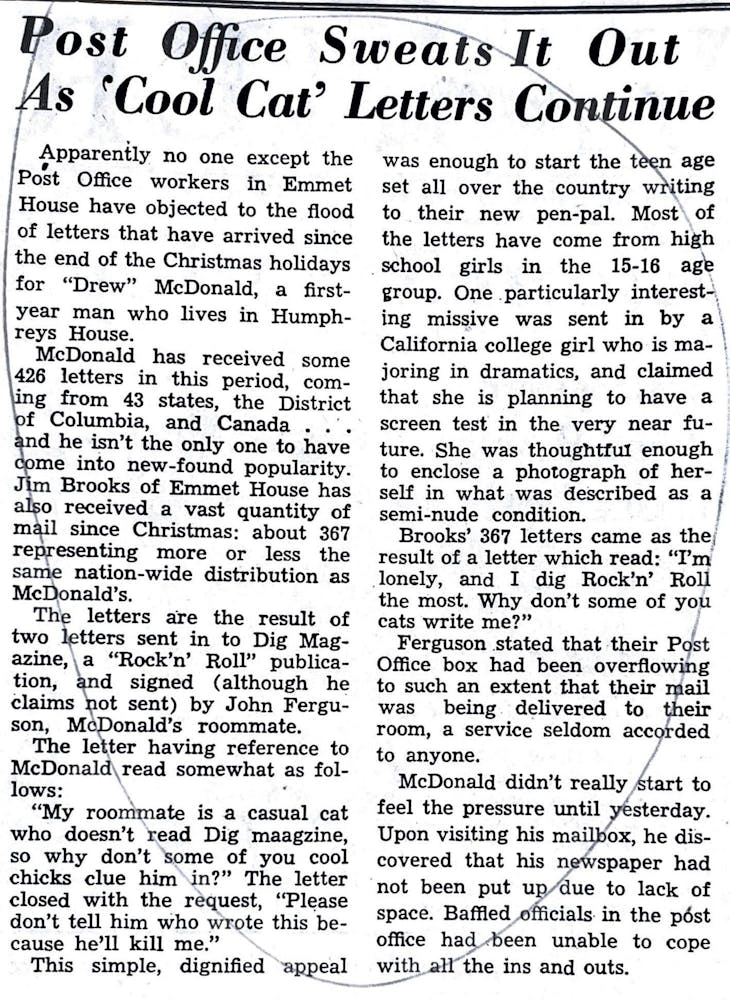
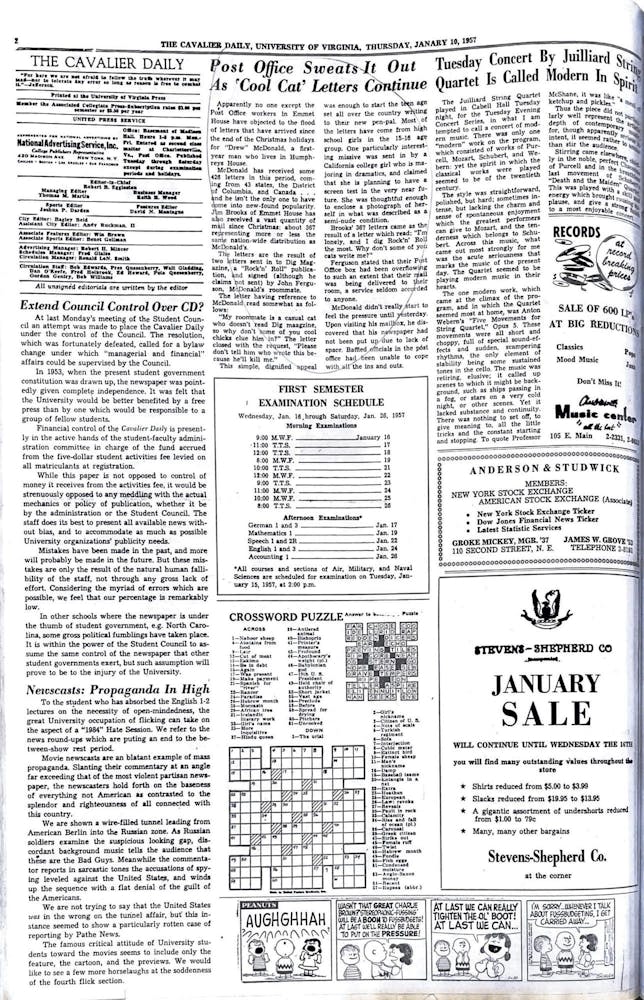
“Post Office Sweats It Out As ‘Cool Cat’ Letters Continue”
By no author
Two University students, Drew McDonald and Jim Brooks, were plagued by hundreds of letters following the publication of two letters in “Dig Magazine”, a “Rock ’n’ Roll” volume. The published letters were thought to be written by McDonald’s roommate, who denied writing them, but each letter begged for “cool chicks” to write to the University students. Brooks received 367 letters and McDonald received 426, both from almost every state, although McDonald also received a “thoughtful” photograph of a Californian girl in a semi-nude condition.
1960s
Jan. 10, 1964
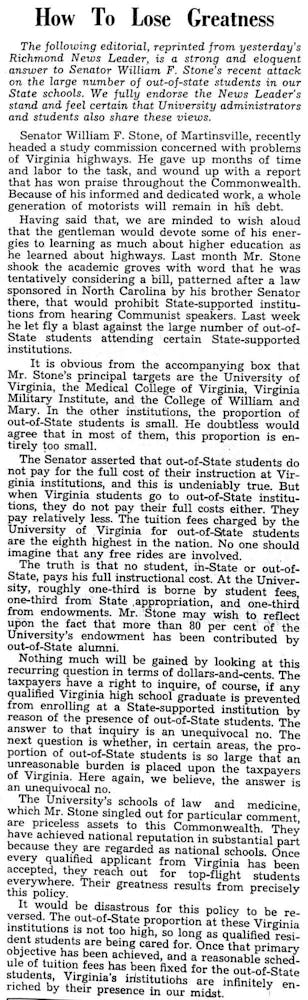
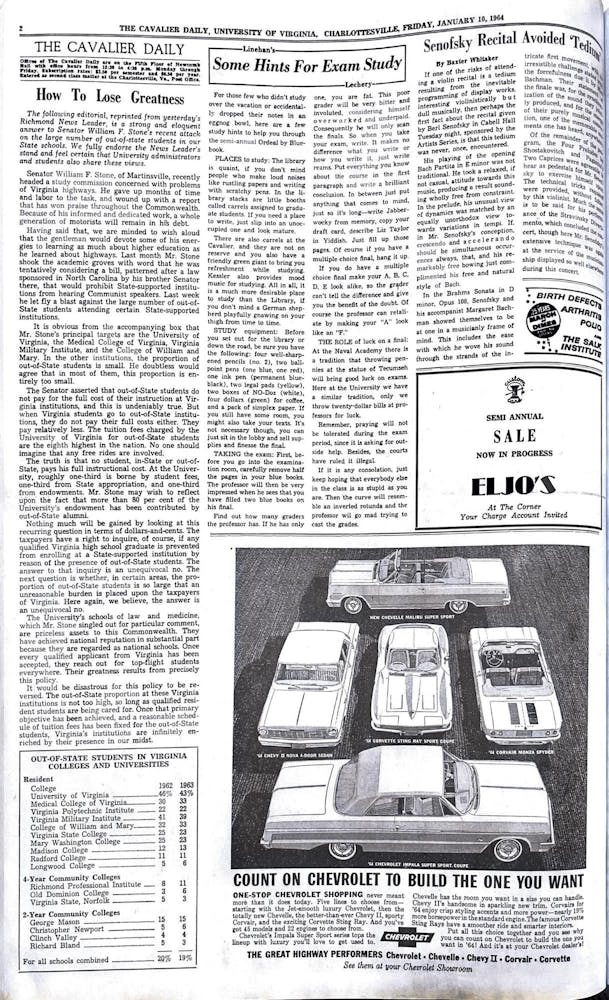
“How To Lose Greatness”
By no author
While it was originally published in the Richmond News Leader, the editorial board of The Cavalier Daily fully endorses this passionate response to Senator William F. Stone’s disparaging remarks about out-of-state students. The title, however, implies instructions on how to fumble glory, possibly the world’s least popular self-help manual.
1970s
Jan. 20, 1977
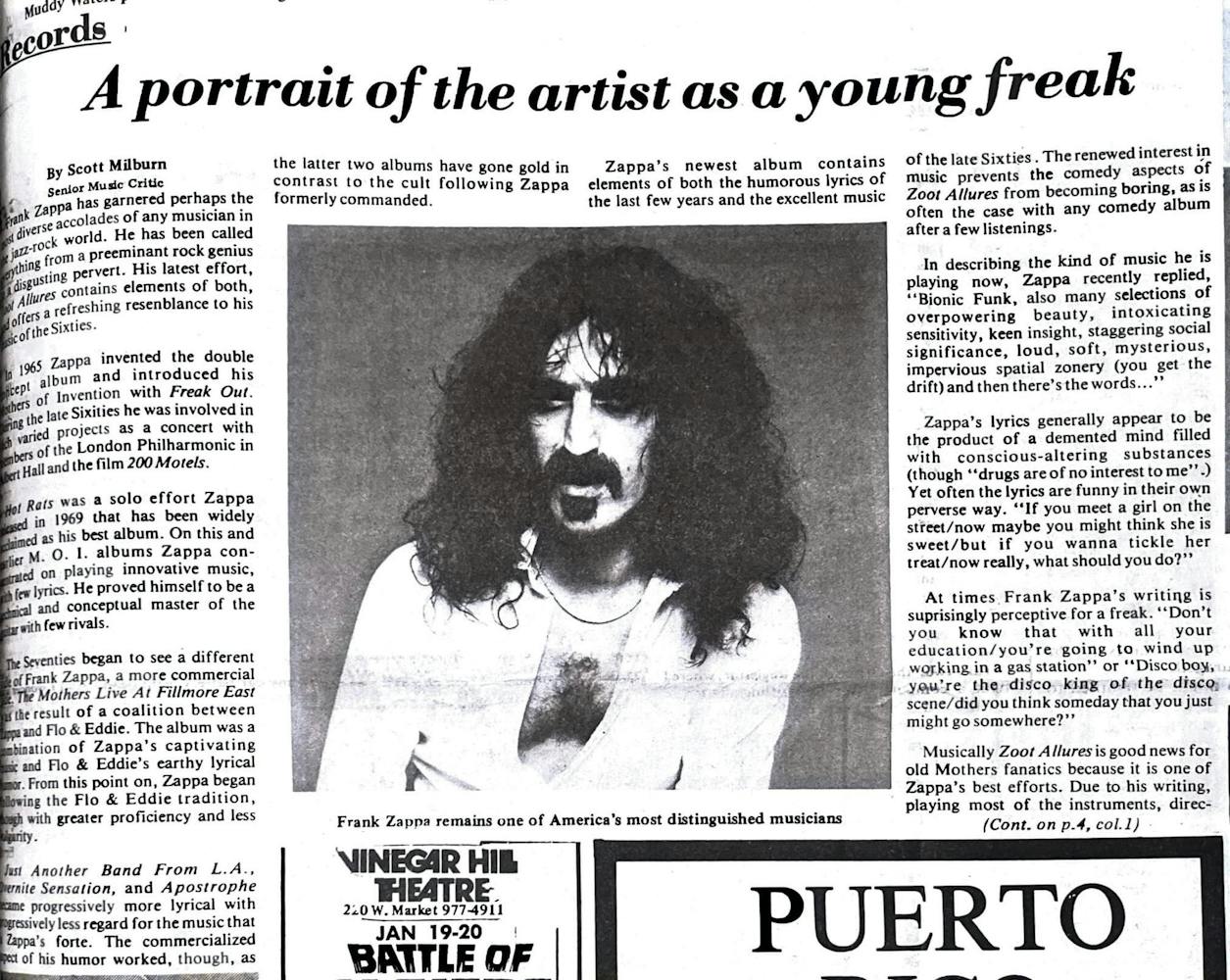
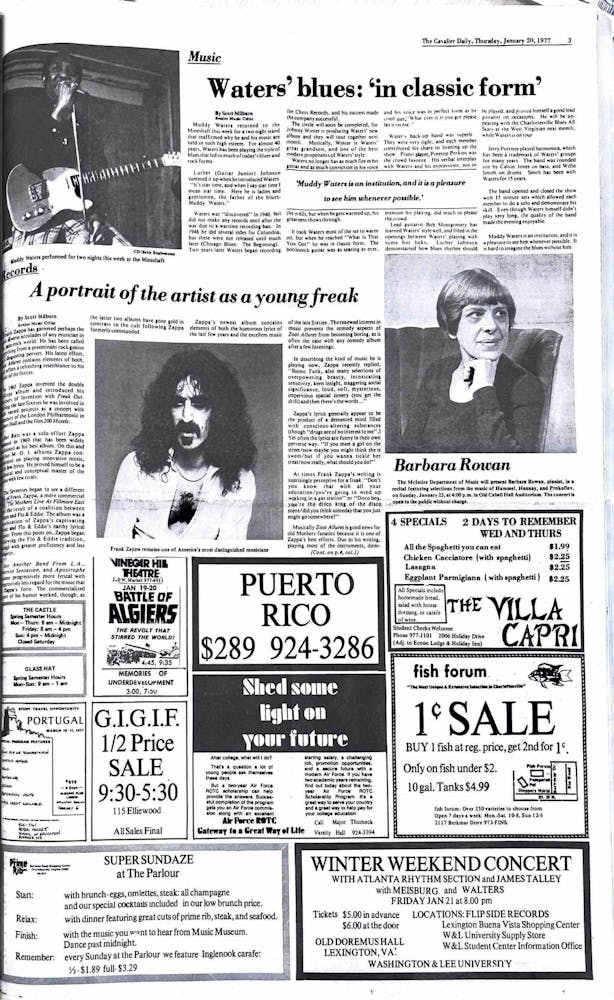
“A portrait of the artist as a young freak”
By Scott Milburn
Photos by unknown
Milburn begins with a summary of Frank Zappa’s musical career, covering critiques ranging from "preeminent rock genius” to “disgusting pervert.” He examines Zappa’s most recent album, “Zoot Allures”, with both of these views in mind, complimenting Zappa’s lyricism and wide-ranging skill, while acknowledging the odd style choices that earned him the “freak” label.
1980s
Jan. 21, 1982
“Reagan plan subsidizes racism”
By Michael Lesher
Photos by Sean Mahan
Lesher attacks former President Ronald Reagan’s social and economic policies, lambasting his cutbacks on government programs supporting the poor while granting tax-exempt status to segregated universities. While Reagan’s defenders argue that these policies will reduce federal regulations, Lesher believes that they fulfill Americans’ fears about the administration while incentivising racism.
1990s
Jan. 22, 1996
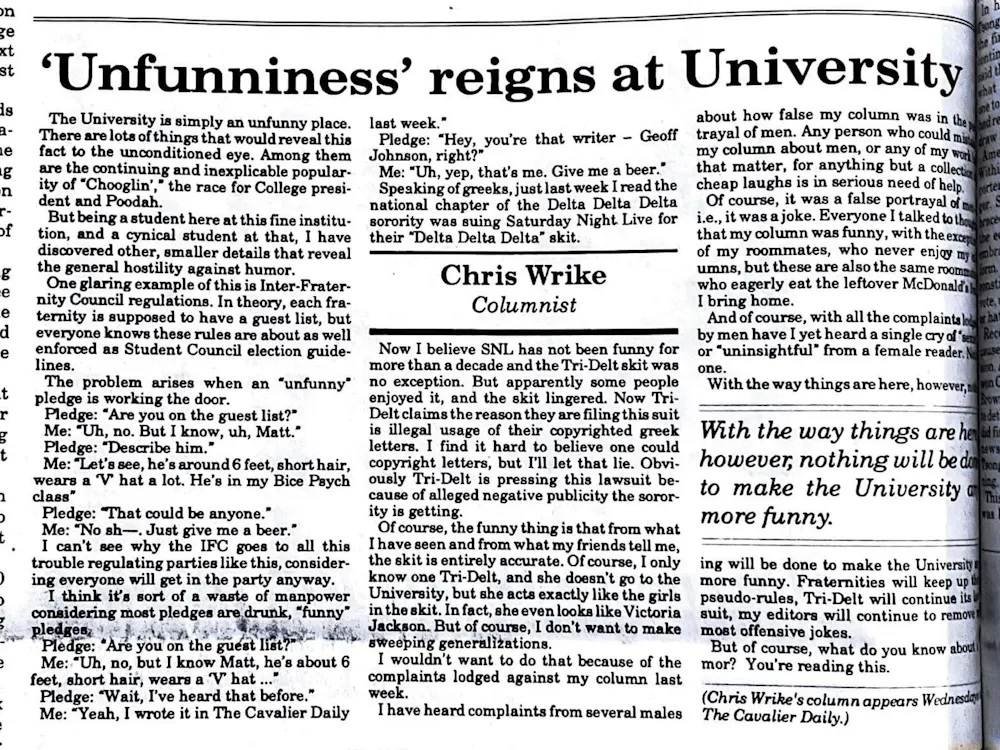
“How I learned to stop worrying and love Cold War”
By Rawley Vaughan
Photos by Kendra Dunn
Vaughan argues that the terror and nuclear panic of the Cold War was preferable to the uncertainty following its end, as the structure of the largely-combatless conflict meant citizens could at least trust where the threats were coming from. While former Soviet leaders Nikita Kruschev and Leonid Breshnev were terrifying, Vaughan preferred a consolidated, obvious threat to the shadowy nuclear actors of the “post-Cold War” world.
2000s
Jan. 19, 2006
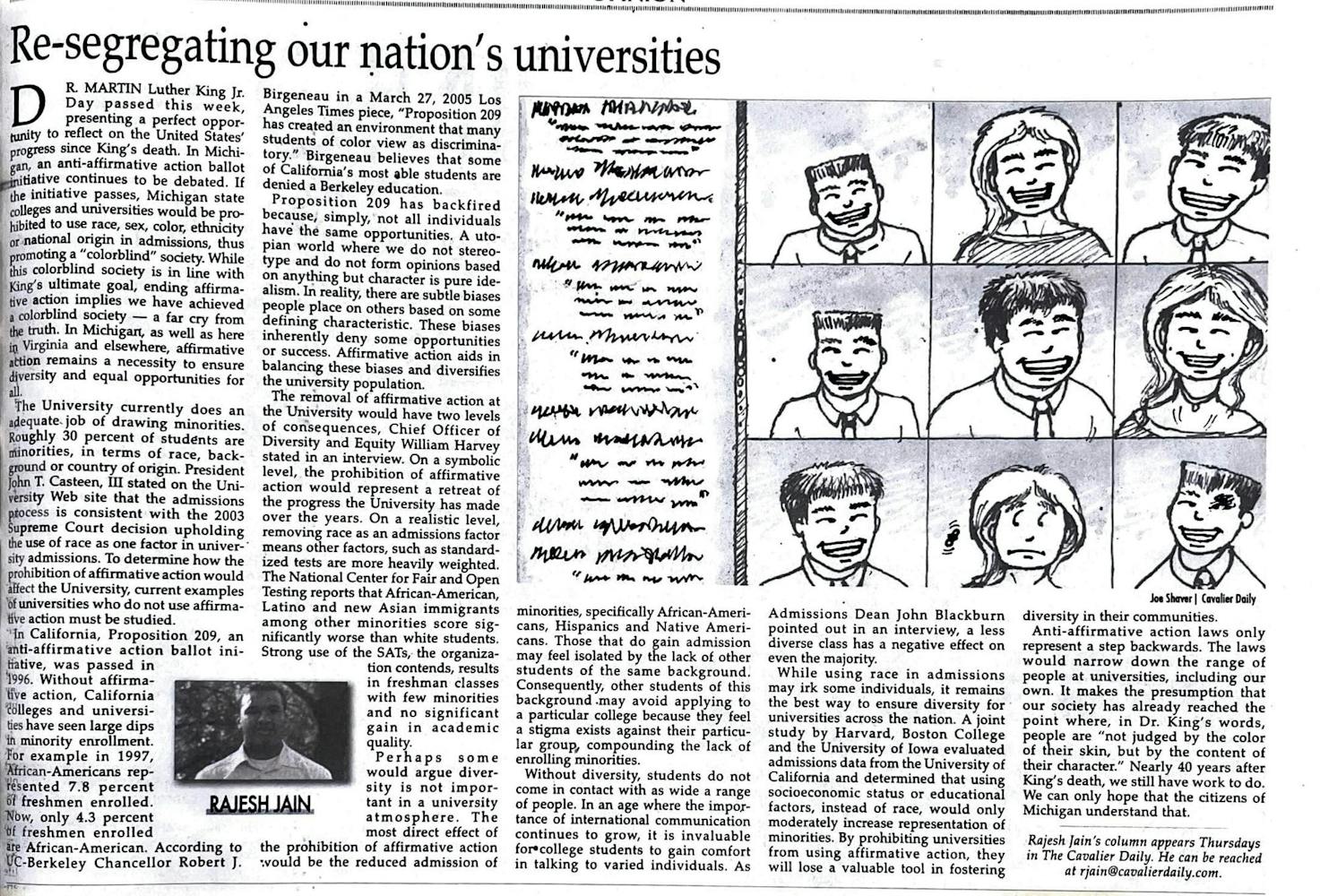
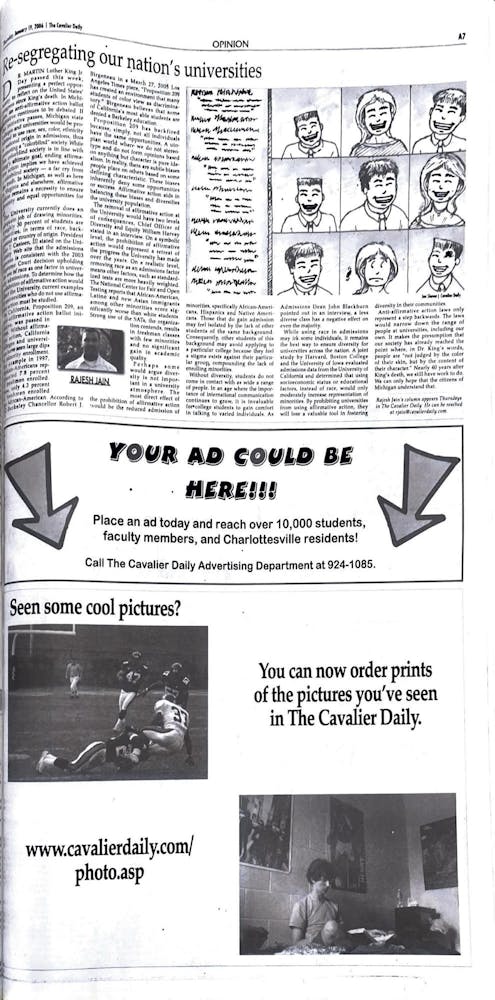
“Re-segregating our nation’s universities”
By Rajesh Jain
Photos by Joe Shaver
While the title suggests a dramatic regression, the article actually focuses on an anti-affirmative action bill in Michigan, which Jain cautions Virginia to avoid. He argues that affirmative action allows more diverse voices in universities and that without it, the University would suffer a loss of intellectual stimulation, and promising voices would be denied. Jain sees a loss of affirmative action as a loss of minorities and a return to the segregated universities of days past.

Annabelle Nee is an archivist for the 137th term of The Cavalier Daily. She is a third-year College student, majoring in English and American studies. Annabelle is from Richmond and enjoys writing about The Cavalier Daily's history. Outside of The Cavalier Daily, she is involved in the Jefferson Literary and Debating Society, the Fralin Museum of Art and Brown Residential College.
Read More
From the Archives: 2000s
By Peyton Franz and Alayjah Gillus | September 2, 2026Cavalier Daily writer, John Adams, pranks students with a column stating that a newly installed “no TJ” policy will go into effect, preventing graduates from Thomas Jefferson High School for Science and Technology from attending the University and expelling all current students who graduated from TJHSST.
From the Archives: 1990s
By Tori Vonderheid and Livia Shrednick | August 15, 2026University physician Dr. Joel Trugman discovered that some children who had been diagnosed with cerebral palsy, an incurable movement disorder, instead have a rare biochemical disorder that is treatable.
From the Archives: 1980s
By Cassie Nokes and Maisy Callahan | July 24, 2026The University’s Gay Student Union invited members of the LGBTQ+ community and supporters to wear jeans to class for Blue Jeans Day, the kickoff to the annual Gay Acceptance Week.