
In light of the recent Student Council elections, we take a look into the archives to examine stories of governance, student accounts of policy and amendment ratifications. The organizations encompassed under the University’s central student governing body include Student Council, the Honor Committee, and the University Judiciary Committee. By taking a look at the efforts put forth by students within these organizations, we can understand how student self-governance has evolved, what bylaws have stayed consistent and how student-led improvements were conducted over the years.
1950s
March 2, 1955
“Student Council Appoints Judiciary Committee Members”
By unlisted author
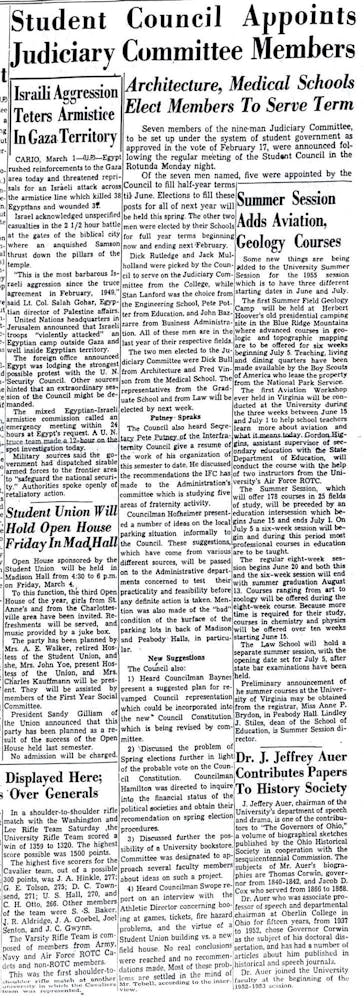
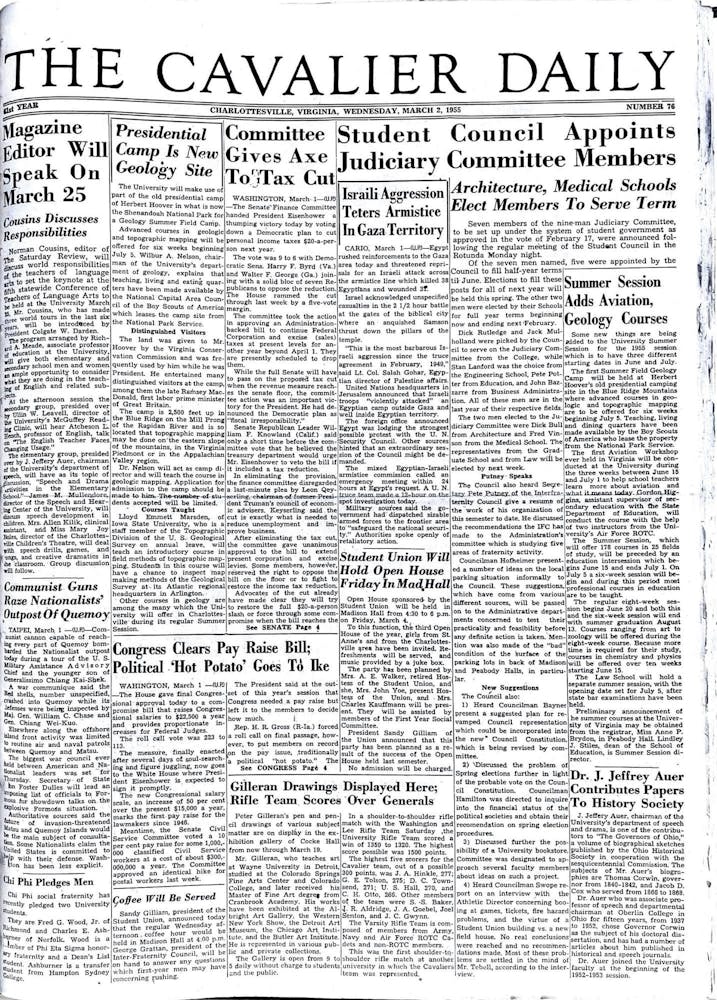
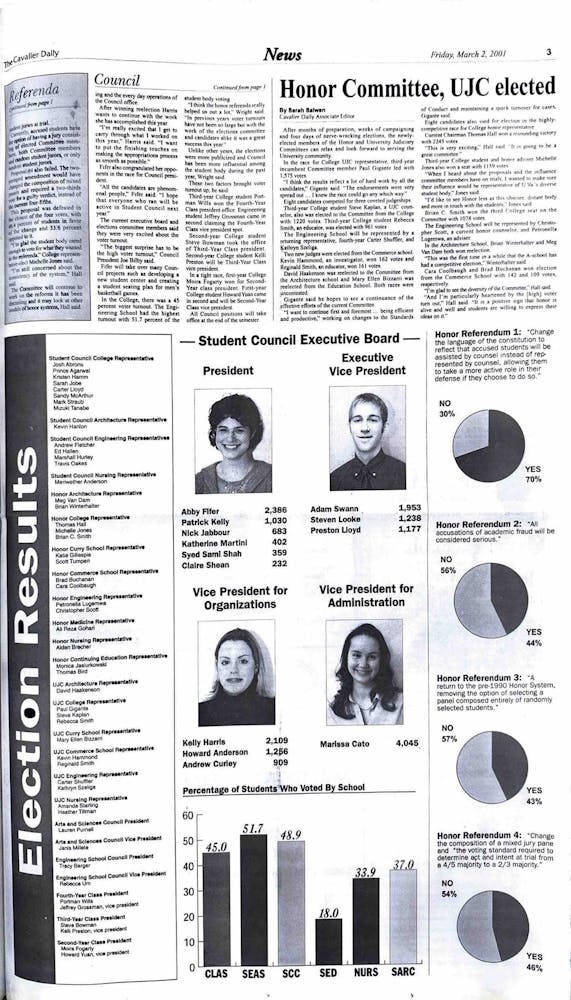
Before the University Judiciary Committee was an independent organization, it was a branch of the Student Council and its members were appointed by the Council. There were only nine members of UJC at the time, two of the new appointees being selected from the College of Arts and Sciences and one each being selected from the Engineering School, Education School, Businesses Administration School, Architecture School and the Medical School.
1960s
March 5, 1965
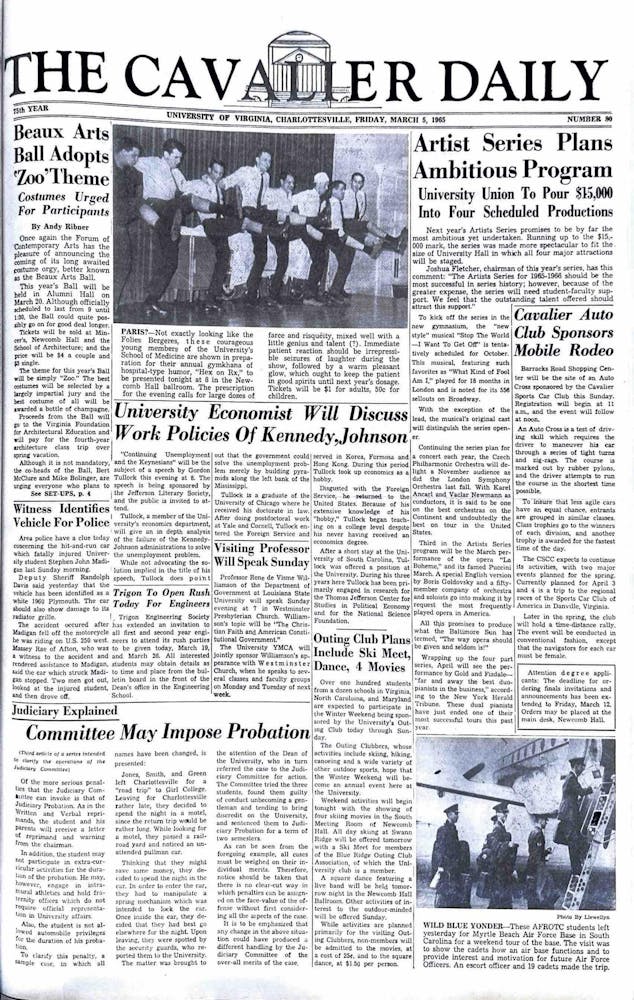
“Committee May Impose Probation”
By unlisted author
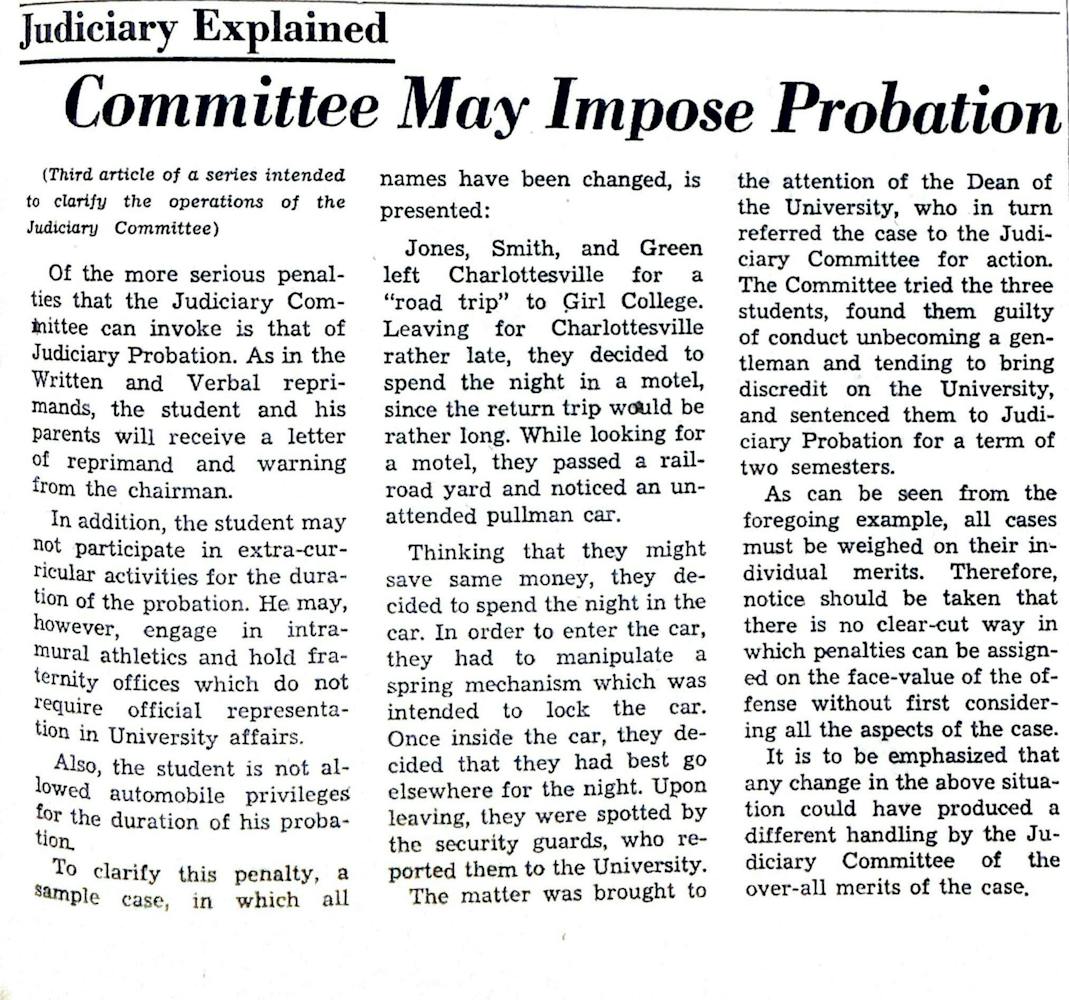
To clarify the University Judiciary Committee’s powers and penalties, The Cavalier Daily published a series of articles outlining the Committee’s process. This article deals with Judiciary Probation, one of the most serious charges the Committee could impose on a student. A student under Judiciary Probation was not allowed to engage in extracurricular activities and was revoked of automobile privileges if applicable, but the student could still participate in intramural sports and hold positions in their respective fraternity. To illustrate an example of when Judiciary Probation would be invoked, the author presents a case where three University students were tried and found guilty, leading to a Judiciary Probation which was active over the course of two semesters.
1970s
March 6, 1972
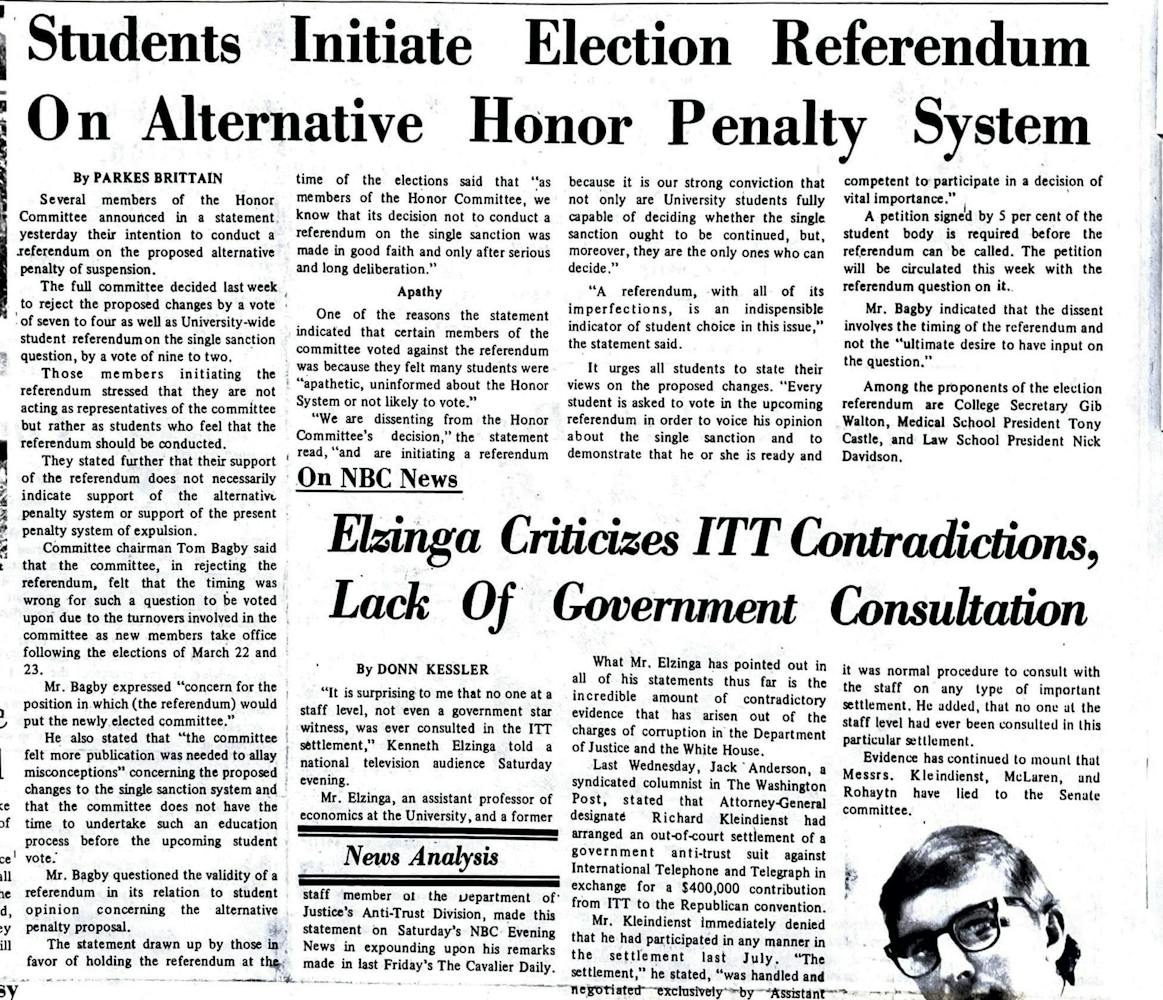
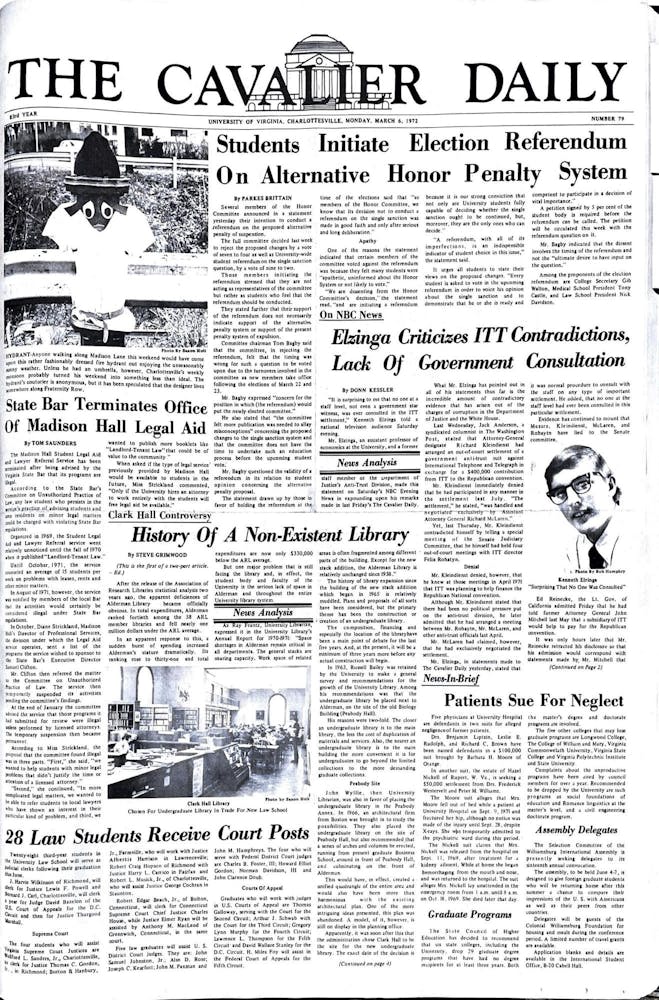
“Students Initiate Election Referendum On Alternative Honor Penalty System”
By Parkes Brittain
A new referendum proposing the honor penalty system be changed from a single sanction protocol to a double sanction protocol was rejected by the members of the Honor Committee. Honor Committee Chair Tom Bagby explained that the proposal was largely rejected due to the imminent turnover given upcoming appointments, and that more educational information was needed for the greater student body before the Honor Committee further deliberates the question. However, several members of the Honor Committee dissented, and expressed their intent to call a referendum among the student body on the issue, stating that University students are “the only ones who can decide” if the single sanction system should be changed.
1980s
March 8, 1984
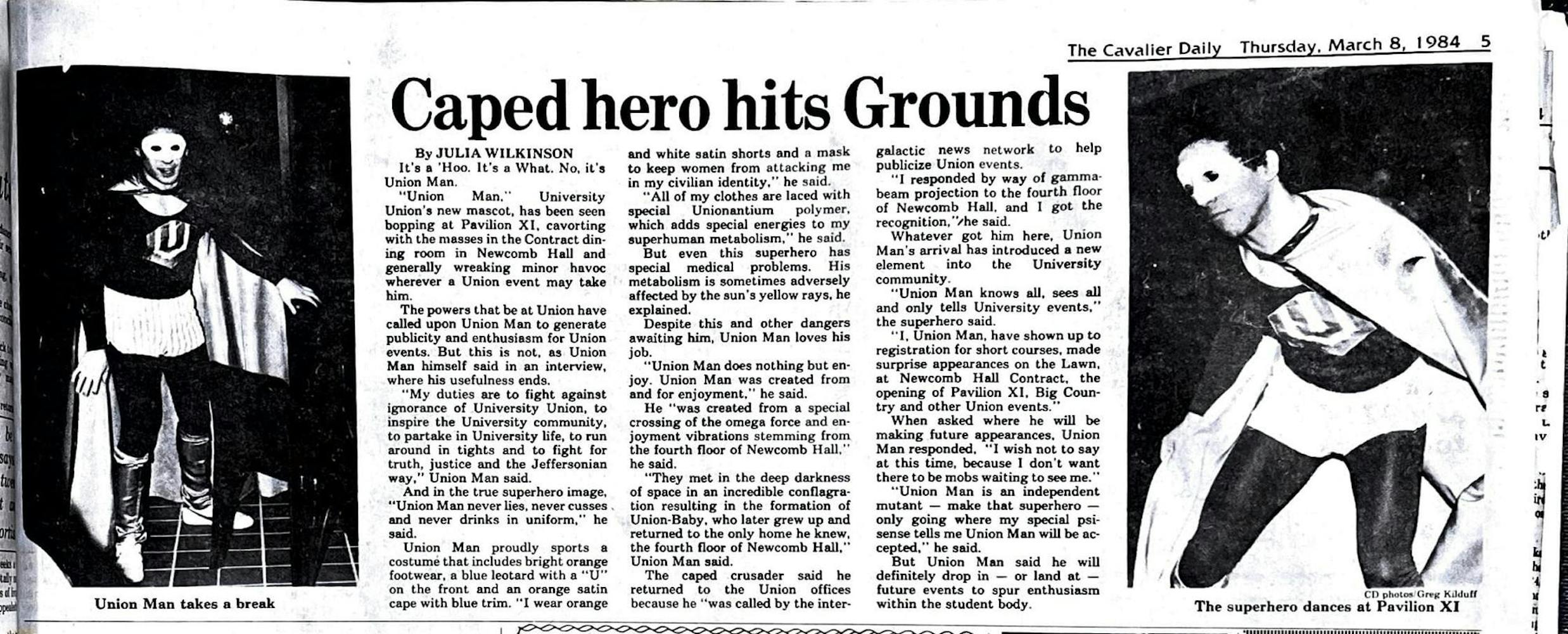
“Caped hero hits Grounds”
By Julia Wilkinson
Photos by Greg Kilduff
Before the University Programs Council got its current title, it was known as the University Union, and one member dressed up as “Union Man” to inspire students to attend University Union events. He was born of “a special crossing of the omega force and enjoyment vibrations stemming from the fourth floor of Newcomb Hall,” and stated he would continue to make surprise appearances at future University Union events.
1990s
March 8, 1999
“IFC voting practices affect election results”
By Margaret Chipowsky
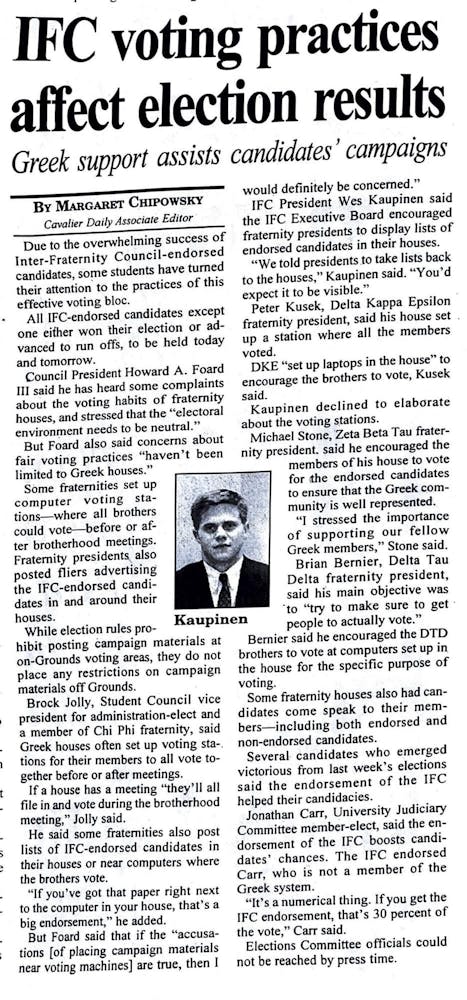
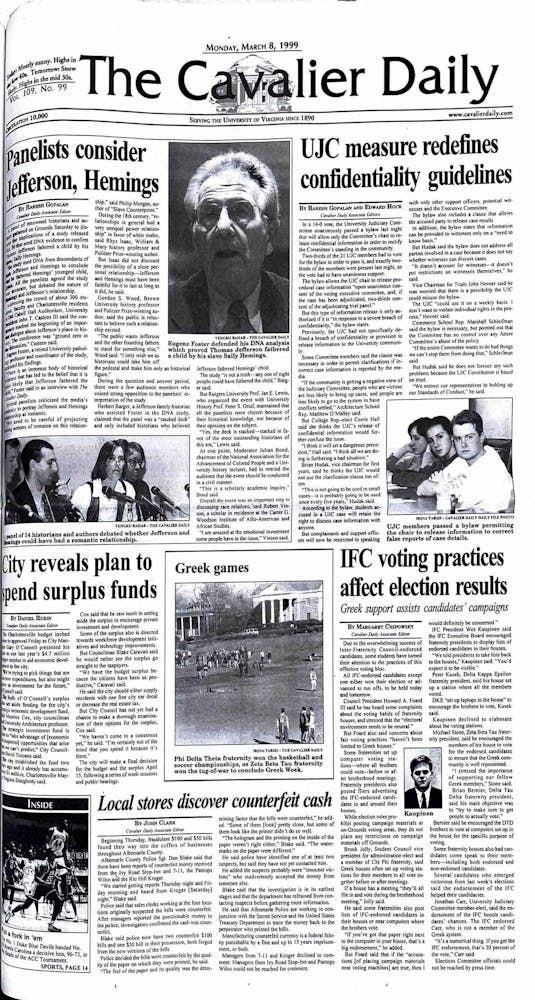
The power of the Inter-Fraternity Council endorsements in University wide elections resulted in all but one endorsed candidate winning their election or advancing to run-off elections. One newly elected member for the University Judiciary Committee, Jonathan Carr, stated that the IFC endorsement accounted for roughly 30 percent of the vote. Fraternity endorsements and voting habits include voting machines in-house for brothers, papers with endorsed candidates’ names next to voting machines, in-house speeches and more.
2000s
March 2, 2001
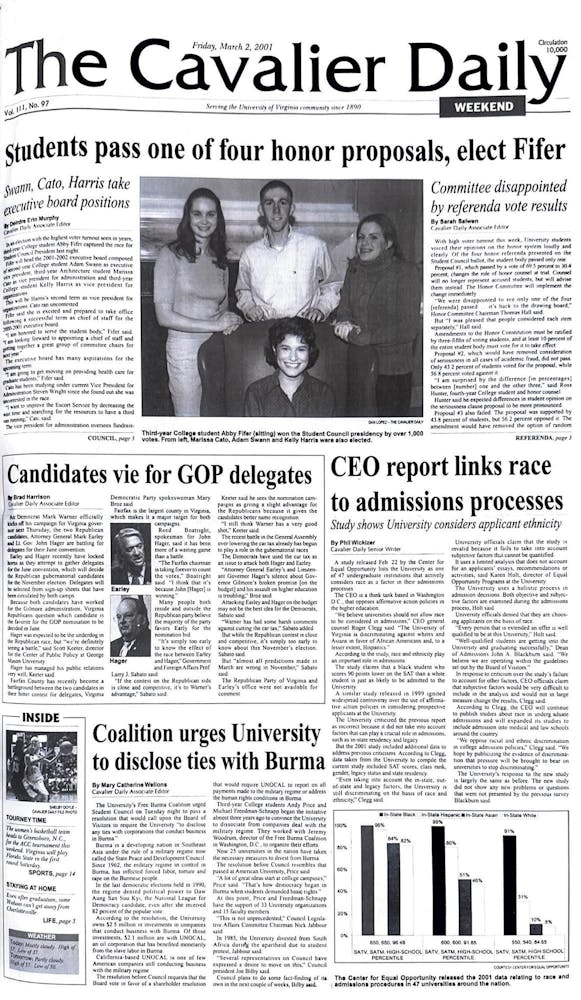
“Committee disappointed by referenda vote results”
By Sarah Salwen
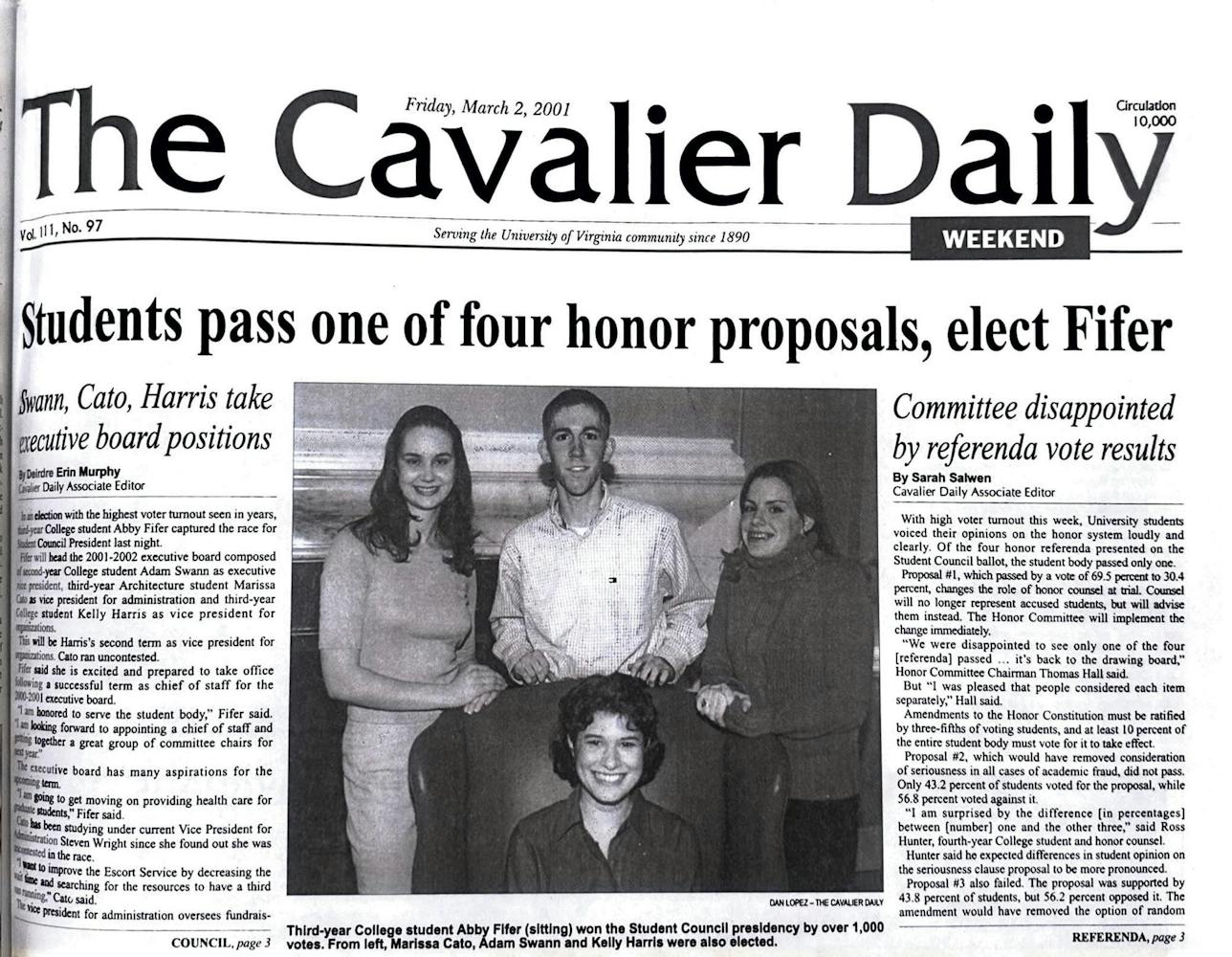
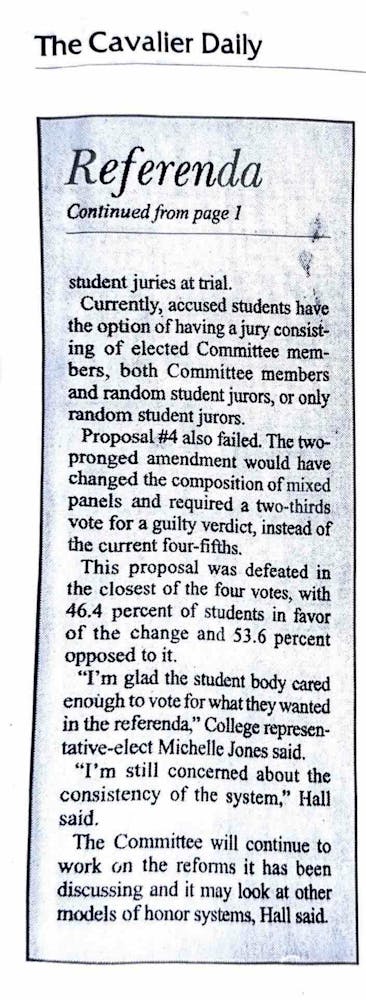
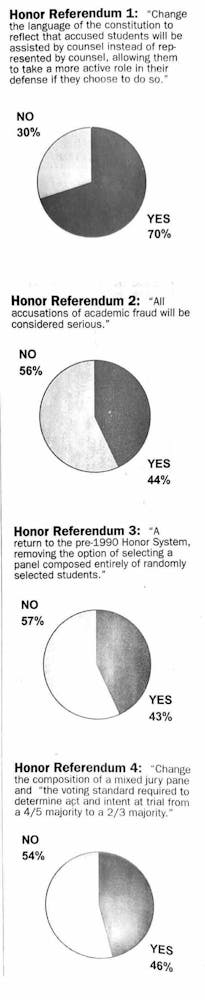
Based on a student majority vote on four honor system proposals, only one referendum was passed. Effective immediately, the proposal states that the “Counsel will no longer represent accused students, but will advise them instead,” meaning the accused student could take a more active role in their defense if they decide to do so. The following three proposals all lost the majority vote–eliminating seriousness as a factor when judging academic fraud, removing the option of random student juries at trial and changing the voting standard to a two-thirds vote required for a guilty verdict rather than the current four-fifths.
Read More

Student Technology Council aims to represent students on technological issues
By Solomon Ross-Milligan | 11 hours agoSTC is currently a 20-member council and includes students from across schools and organizations within the University.

Woodruff and Bouie discuss freedom of the press, emphasize need for nonpartisan news
By Robert Head | 11 hours agoAfter an introduction by Jane Kamensky, president and chief executive officer of Monticello, Woodruff answered Bouie’s prompts on topics such as modern threats to the press, the objectivity of the press and Americans’ declining trust in news outlets.

With midterm elections approaching, Miller Center experts share foresight
By Reilly Auld and Luca Bailey | YesterdayThese midterm Congressional elections are generally viewed as an opportunity for voters to evaluate the incumbent President’s performance in their first two years in office.