Continuing the celebration of Black History Month, this From the Archives highlights orators, exhibits and conversations from the past 70 years of the University’s history. With speeches from civil rights icons like Martin Luther King Jr. and Bobby Seale, the announcement of African-American Studies courses and passionate letters from University Guides on the history of slavery at the University, these articles share Black history on Grounds, honoring those who paved the way while acknowledging the setbacks they faced.
1950s
Feb. 8, 1955
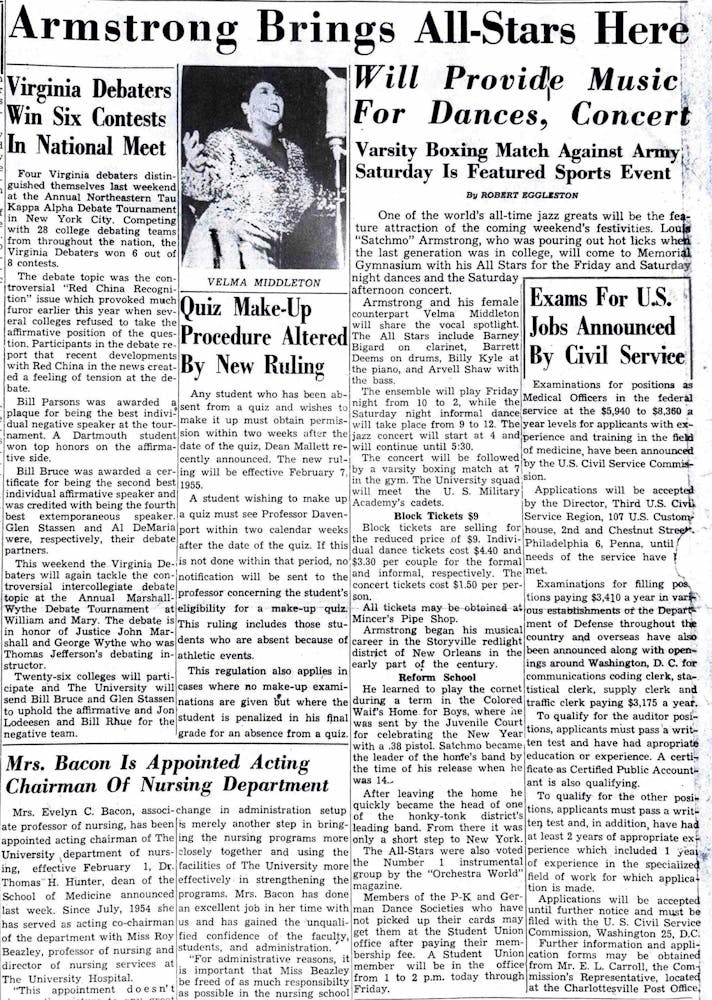
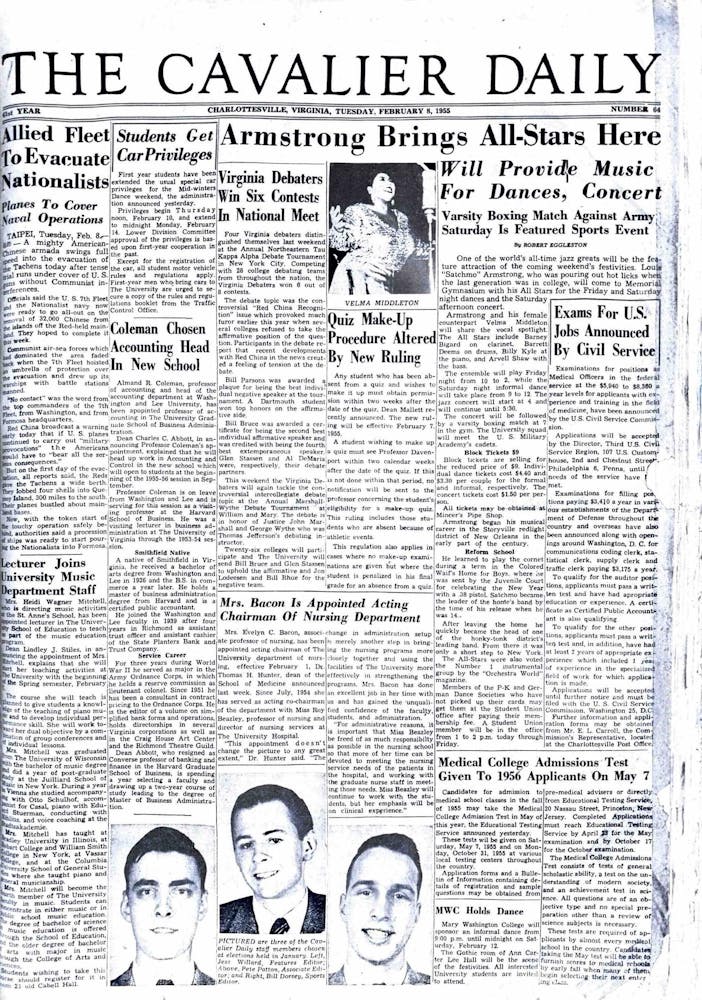
“Armstrong Brings All-Stars Here”
By Robert Eggleston
Photos by unlisted photographer
In 1955, Louis Armstrong was set to perform in Memorial Gymnasium for a weekend concert and dances alongside Velma Middleton and his All-Stars. Ranked first among instrumental groups by the magazine Orchestra World, Louis Armstrong and his All-Stars are “one of the world’s all-time jazz greats.”
1960s
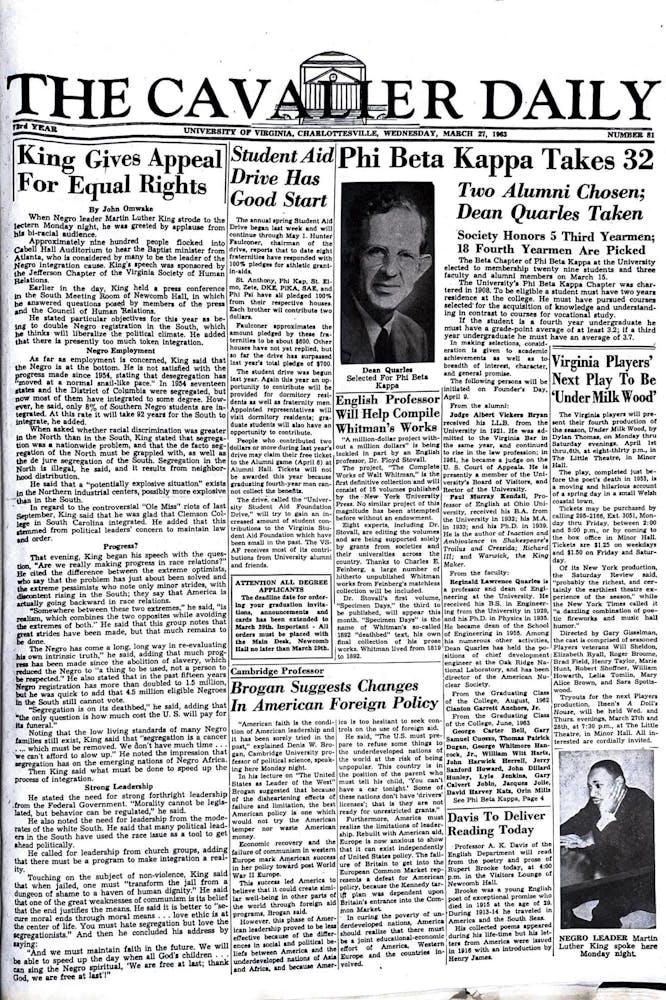
March 27, 1963
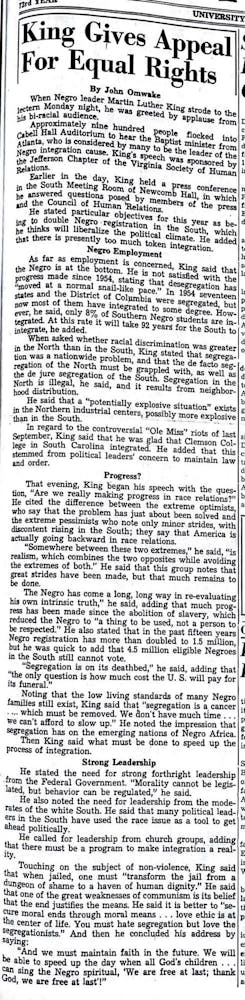
“King Gives Appeal For Equal Rights”
By John Omwake
On Monday, March 25, 1963, Martin Luther King Jr. spoke at Old Cabell Hall, after a press conference earlier that day in the South Meeting Room of Newcomb Hall. During the press conference, he argued that segregation in the North was “potentially explosive” and resulted from de facto housing policies, rather than laws like in the South. King pushed for quicker change, specifically asking church groups, white Southern moderates and the federal government to show strong leadership in the face of anti-integration protests. "Segregation is on its deathbed,” King said. “The only question is how much cost the U.S. will pay for its funeral.”
1970s
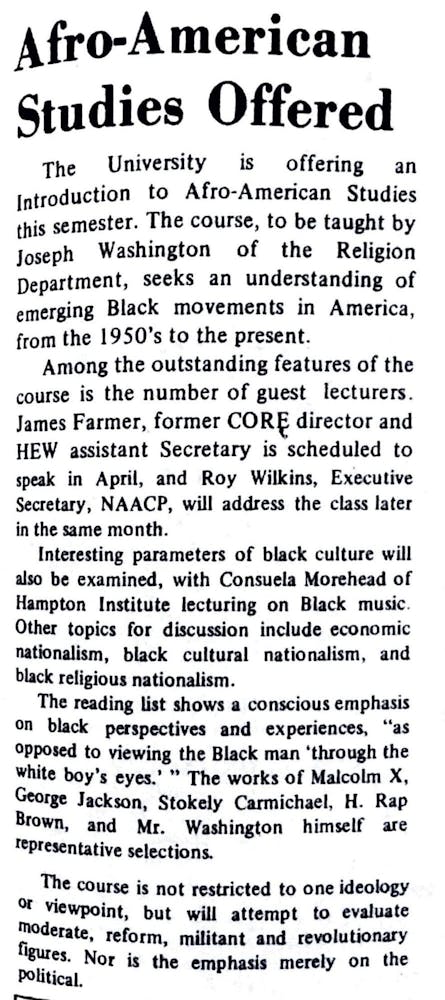
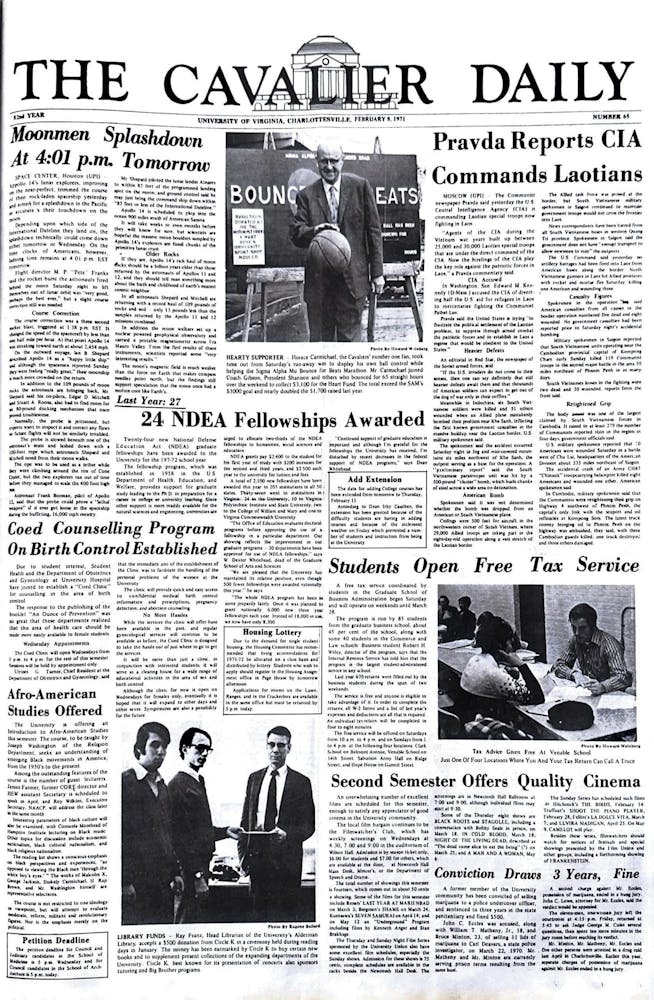
Feb. 8, 1971
“Afro-American Studies Offered”
By unlisted author
A new course on the Introduction to Afro-American Studies was offered the Spring semester of 1971. This class would feature guest speakers, including Roy Wilkins, the executive secretary of the NAACP at the time, and would cover topics such as Black music, Black cultural nationalism and Black religious nationalism. The creation of the course emphasized wanting to view the topics of the course through Black perspectives and experiences.
1980s
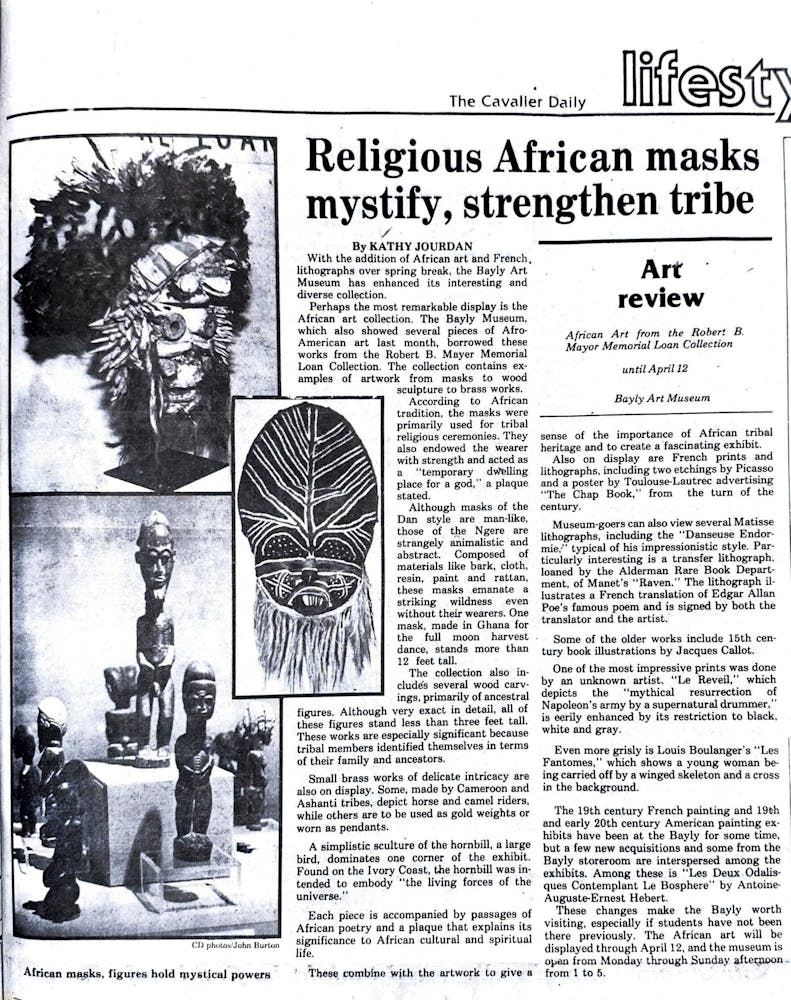
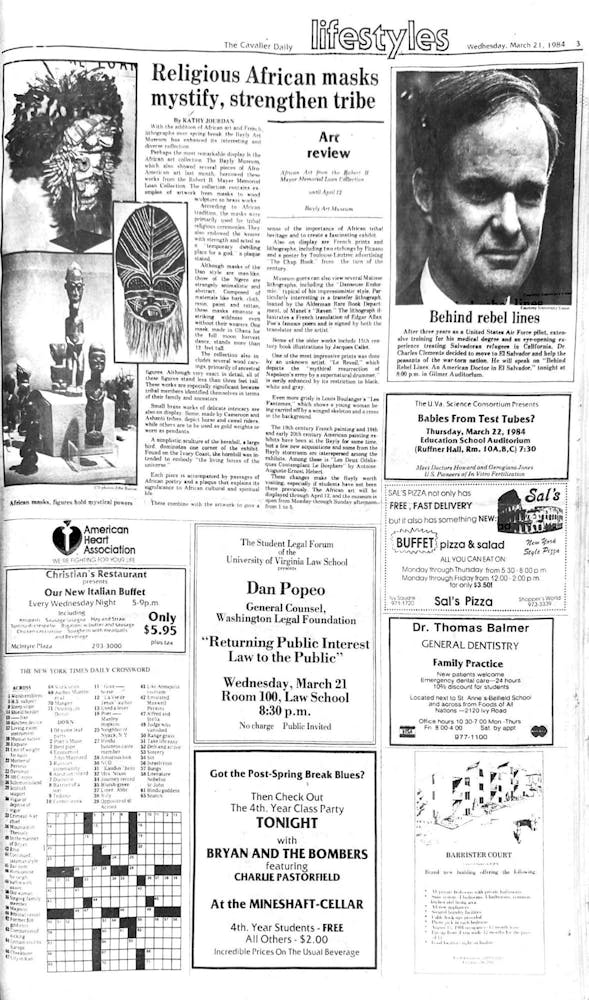
March 21, 1984
“Religious African masks mystify, strengthen tribe”
By Kathy Jourdan
Photos by John Burton
In 1984, a new addition to the Bayly Art Museum, now the Fralin Museum of Art, included an African art collection. Pieces in this collection included masks for religious tribal ceremonies, wood carvings of ancestral figures and more. Along with each display was a piece of African poetry and a description of the pieces’ cultural significance.
1990s
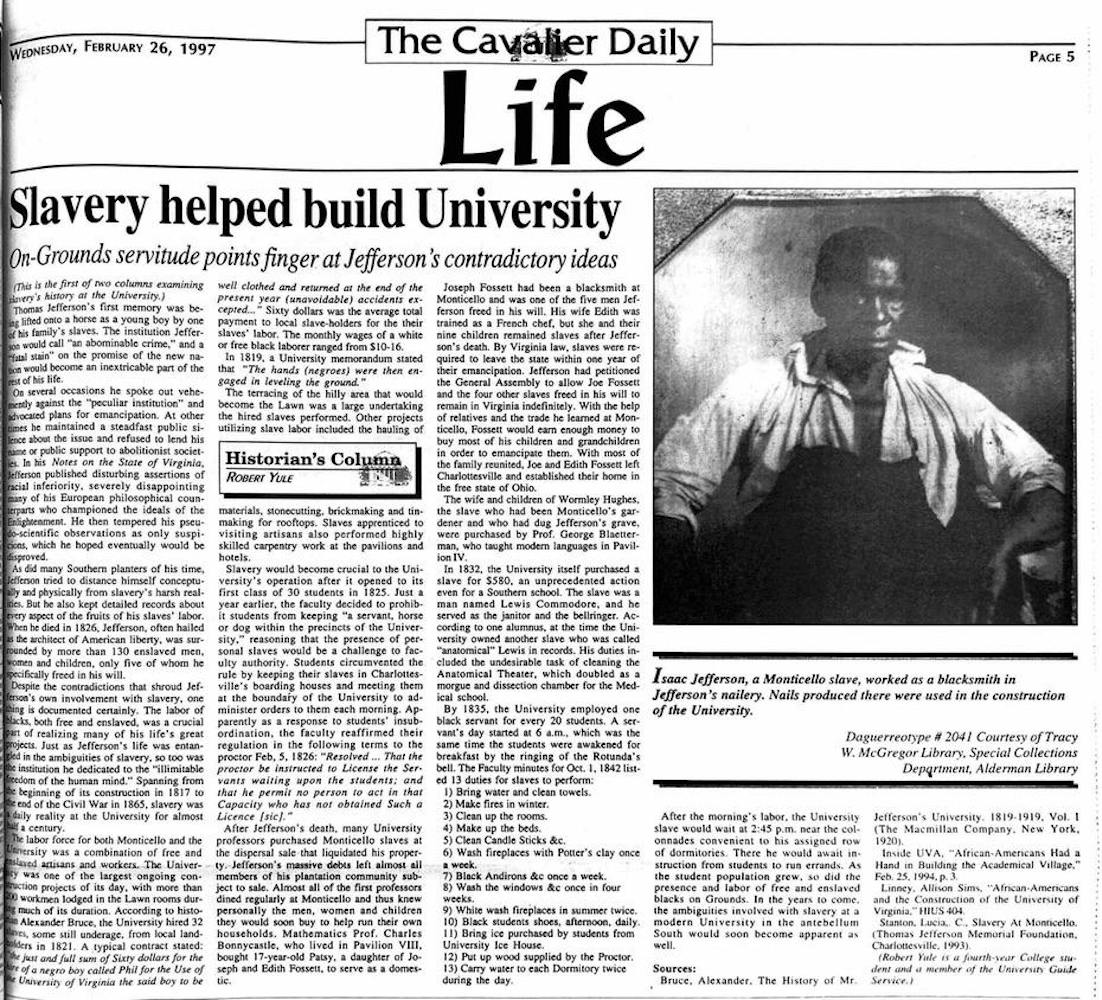
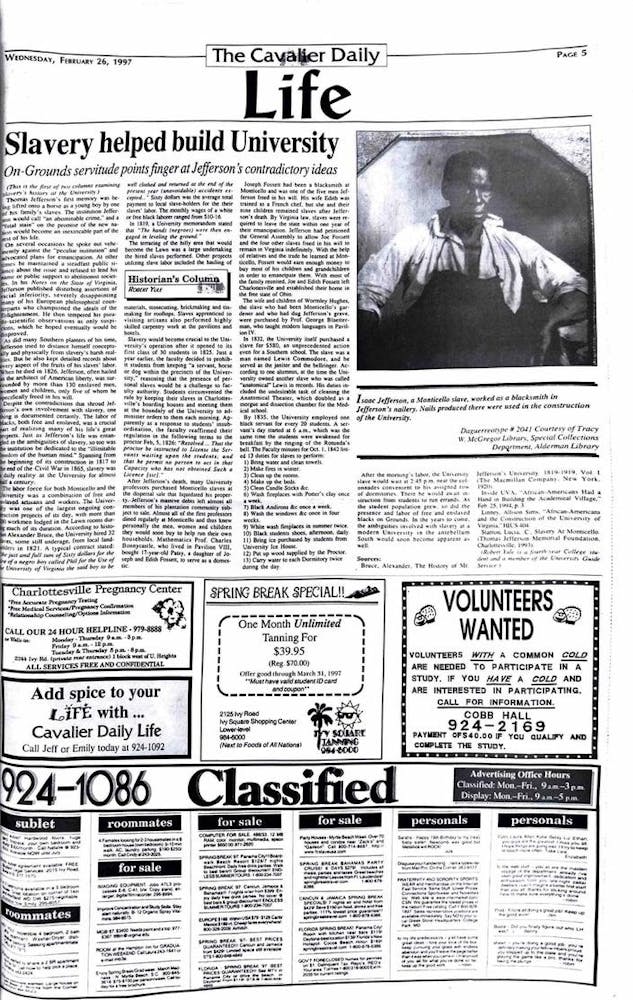
Feb. 26, 1997
“Slavery helped build University”
By Robert Yule
Photo from Tracy W. McGregor Library, Special Collections Department, Shannon Library
This author was a member of the University Guide Service. In this historian’s column, the author wrote about Thomas Jefferson’s complicated relationship with the institution of American slavery and the legacy of enslavement at the University.
2000s
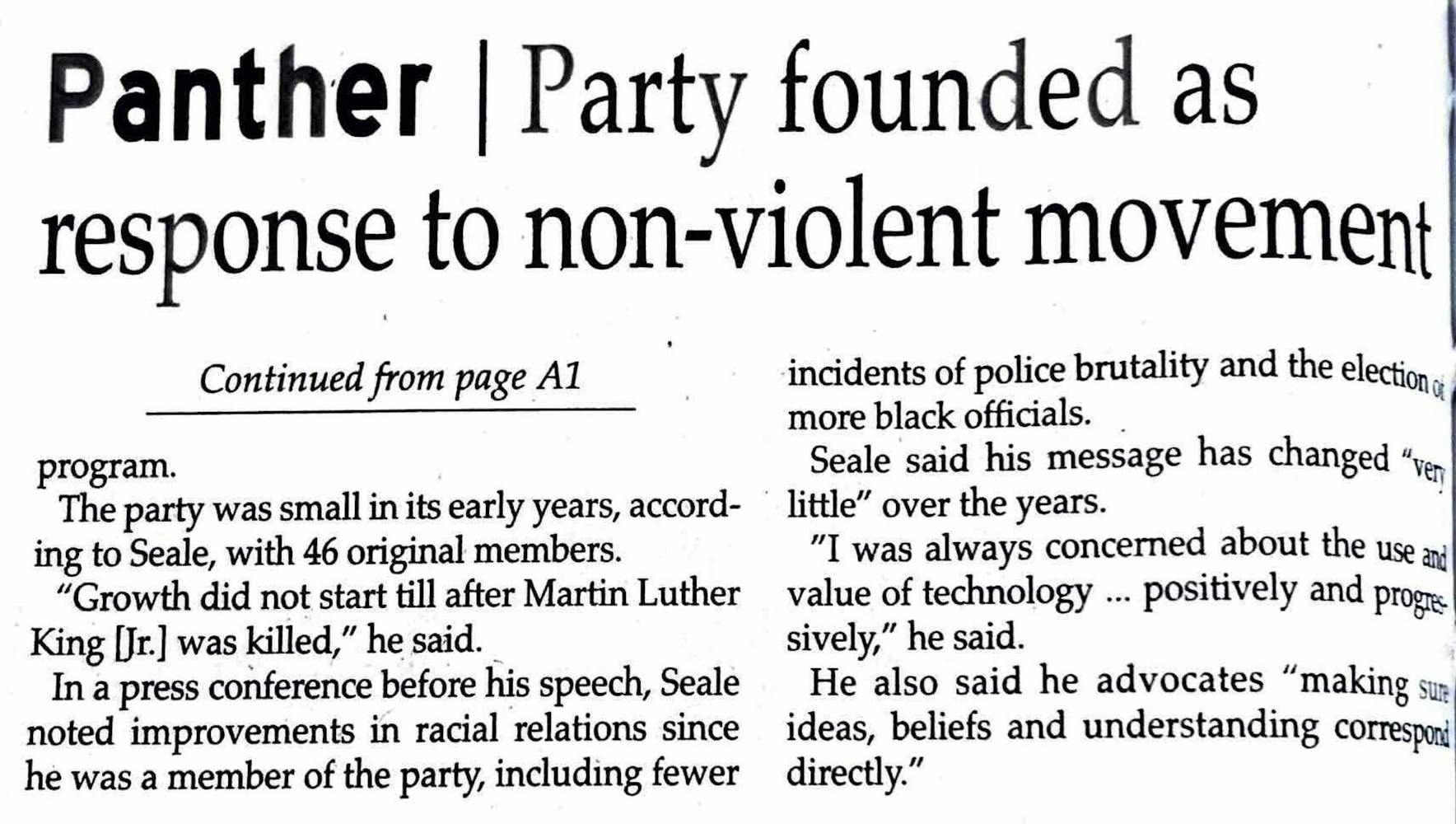
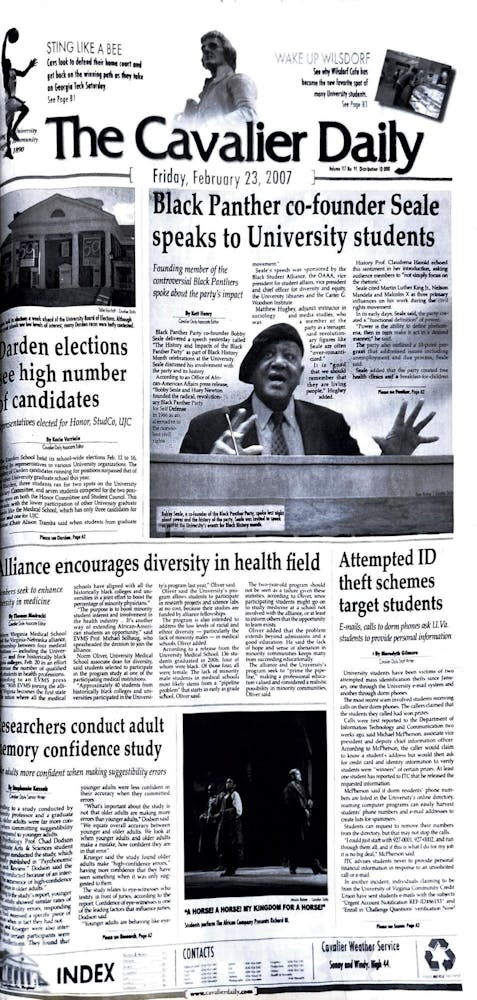
Feb. 23, 2007
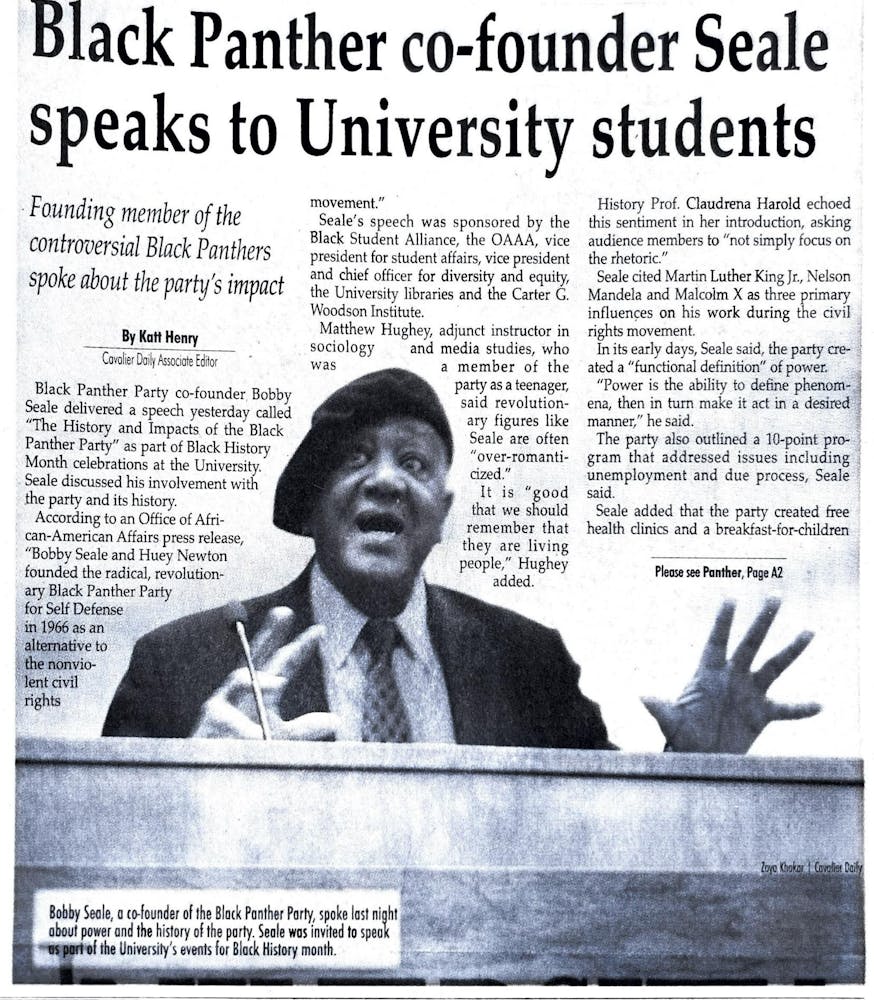
“Black Panther co-founder Seale speaks to University students”
By Katt Henry
Photo by Zoya Khokar
Bobby Seale, co-founder of the Black Panther Party, delivered a speech called “The History and Impacts of the Black Panther Party.” This speech was one of the celebrations hosted at the University in honor of Black History Month.
Read More

U.Va. experts warn against emerging substances kratom, cychlorphine
By Michael Racz | 1 hours agoIn the wake of recent deaths at the University of Mississippi, as well as suspicions surrounding the presence of the potent synthetic opioid cychlorphine in the drug supply, University officials, medical leaders and student organizations across the country have begun urging students to exercise increased caution around controlled substances.

How will upcoming Medicaid changes affect University students?
By Michael Racz | YesterdayNew federal Medicaid work requirements set to go into effect Jan.1 under the One Big Beautiful Bill Act could affect University students’ eligibility for Medicaid.

An overview of available resources for victims of sexual assault at U.Va.
By Luca Bailey | YesterdayAccording to research from the American Association of Universities, more than one in 10 college students are victims of sexual assault at some point when attending their university.