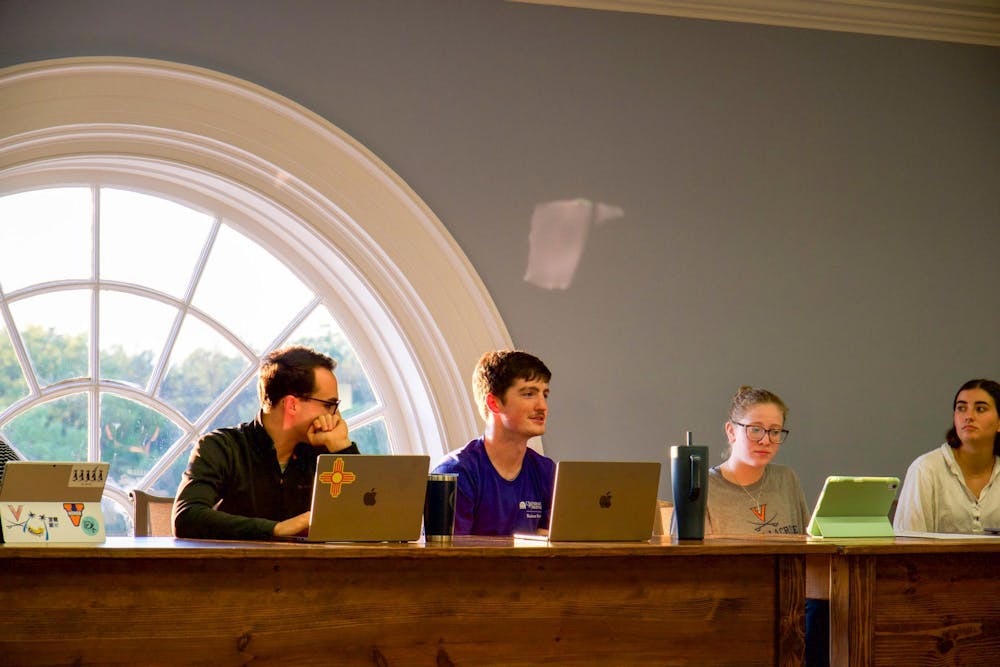
The Honor Committee highlighted plans for Honor Week — which will take place Feb. 16 to Feb. 20 — during their Sunday meeting which include an artificial intelligence panel, a Student Health and Wellness event and a dinner with student-athletes. The Committee also discussed potential changes to the Honor sanctioning process to alleviate the Committee’s workload, plans to encourage participation in University elections and the expansion of resources for suspended or expelled students.
Honor Week — a week-long series of events hosted by the Committee — aims to strengthen the community of trust at the University.
One event the Committee discussed in relation to Honor Week was a panel on AI usage and academic integrity that will take place at The Colonnade Club Feb. 20. This panel will feature guest speakers such as Mona Sloane, Data Science and Media Studies assistant professor and founder of Sloane Lab, and Leo Lo, dean of libraries and advisor to the provost on Artificial Intelligence Literacy.
Jack Wallace, College representative and fourth-year College student, said the panel is expected to include three faculty members and two student representatives. The panel will respond to a series of pre-written questions about academic integrity and AI usage before taking questions from the audience.
In addition to the panel on AI usage in academia, the Committee shared that they will be hosting a dinner for student-athletes during Honor Week to better connect the student-athlete population with the Honor community.
Lastly, Thomas Ackleson, Committee chair and fourth-year Engineering student, said that he will be meeting with University President Scott Beardsley Jan. 27 to discuss how Beardsley can promote and participate in both Honor Week and the honor system at large.
Beyond Honor Week, the Committee also discussed redistributing some administrative responsibilities of the vice chair of investigations in sanctioning procedures. The vice chair of investigations oversees the Informed Retraction process and cases under investigation for honor code violations. According to Ackleson, these duties tend to overwork the vice chair of investigations.
“There’s been a very significant number of cases compared to years past. Most people on the [executive Committee] would agree that the way that we're distributing the work right now is not as efficient as it possibly could be … So we're looking at ways to lighten that load in a number of different [ways],” Ackleson said.
Ackelson said that a significant area where the vice chair of investigations specifically spends time is overseeing the IR process following a student’s decision to sign the IR intent form — a document students must sign and submit to the vice chair of investigations if they wish to submit an IR during the sanctioning process.
An IR is a sanctioning procedure motion that allows an accused student to admit guilt at the start of the sanctioning process and protects students from permanent sanctions — such as expulsion or permanent transcript notation. Students are guaranteed the privilege of one IR during their time as a student at the University.
Cody Scarce, vice chair for investigations and third-year College student, shared his thoughts on altering the workflow of the sanctioning process to alleviate the stress on the vice chair for investigations.
“[The vice chair of investigations] is a very ominous job in the description and the way that we go about it, and I think that there is definitely a way for us to collaborate as a committee to make this [position] more sustainable for future committees,” Scarce said.
Ackleson shared that the Committee was invited to attend the Citadel Honor Conference — an annual conference held at the Citadel, a public senior military college in Charleston, S.C. The conference will be hosted Feb. 5 to Feb. 6 by the Citadel’s Krause Center for Leadership and Ethics with the nation's senior military institutions in attendance.
The conference is designed to promote collaboration between different honor programs. This year’s theme is 'Student versus Administrative Power' and how the role of students and administration differ in various honor systems.
Ackleson discussed the unique nature of the University's Honor Committee in relation to the other institutions in attendance.
“[In] a lot of the military academies, the administration has a very significant role in their honor process … Not only are we the only civilian school going, but also the only school that's entirely student-run,” Ackleson said.
Ackleson also recently met with the University Board of Elections to discuss how the Committee could help promote participation in University elections. One idea that was discussed between Ackleson and UBE was potentially providing incentives to students such as food or Honor merchandise if they show proof of voting.
The Committee also shared that they are in the process of working on a set of resources for suspended or expelled students and their advisors on how to approach the initial expulsion and suspension conversation. These materials will also outline resources available to students after they receive the final decisions of their cases.
The Committee’s next meeting will take place Sunday at 7 p.m. in Newcomb Hall 480. Meetings can be attended both in person and on Zoom. Zoom meeting links can be found on their website.
Michael Racz is a staff writer on the news desk. He is a second-year College student majoring in biology with plans to go to medical school. He enjoys writing about health topics and student self-governance.
Read More
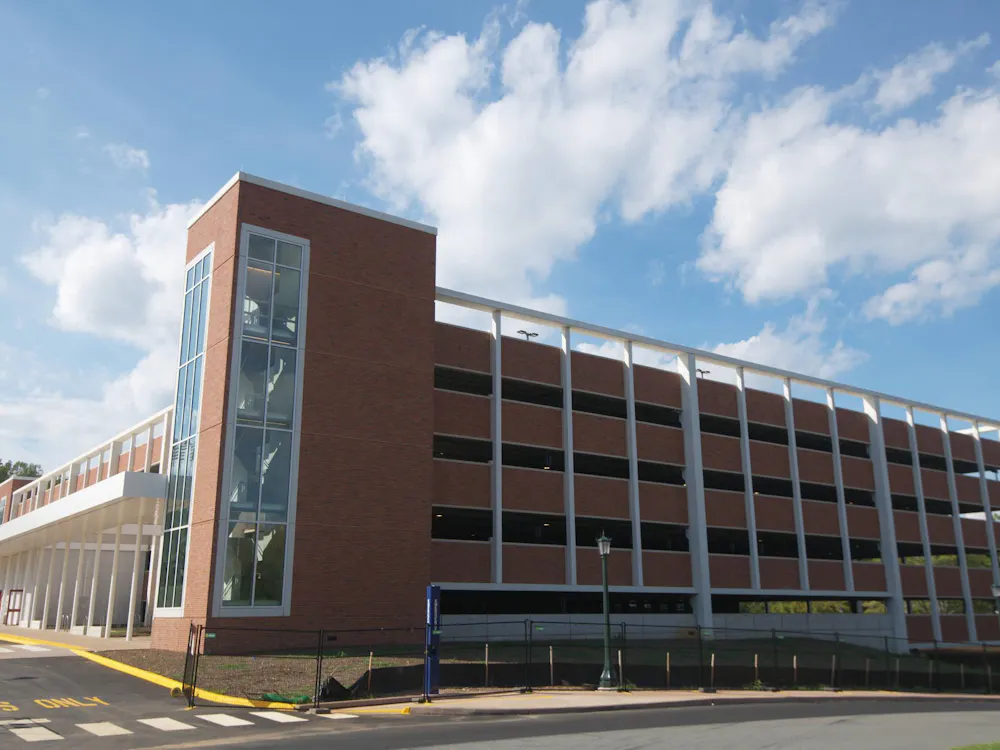
Parking on Grounds — what has changed this semester?
By Charlotte Gabriel | 11 hours agoAccording to University students interviewed by The Cavalier Daily, several expressed frustration with high parking prices on Grounds, as well as the difficulty in finding available parking in general.

Student Council connects with University’s Strategic Planning Committee
By Lucia Gambacini and Reilly Auld | 11 hours agoThe Council also heard updates from Executive Board members regarding the upcoming Fall 2026 elections and new investments in free Sexually Transmitted Infection testing kits for students.
Virginia colleges workshop three-year bachelor’s degrees
By Luca Bailey | 11 hours agoIf the effort is successful, participating schools in Virginia and Ohio will join at least 70 higher education institutions across more than 26 states that have already adopted three-year programs in some capacity.