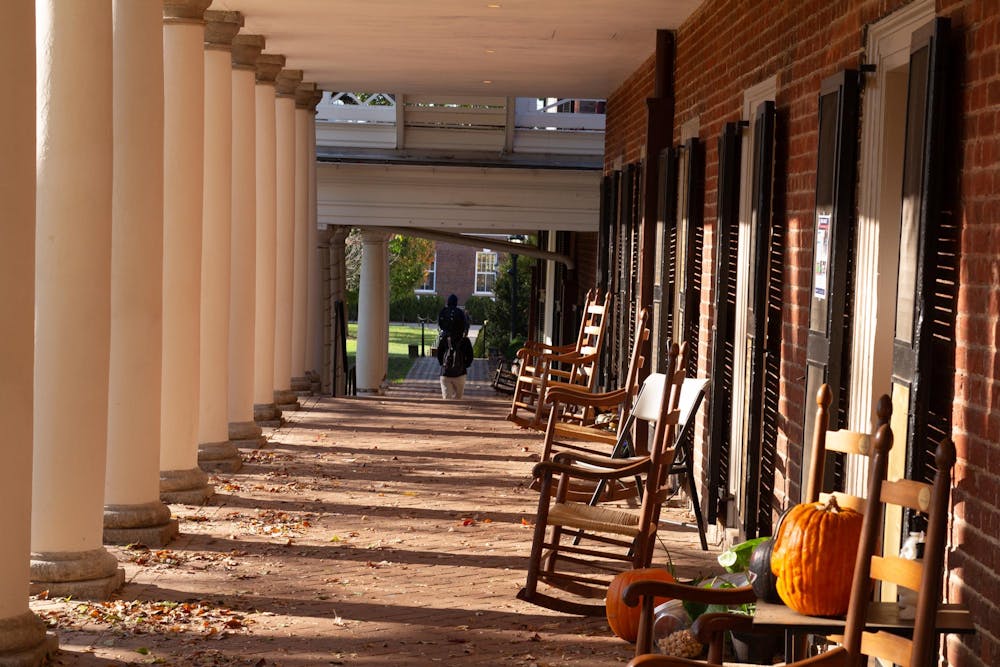
The Lawn Selection Committee announced Feb. 14 that 48 rising fourth-year students were selected to live on the Lawn for the 2026-27 academic year. The Selection Committee — composed of 64 fourth-year students who choose the new Lawn residents — selected these students from a pool of 207 applicants with an overall acceptance rate of approximately 23 percent. The acceptance rate is the same as the previous selection year, according to data provided by University Spokesperson Bethanie Glover.
The Lawn application for prospective residents regards living on the Lawn as one of the highest honorable and prestigious achievements an undergraduate student can receive. Rooted in the University's historical Academical Village designed by Thomas Jefferson, the Selection Committee accepts only 48 fourth-year students each year, making the selection highly competitive and a mark of exceptional academic achievement, leadership and service.
According to University Student Affairs, the Selection Committee seeks residents who have demonstrated unselfish service and leadership within the University and Charlottesville-Albemarle County communities and reflect a broad range of activities, background and interests. Applicants must submit essays, provide summaries of extracurricular activities and include both overall and major-specific GPAs. Once selected, residents are expected to continue involvement in their respective communities, uphold University policies and help build a welcoming environment on the Lawn.
According to Glover, out of the 207 applicants, 114 identified as female, representing 55 percent of the applicant pool, 91 identified as male, representing 44 percent and two did not disclose their gender identity. Among the 48 accepted residents, 29 are female, and 19 are male.
The College of Arts and Sciences comprised the largest share of applicants with 120 students — nearly 58 percent of the total application pool. Only 27 students were selected from the College. Six students each were selected from the McIntire School of Commerce and the Frank Batten School of Leadership and Public Policy. Four students from the School of Engineering and Applied Science and two from the School of Data Science were selected. Two from the School of Education and Human Development and one from the School of Architecture were also chosen as Lawn residents.
The mean GPA among applicants was 3.655, while the mean GPA among selected students was 3.527. Among those accepted to be Lawn residents were third-year College students Ava Wolsborn and Aden Levenson.
Wolsborn wrote in an email to The Cavalier Daily that she applied to live on the Lawn in hopes of engaging with the University and Charlottesville community in ways she had not yet experienced. She said that while students become heavily invested in a particular organization by their fourth year, she is eager to step outside her usual circles.
“By our fourth year at U.Va., it can be easy to get so invested into just one group or project or niche, but recognizing the interdisciplinary nature of these involvements is what makes us better students, leaders and future professionals,” Wolsborn said. “I believe that living on the Lawn will provide me [with] such a community to learn from accomplished students in every field.”
Levenson described feeling shocked when he discovered he was selected to be a Lawn resident. He added that once the initial surprise settled, he felt proud and excited to build on the Lawn’s legacy.
“It was just a surreal moment where … I just couldn't believe that I had gotten the opportunity to participate in a community of like-minded, ambitious and dedicated people to the University, and I think I'm still sort of shocked,” Levenson said. “But definitely after it all settled, I was definitely a little more proud of myself and very excited to contribute to such a great community of student leaders at U.Va.”
Wolsborn said in her email that she highlighted her leadership roles that align closely with University values in her application. She currently serves as the vice president of the University Dance Club — the University’s largest student-run dance organization — where she said she has worked to increase transparency in audition scoring and revise the organization’s constitution. In addition, she serves as a first-year resident advisor and volunteers with Madison House through Girls Excited about Math and Science — a mentorship program supporting young girls in STEM in the Charlottesville community.
“As a young woman in science myself, it has meant everything to be able to empower these girls in traditionally male-dominated fields and enrich their after-school learning experiences,” Wolsborn said. “I believe that this contribution to Charlottesville at large is a wonderful representation of the University's emphasis on the importance of lifelong learning.”
Wolsborn said that she plans to use her experience as an RA to promote University resources, encourage open dialogue and reduce stigmatization of the act of asking for help by posting information on her door or keeping it open to welcome conversation.
“At U.Va., I strive to be a peer excited to teach my passions to others, a mentor that is empowering to learn from and a friend that will always extend a listening ear,” Wolsborn said. “I am forever grateful for my leadership positions in which I can embody these values independently, though I am now eager to continue exemplifying such for the Lawn's impactful community.”
Reflecting on his application, Levenson said he focused on sharing the most formative experiences he had with his clubs and associations, aiming to be as personal as possible. As a new Lawn resident, Levenson said he hopes to use his Lawn room to foster connections through programming and events.
He plans to bring together the a cappella community as president of the A Capella Presidents’ Council, collaborate with the Center for Politics through the Youth Ambassadors Program and organize holiday-themed activities — such as Tricking-or-Treating on the Lawn and Lighting of the Lawn. He also said he hopes to connect with students who frequent the lawn for picnics, music or casual conversation to foster strong social communities.
Levenson explained that while many applicants highlight accomplishments and contributions to their community, he believes that the Selection Committee and the people living on the Lawn look for authenticity.
“Although you could be [in] any sort of leadership position, I think at its core … speaking about who I was as a person, and what drives me and how I impacted others is what I think got me on the Lawn,” Levenson said.
As she prepares for her fourth year, Wolsborn said that she hopes to focus on the involvements that have mattered most to her and to leave a legacy defined by selfless service. She said that she views the Lawn community as an ideal place to grow, surrounded by leaders with different perspectives and experiences.
Wolsborn acknowledged that her path has not always been straightforward, but she said those challenges have made her more resilient.
“My experiences at this university have been anything but linear, highlighted by frequent indecision about my academic pursuits and the infiltration of imposter syndrome with honors that I have earned,” Wolsborn said. “However, I think that has made me a more resilient student and relatable leader, a legacy I hope to leave here.”
Reflecting on the legacy he hopes to leave, Levenson pointed to his involvement in a cappella and Housing and Residence Life as a senior resident. He said that he strives to lead by example, encouraging students to be friendly, approachable and open to connecting with others.
“I hope to be a role model [that] people can look to … someone who basically always tried to go above and beyond in everything he did. In doing so, he did his best to bring people together and not [be] afraid to put [himself] out there,” Levenson said.
Read More

Charlottesville residents warn of gentrifying student housing at City Council Meeting
By Luca Bailey | 8 hours agoCharlottesville residents and University students voiced their continued concerns with the student housing development project on West Main Street at a City Council meeting Feb. 17.

A look at key bills in Richmond that could impact U.Va. Health
By Michael Racz | YesterdayThroughout the current legislative session in Richmond, taking place from Jan. 14 to March 14, Virginia legislators have proposed policies that could change patient care, impact U.Va. Health’s revenue cycle, help alleviate workforce shortages and influence physician employment contracts.
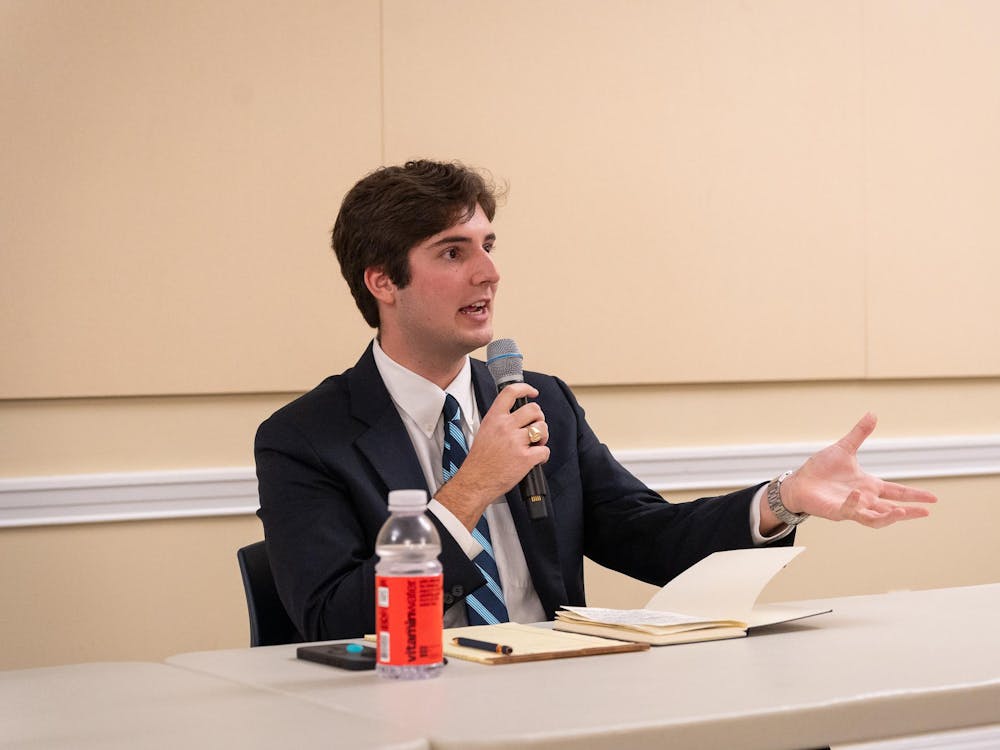
Mitchell changes claim that he did not sign no confidence vote, explains his decision
By Lauren Seeliger and Grace Little | Yesterday“I did not sign the vote of no confidence against the Board of Visitors,” Michael Mitchell, Student Council Presidential Candidate and third-year College student, said at the Student Council Presidential Debate Feb. 15.