The Trump administration’s recent attacks on immigrants within this country signal a dark chapter of American history. Specifically, this federal government has exercised devastating levels of violence, encouraged immigration enforcement to search homes without a judge’s warrant and detained community members for recording enforcement. Both illegal and legal immigrants have been the subject of these political attacks. With this dark chapter comes a haunting national effect where noncitizens do not feel secure.
While Charlottesville has not yet experienced widespread levels of immigration enforcement compared to larger metropolitan areas around the country, fear, dread and lack of security still haunts its community members. On Grounds, the actions of the Trump administration impact the daily lives and choices made by noncitizen students — what a student posts on social media, when they plan to travel home and how they involve themselves in extracurricular activities. Within the community of The Cavalier Daily, several noncitizen students have experienced fear incited by this presidential administration’s actions, which suppresses student voices. This challenge to student journalism — and to the expression of noncitizen students writ large — cannot continue.
Over the past year, several noncitizen students’ work at The Cavalier Daily has been impacted by the Trump administration’s threats. This is part of a nationwide trend across multiple student newspapers, where many noncitizen students have been impacted in their ability to participate fully in student journalism. Moreover, this hostile environment silences noncitizen students who fear retribution or violence. Under this federal administration, a commitment to free expression becomes a risk that noncitizen students are expected to shoulder, or avoid altogether.
In light of this impact, The Cavalier Daily signed an amicus brief Oct. 21 supporting The Stanford Daily in a federal lawsuit which contends that visa and speech restrictions have created a “chilling” effect on student journalists. The amicus brief was signed alongside 54 other student news organizations and objects to how noncitizen student journalists have been impacted by the actions of the Trump administration. The impact on these noncitizen students not only disrupts the day-to-day functioning of student newspapers, but also erases the valuable perspectives that they bring to student journalism and its reporting. In light of this increasingly silenced environment, it is imperative to recognize the importance of collective action and coalition-building to advocate against these threats to student journalism.
When noncitizen students are hesitant to participate in institutions which support freedom of expression, a mutually beneficial exchange of perspectives is lost. Higher education institutions that house students from a wide range of backgrounds benefit from the sharing of ideas and experiences in ways that are impossible to recreate when noncitizen students are excluded from these spaces. Our microcosm at The Cavalier Daily is only one part of a broader story happening at our University and student newspapers all over the country. The inability of certain groups to speak freely is antithetical to the aspirations of this nation’s First Amendment protections. Constitutional rights should not be conditional to the politics of the party in power, and they should extend beyond citizens to protect non-citizens as well. And yet, the First Amendment has now become an afterthought. Such a precedent is dangerous and damning — for everyone from noncitizen students at the University to all people across the country.
Our University was founded with the mission of uplifting students to live by the principles of free expression, integrity and collaboration among a diverse community of thinkers. The threats which noncitizen student journalists at The Cavalier Daily have faced are not limited to their roles as journalists, but also impact their ability to be students at and contributors to the University. Several of the impacted students at The Cavalier Daily have continued their work as journalists, yet they are still entitled to all of the protections which the University promised them as tuition-paying students. The University could continue to demonstrate support for these noncitizen students who feel censored by the actions of the Trump administration by expanding immigration resources or publicly supporting the City Council’s recent resolution in limiting the violence of immigration enforcement within the Charlottesville community.
Ultimately, the effects of this silencing from the Trump administration will continue to impact The Cavalier Daily, the University and student journalism writ large. The loss of valuable contributions from noncitizen students will hinder student journalism’s ability to accurately and holistically capture the fullness of the student experience on Grounds. In the absence of these perspectives, the historical record we aspire to capture will have omissions that disrupt the archive of the student experience. This impending reality should inspire all members of the University community to stand up against a culture which incites violence — both physical and rhetorical — towards noncitizen student journalists.
The Cavalier Daily Editorial Board is composed of the Executive Editor, the Editor-in-Chief, the two Opinion Editors, two Senior Associates and an Opinion Columnist. The board can be reached at eb@cavalierdaily.com.
Read More

YOUNIS: The false promise of neutrality at U.Va.
By Ayat Younis | 6 hours agoAcademic excellence and diversity have never been competing ideals.

BOUCHARD: Hiring Oren Cass is a slap in the face to our institution
By Joseph Bouchard | YesterdayThis is all happening as the Trump administration is currently destroying democracy, the Constitution and the University itself.
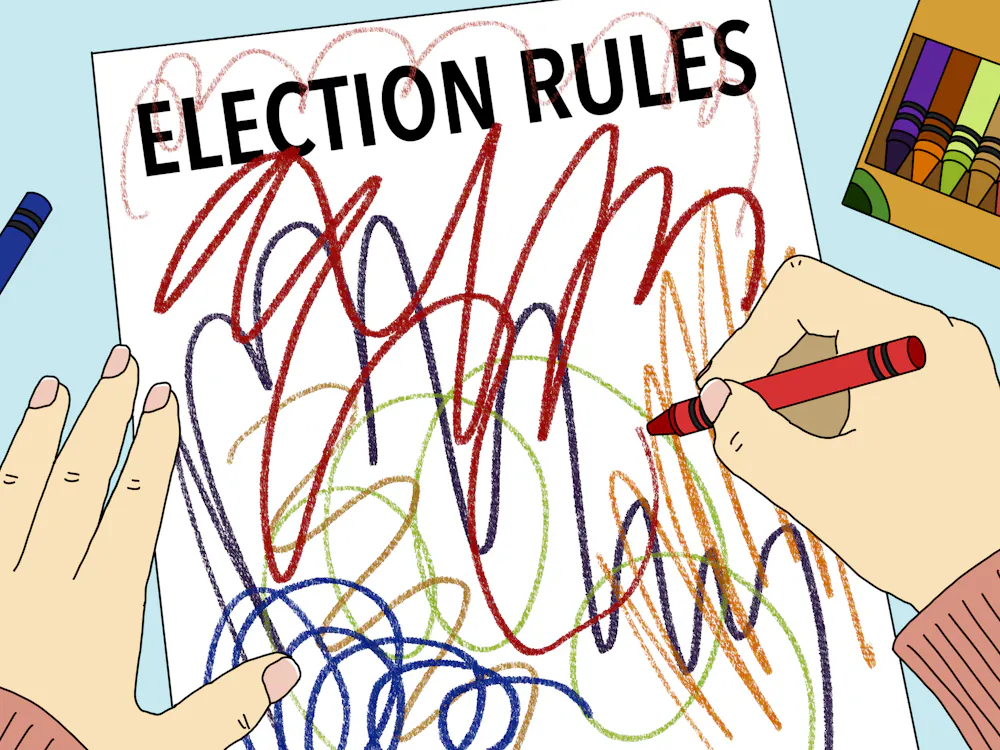
KING: A University Board of Elections that cannot take a hint
By Michael King | 2 days agoThere is still time to avert its current course — extend the time limit for submitting post-election complaints, open hearings to the public and honor the JRB's avenue of review.