As the clock wound down with two seconds left and sophomore guard De’Andre Hunter secured the rebound before launching the ball up into the air, Virginia became champions. For Coach Tony Bennett, the moment cemented him as Virginia men’s basketball’s greatest coach.
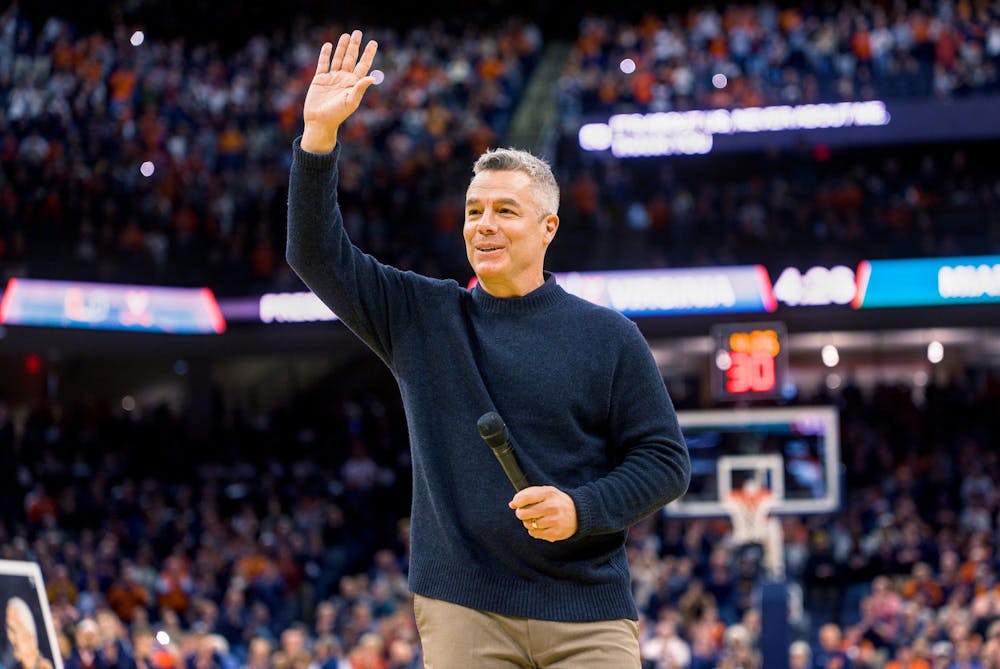
Fifteen minutes before Saturday’s down-to-the-wire win against Miami, the University formally named the John Paul Jones Arena court in honor of Bennett — a dedication that ensures his legacy and imprint on the program will remain at the heart of every possession played in the building for seasons to come.
The ceremony was packed with former players and staff, family and fans, all gathered to celebrate not just the countless victories, but also the imprint on the University that will last lifetimes.
When Bennett came to Grounds in 2009, Virginia was a struggling program searching for a stable leader. What followed was a transformation — regular and postseason titles, the program’s first No.1 overall seed in an NCAA Tournament and a national championship that completed one of the most remarkable comeback stories not just in college basketball, but in all of sports. But more than just the accolades, Bennett established an identity built on discipline, development and belief — one that changed everyone’s expectations when stepping into JPJ.
For former players Anthony Gill and Malcolm Brogdon, who reached the Elite Eight under Bennett, the ceremony was less about the court dedication itself and more about the man behind it all finally getting the recognition he deserves.
“It's unbelievable,” Gill said. “Coach Bennett put in so much work, not only to build a program, but to uplift his community.”
Brogdon, the first player in ACC history to win Player of the Year and Defensive Player of the Year in the same season, emphasized what separated Bennett from so many in the profession.
“He’s the most humble guy, [the] most humble coach,” Brogdon said. “He's one of the legendary coaches, man, we're proud of him. We love him. We appreciate him.”
Actions spoke louder than words. The humility was evident immediately when Coach Bennett was handed the microphone. Etched into the hardwood is Bennett’s signature, and to ensure credit was given to all who helped build the program, Bennett proposed an idea.
“I said, ‘Is there any way’ — and this is what I'm most excited about — ‘is there any way inside that signature, we can put every name of every manager, walk on, player, support, staff [and] coaches?’” Bennett said. “So all your guys’ names for the 15 years I've been the coach [are] inside that signature, so forever we will be on that court together.”
Current Coach Ryan Odom, embracing the moment with Bennett on the court, remarked on how surreal the moment was and expressed his gratitude for having such a remarkable predecessor to look up to.
“Congratulations, and thank you so much from the bottom of my heart and all coaches out there for the example that you set for all of us,” Odom said. “You are what college basketball was meant to be about, and what you did for this University, this program … these folks right here behind you, it says everything.”
The ceremony also included the presentation of a gift from Odom to Bennett — a painting of Bennett and his father in a moment of happiness, a tribute that symbolized the shared roots and familial connection between the two coaches.
“We do have a gift for you, one that I think you'll appreciate,” Odom said. “I asked my friend Kyan [Patel] to paint something for you. You and I share one thing in common, and there's the real Coach [Dave] Odom over there. I know the real Coach [Dick] Bennett is proud of you as well, and we're both coaches' sons.”
The gesture highlighted not only Bennett’s profound impact on Virginia, but also the influence he continues to have on Odom, the current team and the roster as they strive to push the program back to where Bennett once had it.
Odom also proudly noted that the current Virginia roster still draws on Bennett’s success day-to-day.
“These players over here are still learning from you every day,” Odom said. “You don't know that, but we talk about you often, and your players and the history of the program, and they're proud of you as well.”
For freshman guard Chance Mallory, the ceremony marked a full-circle moment. The Charlottesville native originally committed to Bennett, decommitted after his retirement and later recommitted under Odom.
“It was cool to see all the names written down on there,” Mallory said. “Even playing, I was looking down and seeing all the past people I was growing up watching, so that's pretty cool.”
Bennett’s speech epitomized the same theme that carried his program to numerous NCAA tournament games — gratitude over glory. Then, to bring the ceremony to a close, he returned to the same original foundation of the program he built from the ground up.
“My goal always was to honor the Lord as a coach, and I pray that this program and how we did was a bright light to all of you,” Bennett said. “I'm so thankful for this. I feel like this is more than I deserve, but we're all in this together. It's about us, never about me.”
Read More

Trevor Dunbar is building his team the ‘right way’
By Caroline Wulff | 31 minutes agoAfter half a decade as an assistant for the Cavaliers, Trevor Dunbar is ready for his next challenge as the leader of the program.
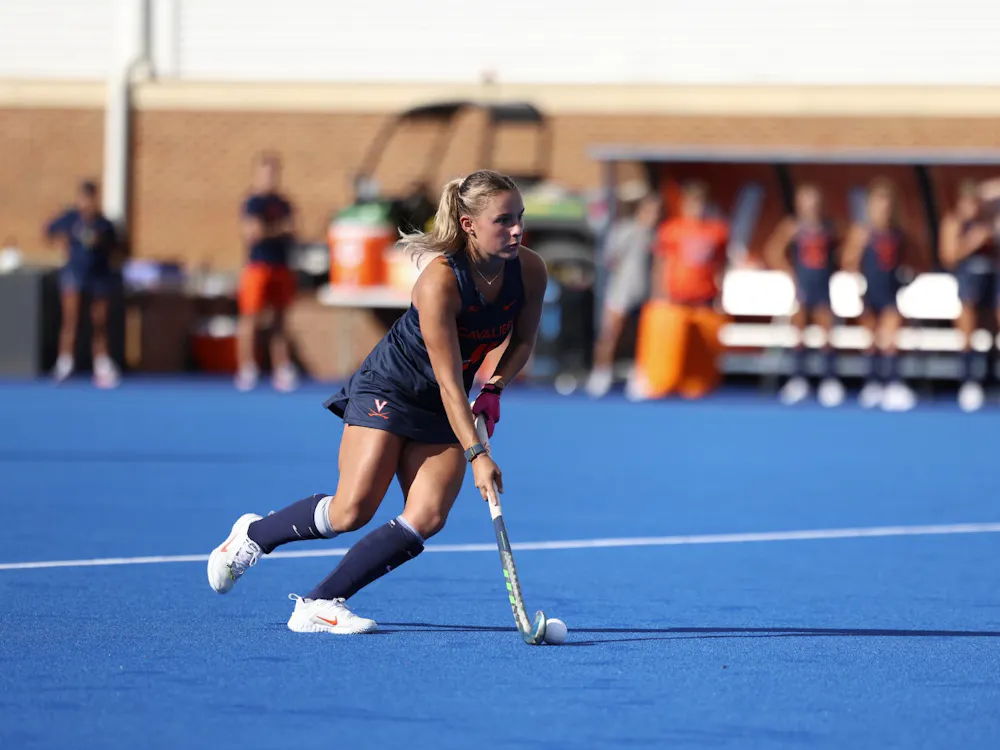
No. 9 field hockey struggles to gain control in 3-0 loss to No. 11 Syracuse
By Eleanor Lynch | 3 hours agoThe Cavaliers (5-3, 1-2, ACC) finished with 14 shots and eight penalty corners, but could not convert any of them.
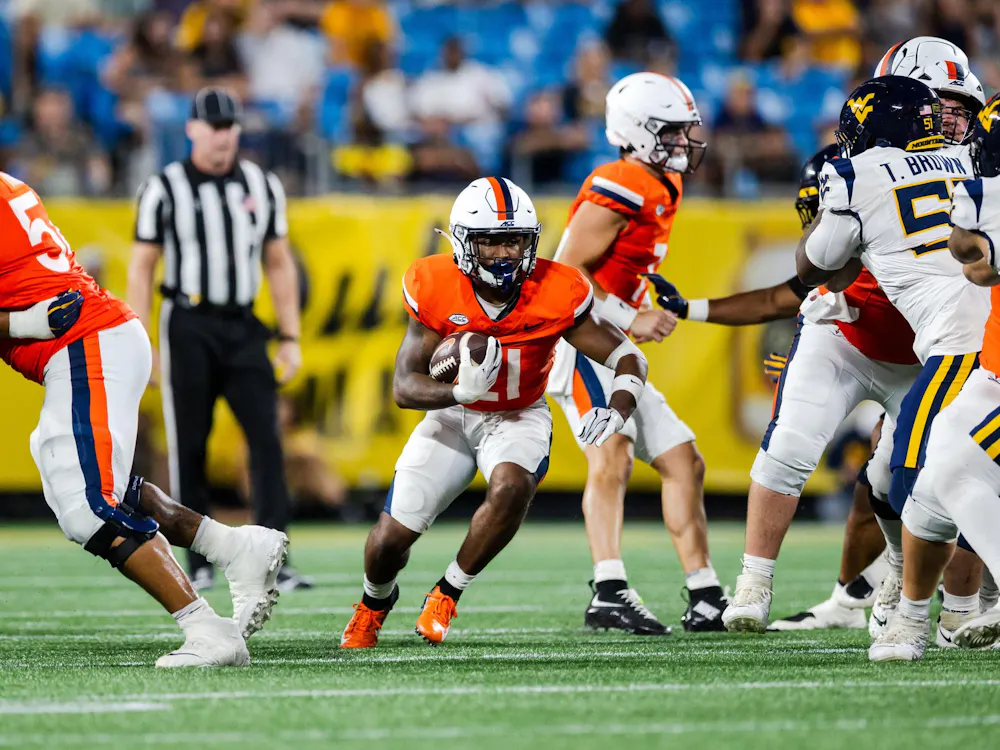
After loss, Virginia looks to ‘feed the monster’ — the Blue Hens are the first course
By Ben McNiff | YesterdayVirginia faces Delaware Saturday — the kickoff is slated for 6 p.m. at Scott Stadium. It will be their final non-conference matchup of the season, with a road trip against Florida State looming.