Following up the incredibly successful “Super Mario Bros. Movie” from 2023, Nintendo and Illumination teamed up again to deliver what was forecasted to be one of the highest grossing movies of the year. Although flawed, the first film had enough in the way of references and fan service to satiate fans and just enough substance to receive mixed reviews from critics.
Unfortunately, “The Super Mario Galaxy Movie,” despite ambitious efforts in some respects, plays it much safer than its predecessor while making a slew of bizarre choices detrimental to the movie’s pacing and overall enjoyability.
The movie follows Mario, Luigi, Princess Peach, Toad and Yoshi as they journey across the galaxy to save the cosmic Rosalina, who Bowser Jr. captures in the opening scene. While Peach believes Rosalina may have the answers to her own mysterious past, the Koopa King Bowser reconnects with his son, Bowser Jr. after years apart. The cast journeys across different planets to find and track down Rosalina, meeting characters from throughout the Mario franchise along the way.
First and foremost, the movie fails through its strange character arcs and lack of compelling conflict. Where the first movie featured Bowser attempting to invade the Mushroom Kingdom and marry Peach — a core conflict that, while predictable, was somewhat compelling — this film’s goal of saving Rosalina is put on the backburner for most of the runtime.
Screen time is split between dozens of side characters and mini-plots, all of which are resolved near-instantly, resulting in a lack of both direction and tension. For example, Mario, Luigi and Bowser have to make it to the Gateway Galaxy to catch up with Peach, so they conveniently stumble upon a tribe of honey bees who can deliver them there. Peach and Toad need a ship to reach Rosalina, so they conveniently find a pilot a few minutes later. The movie feels far longer than it is, being simultaneously overstimulating and utterly boring.
Branching plotlines rarely intersect or influence one another, and their rapid conclusions feel inconsequential to the broader plot. The roadblocks the main cast run into are random and are overcome in equally random ways. Characters never solve problems, but are instead given the tools to surpass challenges on a whim. At the beginning of the film, Peach and Toad use a launch star that conveniently shoots them through space to the exact destination they need. At the end of the film, an ex-machina style interaction between Peach and Rosalina instantly resolves the overarching conflict.
Even the climax of the film feels unfocused. Bowser and Bowser Jr. are charging a universe-destroying super weapon, but it is never made clear exactly what they plan to do with it. The villains lack motivation, something the first movie managed to include.
“The Super Mario Galaxy Movie” is also an adaptation of a duology of video games from 2007 and 2010 and, while it pays respectable homage to the broader Mario franchise in some respects, the movie’s name is misleading at best. The “Super Mario Galaxy” name brings with it expectations of a grand adventure through the locales of the Wii games of the same name, yet the movie features none of these locations in any significant form. Rosalina, a character featured prominently in the first Mario Galaxy title, receives disappointingly little screentime and dialogue, exercising little influence over the plot and does not undergo even the simplest of character development.
The setpieces of the film, while visually stunning and creative, backed by a phenomenal orchestral score that pays homage to the soundtracks of Mario’s past, feel shoehorned in with little reason for their inclusion. The inclusion of the Honeyhive Galaxy bees from the Super Mario Galaxy game near the start of act two feels like an inclusion made out of obligation. The context of their inclusion is different from that of the game and serves as a plot device to move the characters around, failing to challenge them in any new ways.
Some of this unused time is set aside for locations and characters originating from incredibly niche Mario games, such as the character Wart from Super Mario Bros. 2. Some time goes toward entirely original content created for the movie, none of which is particularly creative or relevant. One such instance takes the form of an extended action sequence on a casino world that, while taking aesthetic inspiration from Super Mario 3D World, is itself not present in any Mario game.
Given the success of the first movie, one might think that Nintendo and Illumination would keep some of these ideas in their back pocket for an extended run of movies. Instead, they mix ideas from different games in strange ways. For instance, one section of the movie features Mario and Luigi being turned into their baby forms from Super Mario World 2: Yoshi’s Island. Where the original game served as a prequel of sorts to the Mario franchise, in this movie it was simply one of many diversions from the central plot with no broader significance.
The lack of significant content from the Galaxy games is particularly shocking given the decision to include several characters from outside the Mario franchise. Fox McCloud, protagonist of the Star Fox series — which has not received a new entry since 2016 — is introduced roughly halfway through the film and receives more screentime than Rosalina. His character is remarkably simple, taking on a slick space pilot archetype. Like nearly every character in the film, he experiences no meaningful growth.
The only character that does undergo change is Bowser, one of the main antagonists, yet that change fails to reach any real conclusion. Bowser is set on a redemption arc from a villain to a friend of Mario that is interrupted in the third act and never brought to completion. After reconnecting with Bowser Jr., he has no further direct interactions with the main protagonists. Despite the movie continuing to hint at his character growth through his apprehension toward Bowser Jr.’s plans, it amounts to nothing by the end of the film.
Some faithful nods to the franchise are present in the movie, such as several sequences animated in the styles of various 2D Mario games including the original “Super Mario Bros.” and “Super Mario World.” Power-ups and characters from across the games make appearances, with nearly every game in the mainline series represented to some degree. These references work well in the form of small cameos, but the movie poorly chooses which characters and locales to focus on.
Where the first movie worked large setpieces like Rainbow Road from the Mario Kart series into the core story to excite fans, “The Super Mario Galaxy Movie” stretches itself too thin. Many of the most iconic Super Mario Galaxy setpieces are underutilized or entirely missing from the film. In an attempt to cram as many references on-screen as possible, regardless of their relevance, the movie was left without time to develop on the tried and true creativity of the games that should have inspired it.
Read More

Hoo’s Watching: Fall films to embrace the autumn spirit
By Bridget Baile | 21 hours agoHere are three essential watches for any reader as they prepare to witness the leaves outside their windows change from green to orange.

Charlottesville Opera hits just the right note
By Sofia Hahn | YesterdayThe Charlottesville Opera is in the heart of its 49th year-long season with performances held at venues around Charlottesville.
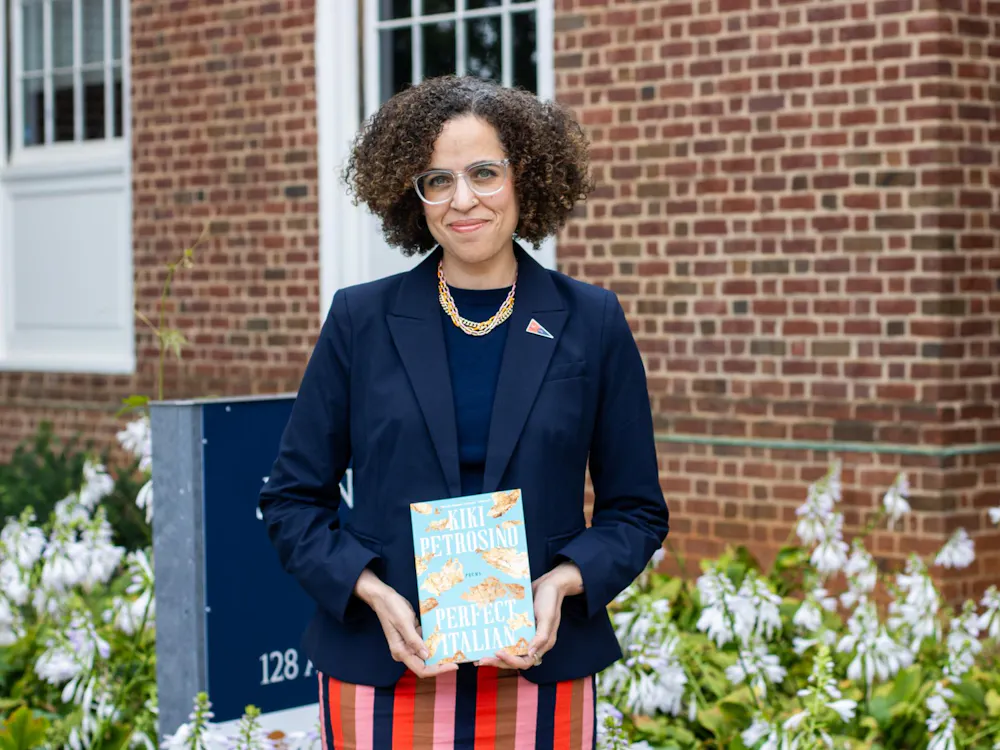
Professor Kiki Petrosino explores heritage, belonging and family in ‘Perfect Italian’
By Carly Smith | 4 days agoIn this work, Petrosino examines her own heritage and identity, using engaging yet deeply personal language, vivid imagery and carefully crafted syntax as ways to express her connection, and lack thereof, to her family’s history.