
Although the 1970s represented a pivotal moment in the University’s progress towards inclusivity through coeducation, these articles demonstrate just how much foundational work remained to make all students feel welcome. This work manifested across multiple areas throughout the institution, including dismantling exclusive societies, recruiting women faculty in greater numbers, addressing tenure inequities and abandoning the racism and sexism that prevented marginalized students from true belonging and participation in the U.Va. community.
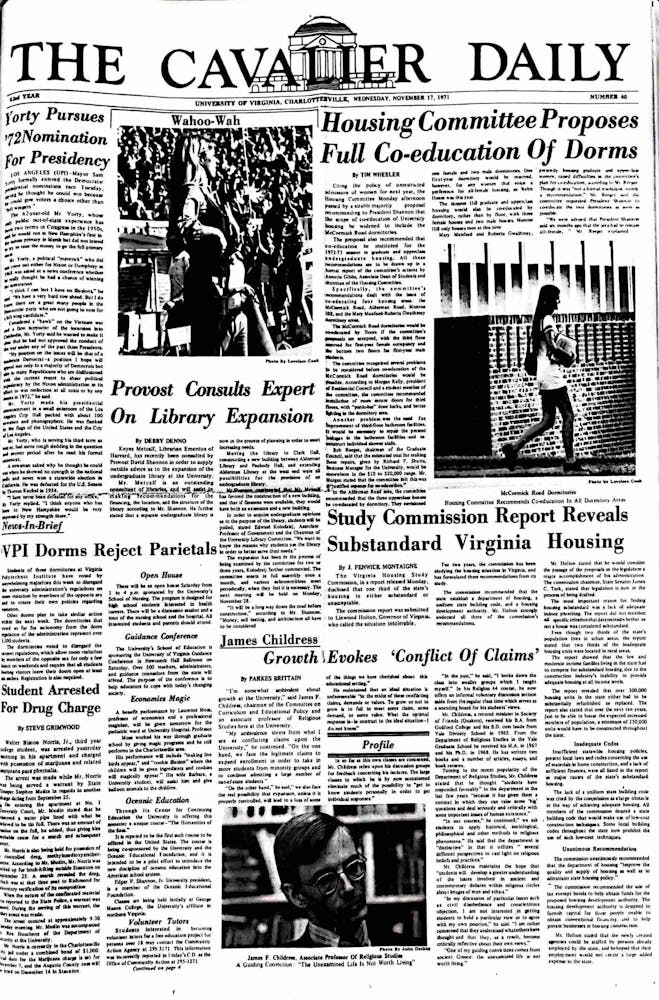
November 17, 1971
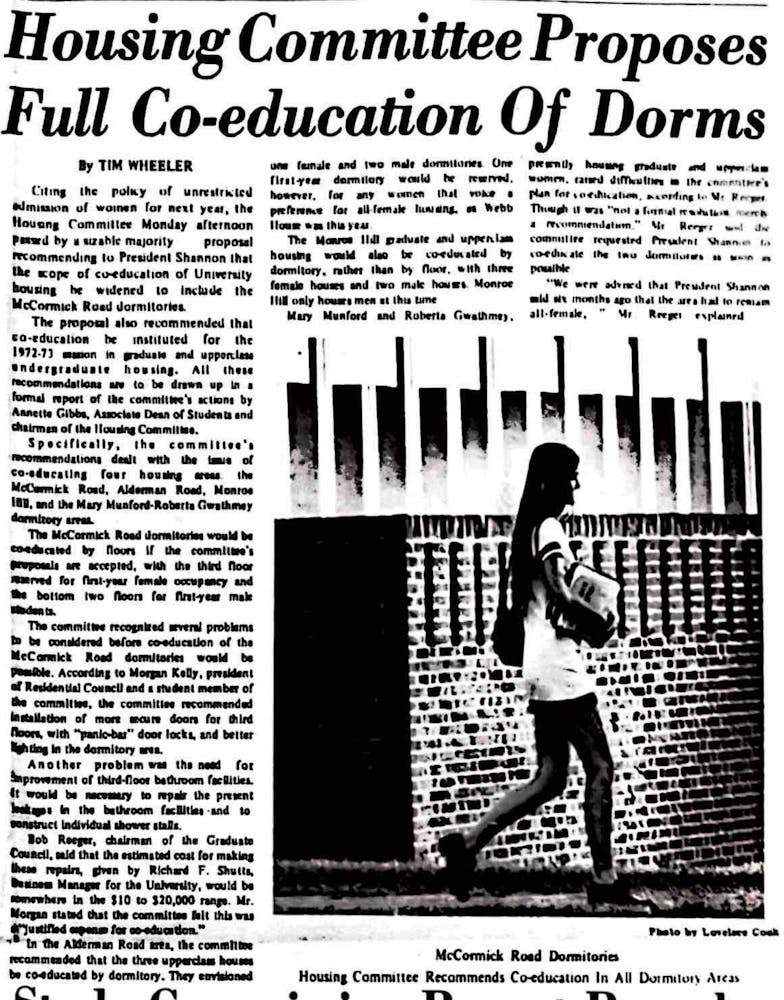
“Housing Committee Proposes Full Co-education Of Dorms”
By Tim Wheeler
Photos by Lovelace Cook
With the University set to admit women freely the following year, the Housing Committee proposed the full co-education of University dorms. For the McCormick Road dormitories, the committee noted several changes that would need to occur in order to enact their plan to convert the third-floor of each dorm into a women’s floor. The dorms needed more secure doors, better lighting and the bathrooms on the women’s floors would need to be modified to suit their needs.
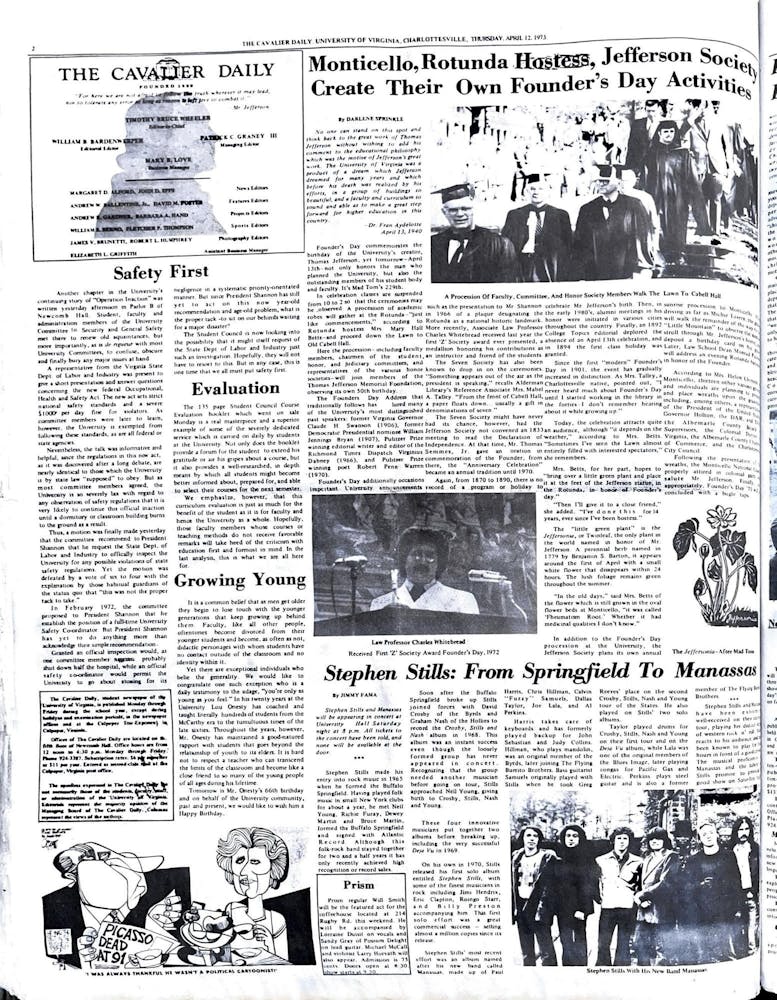
April 12, 1973
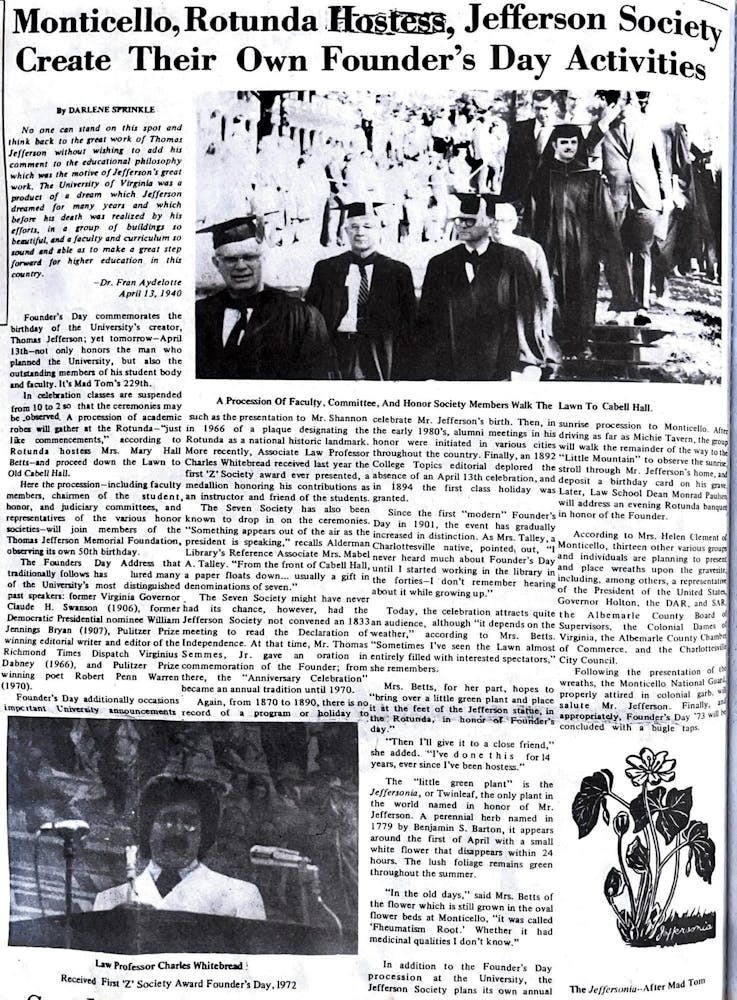
“Monticello, Rotunda Hostess, Jefferson Society Create Their Own Founder’s Day Activities”
By Darlene Sprinkle
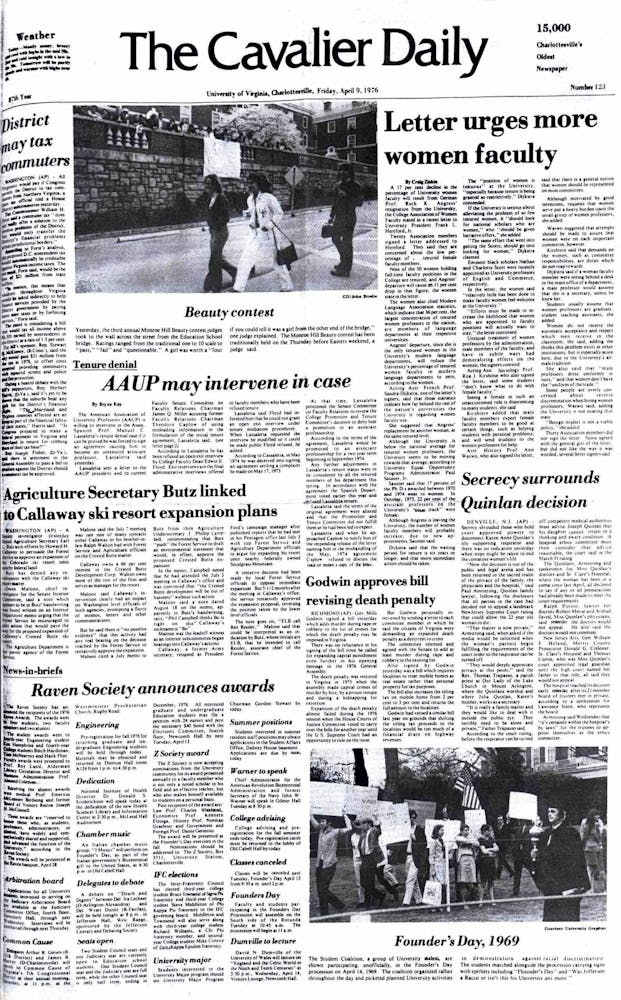
The University planned to celebrate its 79th annual Founder’s Day, a tradition started in 1901, as classes were set to be suspended and ceremonies observed to commemorate the birthday of Thomas Jefferson. Festivities were scheduled all over Charlottesville, with two separate processions, one down the Lawn and one to Monticello, a Rotunda banquet and even a potential appearance from the Seven Society. For her part, one local intended to place a Jeffersonia, the only plant named after Mr. Jefferson, at the feet of his statue in the Rotunda.
April 5, 1974
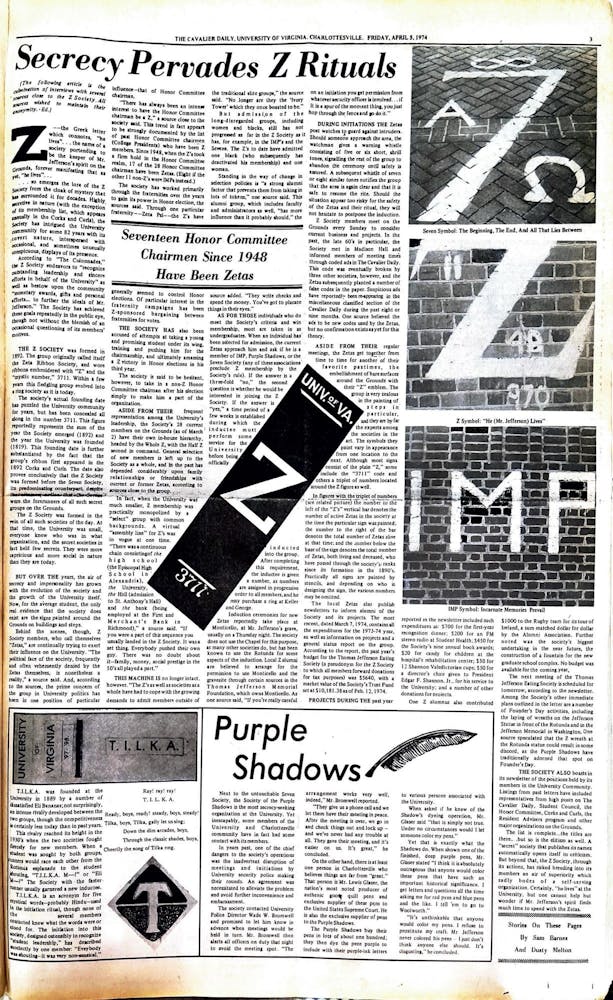
“Secrecy Pervades Z Rituals”
By Sam Barnes and Dusty Melton
The Z Society, founded in 1892, has long been a source of intrigue for the University community. Members of the Society, who call themselves “Zetas,” influence the University in a multitude of ways, but perhaps their biggest influence lies in their consistent representation on the Honor Committee. At the time of this article, the Z Society had only ever admitted one Black and one female student, and maintained its secrecy by announcing meeting times to members via secret codes in Cavalier Daily advertisements.
April 9, 1976
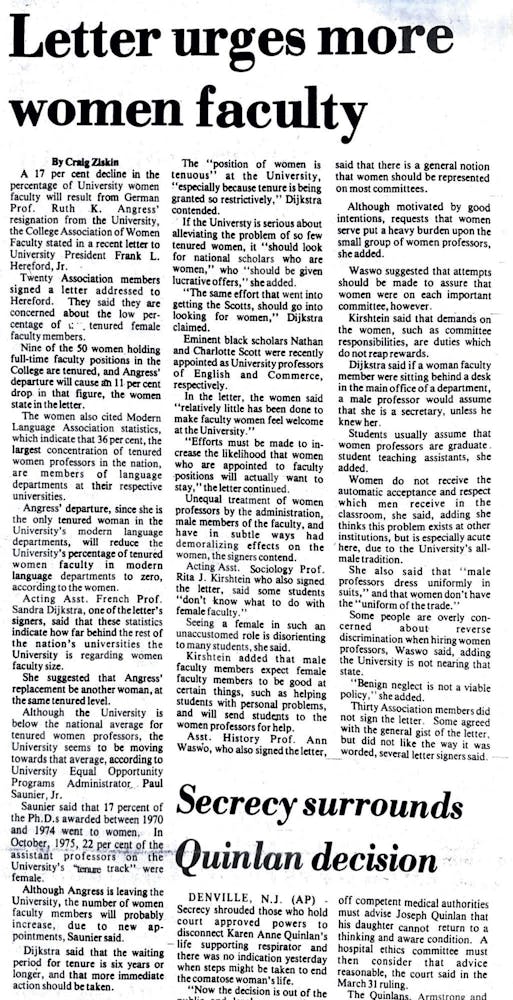
“Letter urges more women faculty”
By Craig Ziskin
Twenty members from the College Association of Women Faculty signed a letter addressed to then-University President Frank L. Hereford Jr. expressing concern over the University’s low percentage of women in permanent faculty positions. They noted that only nine of 50 women holding full-time positions were tenured, and that the resignation of the only woman in the University's modern language departments with tenure would further reduce that figure by 11 percent. The signatories urged the University to increase recruitment of women faculty, ensure their representation on committees and work towards creating an institutional culture where women feel welcomed and valued.
March 28, 1979
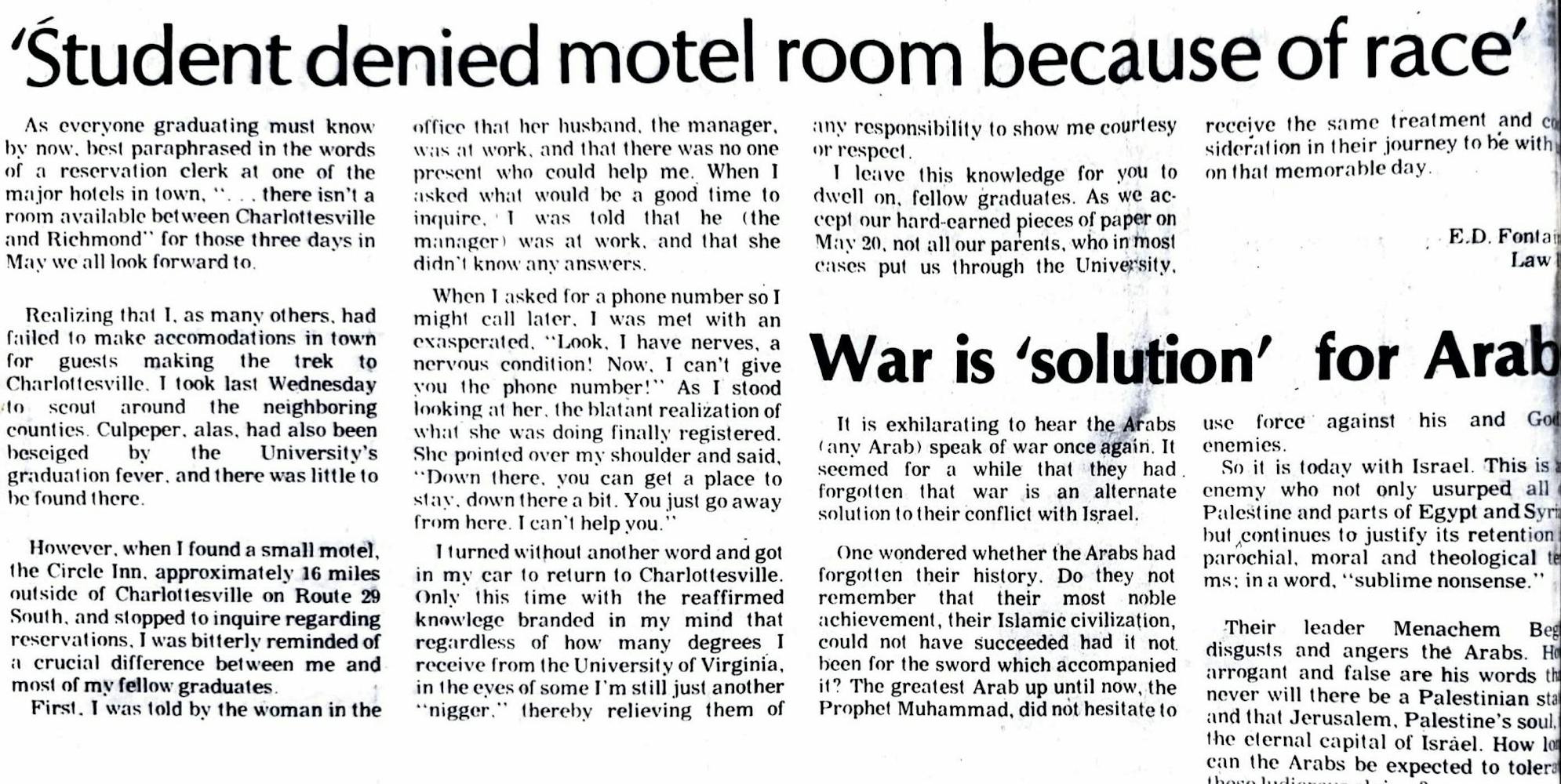
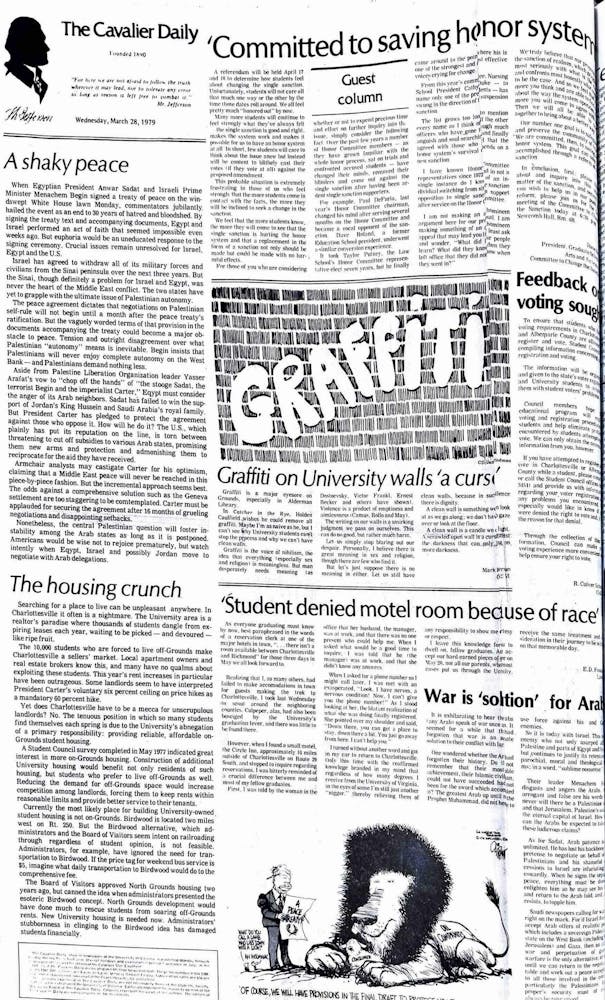
“Student denied motel room because of race”
By E.D. Fontaine
A soon-to-be graduate attempted to secure accommodations for his visiting parents at the Circle Inn along Route 29, when he was met with the denial of service due to his race. When asked about reservations, the motel clerk answered with evasive responses regarding availability and refused to provide contact information for the manager before instructing him to leave the premises. In recounting the interaction, the University student reminds his peers that racist ideology does not yield to any level of achievement.
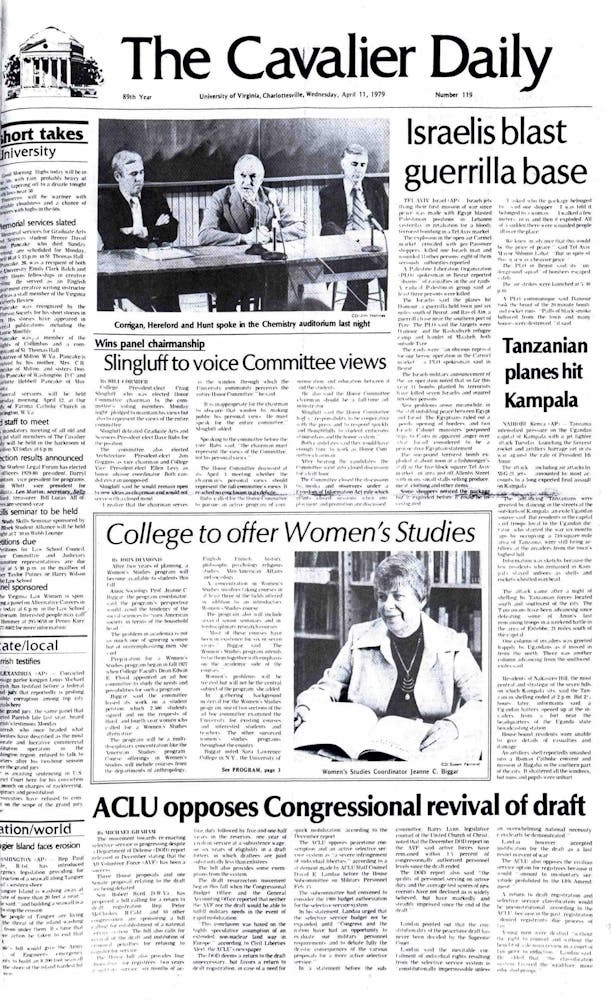
April 11, 1979
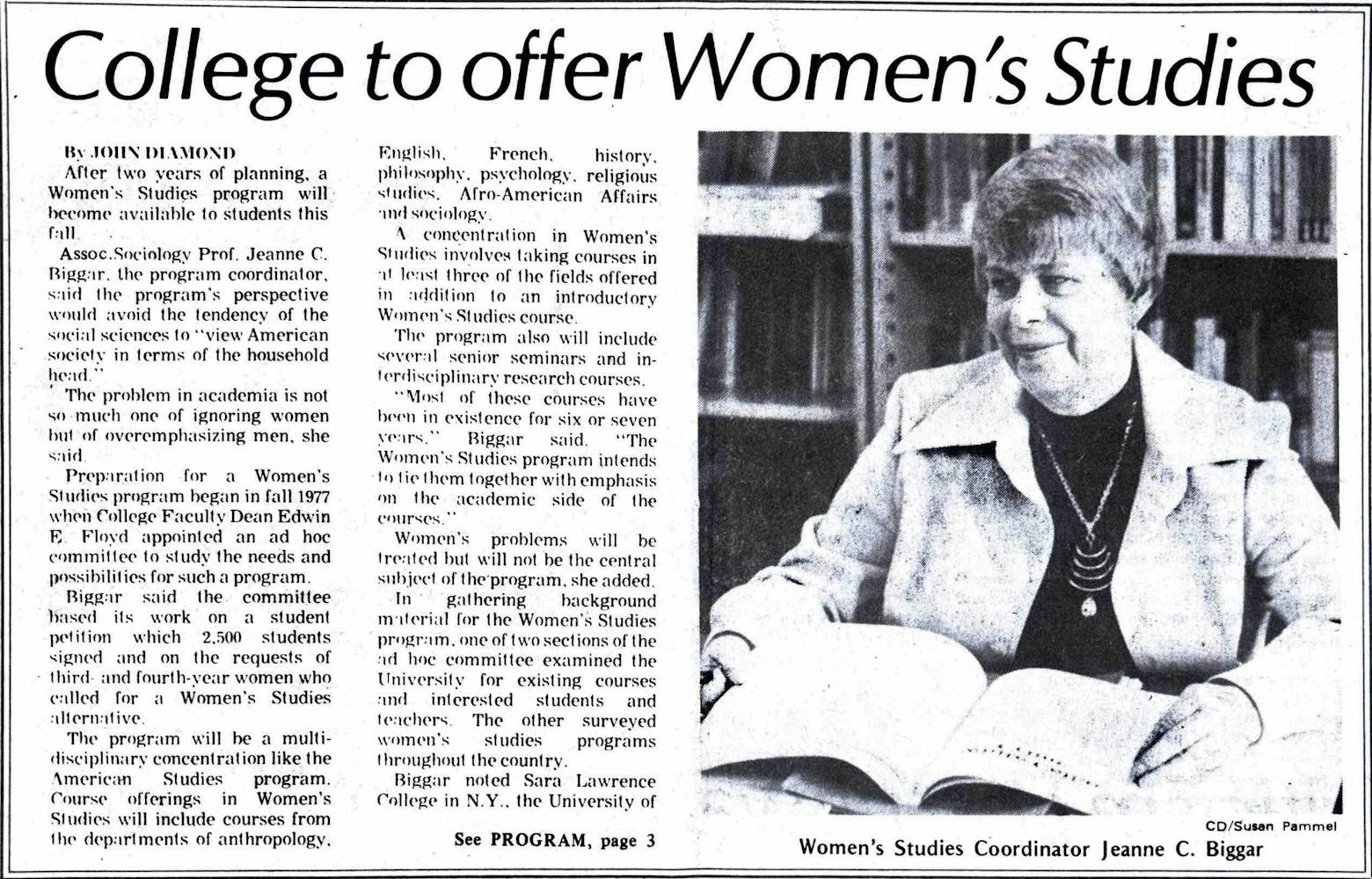
“College to offer Women’s Studies”
By John Diamond
Photos by Susan Pammel
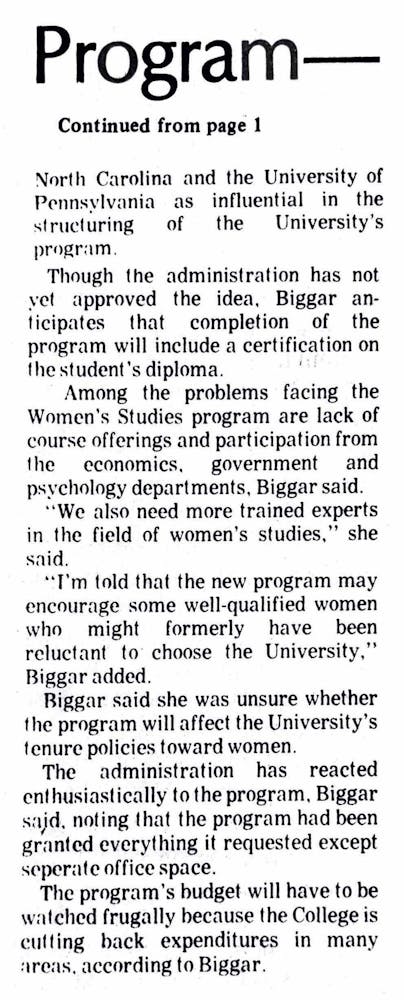
After two years of planning a response to a student petition with 2,500 signatures, U.Va. launched a Women’s Studies program to correct gender biases in academia. While the administration supported the initiative, Jeanne Biggar, sociology professor and Women’s Studies coordinator, expressed doubts about whether the program would actually meaningfully transform the University’s tenure policies and departmental structures.
Read More

Buildings and Grounds Committee approves a U.Va. Health hospital renovation
By Grace Little | 3 hours agoThe Board of Visitors’ Buildings and Grounds Committee convened Thursday afternoon to approve the U.Va. Health Transitional Care Hospital renovation and the namings of 13 exterior spaces at Aggarwall Hall.
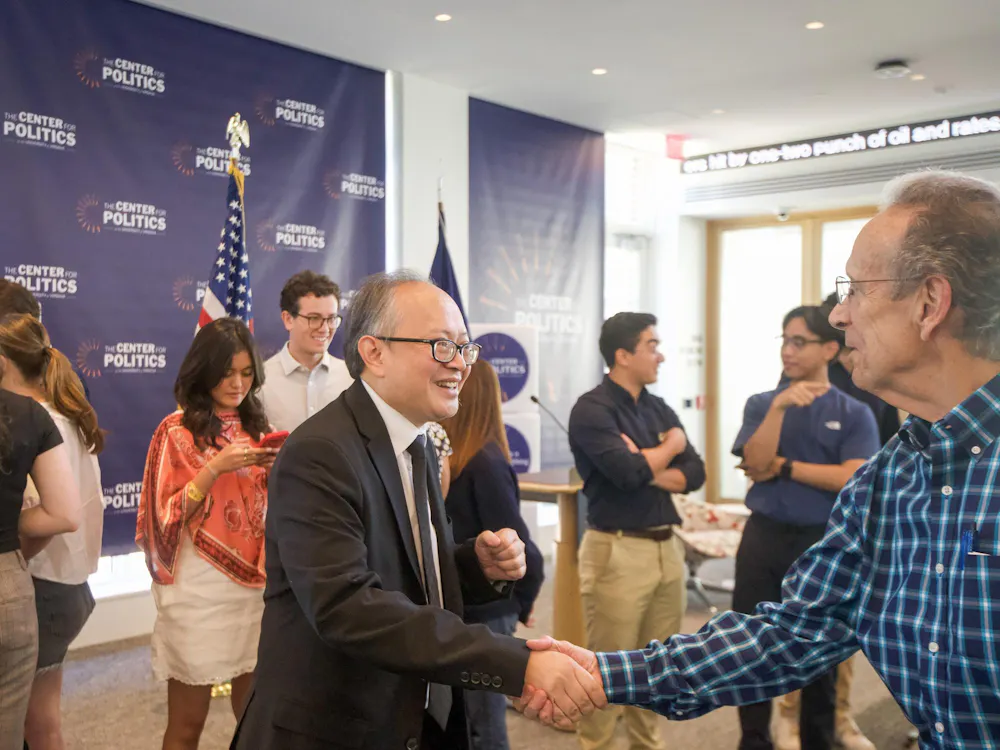
Ambassador of Thailand to the US speaks on Thai economy, conflict with Cambodia
By Edward Christopher | 3 hours agoChindawongse spoke about his home country’s history with the U.S., relations with other nations in Southeast Asia and Thailand’s economy and social progress.

Supreme Court Justice Amy Coney Barrett discusses legal doctrines, emergency docket
By Edward Christopher | 4 hours agoShe reflected on how the role of the Supreme Court Justice has evolved since she clerked for former Supreme Court Justice Antonin Scalia and how she approaches legal issues.


