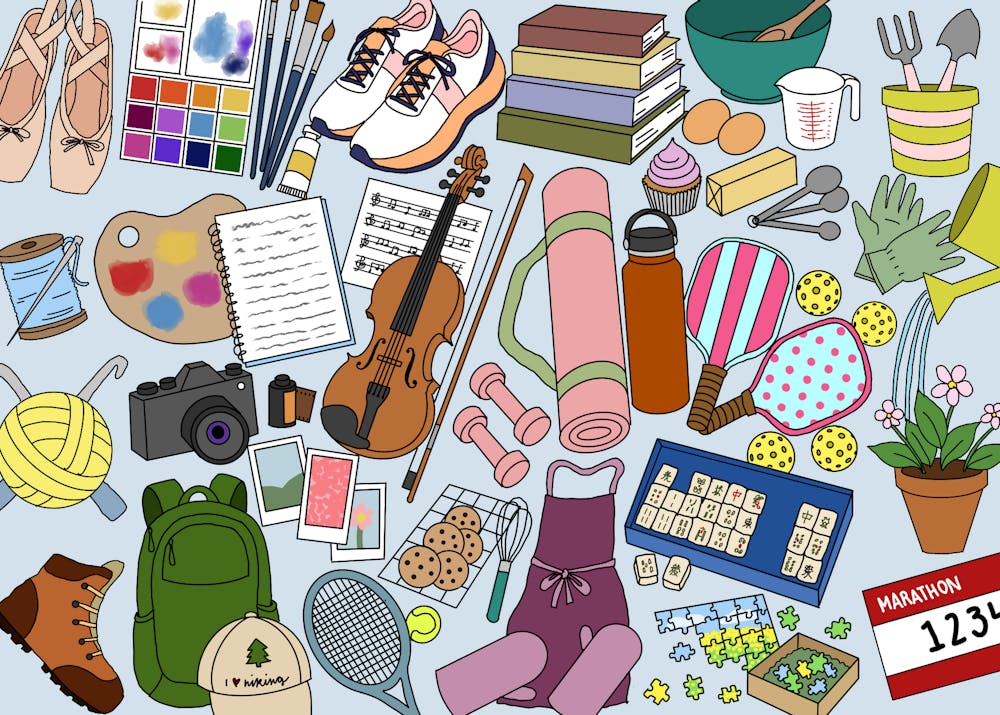
After a jam-packed school year of classes, exams and extracurriculars, summer brought a change of pace for many students — ranging from beautiful vacations to extensive internships to summer jobs or classes. Regardless of how they spend their time away from Grounds, the top need for many students was a break from screens, according to students interviewed by The Cavalier Daily.
These students felt that analog hobbies — passions that are independent of technology — not only bring entertainment, but also help relieve tension from the prior academic year while passing time over the summer.
Fourth-year College student Alissa Emond, who spent the summer in Charlottesville for an internship, prioritized their hobbies when the workday ended. Emond primarily filled her time with reading, cooking and art.
To prioritize keeping hobbies from feeling like a chore, Emond practiced recognizing the process and joy of the hobby itself, rather than focusing on what the end product may look like. This summer, Emond brought their easel up to Charlottesville to get back into painting, and even began one of their first paintings since high school.
This experience was enlightening for Emond, who appreciated the process's slowness. They said that when people focus on making a “bucket list" of things they want to complete through their hobbies, it takes away some of the joy of pursuing those hobbies.
“Just trying to think of [hobbies] as experiences, as things that need to be completed, can end up having the inverse effect and really stagnate people,” Emond said.
Also, summer can allow students to return to hobbies they could not maintain over the busy school year. Second-year College student Kendra Polomondo — an avid reader as a teenager — found it hard to maintain her reading habits on Grounds alongside her workload. Fortunately, Polomondo was able to make time to read while working as a certified nursing assistant over the summer, even finishing three books in one week once classes officially ended.
“I just try to read whenever I have time, like when I come back from work, or in the morning when I wake up, or at night before I go to sleep,” Polomondo said. “Basically, some of the time I would spend scrolling on my phone, I just read instead.”
Pomodoro’s shift to physical media marks a change of pace compared to many young adults. A 2025 survey of 2600 adults conducted by Mental Health America found that 81 percent of adults aged 18-24 believe they are reliant on technology, especially for entertainment purposes. Rather than opting for digital books, Polomondo frequented libraries to pick her next reads, as she finds that reading a physical book lets her focus on something outside of technology and social media.
“I feel like having the physical book helps me to detach from tech as well, and just start doing a different activity instead of just trying to do all of my hobbies on the screen,” Polomondo said.
Polomondo said that she knows this hobby may be difficult to keep up with during the school year, but she believes this summer reignited her love for reading and will motivate her to continue these habits into the school year.
“Looking at my classes [for the fall] … they're all a lot harder, and so I do see myself not being able to keep up with reading the way I'd like to, but I don’t do work on Saturdays [for Sabbath],” Polomondo said. “I feel like that would be my opportunity to keep up doing my hobbies.”
Similarly, second-year College student Kayley Khokhar-Donohue used the summer to return to her lost hobby of taekwondo — a Korean martial art that prioritizes skills such as fast kicking and punching. Khokhar-Donohue first began the physically demanding martial art in the sixth grade to defend herself against bullies.
“The main reason why I got into taekwondo when I was younger is because I was bullied a lot in school for being a bit bigger,” Khokhar-Donohue said. “I just wanted to learn motivation [and] discipline, something that martial arts sports could give me.”
Despite hoping to continue her hobby at the University, Khokhar-Donohue said that she had trouble connecting with the Taekwondo Club on Grounds, as she found it to be too rigid for her compared to her dojang in New York. Additionally, Khokhar-Donohue said she wanted to make sure she did not let her grades slip while pursuing her hobby.
“I felt like I did not want to start something and then pile on all these things, be stressed out about taekwondo, because I want to be the best, I want to be perfect,” Khokhar-Donohue said.
This summer when she returned to New York, however, her mother pushed her to get back into taekwondo. Khokhar-Donohue said she was interested in getting back into this hobby, and wanted to find a way to exercise and improve her lung span over the summer after realizing her breathing was not where she would have liked it to be. Though Khokhar-Donohue’s dojang remained visibly unchanged to her, she said that her mindset around returning to taekwondo changed for the better.
As social media continues to grow more prevalent, hobby representation has expanded onto apps like Instagram or TikTok. Emond, though, warned that the commodification of hobbies on social media may make certain hobbies appear better than others, and that some hobbies are made to seem trendy or only useful if they can generate income. Additionally, she finds that the internet often portrays hobbies as effortless, overlooking the hours of labor that likely go into a final product.
“[Social media] shows how they effortlessly crochet this beautiful woolen scarf, and it seems like all the girlies are just getting into it, and then being good at it,” Emond said. “Behind the camera, you do not see them practicing, you do not see their failed attempts.”
Speaking from her experience of operating an Instagram account where she posts her artwork, Emond said that the pattern of linking social media to the enjoyment of a hobby can be detrimental. While the account was created purely for showcasing their work, it quickly became something that added to their anxieties as an artist, they said.
“With social media … I was chasing likes for a little bit. I really wanted to make art that I thought people would like and repost … and I'd be famous … and that would really freak me out because when I would post something and it would only get 27 likes, I'd be like … ‘this is the worst,’” Emond said.
The pressure to dish out exactly what the algorithm wanted made Emond feel that it was nearly impossible to consistently post. Not until recently did she begin to change her mindset about her art account and the internet’s pressures on hobbies.
Emond highlighted that people with hobbies should be intentional about how they use social media related to their hobby or interest. To Emond, clarifying boundaries as to what people want social media to do for their hobby, whether that be to promote it for sales or to work as an online portfolio of their skills, can help protect against effects like self-consciousness.
“Getting nervous about other people seeing your work [online] can really change your relationship with your art,” Emond said. “Because you'll get to this place where you're not writing or drawing for yourself but you're writing, or you're drawing for this perceived audience that you want to appeal to.”
While some students may not be able to fully bring their hobbies back to Grounds, they can still bring the emotions and discipline those hobbies foster. Maintaining the University’s difficult work-play balance relies on understanding that every student needs a break and a chance to do something without pressure to be perfect.
“The purpose of hobbies, which is not just to have a complete product or have something that you're really good at, [is to] carve out time for these hobbies,” Emond said. “Despite your errands, despite your job, despite your school, you carve out these times to be with something that you enjoy doing.”
Read More
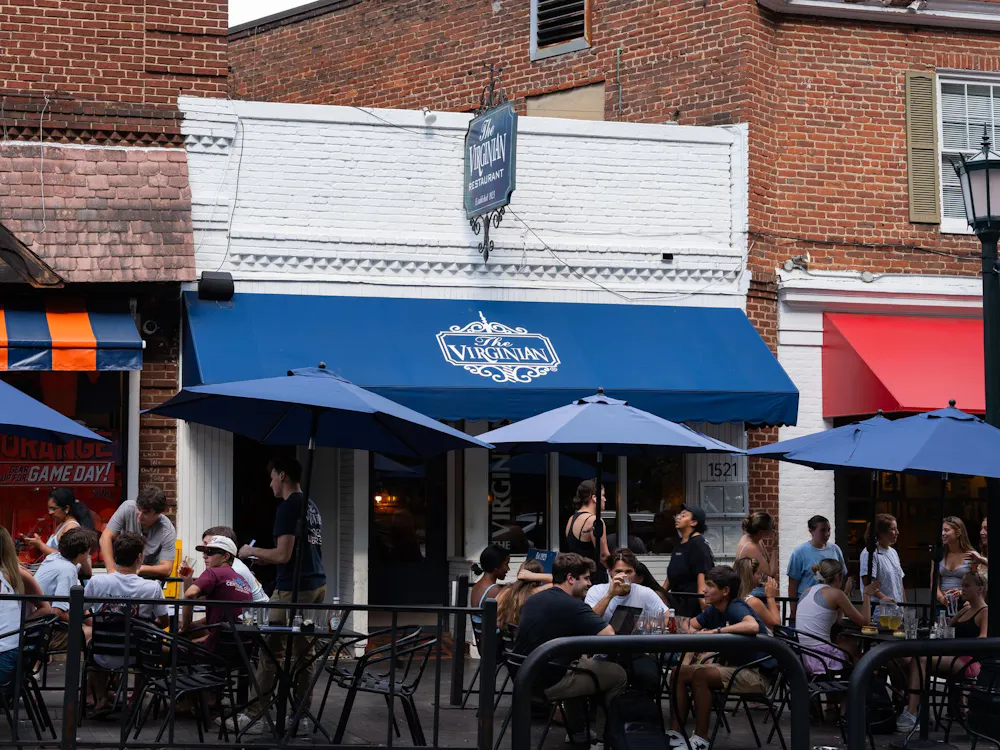
The Virginian — where Charlottesville comes to stay
By Sadie Adams | 2 days agoBut reducing The Virginian to just another restaurant or college bar misses exactly what has kept the establishment alive and well for over a century.

ROUNDTABLE: The ins and outs of sexual health on Grounds
By Ingrid Gay , Madigan Wirkus and Summer Hoffman | 5 days agoThree sex and relationship beat writers from The Cavalier Daily’s Life desk discuss their approaches to navigating sexual health on Grounds and beyond.

Fall Activities Fair marks new beginnings for students
By Ingrid Gay and Claire McGinn | 5 days agoOrganized by Student Council, students browsed over 550 Contracted Independent Organizations, Special Status Organizations and other student-oriented organizations to learn about the plethora of avenues for involvement around Grounds.