When OpenAI released ChatGPT as the first consumer large language model in 2022, the program was nearly unable to render any version of visual or written “art.” Distorted human bodies, glitching movements and robotic writing was the limit of artificial intelligence’s artistic ability, which gave some in fine arts a sense of security within their profession and passion. But over the last four years, the capabilities of generative AI programs have evolved exponentially, casting doubt on whether the arts will remain a solely human industry.
Although AI still leaves a slightly robotic mark on its work, generative models can now render realistic footage, effectively edit video and produce organic writing comparable to human production. Consumer models like Gemini and ChatGPT have all been updated to deliver more naturalistic writing and higher quality image generation. Even trade-specific AI programs have been released, such as scriptwriting tool NolanAI and post-production editor Runway, which aim to supplement industry professionals.
Amidst these rapid advances in AI technology, many companies in the entertainment industry have officially begun incorporating AI into their production processes, leaving artists and arts industry members wondering if, how or when their career will change in response to the technology. As University arts professors begin teaching in the new semester, the industry-wide debate about AI’s role in art will frame how professors approach class discussions, assignments and preparing students for what awaits after graduation.
For Asst. Media Studies Prof. Jülide Etem, the academic goal is to strike a balance between the use of traditional processes and the addition of AI. Etem teaches classes on film history, social justice and documentary filmmaking, and explained in a statement to The Cavalier Daily that she allows students to use AI on a case-by-case basis.
“I consider the central purpose of each assignment,” Etem wrote. “The central question is whether a tool supports the intellectual or creative process or substitutes for it.”
Etem provided a specific instance of students in MDST 2200, “Introduction to Film” who, when creating their film for a class project, used an AI-assisted editing tool to remove objects from the background of a scene. Etem said that reshoots would have created serious difficulties for the students, and thus she deemed the use of AI as “reasonable” in that scenario. Etem wrote that she sees AI being reliably used in similar scenarios as a post-production tool, but also recognized that students should fashion their own informed opinions on how the technology may be used in art.
“A strict ‘no AI’ rule may be appropriate for a particular assignment, but … education works best when students are not merely taught whether a technology is good or bad but are taught how to ask questions about it,” Etem wrote.
Outside of implementing AI policy, some professors have chosen to educate students on AI by dedicating class modules or entire courses to studying the technology. Assoc. Drama and Art Prof. Mona Kasra created ARTS 2559, “Art + AI: The Future of Creativity,” taught in Spring 2025, which focused on the potential relationship between human art and AI technology. Students in the class explored the artistic capabilities of various AI models, from consumer LLMs like ChatGPT to arts-specific programs like Nano Banana, and conducted experiments to see if the “promise” of AI truly compares to human-produced artwork.
Similar to Etem, Kasra said that she believes students should come to their own conclusions about AI’s place in their discipline. Still, Kasra noted that she thinks students should learn the full capabilities of AI before they make that decision, as she believes AI has already begun making irreversible changes to art.
“This tool is here … and it’s going to impact our way of making, our way of looking at the world,” Kasra said. “I think we’re just going to change our view of art, how we evaluate it, and see how art … [is] going to change and utilize this in different ways.”
However, there are professors who choose to teach arts mediums via traditional methods absent any discussion of AI — even if they believe that AI has the potential to seriously impact art. Assoc. Drama Prof. Doug Grissom has taught at the University since 1986, and said that while he thinks generative AI will have some impact on the arts, his teaching style has not changed in response to the technology.
Grissom explained that there are many reasons for continuing to teach playwriting and screenwriting in a more analog way, but the most prevalent is the fact that students in his writing classes seem genuinely interested in learning the traditional form. His students seem to, according to Grissom, be relatively uninterested in using an AI program to complete the intrinsically human process of creating art.
“Until AI can think and feel for us, and literally take over our consciousness, I still think people are going to want to do their own work for the most part,” Grissom said.
Grissom recognized that artists like his students could eventually become part of a future industry that is philosophically split between those who use AI and those who do not. Kasra and Etem emphasized the same importance of the human artist as Grissom, though they added that they feel it is important for students to understand AI regardless of whether they choose to use it in their artistic process. According to the two, students unfamiliar with AI could find themselves left out of the larger industry discussion about AI’s place in the arts.
Beyond the classroom, Etem and Kasra also agreed that the ultimate decision of how far AI is integrated into the arts will not be made by students, professors or industry executives — it will be made by audiences, as they are who truly determine the value of art.
“Audiences are crucial,” Etem wrote. “People decide when something feels moving, hollow or manipulative. Human fascination with storytelling will not disappear simply because the available tools change.”
Artists have already seen this very theory in motion, largely in negative responses to public collaborations between film studios and AI labs. Kasra, Etem and Grissom all highlighted that there is a societal connection to human art which corporations and executives cannot seem to shake, even as AI models become increasingly advanced. That connection, they said, can be reasonably traced back to the very process of creating that art.
“We are interested in where the art comes from, what ideas it’s presenting, what the process is. One of the issues, especially with generating [AI] tools, we see more and more is that that process is lost,” Kasra said.
Most corporate use-cases for AI in the arts revolve around increasing production of content, decreasing time spent on the creative process and decreasing labor expenditures. The endless creative applications for AI seem to fall by the wayside in favor of lower costs and faster results, which may not sit well with general audiences seeking carefully told human stories. Therefore, University professors, regardless of how they choose to implement AI in their classrooms, will be working towards a similar goal — teaching students how to create art that speaks to audiences, and to themselves as artists.
Read More
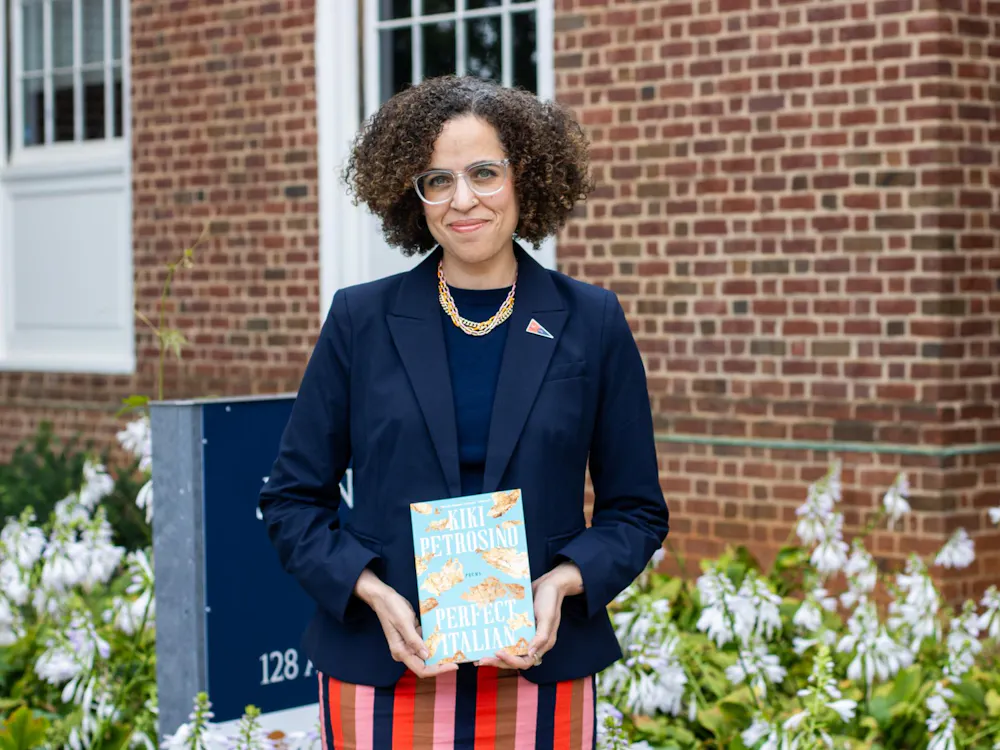
Professor Kiki Petrosino explores heritage, belonging and family in ‘Perfect Italian’
By Carly Smith | 2 hours agoIn this work, Petrosino examines her own heritage and identity, using engaging yet deeply personal language, vivid imagery and carefully crafted syntax as ways to express her connection, and lack thereof, to her family’s history.

U.Va. Arts Welcome Picnic showcased the many ways to engage with art on Grounds
By Cece Sherman | 16 hours agoUniversity creatives, student-led Contracted Independent Organizations and local organizations were welcomed by U.Va. Arts to the Betsy and John Casteen Arts Grounds Sunday for the annual Arts Welcome Picnic.

On Repeat: Songs for summer’s final sunsets
By Eloise Diffley | YesterdayThese songs are perfect for soaking up the last few drops of summer sunshine and serve as a great soundtrack for the first few weeks back in Charlottesville.