When fourth-year College student Sarah Deloney was in high school, she was a high-achieving athlete and student, attending Governor’s School in the morning and running track in the evenings. As she prepared to come to the University, she hoped to continue her demanding schedule on Grounds.
What she did not expect, however, was a subset of symptoms — headaches, pelvic pain and nausea — that eventually became too frequent and intense to ignore. After three years of persistent pain, Deloney was finally able to find an answer — Nutcracker Syndrome.
As festive as its name may sound, Nutcracker Syndrome has nothing to do with Christmas. It is a rare vascular condition that bears a superficial resemblance to a nutcracker — a vein that carries blood away from the left kidney is caught between the sharp angle created by two major arteries, which squeezes the vein just as a nutcracker squeezes a nut.
The rarity of the syndrome contributed to Deloney’s initial difficulties in receiving a diagnosis. When she told her pediatrician about her headaches and fatigue in 2020, her symptoms were put down as psychosomatic. Deloney, acknowledging her own stress about COVID-19, accepted the idea and did not pursue it further.
“I think for women especially, [we] don’t always pursue treatment if [we’re] told that [our] symptoms are psychosomatic,” Deloney said. “So I didn’t for a while. I said okay, I'm going to manage that, and I'll be fine.”
However, while attending the University in April 2023, Deloney also began to experience abdominal and pelvic pain. Like many women suffering from pelvic pain, she kept silent out of a sense of embarrassment. Instead of seeking help, Deloney dealt with the mixture of pain and fatigue by sleeping through her days, unable to attend classes or complete assignments. She took several incompletes that semester, and struggled to view them as a reflection of circumstance instead of a failure of her own effort.
“There's a part of me that thinks if I just worked harder or if I just really applied myself more, then maybe I could have at least finished the work that I had outstanding, because of [University] culture and because of my previous experience and the expectations that I've set for myself as a student,” Deloney said. “But being a good student should never come at the expense of your health.”
Deloney’s concerns about the stigma surrounding women’s pelvic pain led her to delay seeking treatment for six months. Although the Journal of Pain reports that approximately 26 percent of women around the world suffer from chronic pelvic pain, research in the Practical Pain Management journal shows that it is frequently dismissed and left unaddressed by medical professionals, resulting in the internalized stigma Deloney shared.
“I found [pelvic muscle pain] embarrassing and hoped it would go away with time,” Deloney said. “I didn’t realize [it] came from my pelvis tightening drastically to compensate for the weight of the distended veins bearing down on it.”
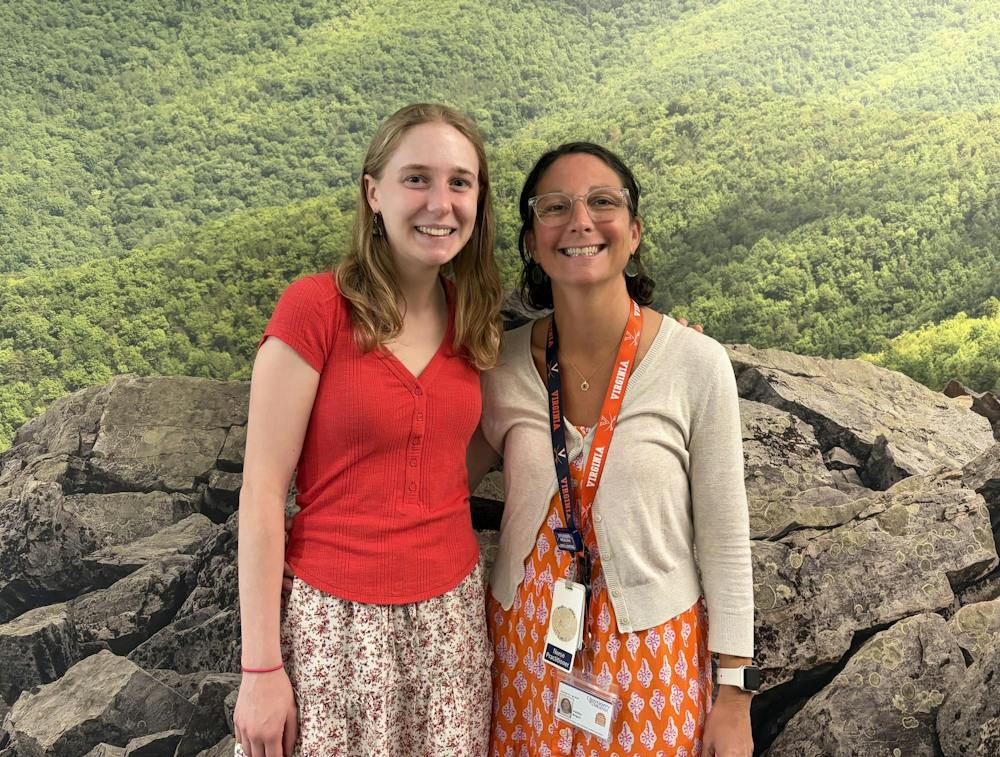
When Deloney decided to seek help, she contacted Ashley Rogan, a Family Nurse Practitioner at Student Health and Wellness. Having previously met Rogan for a consultation about tension headaches, Deloney felt that Rogan was personable and pleasant to talk to. Rogan noted that Deloney came with a complex set of symptoms which did not seem interrelated, and said she did not initially have a clear answer, but was committed to investigating Deloney’s case.
“Nurse Rogan [...] was the difference between me getting a diagnosis and not,” Deloney said. “She was so attentive. She wasn't dismissive of what I was saying … [When] I told her that I was having fatigue as a main symptom, she didn't just say, ‘Oh, well, you know, some people handle anxiety by sleeping.’ She wanted to figure out if there was a physical cause for it.”
Initially, the syndrome was not on Rogan’s radar. It took multiple appointments, several blood tests and two imaging scans before it was even a possibility. Deloney said that the process was not always straightforward, especially as her symptoms were atypical of her eventual diagnosis.
“Bodies are complicated and nothing is always ‘by the book,’” Rogan said. “[It’s good to] spend time listening to patients and getting a good history, and have multiple meetings if necessary to allow enough time to be thorough.”
The imaging scans ordered by Rogan uncovered a shape the size of a chapstick in Deloney’s abdomen. Initially, the shape was concluded to be a cyst. Three months later, however, radiologist Gia DeAngelis, M.D. realized that it was not a cyst but a vein — compressed and swollen due to obstructed blood flow.
The compressed vein led Rogan to read about Nutcracker Syndrome and convinced her that was the cause of the pain. She scheduled another appointment with Deloney and over an open anatomy book, Rogan explained the syndrome, trying to help Deloney visualize what was happening inside her body.
“[Ashley] actually brought out a textbook,” Deloney said. “She said [that] in all of the years … practicing as a nurse, she hadn't seen anything like this. But she had the textbook ready and she wanted to explain to me what happened.”
According to Deloney, receiving the diagnosis was a huge relief. Aided by her mother, Deloney began to search for a Nutcracker Syndrome specialist. Since there were none in Virginia at the time, they contacted Dr. Khanjan Nagarsheth, a vascular surgeon then practicing at the University of Maryland Medical Center. After more medical examinations, Nagarsheth discovered another case of Nutcracker Syndrome in a second renal vein, as well as a compression in Deloney’s iliac vein, a related condition known as May-Thurner Syndrome.
Since both syndromes were related to the kidney, Deloney decided to undergo a renal autotransplant, which removed her left kidney from its original spot and placed it under her right kidney. Moving the kidney left more space for her remaining renal vein, as well as the iliac vein which had been compressed as a downstream reaction to her renal compressions. At the same time, she needed venous repair that targeted three veins with two different venous conditions. The surgery took six hours and 30 people across three medical teams.
“They repaired the veins that needed to be repaired,” Deloney said. “And they detangled the kidney. In [my] patient notes, it says they worked on it on the back table, which is really funny to me because it sounds like they took out a car part, and they’re repairing the car part before they put it back in.”
Deloney successfully underwent surgery in December 2024, four years after her initial symptoms began. The process made it necessary for her to take medical leave for the Spring and Fall 2024 semesters, as well as the Spring 2025 semester for recovery. Although Deloney’s case concluded favorably without complications, her experience nevertheless alerted her to the importance of patient self-advocacy in the face of misdiagnoses.
“It's okay to push the system a little bit,” Deloney said. “If you're seeing a doctor, and they're telling you [that] your symptoms are really just anxiety or they just don't know what you have yet, don't be afraid to seek out another doctor. Don't be afraid to get a second opinion because it might be the difference between catching something early and suffering for months without knowing.”
For Rogan, Deloney’s case is a good reminder to medical practitioners. She said that uncommon conditions like Nutcracker Syndrome are easily missed, potentially leading to serious consequences that could be avoided by slowing down and paying more attention.
“One constant issue in healthcare is having enough time to be thorough,” Rogan said. “When the clinic is busy and things feel rushed, it can be easier to dismiss complaints that don’t fit a pattern rather than take the time to fully understand what a patient is experiencing.”
Deloney believes that the delay between her diagnosis and treatment was also due to institutional and logistical barriers within the medical system. She noted that barriers to proper treatment could be as big as the lack of an in-state specialist and the impossibility of fixing a surgery date, or as small as logging into a system to transfer medical records from one hospital to another. For Deloney, the sum of these factors pose a significant burden on the patient on top of physical pain and its consequences.
Academic pressure was also on the table. Deloney initially struggled to accept that her medical condition has made it difficult for her to perform academically at the same level as before, but her medical journey has been instrumental in changing her perspective. A weightlifting class taken during the recovery process encouraged her to come to terms with her physical capabilities, while physical therapy and other medical appointments prompted her to carve more time out of her academic schedule for health.
“In having chronic pain and recovering from it, I think my goal has shifted a little bit,” Deloney said. “I really just want to be healthy. I want to be academically successful, but I also want to be happy and healthy.”
Another one of Deloney’s new goals is pushing for more comprehensive treatment options and raising awareness for rare vascular diseases like Nutcracker Syndrome. She will be observing Nutcracker Syndrome’s first official Awareness Day Dec. 18. As she settles down for her last semester at the University, Deloney said she hopes her struggles will inspire others to advocate for themselves in the examination room, in the classroom and beyond.
“Having a medical obstacle, as a young person, is a kind of adversity that I wish more people could talk about openly and understand … For awareness and for helping others who have been through different obstacles feel validated in their trajectory,” Deloney said. “When [life] doesn't look like going straight through [a] college degree and getting it in four years, there's knowing that you have a different timeline, and that's okay.”

Astrid Cheng is a senior writer on the life desk. She is a second-year College student, majoring in English and cognitive science. She enjoys covering University events and writing the occasional column. Outside of The Cavalier Daily, Astrid is involved in the Honor Committee, Humanitas Journal of Human Rights and Epsilon Eta.
Read More
Animal lovers come together at Charlottesville-Albemarle SPCA’s third annual Fall Fest
By Lily Notter | 1 hours agoFall Fest is the CASPCA’s largest adoption event of the year.

No diet, no glory: My complicated relationship with dieting and eating
By Phoenix Banks | YesterdayMy weight and what I was going to do about it have been a topic of conversation my entire life.
Nothin’ But Burgers makes itself at home on the Corner
By Phoenix Banks and Claire McGinn | 3 days agoWhat makes Nothin’ But Burgers unique is its simple and cheap menu — burgers are the sole entree offering.