Editor’s note: This article contains mentions of sexual assault.
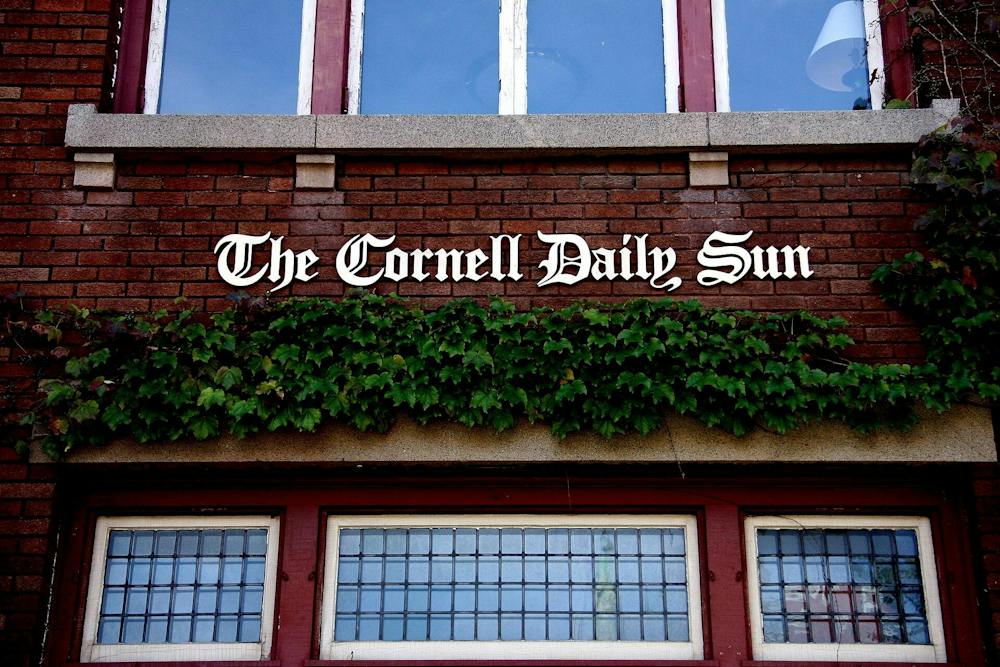
Almost everyone at this point is aware of the horrific alleged gang rape scandal at Cornell University. While the incident took place in 2024, the story and its disturbing details have only recently been catapulted into the national headlines. The attention generated by the ensuing media firestorm was enough to pressure Matthew Van Houten, Tompkins County district attorney, to reopen a criminal investigation into the alleged perpetrators. What many are unaware of, however, is how the news story was actually reported and uncovered for all to see. Student reporters at The Cornell Daily Sun, Cornell’s independent student newspaper, tracked the story for years behind the scenes before breaking the news of the lawsuit to the world Sept. 18. That detail has been tragically omitted from many of the national headlines, and it matters a great deal more than most may believe. When the Cornell administration faltered, it was the students who rose to the occasion.
The details of the story uncovered by the students are gruesome enough to repulse any reader. The impact on the victim was so traumatic that she left the university altogether. Unfortunately, equally repulsive was the Cornell administration’s response to the incident. While the victim identified seven alleged perpetrators, apparently only two were expelled. The others were seemingly slapped on the wrist with sanctions that included written essay assignments. This shocks the conscience. It is not merely the leniency of the sanctions that raises alarm bells — it is the utter lack of transparency exhibited by Cornell as the administration confronted the issue. About a month after the original incident, Cornell’s interim president released a vague statement addressing the allegations and encouraging victims of sexual assault to file Title IX complaints.
After that statement, however, Cornell’s subsequent Title IX investigation yielded no meaningful criminal referrals despite the administration holding evidence necessary to criminally charge the perpetrators. The Chi Phi fraternity Snapchat group text chain where the perpetrators derogatorily described the victim and encouraged others to join in the alleged crime was mysteriously absent from the initial investigation. While Cornell Police now insist that their department turned over the evidence to prosecutors, District Attorney Van Houten told reporters days ago that his office did not have access to the damning screenshots when he made the decision not to pursue a criminal case. The six-page report compiled by Cornell police that was instrumental in the DA’s decision not to initiate a prosecution appears to omit key details about the victim’s testimony. That is disgusting administrative malpractice — and someone in the Cornell administration is obviously lying. If it looks like a cover-up, walks like a cover-up and quacks like a cover-up — it is probably a cover-up.
Cornell’s administration presumably thought they could get away with this. It was the student journalists who ensured they did not. Powerful and unreceptive university administrations such as Cornell’s are not held accountable unless someone shines a light on their nefarious deeds. That is precisely where student journalists come into the picture. It is possible that no other outlet would have covered this story as scrupulously if The Cornell Daily Sun did not exist. As local newspapers especially continue to face fiscal pressures and shut their doors, student journalists are sometimes the only ones doing investigative work to take on the opacity of university administrations.
The resilience of the student journalists here is worth celebrating and commending. The Cornell Daily Sun journalists — Cornell students — first reported the story, investigated and followed the exposé for years before breaking the news. These brave student journalists spent countless hours reporting, researching, interviewing and daring to take on the Cornell administration in pursuit of the truth.
Cornell’s student paper is structured as an independent, student-run organization that does not receive any funding from Cornell. This structure, mirrored by many student papers across the nation, including our own, is incredibly powerful. By severing the unholy financial relationship between the university and the journalists tasked with holding it accountable, The Cornell Daily Sun creates for itself a degree of independence and credibility that university-affiliated news organizations could never achieve. It is no coincidence that The Cavalier Daily is structured in similar fashion — it is impossible to hold bad actors accountable while simultaneously taking their money. This combination of independence and resilience has culminated in what could be a second chance at justice. Universities, for all their vices, are better off having students with the courage to search for the truth and forums where the truth can be shared.
Student journalism is an often overlooked sideshow of the student experience on Grounds and at other universities. The shameful events that transpired at Cornell prove otherwise. However transparent university administrations may appear, students and other stakeholders can never place their full faith in leaders who have an incentive to conceal the worst offenses in order to save face. That is where organizations like The Cornell Daily Sun shine particularly bright. It is not possible or appropriate to argue that an incident as heinous as this one has some sort of silver lining. That being said, the story does have a few valiant unsung heroes who refused to stay silent. If and when the perpetrators are ultimately brought to justice, remember that it was thanks to Cornell’s audacious and stalwart student journalists who questioned authority just enough to reveal the uncomfortable facts. At Cornell, at our University and across the country, student journalism is the silent weapon that even a few daring college students can wield to take on the machine.
Joshua Hawkins is an opinion columnist on the Editorial Board for The Cavalier Daily. He can be reached at opinion@cavalierdaily.com.
The opinions expressed in this column are not necessarily those of The Cavalier Daily. Columns represent the views of the authors alone.
Read More

CARON: Political cynicism is complacency, not productivity
By Jenna Caron | 15 hours agoDuring elections, our agency is only gone if we allow it to be.

CLIPPINGER: Grade inflation is killing curiosity
By Grace Clippinger | 3 days agoWhen a high GPA is deemed important for future opportunities, students have more reason to avoid difficult courses, choose classes based on their expected grades and protect their transcripts, rather than pursue what genuinely interests them.
GARVIE: Do not let data center development fly under the radar
By Adeline Garvie | 6 days agoThere is a new power-sucking facility being built less than two miles from you, and you may not even be aware of it.