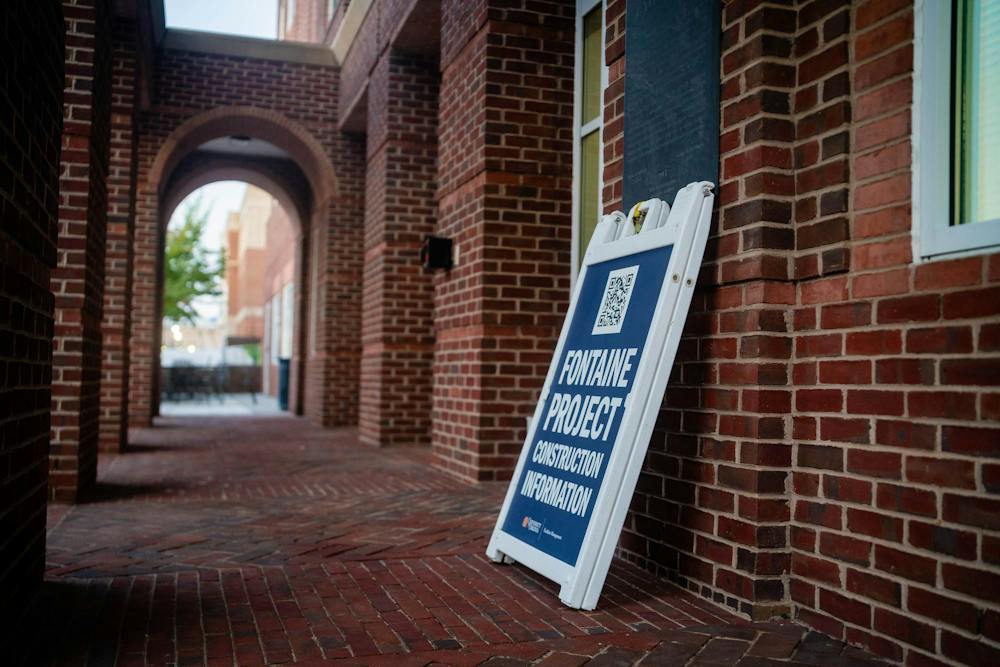
There is a new power-sucking facility being built less than two miles from you, and you may not even be aware of it.
This new research data center is located at Fontaine Research Park, right off of Jefferson Park Avenue. The project was initially approved by the Board of Visitors in June 2025 and is currently in the pre-construction phase. Despite this decision occurring over a year ago, the initial approval and continued progress of this project seems to have eluded the University community’s attention. While it is understandable that many citizens may not be aware of this development due to minimal publication and pushback on it, there could be severe and deleterious impacts to this lack of knowledge about local data center development.
While the Fontaine data center in Charlottesville may not be exclusively utilized for AI, it is designed to support high-performance computing and artificial intelligence workloads. The University claims it is a necessity to support the University’s computing needs, but it is unclear precisely what this means in the context of the University’s current or prospective investments into technology and AI.
Indeed, the development of data centers is not unique to Charlottesville. Northern Virginia is currently the world’s largest hotspot for data centers with over 250 facilities spread across the region. While data centers have been around since the 1950s, the recent surge in generative AI has led to a sharp increase in these facilities across the United States. This rapid development has been met recently with increased local opposition to the development of data centers across the country. Within this opposition are a few key aspects of data center development that do not sit right with many citizens — aspects which should be critically engaged with over the course of the Fontaine data center’s development and operation.
The most prominent effect of data centers on nearby residents is the rising energy costs associated with increased local electricity demand. Electricity costs are far outpacing inflation rates, with the Consumer Price Index rising 29 percent while electricity costs have increased by 42 percent since 2019. This surge in electricity demand is highly correlated to the massive expansion in new data centers in recent years. Moreover, the rise in energy demand and cost for residents has resulted in an upsurge in utility disconnections, including in Virginia, which disproportionately impacts lower-income households and can be tangibly detrimental to their wellbeing. These sweeping energy-related impacts are likely to also impact Charlottesville with the development of the Fontaine data center, and the University must make clear publicly that they are considering these consequences for the broader Charlottesville community — not simply the benefits of computation for the University.
The other common gripe against data centers are the environmental consequences for surrounding communities. In 2025, data centers worldwide consumed 222 billion liters of water for cooling. Additionally, the water used to cool down the facilities cannot simply be reused, replete with heavy metals and chemicals. Perhaps in an effort to respond to these concerns, the University has said that water will operate in a closed-loop system, which could help to reduce waste — though this method is only guaranteed when the Fontaine Central Energy Plant is operating at full capacity. On top of water consumption, there is also an increase in noise, light and air pollution from data centers. The harm data centers are causing to the environment is real and extensive, and it is happening now — even in our very own community.
Perhaps because of these growing issues, or due to the decreasing rural land available, or maybe because people are simply tired of staring at these loud, massive blocks of concrete day after day, Virginia is finally beginning to crack down on data center development. In Virginia Beach, a moratorium has been placed on new projects. In Chesapeake, Va., City Council approval must now be given before projects move forward. In Front Royal, Va., no data centers are permitted in the town’s industrial area. While the stated reason for striking down data centers may vary between counties, one thing is clear — public disapproval has influenced these choices. Virginians are tired of these facilities taking over their lives and are making their opposition known, with 25 data center projects canceled in Virginia in 2025 due to public resistance, showing that citizens’ opinions do have an impact. Charlottesville’s perspective should be captured and reflected as well in this development, with citizens expressing any concerns and consternation they might have about the Fontaine data center in whatever public forums are available.
There is a lot more nuance to the data center discussion than simply “stop building,” and this is certainly true for the Fontaine data center as well. While many environmentalists and philosophers would prefer the end of generative AI altogether to slow down development, AI is much too ingrained in our society and the workforce for this to be realistic. Conversely, this does not mean citizens should sit down in the discussion of data centers. If citizens become aware of these developments earlier, they have legal and political leverage through nuisance claims, environmental reviews, expenditure of resident funds and water rights violations.
The repetitiveness of the spiel on data center concerns does not make it any less important. In fact, it just highlights the consequences of normalizing these power-sucking facilities. The Fontaine data center serves as a great example of what happens when data center development flies under the public’s radar, with many Charlottesville and University students still not knowing about this project. University students should remain vigilant about the proceedings of developing data centers in their community, and prioritize informing themselves about the potential consequences to wield the proper ammunition for fighting against their development. University students must prove their commitment to their community, and show the fight against data centers is not in vain.
Adeline Garvie is an opinion columnist who writes about health, technology and environment for The Cavalier Daily. She can be reached at opinion@cavalierdaily.com.
The opinions expressed in this column are not necessarily those of The Cavalier Daily. Columns represent the views of the authors alone.
Read More

EDITORIAL: College sports need fixing
By Editorial Board | YesterdayCollege sports, in their current state, are fundamentally broken, and they desperately need legislative stabilization and reform.
EDITORIAL: Student self-governance deserves our confidence
By Editorial Board | 6 days agoNow, just a month into the semester, new officeholders appear to be delivering results.

YOUNIS: SJP’s criticism is not hysteria — it is a challenge to U.Va.’s standards
By Ayat Younis | September 16, 2026Any leader deserves scrutiny for their professional past, regardless of their background and especially if they have ties to brutal military-industrial complexes through the IDF.