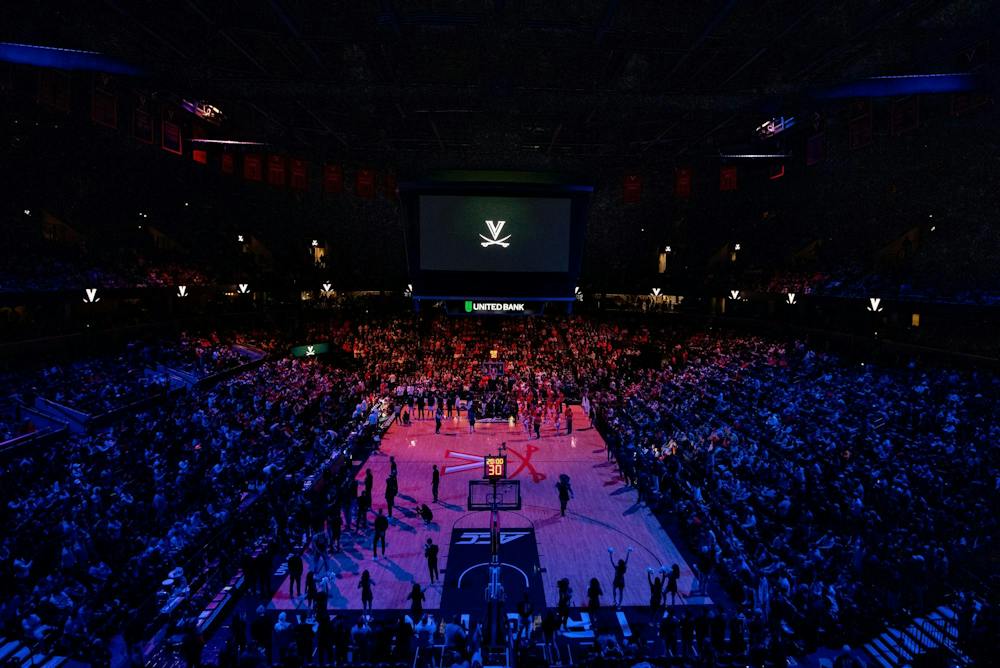
Today, collegiate athletics are a chaotic, lawsuit-ridden mess. Despite the kickoff of a new college football season, what has dominated headlines thus far has been legal controversy after legal controversy — from class of 2022 players’ eligibility status changing daily to Lane Kiffin’s attempt to bring back NFL players to Louisiana State University’s roster. Moreover, it is not just lawsuits that are embroiling the NCAA in contention, as astronomically large Name, Image and Likeness deals and disjointed regulation have sent the organization spiraling into disarray. Ultimately, this mayhem makes college sports significantly less fun for fans, who have become disillusioned amidst constantly changing rules and unprecedentedly high roster turnover. College sports, in their current state, are fundamentally broken, and they desperately need legislative stabilization and reform.
Arguably, the biggest problem in college sports is the never-ending eligibility disputes. The NCAA disclosed that there are 79 current lawsuits — with 450 plaintiffs across different sports — against the organization over the current eligibility rules. Athletes who face special circumstances often sue the NCAA for extra years of eligibility, leading to dramatic legal battles and arbitrary decisions across jurisdictions. For example, both Virginia quarterback Chandler Morris and University of Mississippi quarterback Trinidad Chambliss sued the NCAA for another year of eligibility this past offseason. The cases are remarkably similar. Morris, seeking a retroactive medical waiver, claimed that mental health struggles had kept him from playing during the 2022 season. Chambliss, also pursuing a retroactive medical waiver, argued that chronic tonsillitis held him out of competition during the same season. The biggest difference in the two situations? Chambliss, granted another year by a Mississippi court, takes the field this year. Morris, denied his eligibility by a Virginia court, had to end his college career.
For Virginia fans, it is a deflating result that points to an incongruent application of the rules based on the forum chosen to litigate the dispute. Additionally, the judicial ambiguity compounds, as quarterback Brendan Sorsby’s case clearly reveals. Sorsby admitted to sports betting on games, warranting a ban from NCAA participation, but upon suing for his eligibility, he found himself in a courtroom with a judge who is an alum and fan of Texas Tech University, the school he was attempting to play for. While the judge rightly recused himself from the case after widespread controversy, the fact that this could even be a possibility raises serious questions about the integrity of litigating these matters in local courts.
The NCAA should be able to make enforceable rules that quash the drama of lawsuits altogether, but player compensation has thrust college athletics into awkward legal territory. It can no longer be argued that it is a purely amateur endeavor, as it directly impacts athletes’ pocketbooks. When eligibility limits are taken as a suggestion, the traditional order of college sports falls apart, as high school recruits are deprioritized when schools attempt to hoard as many older players as they possibly can. Notably, Virginia football has started taking significantly fewer high school recruits and far more veteran players in the portal, making it the oldest team in all of college football. Though this might be a successful roster-building strategy, it derails one of the most sacred elements of college sports — the traditional four-year player. There must be a path set for clear, actionable limits on player eligibility in order to protect the integrity and equity of college sports across the country.
Another problem facing the current model of college athletics is the overuse of the transfer portal. Often chasing bigger paydays, college athletes swarm to the portal at the end of every season, uprooting teams and dismaying fans. In 2026, about one in three college basketball players entered the portal. One of the best parts about following a college team is watching the players you know and love blossom within the system — think of Virginia basketball’s 2019 national championship squad, a team with one lone transfer — but such high turnover makes that a significantly less common experience.
While it certainly can be exciting to watch how teams rapidly reshape each year, it is not a sustainable, healthy system. College teams should not only be focused on winning, but also on building scholar-athletes ready for life beyond their sport. Fewer than 2 percent of NCAA football athletes will end up going to a major pro league, with similarly low rates across other sports, which makes it incumbent on schools to prepare student-athletes for their realistic future. Reshuffling entire rosters year after year and dropping players into new environments with wildly different academic and team expectations makes it so those athletes are not given the stability of a four-year college experience. This instability makes it difficult for schools to fulfill that obligation.
Fortunately, Congress has heard the public outcry over the state of college athletics and taken up trying to solve these problems. The Protect College Sports Act is a bipartisan bill currently making its way through the Senate, which would officially establish a simpler, enforceable eligibility framework, standardize NIL funding and limit the transfer portal. These reforms would go a long way towards fixing what is broken in college sports. However, it is not yet clear whether the broader implications of the legislation are worth the real improvements it would make to college athletics. To achieve its ambitious goals, the act gives the NCAA antitrust exemptions that would only further empower an organization that has been credibly labeled as having monopsony power by economists. Furthermore, the bill could depress athlete wages by setting hard limits on NIL funds and limiting players’ legal leverage over the NCAA.
These downsides make it difficult to fully endorse the bill in its current state, and we strongly urge Congress to make amendments to the bill to protect player compensation — NCAA athletes are among the most desirable amateur athletes in the world and deserve to be fairly paid. Nevertheless, it is genuinely encouraging to see the government attempt to bring much-needed stability and reform to college sports. If the necessary player protections are made, this board would wholeheartedly endorse the act.
When legendary Virginia basketball Coach Tony Bennett shocked the University community by suddenly retiring in 2024, he explained his decision by pointing to the state of college athletics — “College athletics is not in a healthy spot. It’s not. And there needs to be change.” Though even at the time his words rang true, they have only gotten more prescient in the ensuing years. College sports are in a profoundly unhealthy state which threatens to both undermine fan enjoyment and decay its true mission of shaping scholar-athletes. However, the potential for ground-breaking, stabilizing and fair legislation provides a real glimmer of hope for the future of the sports we all love.
The Cavalier Daily Editorial Board is composed of the Executive Editor, the Editor-in-Chief, the two Opinion Editors, the two Senior Associates and an Opinion Columnist. The board can be reached at eb@cavalierdaily.com.
Read More
EDITORIAL: Student self-governance deserves our confidence
By Editorial Board | 4 days agoNow, just a month into the semester, new officeholders appear to be delivering results.

YOUNIS: SJP’s criticism is not hysteria — it is a challenge to U.Va.’s standards
By Ayat Younis | September 16, 2026Any leader deserves scrutiny for their professional past, regardless of their background and especially if they have ties to brutal military-industrial complexes through the IDF.

ELJAZZAR: Do not be fooled by the Vanderbilt Report
By Farah Eljazzar | September 14, 2026A report chaired by a philosopher that aims to invoke objective inquiry is hypocritically holding itself to a lower evidentiary standard than it criticizes.