From childhood on, women "learn that conversations about love are gendered narrative, a female subject." In a patriarchal culture, love, because of its unfair attribution to "femaleness," represents the inferiority of women in the culture. In fact, bell hooks argues, "Femaleness in patriarchal culture marks [women] from the very beginning as unworthy or not as worthy, and it should come as no surprise that we learn to worry most as girls, as women, about whether we are worthy of love." After years of feminism, why are women still searching for love?
In "Communion: The Female Search for Love," hooks addresses the importance of love and how it reveals itself in a woman's life -- a subject often shoved under the rug. hooks discusses the progress feminism has generated and the problems it has not addressed.
hooks declares the search for love as the "heroic journey" females must choose to be truly free. Love, as prescribed in "All About Love: New Visions," also by hooks, is very important but cannot be explained by women -- let alone men.
Throughout childhood, females receive constant affirmation of their beauty and belonging in this culture. Fathers, if present -- another issue deserving its own book -- treat their daughters as princesses until they begin to grow up. Many females would stall this maturation to simply have their father's love again. Patriarchal culture abruptly introduces itself when little girls begin to interact with society. Research on girlhood "confirms that young girls often feel strong, courageous, highly creative and powerful until they begin to receive undermining sexist messages that encourage them to conform to conventional notions of femininity," hooks writes.
Neither the author nor I want to say that conventional norms of femininity are wrong. If a female wants to choose to be a housewife or wear a skirt to work, she should be granted the right to do so. It is any form of coercion into the conventional norms that would disturb hooks and me.
Feminism altered the way women were viewed in society. Females were able to claim greater respect and appreciation. But still to this day, females have never been rightfully able to claim equality in this patriarchal society.
Society recognizes a female's right to work outside the house. Most females do not attend the University with the intention of becoming a housewife, but rather attend with dreams of careers and economic gain. Within the home, patriarchy overtakes the female's life, using her wealth to pay the bills while her husband uses his salary to fit the rest and keep a stash on the side. This display of patriarchy is not love.
"No feminist woman proclaimed loudly that she was looking for love," hooks writes. Feminists treated work outside the home as a replacement to love. However, careers and money -- as time has shown -- does not replace the female's want for love. In this patriarchal society, females should be able to be loved and should have men joining them in this quest for love.
Females are typically trapped in a relationship power struggle that goes beyond money and careers. hooks makes mention to the sexual freedom feminism supposedly created. Men were widely receptive to women performing oral sex and wanting sex several times a day. Many men at this University are not protesting the Lawn against the woman's freedom to be sexually loose or sexually explorative.
Still, many men refuse to accept the women's right to say no. Men readily abandon feminism when women stake a claim on their right to say no. Men may withhold sex, but women are not afforded this right. "For example: there is not one essay written by a feminist man who likes having his [penis] sucked that tells us how he copes with having a longtime female partner who refuses to perform fellatio," hooks observes.
Men do not care if females are their equals everywhere as long as they stay the "superiors -- the ones in charge, the ones on top -- in the bedroom." Cat calls, sexual innuendos and rape -
Read More

U.Va. students and physicians team up for another year of free kidney screenings
By Merrill Hart | November 5, 2024Saturday’s screening marked the first by KDSAP at Portico Church, near IX Art Park.
U.Va. Health sees a spike in COVID-19 cases
By Emily Horn | September 4, 2023U.Va. Health ended their vaccination requirements in August, and masks were made optional in most hospital areas in early April.
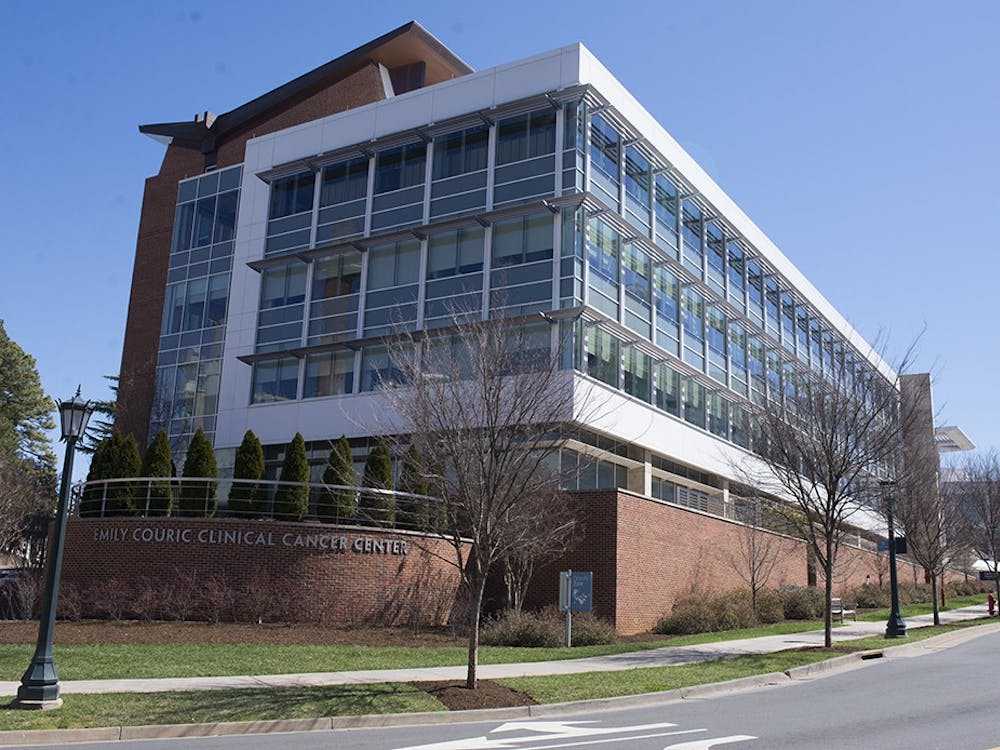
U.Va. Cancer Center harnesses $12 million grant to support opportunities for undergraduates, ongoing research and new center
By Ellen Wu | January 12, 2023The grant provides an opportunity to establish the Center for Systems Analysis of Stress-Adapted Cancer Organelles, which seeks to find the cause of cancer in individual organelles.