By Margaret Bonner Cavalier Daily Associate Editor The new Honor Committee convened for the first time last night, using the meeting to elect new subcommittee chairs and discuss this year's emphasis on increasing the visibility of honor at the University.
In closed session, the Committee elected third-year College student Brock Saunders and second-year Engineering student Alison Tramba co-chairs of the Faculty Advisory Committee and third-year Architecture student Morgan Miles chair of the Diversity Advisory Board. The Committee held off electing a secretary and other subcommittee chairs until the subcommittees are created formally by a vote on the Committee's goals.
The meeting was highlighted by a discussion of the Committee's goals. The discussion centered on the image and visibility of honor in terms of diversity, student initiations and faculty opinion.
The diversity discussion emphasized the need to increase non-racial diversity in the honor system.
"We should be careful not to just think of racial minorities but also athletes and other underrepresented groups," Vice-Chair for Investigations Lauren Ross said.
The Committee also discussed concerns that some schools have disproportionate engagement in the honor system, a matter highlighted by some of the non-elected support officers.
"Most of the support officers are from the College," representative Dan Bowman said.
Others voiced concern about the percentage of student initiations.
"One of the reasons student initiations went up so much this year was how much it was in the news," Ross said. "We need to make sure people don't become complacent."
This year, students initiated 40 percent of cases, a dramatic increase from last year's 12 percent student-initiation rate.
In response to the overwhelming support for the referendum on sanction reform in the spring elections, the Committee discussed the dual purpose of the Sanction Reform Committee -- both to research student opinion on the issues and to seek alternatives to the single sanction.
"Both aspects need to be operating within the same committee, with the two components working together," representative Sarah Outten said.
There was some dissent over whether the aims of research and reform proposals should be pursued concurrently or not.
"There needs to be a component seeking alternatives to the single sanction," representative Alexander Hawkins said. "I think we have student mandate that necessitates that."
Committee Chair David Hobbs suggested that the Committee defer placing a deadline on the actions of the SRC.
"We could structure it that it would not put a sanction alternative referendum on next year's ballot but would give next year's Committee a foundation to work with," Hobbs said.
The Committee also discussed faculty relations, an issue that came up in discussion of a Faculty Senate initiative to survey faculty about their opinions on the honor system. Several members of the Committee proposed modifications to the proposed survey, such as including both students and faculty. The Committee tabled the issue for further discussion at later meetings.
"Striking while the iron is hot might not be the best thing for this survey," Hobbs said.
The goals of the Committee will be drawn up formally by the Executive Committee and brought to a vote at next week's meeting.
Read More
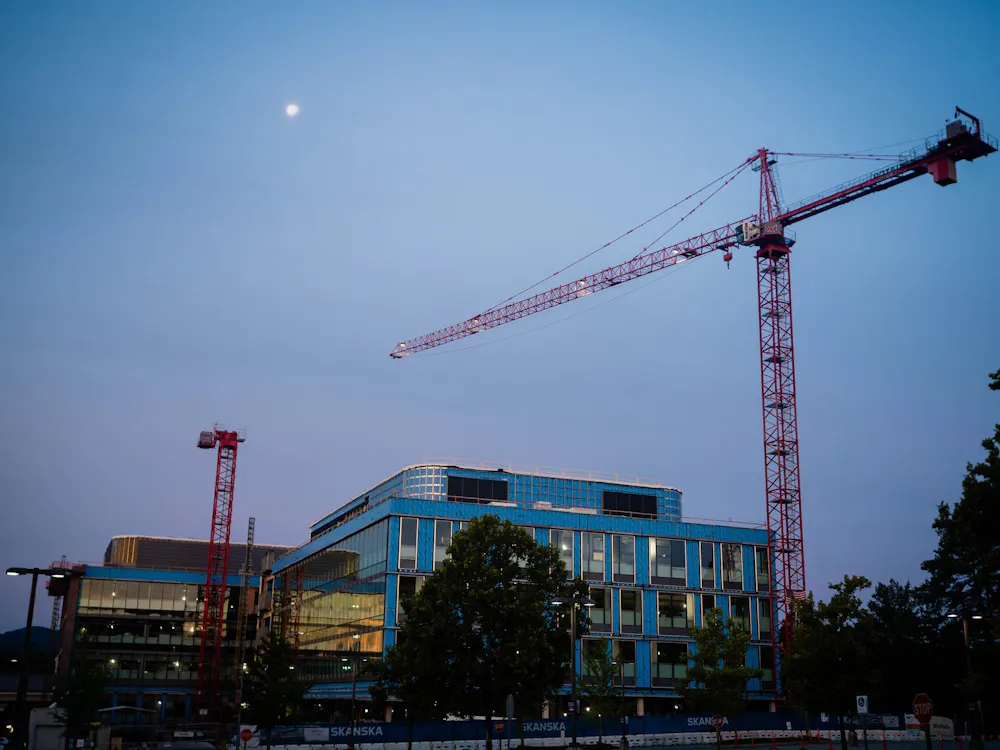
U.Va.’s planned data center expands $30 million amid statewide debate over energy use
By Jaylynn Perez | 20 hours agoThe project has grown since it was initially approved by the Board of Visitors in June 2025 as a $72 million, two-story data center facility.
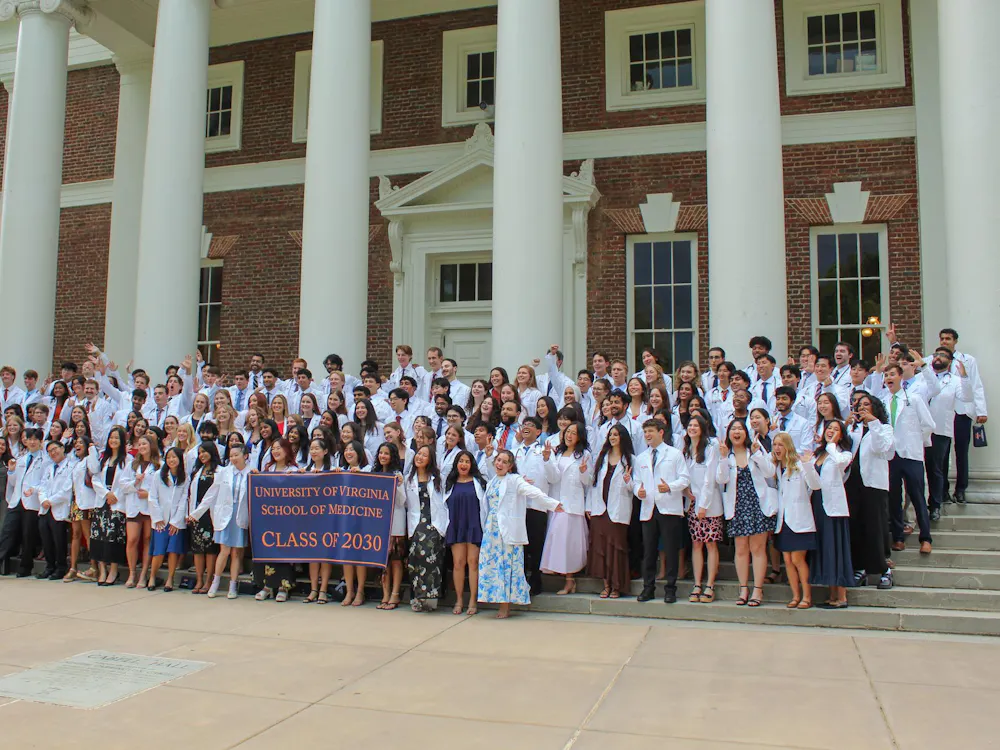
School of Medicine welcomes Class of 2030 with annual White Coat Ceremony
By Michael Racz | 21 hours agoThe ceremony is a longstanding tradition in medical schools across the country in which incoming first-year medical students receive their first white coat as they enter the medical profession.
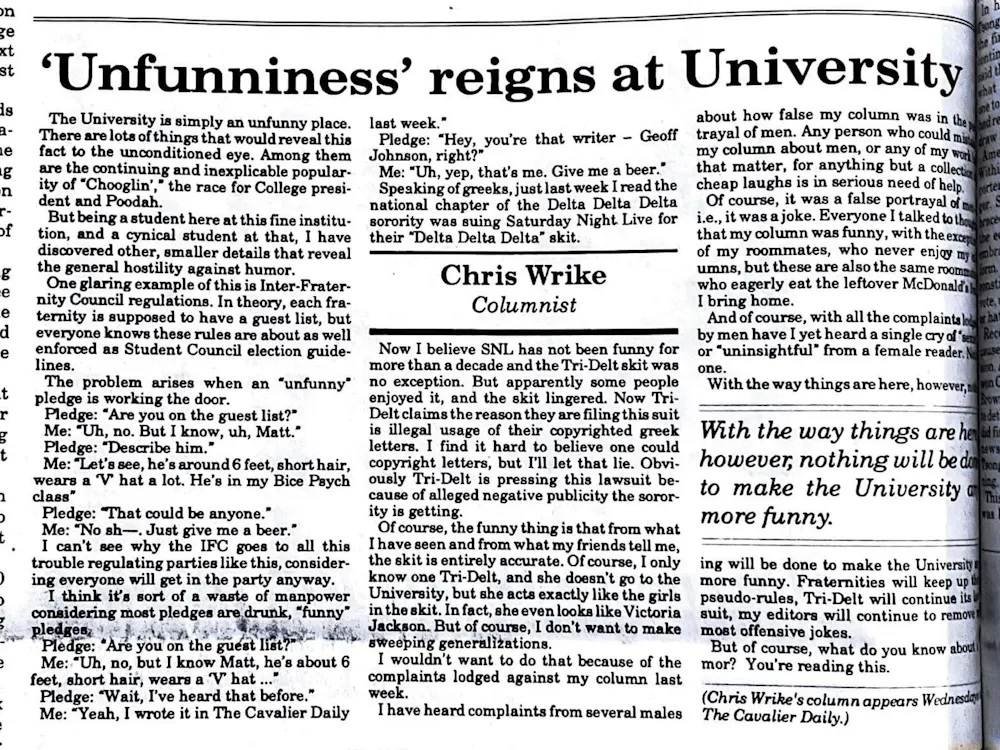
From the Archives: 1990s
By Tori Vonderheid and Livia Shrednick | YesterdayUniversity physician Dr. Joel Trugman discovered that some children who had been diagnosed with cerebral palsy, an incurable movement disorder, instead have a rare biochemical disorder that is treatable.