Recent studies show that patients with autism and related Asperger syndrome with higher levels of oxytocin are more likely to decipher social cues and make eye contact, tasks that are often difficult for these individuals. Thirteen high-functioning subjects with autism either were asked to inhale oxytocin, a hormone know for its role in female reproduction, or a placebo, before participating in two tests to determine if their behavior was altered as a result. The first test showed how well the subject could determine which computer-generated player was most cooperative and trustworthy, which proved to be a difficult task for subjects given the placebo. The second test gauged the subjects' ability to focus on people's eyes by showing them a few faces. This also was more difficult for subjects given the placebo than for the individuals who inhaled oxytocin. Although there is "therapeutic potential" from using oxytocin, these studies will have to go through extensive testing before being safely released for public use.
-compiled by Nalin Chuapetcharasopon
Read More

U.Va. students and physicians team up for another year of free kidney screenings
By Merrill Hart | November 5, 2024Saturday’s screening marked the first by KDSAP at Portico Church, near IX Art Park.

U.Va. Health sees a spike in COVID-19 cases
By Emily Horn | September 4, 2023U.Va. Health ended their vaccination requirements in August, and masks were made optional in most hospital areas in early April.
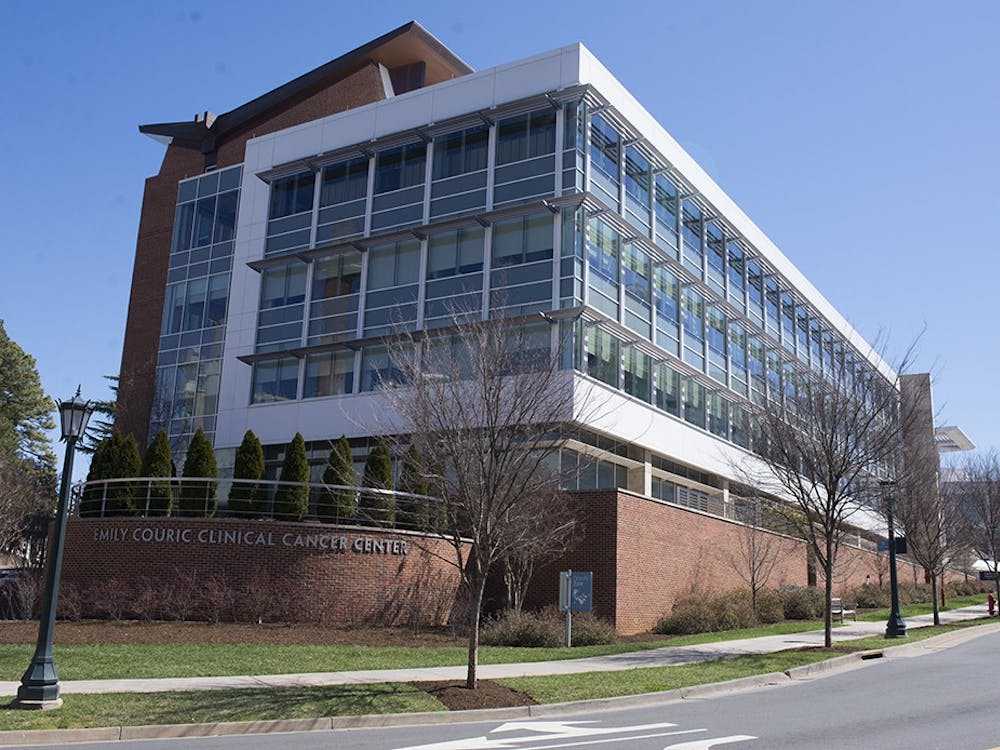
U.Va. Cancer Center harnesses $12 million grant to support opportunities for undergraduates, ongoing research and new center
By Ellen Wu | January 12, 2023The grant provides an opportunity to establish the Center for Systems Analysis of Stress-Adapted Cancer Organelles, which seeks to find the cause of cancer in individual organelles.