The Cavalier Daily
Serving the University Community Since 1890

Are organizations' statements condemning the Board’s actions effective?

Several critical statements from University organizations about the 10th presidential search have been issued, and organizational leaders stand by their importance

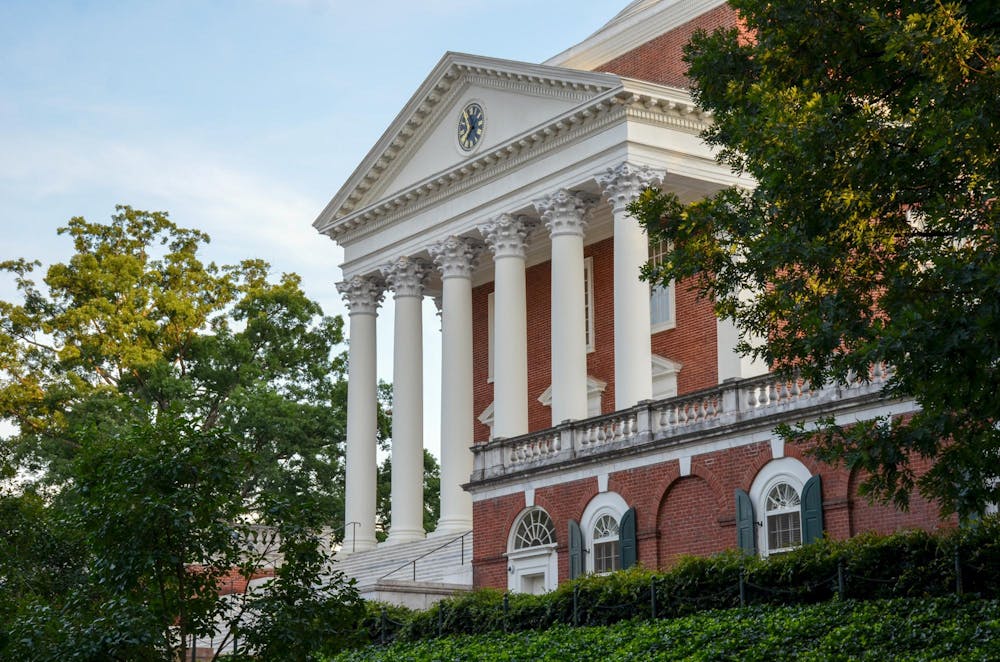
The Rotunda, photographed June 29, 2025.

Despite votes of no confidence in the Board of Visitors and calls to cease the presidential search from several key stakeholders, the Board appointed University President Scott Beardsley to begin his term Jan. 1. This dissonance raises questions about what constitutes effective and collaborative communication with University leadership.  

Following the resignation of former University President Jim Ryan in June, various stakeholders on Grounds, including the Faculty Senate, General Faculty Council and Student Council, began releasing statements. These included votes of no confidence in the Board of Visitors and calls for the presidential search committee to pause. 

The first statement came from the Faculty Senate July 11 when they voted no confidence in the Board, stating the Board did not protect the University from “outside interference” regarding Ryan’s resignation. 

This was followed by Student Council passing a resolution July 20 calling for increased student voices to be upheld throughout the search process for the University’s 10th president. According to Clay Dickerson, Student Council president and fourth-year College student, the extent to which the initial resolution was incorporated was unclear, which led Student Council to issue a vote of no confidence in the Board Aug. 8. 

Later, while the presidential search was underway, the Faculty Senate passed two resolutions calling for the process to pause on Nov. 14 and Dec. 12. 

The General Faculty Council, which aims to advise the University on matters related to general faculty and senior professional research staff, voted to endorse both of the Faculty Senate’s resolutions during formal meetings in November and December. All GFC endorsements are outlined on their website

Additionally, nine of the University’s 14 deans wrote a letter to the Board Dec. 2 calling for the presidential search to pause. 

However, not all stakeholders condemned the presidential search process. University Spokesperson Bethanie Glover said the search committee held listening sessions to increase transparency during the search. Additionally, The Jefferson Council, a conservative alumni group, defended the Board’s actions over the course of the search.  

Glover shared that University leaders try to maintain a relationship with stakeholder groups attempting to influence the Board, but she also said that resolutions and statements passed by these groups are not fully representative of the bodies they claim to represent. According to Glover, the University did take community input into account in the presidential search process, citing the search committee’s over 40 listening sessions with members of the University community. 

“We're grateful for the hard work of the Special Committee and search firm in thoroughly reviewing the feedback the University received during the presidential search process in order to arrive at a well-qualified finalist who is fully equipped to lead the University,” Glover wrote. “We're also thankful for all University community members who took the time to share their thoughts on the search throughout the process.”

Jefferson Council President Joel Gardner agreed with Glover, arguing the statements from University groups were “ridiculous” because they were misrepresentative of the entire faculty and student populations. He noted the statements were ineffective and served simply as an attempt to discourage the Board from appointing a president. 

“This was a coordinated effort to keep the current [Board] from doing their job, which is selecting a new president, which is probably the most important job of any [Board],” Gardner said. “In my mind, [organizations critical of the Board are] totally politically motivated to try to intimidate them not to go and pick the new president.”

In opposition to Gardner’s view, Jeri Seidman, Faculty Senate chair and associate Commerce professor, said she viewed the Senate’s resolutions as a success even though the Board did not take action on them. 

“If the impact of the numerous resolutions is an understanding that the Faculty Senate takes its call to provide advice seriously ... I would consider that to be a success,” Seidman said. 

Seidman explained the reasoning behind the Faculty Senate’s resolutions, saying that following Ryan’s resignation, regular avenues of communication with the Board and University administration were severed. 

Specifically, Seidman said that meetings of the President’s Direct Reports and the University Leadership Council were cancelled or paused. According to Seidman, the Senate Chair was historically included in the meeting of the President’s Direct Reports, and these meetings have not occurred since July. Additionally, meetings of the University Leadership Council were put on hold from September to November. Seidman said that both of these types of structured meetings enabled a relationship between the Senate and University leadership by allowing for direct lines of communication. 

“Without these standing and scheduled meetings to allow for relationship-building, [a relationship between the Senate and University leadership] didn't exist,” Seidman said. “There was a signal being sent without these other meetings occurring, that input was being sought from a select few people, rather than from a wider group.”

Tisha Hayes, chair of the General Faculty Council and Education professor, shared similar sentiments to Seidman. She said that GFC’s endorsements of Faculty Senate resolutions were the most effective way to convey the sentiment of the broader faculty, and that they enable the GFC to advise the Board. 

“Our expectation is that [the Board and new president] will consider our unified voice … calling for shared governance and work to rebuild trust,” Hayes said. “We will continue to use our voice to advise on behalf of the general faculty.” 

According to Dickerson, resolutions are the primary way Student Council communicates concerns, and ultimately, the vote of no confidence arose from students realizing they did not have a voice in the transition to a new president. 

“[Resolutions] are a pillar of student self-governance, and their effectiveness is dependent on the receptiveness of our partners in U.Va. governance. The [Board] has proved to be a less than optimal partner in this regard,” Dickerson said. 

Though statements released by University stakeholders calling for the presidential search to pause were not ultimately acted on, Watler Heinecke, former president of the U.Va. chapter of the American Association of University Professors and associate professor of Education and Human Development, said such statements have applied pressure to the Board in the past. 

Heinecke cited the pressured resignation of former University President Teresa Sullivan in 2012. The AAUP, along with other organizations, objected to the resignation by releasing critical statements, and Sullivan was reinstated as president. 

Heinecke noted that for the 10th presidential search, the AAUP followed a similar procedure to when Sullivan first resigned, releasing statements condemning the Board which he said were aimed not only at the Board, but also at the University community more broadly. However, this time, those statements were not equally as effective according to Heinecke. 

“[The Board’s] behavior [was] totally out of compliance with shared governance standards, and they did it willfully and politically and for ideological reasons,” Heinecke said. “All three [state, local and national AAUP] have objected to the appointment of Scott Beardsley.”

The AAUP has a set of standards for universities to uphold during presidential searches, and Heinecke said the objections to the search were founded in the standards of the AAUP. 

Looking forward, Seidman, Hayes and Dickerson all said that they hope to soon return to a model of more direct communication with University leadership. Seidman said that she would like the Faculty Senate Chair to address the Board at meetings next year to increase the faculty input the Board receives. Hayes and Dickerson shared a similar sentiment — they hope for the new president to pursue shared governance with students and focus on rebuilding trust with the University community.

“Students must continue to be creative when met with inflexible governance partners. There's always a way, and no challenge is impossible to overcome,” Dickerson said. 

Correction: This article previously stated that Seidman said she would like to address the Board at meetings next year to increase the faculty input the Board receives. Seidman said that she would like the Faculty Senate Chair to address the Board at meetings next year, not herself specifically. The article has been updated to reflect this.

Local Savings

Puzzles
Hoos Spelling

Latest Podcast

Dr. Anne Rotich, Director of Undergraduate Programs in the Department of African American and African Studies, informs us about her J-term course, Swahili Cultures Then and Now, which takes the students across the globe to Kenya. Dr. Rotich discusses the new knowledge and informational experiences students gain from traveling around Kenya, and how she provides opportunities for cultural immersion. She also analyzes the benefits of studying abroad and how students can most insightfully learn about other cultures.