To celebrate Black History Month, we look back into the archives to see the stories of Black trailblazers who attended the University who made a difference on Grounds. From Rosa Parks giving a speech in Old Cabell Hall, to the Corner being segregated, these moments in the University community’s history remind us that history can be both inspiring and painfully complex. By revisiting these stories, we honor those who challenged injustice, created space where there was none and helped transform the University into a more inclusive and welcoming place.
1950s
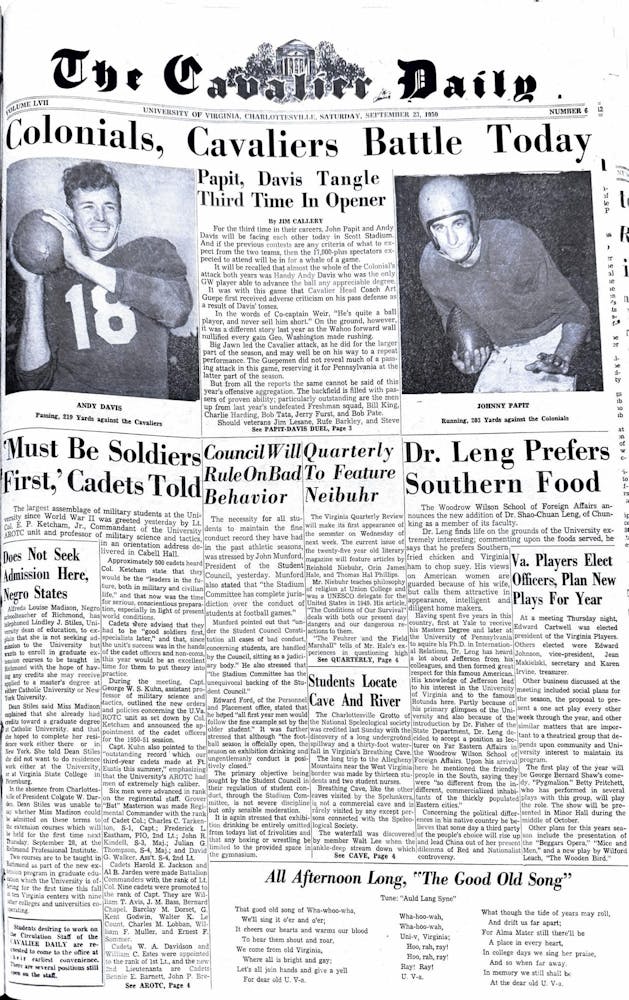
Sept. 23, 1950
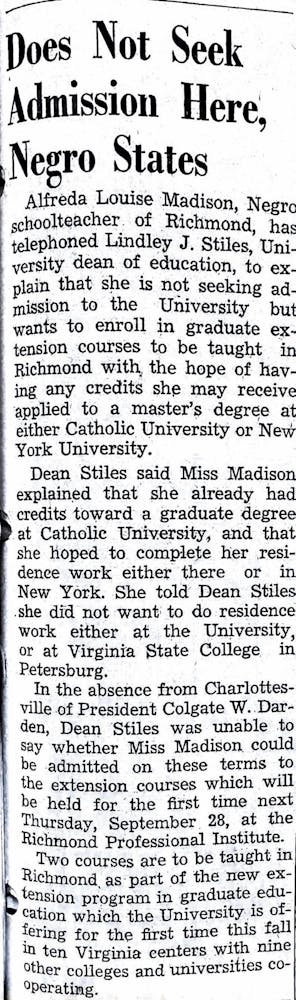
“Does Not Seek Admission Here, Negro States”
By author unlisted
In September of 1950, African American schoolteacher, Alfreda Louise Madison pursued her graduate studies degree despite racial and systemic barriers. University Dean of Education Lindsey J. Stiles wrote to Madison expressing to her that because University President Colgate Darden was absent from Charlottesville, she was unable to confidently say whether Madison could enroll considering the circumstances for the time. Madison’s story is a common tale that reflects the commitment to higher education that Black individuals had during a time before civil and equal rights.
1960s
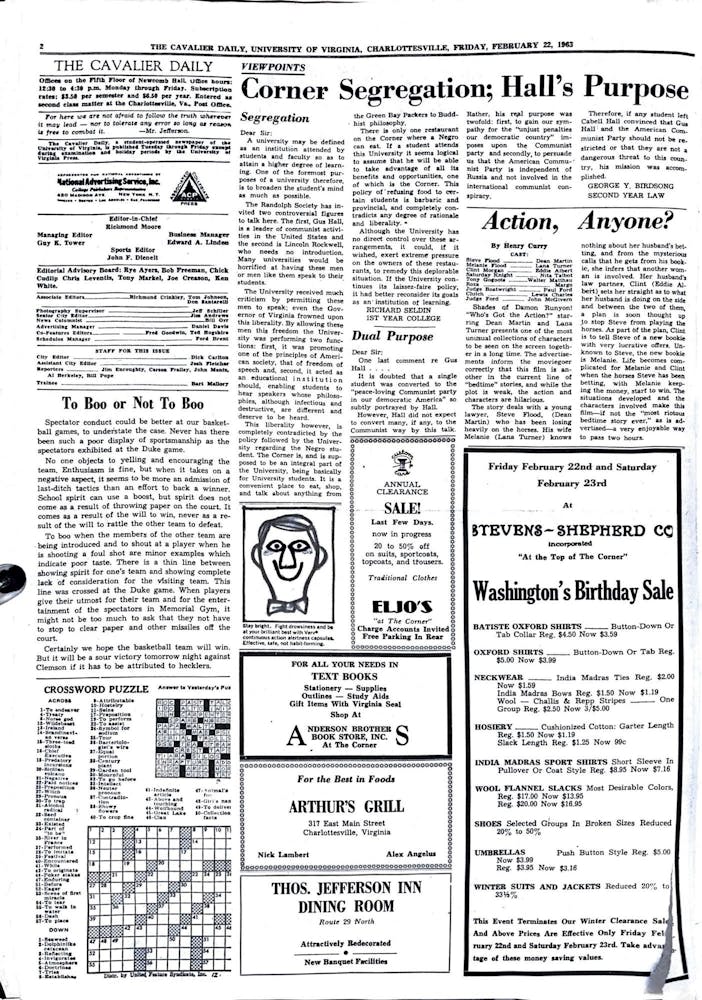
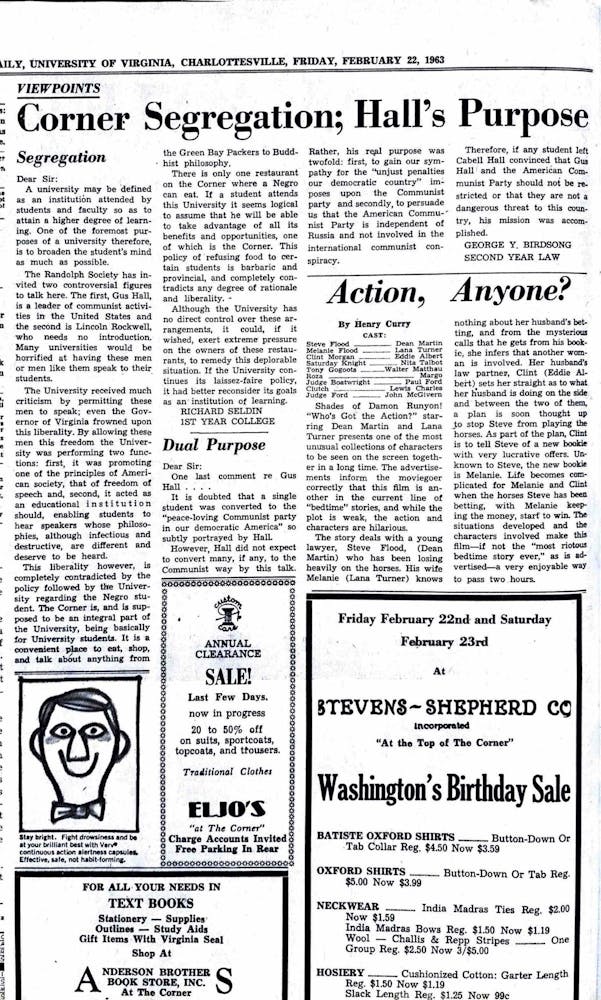
Feb. 22, 1963
“Corner Segregation”
By Richard Seldin
In 1963, only one Corner restaurant was open for Black students to eat, spend time and — most importantly to writer Richard Seldin — encounter a diversity of thought. Seldin argues that the University’s purpose should be to “broaden [a] student’s mind,” as it did when inviting controversial speakers to Grounds, yet notes that it does not extend this “liberality” to the Corner, a breeding place for discourse and education. This article critiques the University’s hypocrisy and calls on the administration to demand change from the restaurants’ owners.
1970s
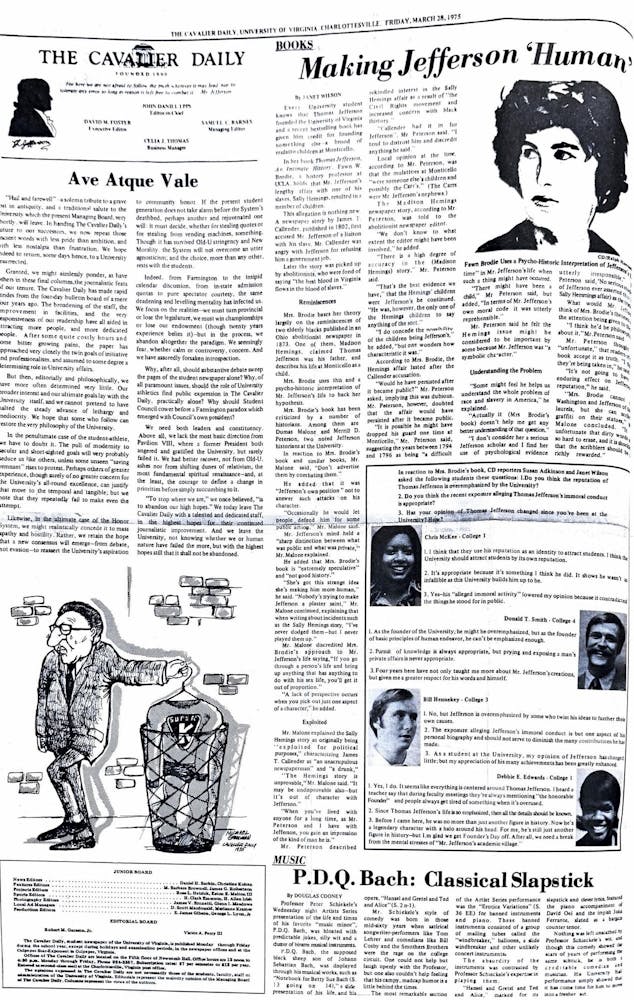
March 28, 1975
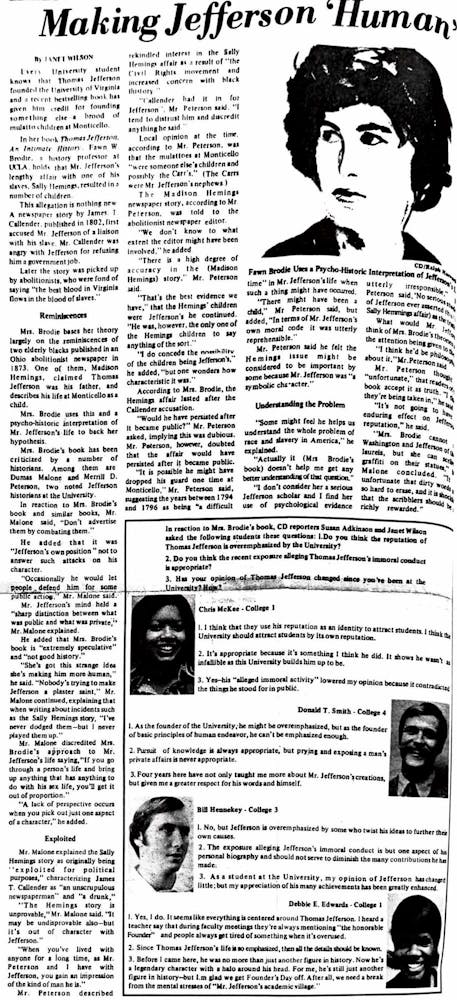
“Making Jefferson ‘Human’”
By Janet Wilson
In 1975, The Cavalier Daily discussed the controversial figure Thomas Jefferson. This article confronts Jefferson’s legacy and accomplishments when compared to his failures and hypocrisy regarding enslaved laborers. To get a student perspective, four students were interviewed, two Black women and two white men. The Black students emphasized that the University should be upfront about its founder’s reputation, whereas the white students said it’s inappropriate to expose a man’s private affairs considering all of his accomplishments for the University. This article shows the difficulty that Black students faced, and continue to face, when grappling with the legacy of racism and enslavement at the University and one of its most “honorable” figures.
1980s
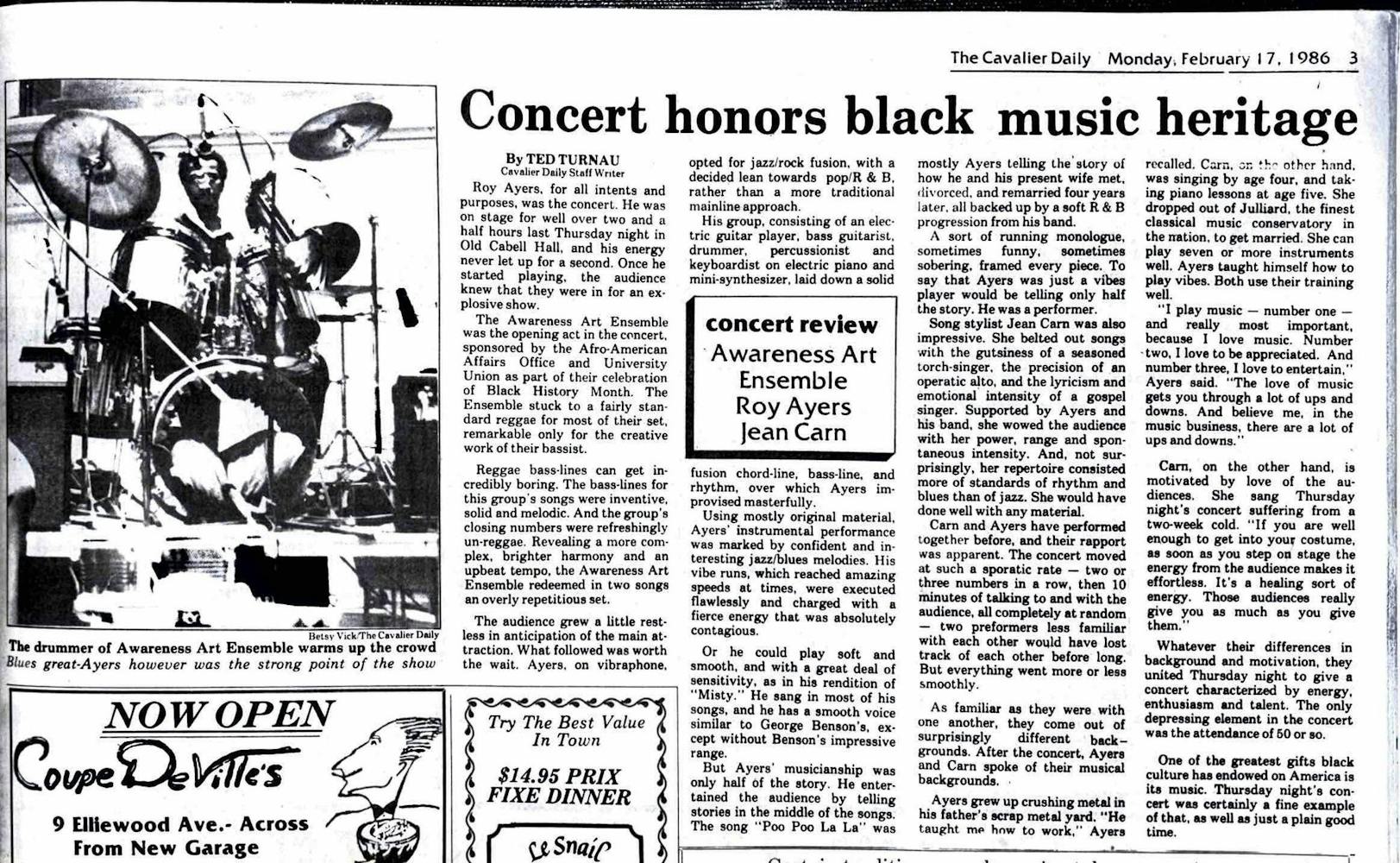
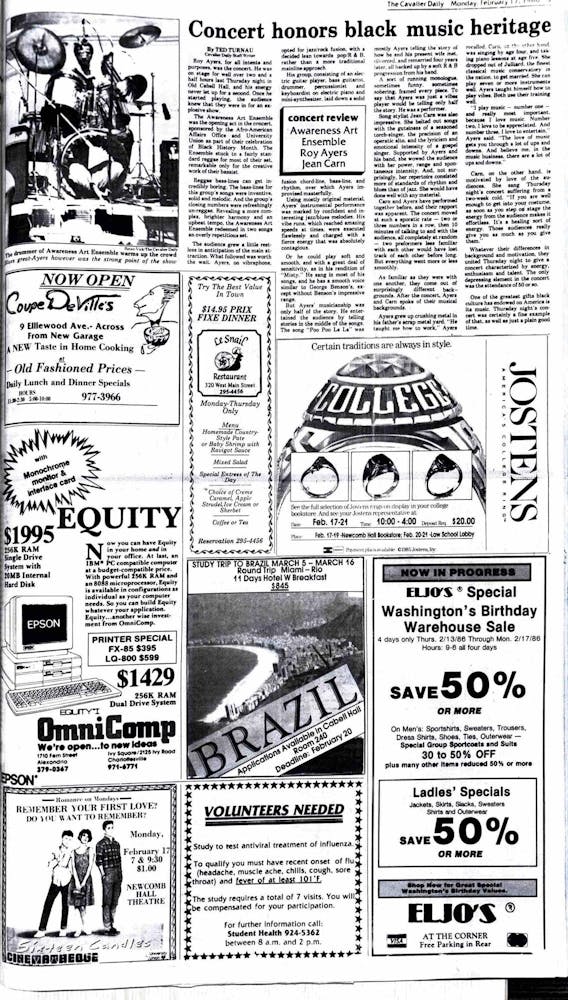
Feb. 17, 1986
“Concert honors black music heritage”
By Ted Turnau
Photos by Betsy Vick
In 1986, the Afro-American Affairs Office and University Union celebrated Black History Month with a concert honoring Black musical heritage. In his review of the event, writer Ted Turnau praises Roy Ayers, writing that he “was the concert.” He appreciates Ayers’s pop and R&B approach, based in a historic jazz-rock fusion sound, but with a distinct perspective. Although attendance was low, Turnau expressed gratitude for the opportunity to witness and recognize the significant contributions of Black artists to American music.
1990s
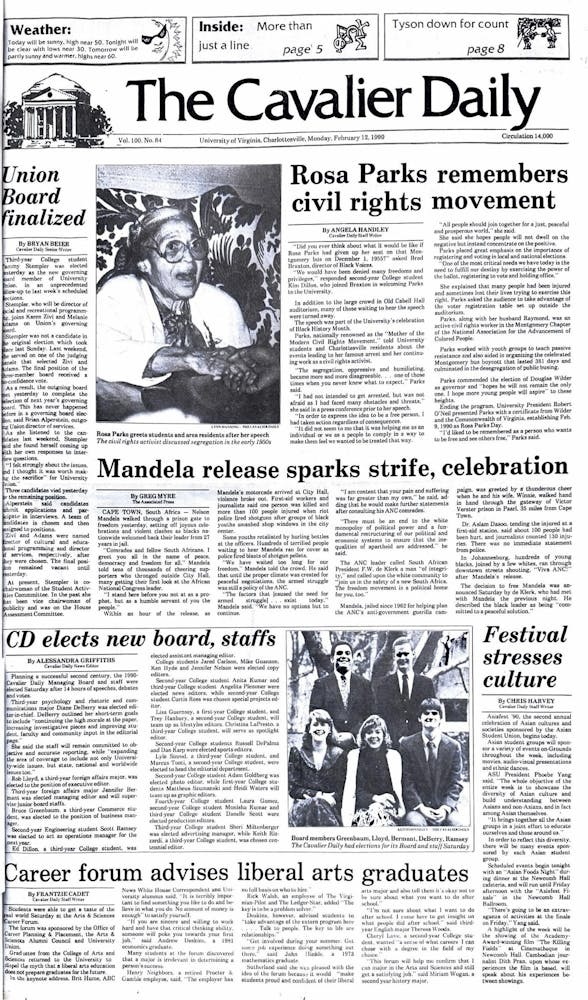
Feb. 12, 1990
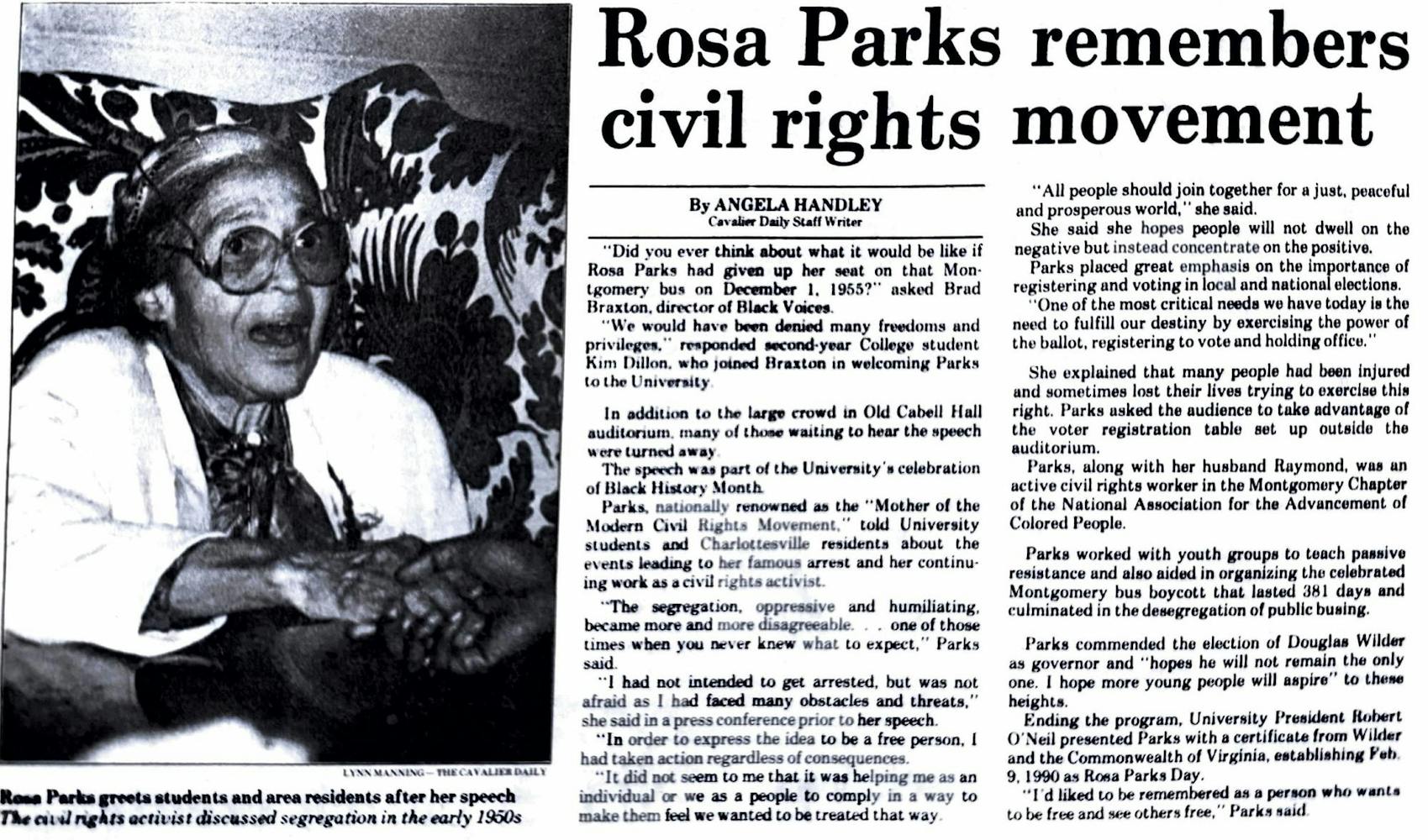
“Rosa Parks remembers civil rights movement”
By Angela Handley
Photos by Lynn Manning
Civil rights activist Rosa Parks gave a speech in 1990 for the University’s celebration of Black History Month. Parks detailed the experience of her arrest when she refused to sit in the back of a bus in Montgomery, Alabama. Parks urged audience members to vote for a peaceful world and for change, stating that many people had been injured, arrested and even killed in an effort to make sure future generations could have their voices heard.
2000s
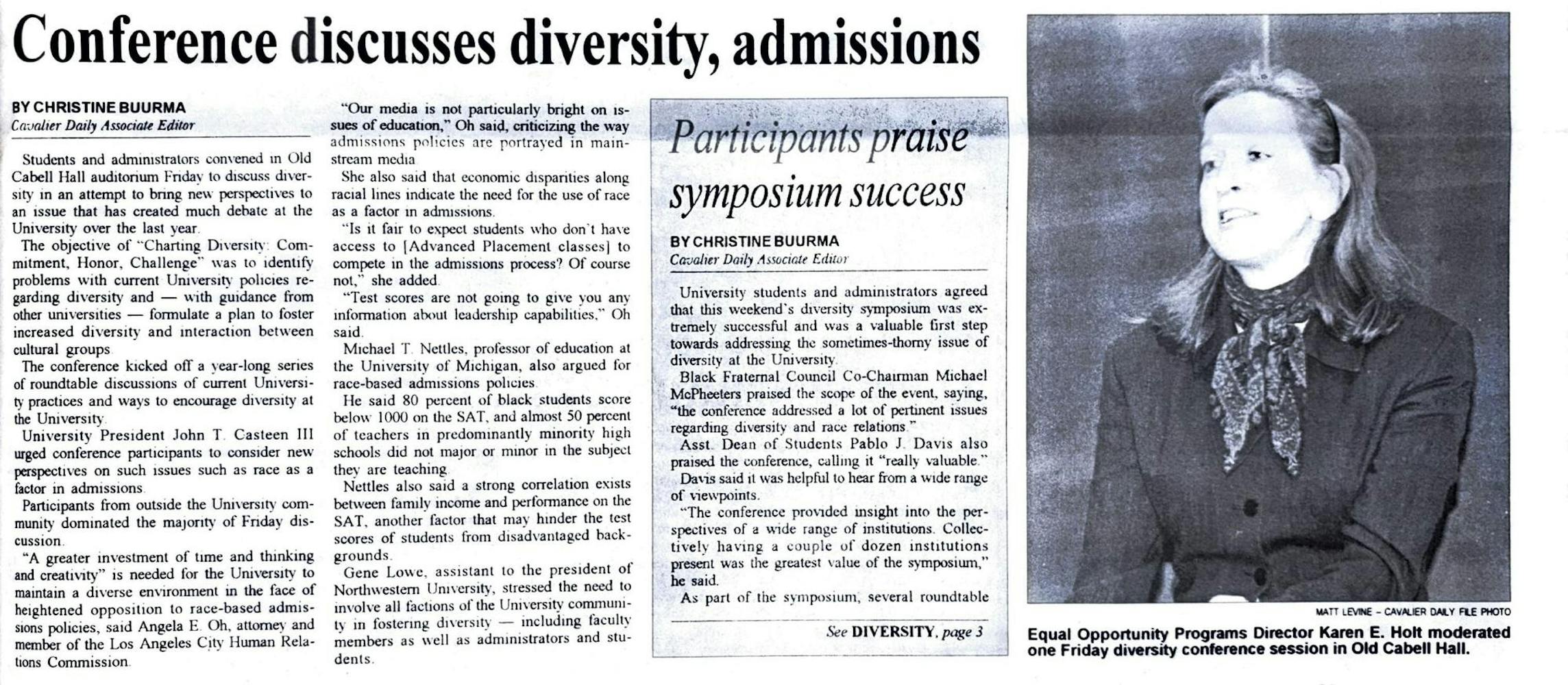
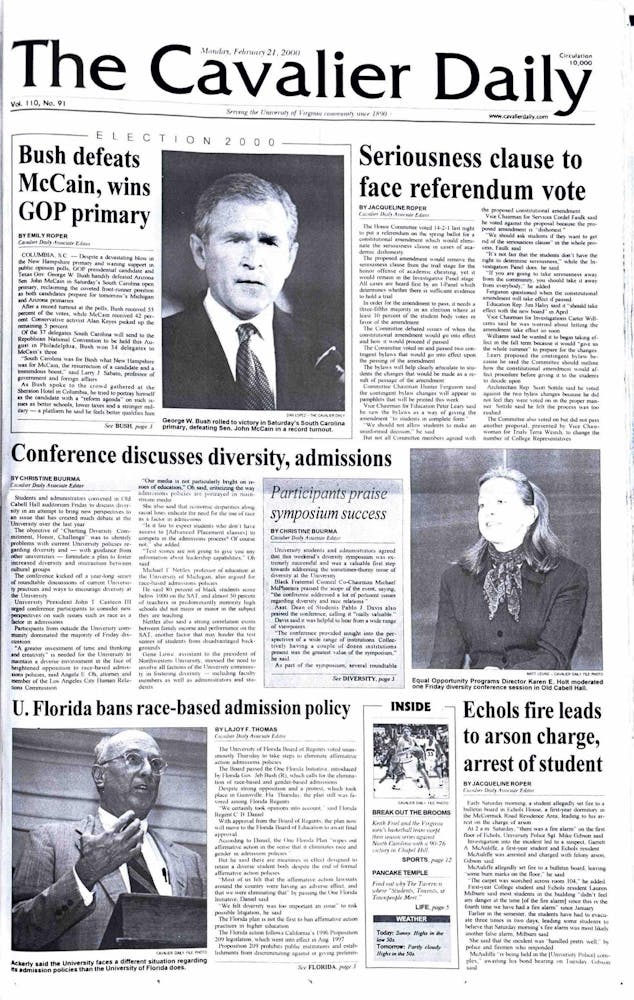
Feb. 21, 2000
“Conference discusses diversity, admissions”
By Christine Buurma
Photos by Matt Levine
The “Charting Diversity: Commitment, Honor, Challenge” conference marked the beginning of a year-long symposium series focused on building racial and cultural diversity at the University. The discussion highlighted the necessity of race-based consideration in admissions, particularly stressing the insufficiency of SAT scores and Advanced Placement courses in measuring potential success for students of color. Uniting a wide array of perspectives, the event was described as a “valuable first step” towards making the University better.
Read More

Student Technology Council aims to represent students on technological issues
By Solomon Ross-Milligan | 7 hours agoSTC is currently a 20-member council and includes students from across schools and organizations within the University.

Woodruff and Bouie discuss freedom of the press, emphasize need for nonpartisan news
By Robert Head | 8 hours agoAfter an introduction by Jane Kamensky, president and chief executive officer of Monticello, Woodruff answered Bouie’s prompts on topics such as modern threats to the press, the objectivity of the press and Americans’ declining trust in news outlets.
With midterm elections approaching, Miller Center experts share foresight
By Reilly Auld and Luca Bailey | YesterdayThese midterm Congressional elections are generally viewed as an opportunity for voters to evaluate the incumbent President’s performance in their first two years in office.