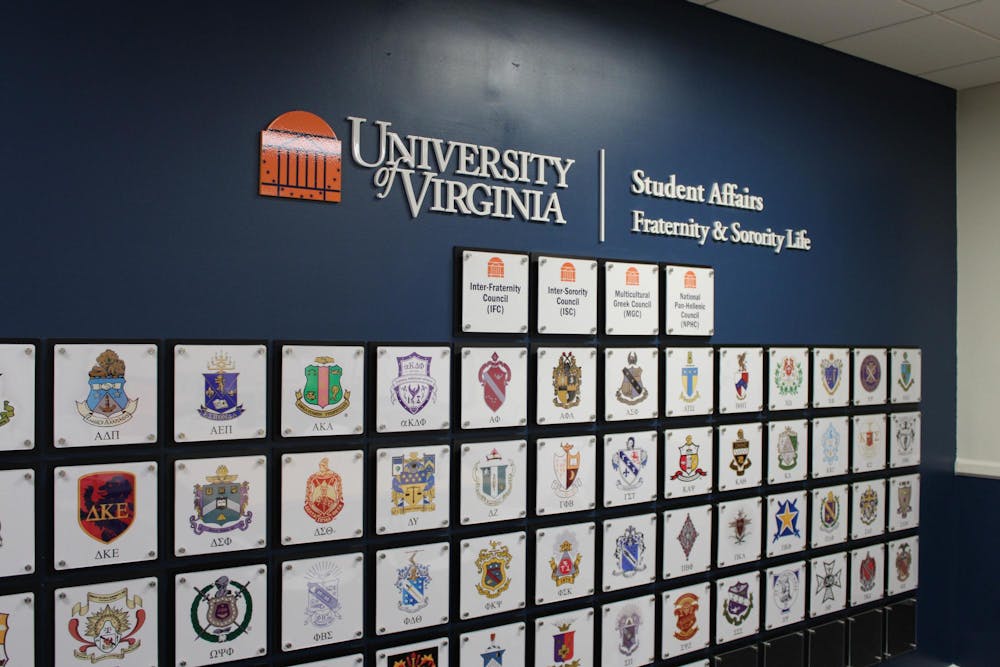
The start of the spring semester marks the time for formal fraternity and sorority recruitment — a process which roughly 25 percent of the student body takes part in. This year, 1,100 undergraduate women registered to rush 13 sororities in the formal recruitment process, and 825 undergraduate men registered to rush 25 fraternities. Formal sorority recruitment and formal fraternity recruitment took place Jan. 8 to 18 and Jan. 11 to 24, respectively.
Meredith Collier, Inter-Sorority Council president and fourth-year Education student, said that at the end of the Spring 2026 recruitment period, the ISC had reached its largest community population in the school’s history, with 3,082 members currently in sororities.
“This information we’re seeing … tells [me and] my team … that we were successful in ensuring that everyone understood the values which the ISC stands for,” Collier said.
This year, Collier said there was also a 10 percentage point increase in retention rate for girls going through sorority recruitment over the course of the process. Collier attributed this to a stronger focus on empathy training for Pi Chis — unaffiliated sorority members that help guide potential new members throughout the recruitment process.
“Having [Pi Chis] that are confident in their own peer counseling skills ensures that our [Potential New Members] feel confident in the process,” Collier said. “I think I can attribute this 10 percentage point increase to our Pi Chis just being fantastic.”
First-year College student Emma Teague registered for sorority rush this year and said being in a sorority is a great way to connect with a smaller community of women at a large school. She noted that a sorority could replicate the feel of smaller high school communities.
“I went to an all-girls school in high school, so I was used to a big community of girls,” Teague said. “I love [the sisterhood and small-community feel] of sororities here, and I think [rush is] a great way to meet people in other grades.”
First-year College student Mila Neumark also participated in sorority recruitment, and said that second-semester sorority rush — as opposed to fall rush typical of many southern schools — is a good opportunity to try new things in the latter part of the academic year. She added that rushing a sorority was important to her so she could find a group of friends to grow and learn from.
“I thought it was another way for me to branch out and meet new people and push me out of my comfort zone,” Neumark said. “Finding a close-knit sisterhood of people that you share interests with … was really important to me.”
The Inter-Fraternity Council, like the ISC, also saw an influx in the number of registrants this year. The IFC extended its original registration deadline from Oct. 31 to Dec. 9, and according to a statement to The Cavalier Daily from Ryan Phelan, president of the IFC and fourth-year College student, registration saw its largest number of sign-ups since 2022, with 825 male students registering for formal recruitment this spring.
However, Phelan noted the increased number of registrants has led to fewer total men receiving bids during the formal recruitment process, and he wrote that this creates a phenomenon called “the Bid Gap.” Due to several fraternity houses becoming suspended or de-chartered in the last two years, Phelan said the number of active houses decreased from 30 to 25 in that time frame.
“While the top-line number of rushees is very important to us, we have seen a significant portion of men signing up for rush that either don't receive a bid, join an unaffiliated house or don't take the bid they receive,” Phelan wrote. “This has contributed to what we refer to as ‘The Bid Gap.’ This number has grown over the years, and we are taking steps to address it.”
According to Phelan, this “Bid Gap” has persisted since the 2023 recruitment cycle. Roughly 810 men signed up for formal recruitment and 209 did not receive a bid in 2023, resulting in a bid gap of approximately 33 percent. The 2024 recruitment cycle saw a bid gap of approximately 28 percent and the 2025 recruitment cycle had an increased bid gap of approximately 38 percent.
Phelan additionally noted that the IFC’s effort to increase marketing campaigns — spearheaded by Braden Coward, vice president of membership for the IFC and fourth-year Batten Student — likely led to the influx of sign-ups for 2026 recruitment. Phelan also cited recent efforts to reduce hazing and the opportunity for male students to find personal and career connections as reasons that have made fraternity rush more appealing for students.
“What some may see as reckless, thrill-seeking groups are actually institutions in which young men come out on the other side a better student, son and friend,” said Phelan.
First-year College student Dhanvanth Sairam said he was unsure if Greek life would be something he would pursue, but after rushing in the 2026 recruitment cycle, said he found the process to be a great way to make new friends, even if they didn’t end up in the same fraternity.
“As a first-generation student, my parents did not know anything about college or rushing or any kind of Greek life, so I didn't have that notion when I entered college,” Sairam said. “I wasn’t fully set on it until I actually rushed … I’m now part of a fraternity and I think it’s amazing.”

Lily Kostro is a staff writer on the news desk and a third-year College student studying politics. Lily is from Beverly, Mass., and enjoys writing about events happening on Grounds.
Read More
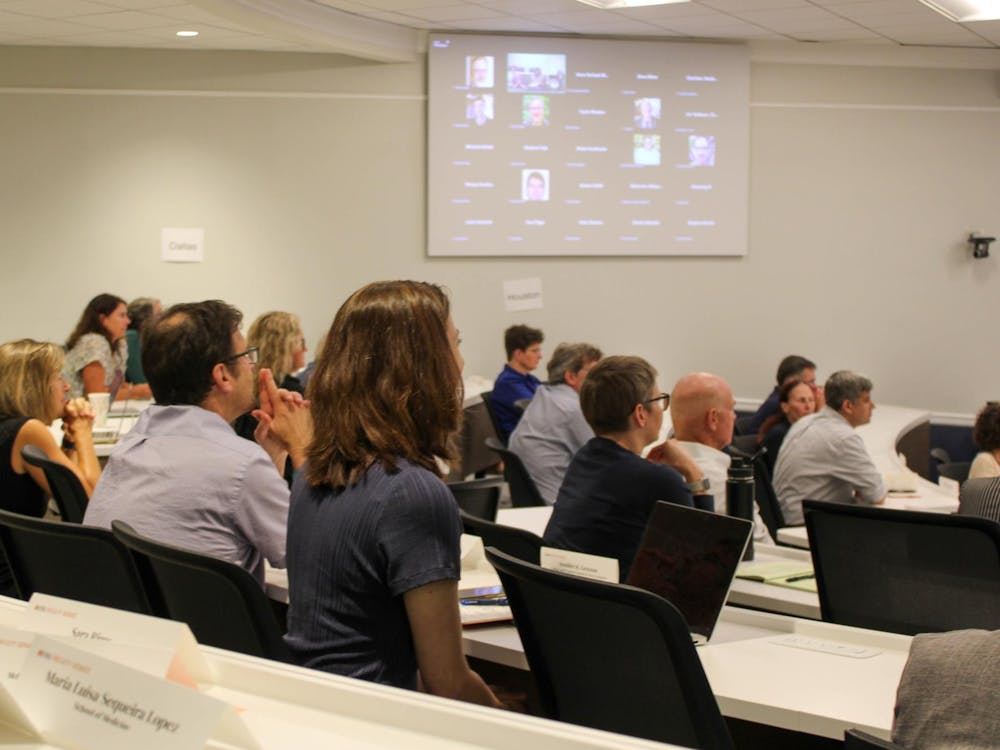
Provost search committee seeks Faculty Senate’s Executive Council input on qualities for next provost
By Jaylynn Perez and Cassidy Hazel | 13 hours agoBrie Gertler, interim executive vice president and provost, also provided updates on the University’s developing approach to artificial intelligence.

U.Va.’s Larry Sabato weighs in on midterms, issues warnings for Democrats ahead of 2028
By Luca Bailey | 13 hours agoSabato shared his insights into how the country’s 2026 midterm elections are unfolding heading into the final weeks of the campaign.
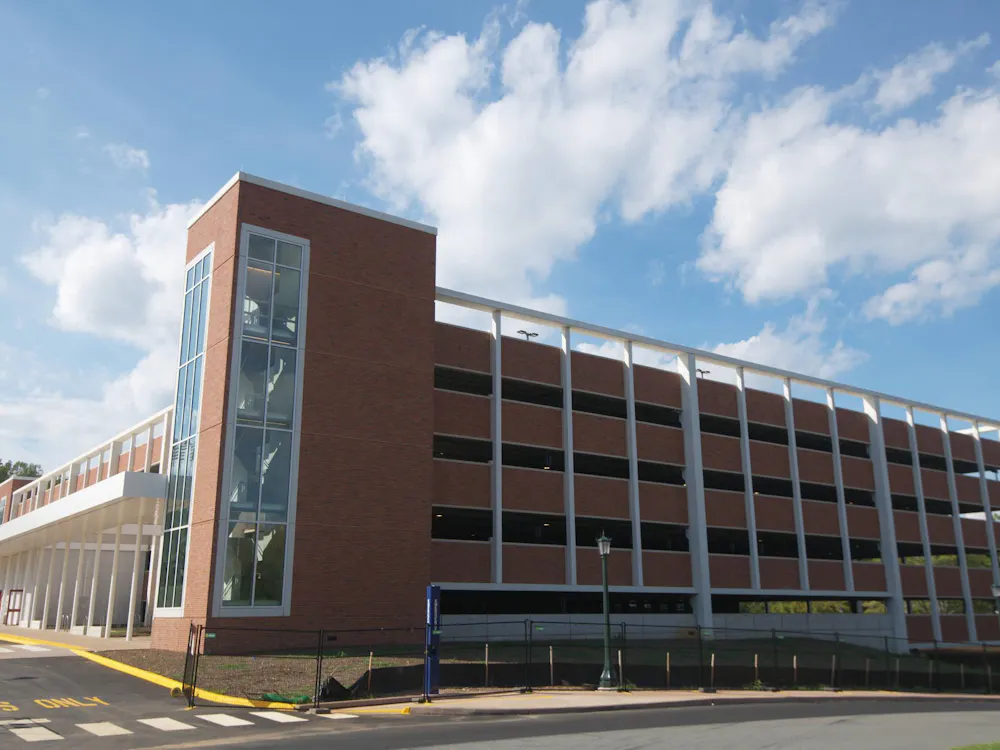
Parking on Grounds — what has changed this semester?
By Charlotte Gabriel | YesterdayAccording to University students interviewed by The Cavalier Daily, several expressed frustration with high parking prices on Grounds, as well as the difficulty in finding available parking in general.