Correction: A previous version of this article incorrectly stated that the Faculty Senate chair had not been looped into discussions with the University president. The Senate executive council does meet with the University president. The article has been updated to address this factual inaccuracy.
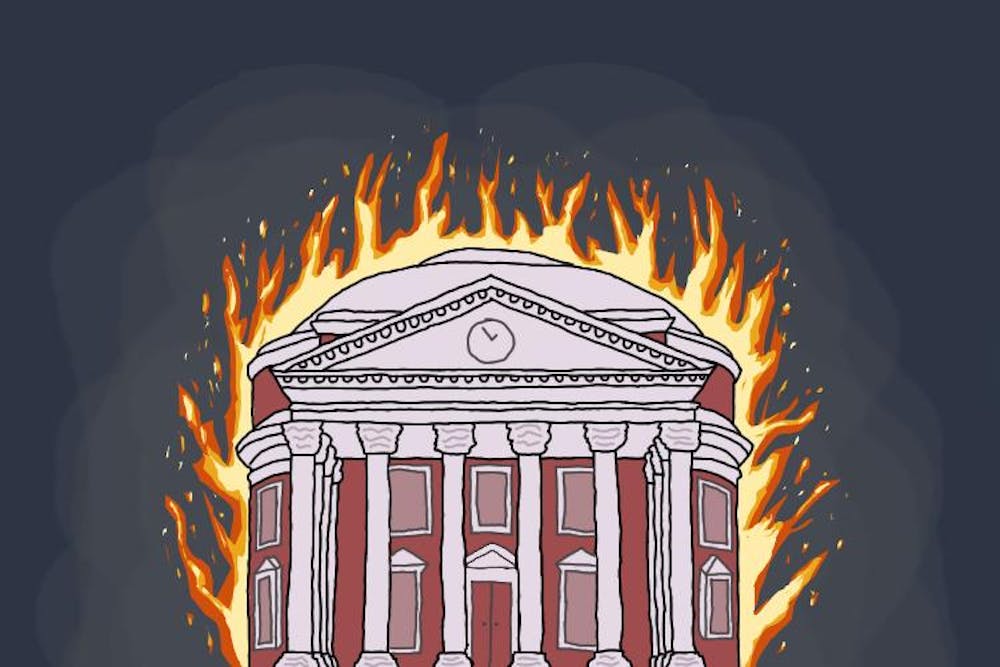
For many different reasons, 2025 was a difficult year for the University. Former University President Jim Ryan was pressured to resign from his position as University president by a vindictive Justice Department. Former Interim President Paul Mahoney dealt with the Justice Department in the way a child would clean their room because they want to, not because they were told to. Scott Beardsley was a twilight appointment to the University by a Board of Visitors that very likely is illegitimate. The Board and former Rector Sheridan are caught up in scandal. Most recently, the Justice Department sued the University for providing undocumented immigrants with in-state tuition, granted they met the same criteria as citizens.
The response by the student body and faculty over the past year has been a stern finger wagging — lofty statements and paper tigers of votes of no confidence. It is not working. The administration of the University acts without care of consequences because it knows there are none, and it is becoming incredibly frustrating to watch. The University community needs to alter its approach to these issues, or nothing will change.
The response of the student body to a despotic administration has been pathetic. In August, the Student Council issued a vote of no confidence following the removal of Ryan. This particular vote was to condemn the Board for ignoring a previous Student Council resolution to include five students on the presidential search committee. If you are curious what a vote of no confidence means, you are in luck — it means nothing. While this is not Student Council’s fault, how they find the will to continue passing resolutions and shaking their fist at administration with a straight face is beyond the rational observer. It speaks to a larger structural ineffectiveness in student self-governance.
Later in the year, students had another opportunity to use their collective voice when the University was given the choice to sign Trump’s Compact for Academic Excellence in Higher Education. Hours after protesters gathered on the Lawn to show their disgust for the offer, the compact was refused by Mahoney. Do not celebrate too quickly, though — a new agreement with essentially the same terms was signed immediately after. This lack of any recognition of student voice is difficult to stomach — an apathy that seems incurable after so many instances.
Faculty seem to possess more power than student voices as respectable professors, yet they have fared even worse than students. Nine deans asked for pause on presidential search — they were ignored. The Faculty Senate passed a resolution asking for a similar pause — they were similarly ignored. There is an argument to be made against turning every student body opinion into policy, but it is hard to see why the faculty — that make or break educational prowess — are treated with all the same intellectual and political respect as children.
A process that began with the authoritarian encampment crackdown May 4, 2024 is reaching its pinnacle. Where there were once cracks in the relationship between students and administration, there are now canyons. What is the point of student self-governance if their authority is continually undermined? Student Council has the phrase “We are not governing. We are bargaining.” on their website, yet it seems that they are in a perennially lopsided negotiation. In contrast, the Board acts with its own set of guidelines, and occasionally with its own set of rules. Expecting a political machine to take into account a student body that is actively trying to remove it from its position is foolish. Student self-governance already walks a precarious tightrope convincing the administration to take its voice seriously — continuing to post uninspired resolutions only serves to weaken the student body’s position.
The sad truth is that options seem to be incredibly limited. The Board has no incentive to act in the interest of students, partially because student self-governance has not shown a framework and willingness to enforce any sort of punishment for deviation. One way to show the consequences of ignoring the student body is to demonstrate declining enrollment, yet the application numbers broke another record this year. Another option is to test the limits of Board intimidation. Fund diversity, equity and inclusion. Discuss issues in class that have become taboo. Provide tuition to deserving undocumented immigrants. All of this is possible with the right mindset, yet it has not been done and is unlikely to be done within the current climate of intimidation. Even if it is possible, the reality is that higher education has become so politicized and federalized that any fiscal or social pressures that the administration could face are negated by outside support.
It is easy to become despondent in the face of such a looming threat to the University. Student self-governance has always been a flawed system, and now, its failures are exposed for everyone to see. We are bargaining with someone for whom we have nothing to offer and with whom we seem to share no common goals. The Board increasingly represents the interests of itself as an independent political entity, rather than a pragmatic administrative body, and this comes at a cost to every student and faculty member of the University. Gov. Abigail Spanberger is poised to replace many of the Board’s members in lieu of liberal allies, but this does not solve the underlying issue — administration does not respect student voices. A new style of student vocalization must emerge, yet it remains increasingly elusive.
Paul Kurtzweil is an opinion columnist who writes about economics, business and housing for The Cavalier Daily. He can be reached at opinion@cavalierdaily.com.
The opinions expressed in this column are not necessarily those of The Cavalier Daily. Columns represent the views of the authors alone.
Read More

HAWKINS: SJP’s animosity toward Darden’s new dean is patently absurd
By Joshua Hawkins | YesterdayNo, Grushka-Cockayne should not be forced to resign before Darden even opens its doors for the fall, and SJP should seriously reconsider suggesting such a dramatic step.

ELJAZZAR: The University’s growing lobbying budget should worry you
By Farah Eljazzar | 4 days agoA public research university having to negotiate for its independence is, on its face, an indictment of the system it operates within.
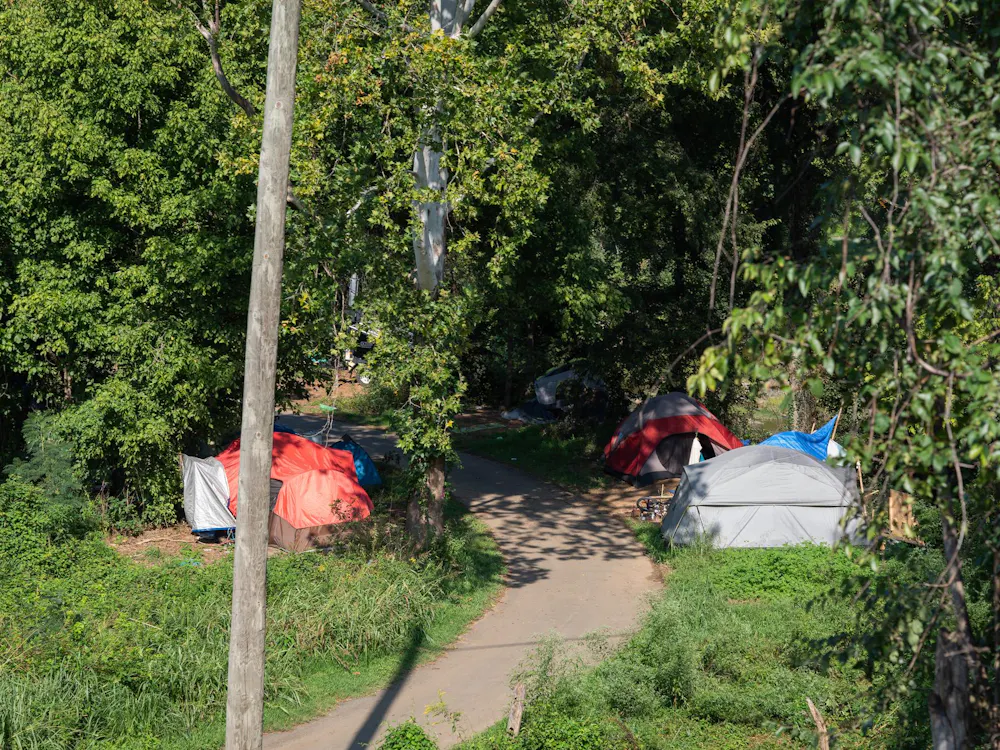
TAYLOR: The Free Bridge encampment removal and the issues with homelessness ‘solutions’
By Nat Taylor | August 19, 2026If we are to solve homelessness, temporary band-aid solutions like expelling or breaking up homeless communities will only displace more residents, alienate them from local governance and end up merely criminalizing this predicament.