
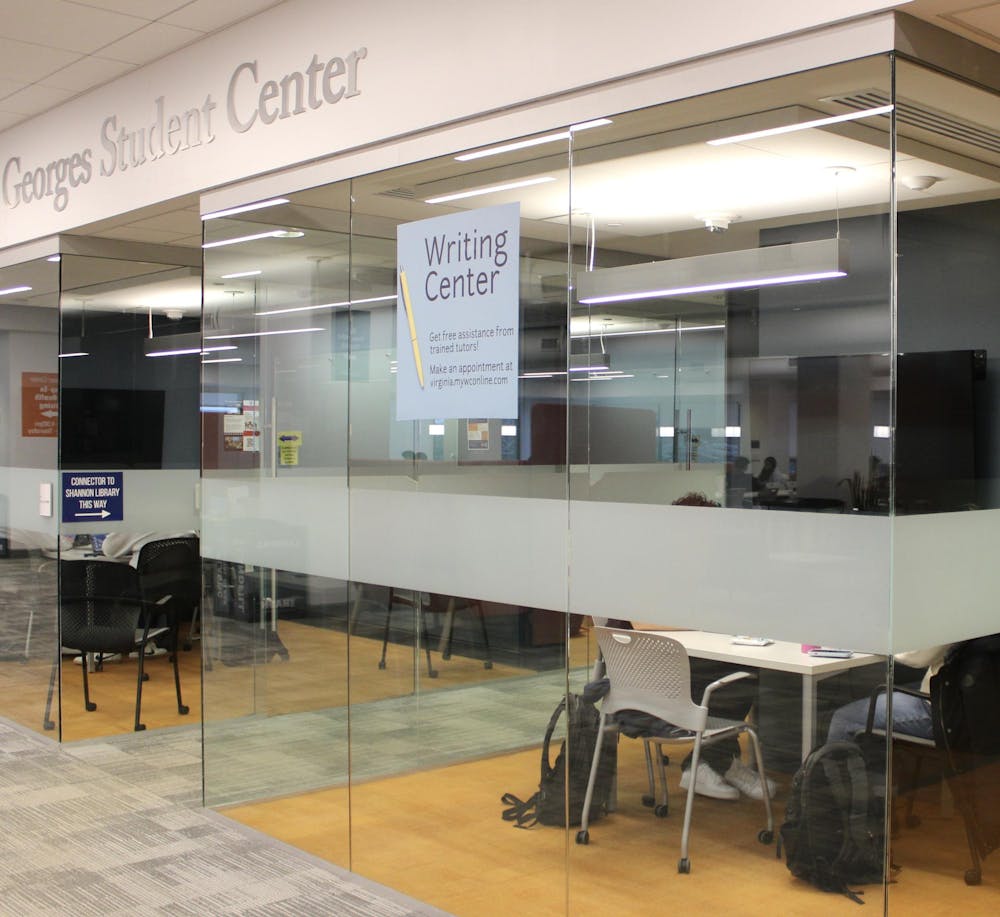
As more students can easily turn to generative artificial intelligence tools to assist with coursework, staff at the University Writing Center say that their mission remains the same — to help students develop as thinkers, not just produce strong papers. The Writing Center staff recommend that students engage responsibly with AI tools, input specific requests into AI platforms and more generally use AI as a resource rather than an all-in-one replacement.
The Writing Center serves as a resource for all University students, regardless of year, school or major, to receive one-on-one tutoring on any stage of the writing process — brainstorming, drafting or revision. The Writing Center’s main location is in Bryan Hall with satellite locations in Clemons Library and Newcomb Hall, and it is staffed by both graduate and undergraduate consultants. Students can schedule appointments with Writing Center consultants online.
According to Kevin Smith, co-director of the University Writing Center, the purpose of the work they do is to focus on understanding the student rather than just the writing product. According to Smith, the social process of writing is part of what builds good critical thinking and engagement with academic material. Smith said that during these appointments, students are pushed to think more deeply about how they can strengthen their writing.
“We should really be called the writers center instead of the Writing Center, because we care more about the writers than the writing that they bring in,” Smith said.
Although platforms such as ChatGPT have made it possible to generate drafts of essays in seconds, Smith said the Writing Center’s core approach has not fundamentally changed. However, he acknowledged that most students are likely using AI over the course of the writing process for brainstorming, drafting or revising.
One of the struggles Smith noted is that AI policy is varied across the board — many professors across the University have different AI policies that are central to their teaching goals. Smith said that it should not be the job of the Writing Center tutors to make sure students are following the AI guidelines of their different classes.
“We operate under the assumption that students are working within the honor code,” Smith said. “We're leaving it up to the student to use tools appropriately, and thus to bring appropriate questions to the writing center that align with their course policies.”
Rather than attempting to police AI use, Smith said he believes it is more productive to evaluate how students can effectively use these tools to enhance their learning. He suggested that AI may be most helpful in the early brainstorming stages of writing.
“If you say, [AI] give me 100 potential topics for this paper, it will give you 100 … and a lot of them might be garbage, but there might be a couple in there that are useful and reasonable,” Smith said.
Margot Ross, Writing Center consultant and second-year College student, said that in ENWR 3620, “Writing and Tutoring Across Cultures” with Assoc. English Prof. Kate Kostelnik, the class talks about the ability for AI to be a partner in the brainstorming process. Students take this class as training to become tutors for the Writing Center, and in the course, students examine how AI tools might intersect with the writing process.
“I can definitely see the potential [of AI], because a lot of the time I have students who come in who just want to brainstorm, and really all they need to do is be asked more questions to guide their thinking,” Ross said.
Kostelnik said she has used teaching material from writing centers at other schools like the University of Wisconsin to help engage her students in thinking about the best ways to utilize AI. One focus of this is prompt engineering — the science of optimizing inputs to guide AI — and the importance of being thoughtful in the questions students ask AI.
The University of Wisconsin breaks down the workflow of how to use AI in writing into four main steps — “give the model an identity, be as specific as possible in your request, guide the model through every step of the process and refine your results.” According to this pedagogy, rather than just asking for broad overarching feedback, students can be deliberate and specific within their requests.
Similarly, Smith said he thought it was important for students to not just use AI for broad feedback, but to learn how to approach their prompts and questions with specificity.
“What I ask students to do is tell AI not to rewrite it for you, but to give you formative feedback,” Smith said. “Say, what could be strengthened here, and what advice do you have for how I could strengthen it?” Smith said.
Ross said that she believes writing is just an extension of thinking, explaining that conversations during tutoring sessions help students better structure and communicate their ideas. She said that if students do use AI they need to know how to do so responsibly.
“I think when you automate the writing process, you lose an opportunity to strengthen your critical thinking skills,” Ross said.
Smith said he believes that the Writing Center tutors should not be required to be experts in AI. While they are trained to think about the possible ways AI may be helpful in the writing process, expertise in AI is not their main job.
However, Smith noted he does hope that the Writing Center can continue to figure out how to integrate AI into its practice. Ultimately, though, Smith said that the real value of the Writing Center comes from sitting down with other students to discuss their process. Smith encourages students to be thinking about big questions such as, “How do you want the knowledge or skills that this class is offering you to contribute to who you want to be or where you want to go in your life?”
The Writing Center is a place for students to discover the value in learning from writing, according to Ross. She added that the Writing Center must convince students there is some “return on investment” in their writing skills so they are less likely to automate them, since AI can allow students to be more efficient with their time.
“I just hope students can come in and realize how fruitful it can be to have a conversation about your writing with an actual person and not just a machine,” Ross said.

Lidia Zur Muhlen is a staff writer for the news desk and frequently covers artificial intelligence for The Cavalier Daily. She is a third-year student pursuing an interdisciplinary course of study examining the politics, ethics and economics of emerging technologies.
Read More

English department considers AI’s place in the classroom
By Lily Kostro | 2 days agoFor the University’s English department, some professors have chosen assignments that utilize AI in writing, while others take the approach of completely eliminating students’ access to generative AI in their writing process.

The Cavalier Daily joins amicus brief supporting student press at University of Alabama
By Jaylynn Perez | 3 days agoThe Cavalier Daily joined 39 other collegiate news organizations and 15 student editors from across the country in signing an amicus brief Sept. 2.

Student Council considers creating an ad hoc committee to review UBE proceedings
By Lucia Gambacini | 3 days agoConsideration of the bill was postponed until the next general body meeting.


