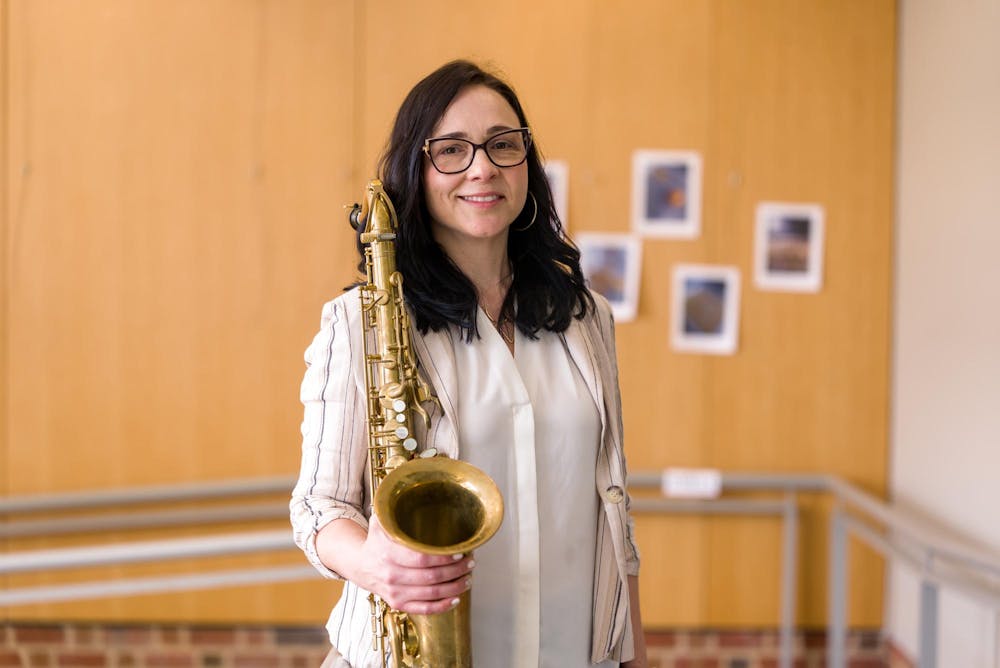
Sharel Cassity, associate music professor and the University’s director of jazz performance, is no stranger to the spotlight, frequently gracing the stage as a saxophonist and jazz musician. Throughout her career, Cassity honed her craft in the music scenes of New York and Chicago, working alongside Grammy-winning artists such as Aretha Franklin and even appearing on television shows such as Good Morning America. Last Fall, she added another role to her distinguished artistic career, stepping into academia as a professor at the University — a role that places her at the forefront of change in music education.
As the director of jazz performance, Cassity leads the University Jazz Ensemble in their shows and teaches courses such as MUSI 2600, “Jazz Improvisation” and MUEN 3600, “Jazz Ensemble.” In these spaces, she also works to expand the University’s academic jazz program as a whole, especially in guiding students in musical development and career preparation.
Cassity first learned to play an instrument by strumming along to simple guitar chords with her father. She attributes her early affinity for music to her parents, who both expected and encouraged her to be involved with instrumentation growing up.
“Music, on my dad’s side, was an expectation for everyone. Everyone played piano, so I started playing piano at six … [music was also] something that my mom really encouraged,” Cassity said.
According to Cassity, she wanted to be a musician by age 8. And at age 10, she began to find solace in music as a safe space after frequently moving homes growing up.
Believing music to be her calling, Cassity explored numerous styles of the art form. She explored classical and jazz sounds with her father, while simultaneously listening to Motown songs with her mother. As her career developed, Cassity also began to take inspiration from the sounds and musical ecosystems of the cities she lived in, ultimately gravitating towards the jazz genre.
“Hearing all the straight-ahead jazz in New York inspired me, and then, 16 years later, moving to Chicago [I was] inspired by the music there, because the music in Chicago has an element to it that’s very deep,” Cassity said. “Both cities really influenced my music.”
However, for Cassity, the constant hustle between practicing and performing was never the final destination. As she noticed her mentors — notably, National Endowment of the Arts jazz masters James Moody and Jimmy Heath — were nearing the end of their careers, Cassity’s perception of jazz shifted. Instead of simply being an art form to master, Cassity viewed jazz music as a tradition to pass on.
“I started to think about what’s going to happen if we don’t teach?” Cassity said. “And I didn’t like that. So that’s [why] I was inspired to teach because I realized that it’s important to pass on this music, and it’s important to help students into the industry as well.”
This realization inspired Jazz Up — a non-profit based in Chicago founded by Cassity in 2021 which connects high school students with performance experience and like-minded peers. She currently still serves as the program director and president of the organization. At Jazz Up, students engage in combo rehearsals, rhythm classes, jam sessions and more as a means to broaden their perspective of music and improve upon their skills.
Cassity further noticed barriers in experience and opportunity between students in traditional public schools and those in arts-centered high schools and communities. Therefore, Jazz Up aims to bridge that gap by providing mentorship to students who may lack prior guidance but aspire to pursue a music career.
That same career-oriented focus manifests itself in Cassity’s work at the University, where she mentors students navigating the transition from classroom to a professional stage. Cassity has observed that collegiate students often struggle to navigate the professional music industry without sufficient mentorship. Musical prowess, she believes, is only a small piece of the puzzle when it comes to a professional career.
“I think if you choose to play music, you should leave with an idea of how you're going to create income for yourself, the kind of community that you fit into … you should have an idea of what your product is going to look like,” Cassity said.
Looking ahead, she aims to further highlight these career-building topics in the University jazz program, including topics relating to creating and sustaining a career in the music industry. Currently, one way Cassity accomplishes this is by helping students train their ear to recognize and listen for well-produced music they can take inspiration from.
Cassity also aspires for the program to become nationally recognized as one of the strongest university jazz programs — an effort she has already advanced in the past semester by hosting nationally renowned jazz artists like vibraphonist Warren Wolf to workshop and perform with students. The jazz ensemble additionally may have the opportunity to take national trips, play at major conferences and even create albums.
“I’m looking to create one of the strongest programs, strongest big bands and combos, and to take trips nationally to play at major festivals, to play at major conferences [and] maybe to do an album,” Cassity said.
Importantly, Cassity said students not pursuing a major in jazz can benefit from these improvements, hoping to cultivate an environment with resources for professional development accessible to all University students. In the University's jazz program, Cassity believes this can be done through a pathways program, which specifically provides a space for students with non-musical career aspirations to create and expand their musical capabilities in a collegiate setting if they want to.
“I think the music department’s already doing a great job at guiding students, because they have teachers that really focus on each student’s need,” Cassity said. “We are [also] working on creating a pathways option [within the program] to even create more opportunities for students to go in the direction they want to.”
This proposed pathways option reflects a larger shift in how Cassity approaches music education at the University. Drawing from her experiences in her own career and at Jazz Up, Cassity is building a program flexible enough to accommodate various musical ambitions. By stepping into the role of director of jazz performance at the University, Cassity’s goals redefine what the jazz program can offer to University students — a space where mentorship and opportunity allow students of all backgrounds to find their place in the jazz community.
“When I came here, that was one of my big goals, is to help the students, first of all, see themselves being successful at [jazz] and then give them the pathway that they want into the industry,” Cassity said. “I think that this is something that is changing very quickly in a positive direction in the program.”
Read More

On Repeat: Nostalgic songs to celebrate the waning of summer
By Kelsey McIntyre | 4 days agoWith less than a month until students return to Grounds, this soundtrack can be used to rest and relax before the stressful semester by reminiscing on familiar times.
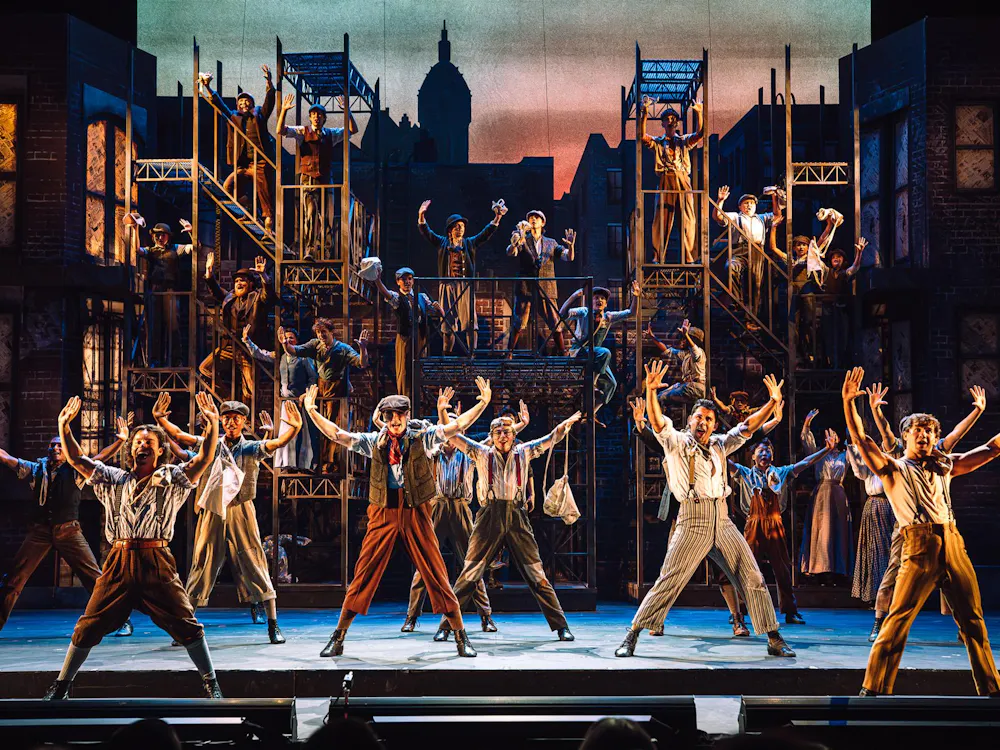
Virginia Theatre Festival unites Charlottesville and Broadway talent
By Carter Horner | August 8, 2026The Virginia Theatre Festival began in 1974 as a University semi-professional drama program and recently returned to Charlottesville for its 52nd iteration.

‘Spider-Man: Brand New Day’ soars despite a few tangled threads
By Preet Manukonda | August 8, 2026Although “Spider-Man: Brand New Day” occasionally gets caught in the web of uneven pacing and franchise expectations, the film excels in returning Peter Parker to the qualities that make him a beloved hero.