I have been an intrauterine device warrior since June 2024. A year and a half in, I can confidently say that it has been one of the few good decisions I have made while in college. Since getting my Liletta IUD, however, I have found myself transforming into a living, breathing Reddit board for my friends and peers to consult, constantly being asked everything from “Is it worth it?” to “Does it really work?”
I’m here now to set the record straight. In my experience, yes, it is worth it. No, it was not as bad a process as portrayed by social media. And yes, it most definitely works.
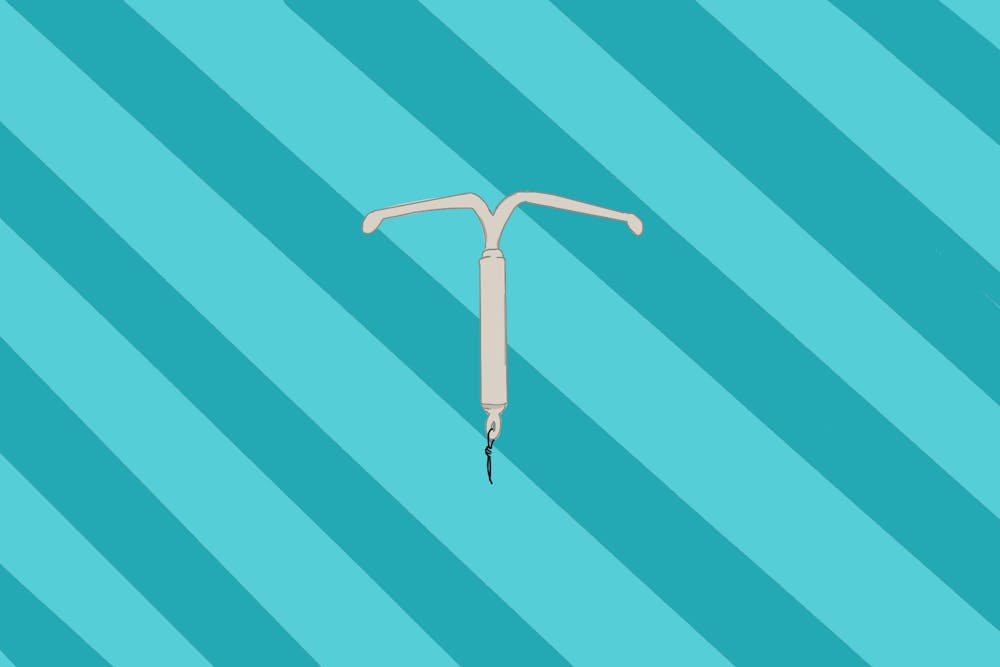
For those unfamiliar, the IUD is a form of birth control. It is a small, T-shaped device that is inserted directly into a woman’s uterus as a constant and long-lasting contraceptive. There are two types of IUDs — hormonal and copper. IUDs are praised for their low maintenance requirements, effectiveness of up to 99 percent, low impact on fertility post-removal and, depending on the type, lifespans of between three and 10 years.
There are a slew of reasons for women to opt for the IUD as opposed to other methods like the pill, Nexplanon, condoms or even the pull-and-pray method. For me, the decision was relatively easy. First off, I had been with my long-term boyfriend for a year at the time of my insertion, and was in the market for something with slightly higher effectiveness rates than the pill, which requires ingestion at the same time each day for maximum effectiveness. I was sick of worrying myself every month prior to getting my cycle knowing I had missed taking a pill — or five.
The second factor was that the pill was wreaking havoc on my body — exacerbating existing mental health challenges and causing near-daily nausea. I had been on and off the pill since freshman year of high school for various reasons, and each time it left me feeling worse than I had begun.
Finally, and perhaps most importantly, I had long struggled with debilitating menstrual pain that was legitimately causing me to take a backseat in my life. This final factor is what truly caused me to take the leap with a hormonal IUD.
In my time acting as a human IUD Reddit board, I am most commonly sharing my experience with the insertion process. The IUD is infamous for its uncomfortable insertion that offers few pain management options — a take I disagree with, but a conversation to be had at another time.
This portrayal of the IUD process largely emerges from documentation posted to social media platforms such as Instagram Reels and TikTok. These videos often showcase women screaming, fainting and begging for the process to stop while getting their IUDs inserted, ultimately deterring others from exploring this reliable contraception option.
While I am in no position to deny the experiences of these women, my insertion was nothing like this. It was most definitely uncomfortable, but nothing beyond that. Most importantly, from the time I laid in the chair to the process being done, it was no more than three minutes.
For my girls with period cramps, it was nothing more than a couple of very strong cramps at insertion and some cramping for the next 12 hours. After going through this process, I found myself wishing that we were able to highlight the plenty of positive experiences rather than always turning them into scenes straight from a horror movie.
While having holistic conversations about the IUD is important for people of all child-bearing ages, I find that it especially impacts college-aged women. This is a unique time of life where many women are engaging in consistent sexual experimentation. They need an option that offers protection without constant maintenance or relying on a phone alarm to take a pill at exactly the same time every day. With busy schedules, irregular routines, study abroad opportunities and maintaining all sorts of relationships, the IUD accommodates it all.
With my IUD, I know that I am prioritizing my reproductive health as well as my day-to-day peace of mind. My menstrual cycles have become more manageable, I am not tied down to a pill alarm and, most significantly, I have not found myself expending unnecessary amounts of worry into my sexual safety.
Of course, contraception is a very individualized experience, but this is all to say that the IUD cannot be ruled out based on select social media representations. It is important to consult experts, such as those at U.Va. Health — which offers insertion procedures — and providers back at home to know what is the best option for you. Still, my hope is that sharing a first-hand experience can help bring the IUD conversation back down to Earth.

Madigan Wirkus is a staff writer for the life desk. She is a fourth-year College student from Franklin, Mass., majoring in Media Studies and minoring in Public Policy and Leadership in the Frank Batten School of Leadership and Public Policy. She frequently covers topics such as relationships and sexual health resources, as well as the occasional feature for the life desk.
Read More

Sarah Deloney’s path to — and from — her diagnosis
By Astrid Cheng | YesterdayAfter three years of persistent pain, Deloney was finally able to find an answer — Nutcracker Syndrome.

Animal lovers come together at Charlottesville-Albemarle SPCA’s third annual Fall Fest
By Lily Notter | YesterdayFall Fest is the CASPCA’s largest adoption event of the year.

No diet, no glory: My complicated relationship with dieting and eating
By Phoenix Banks | 2 days agoMy weight and what I was going to do about it have been a topic of conversation my entire life.