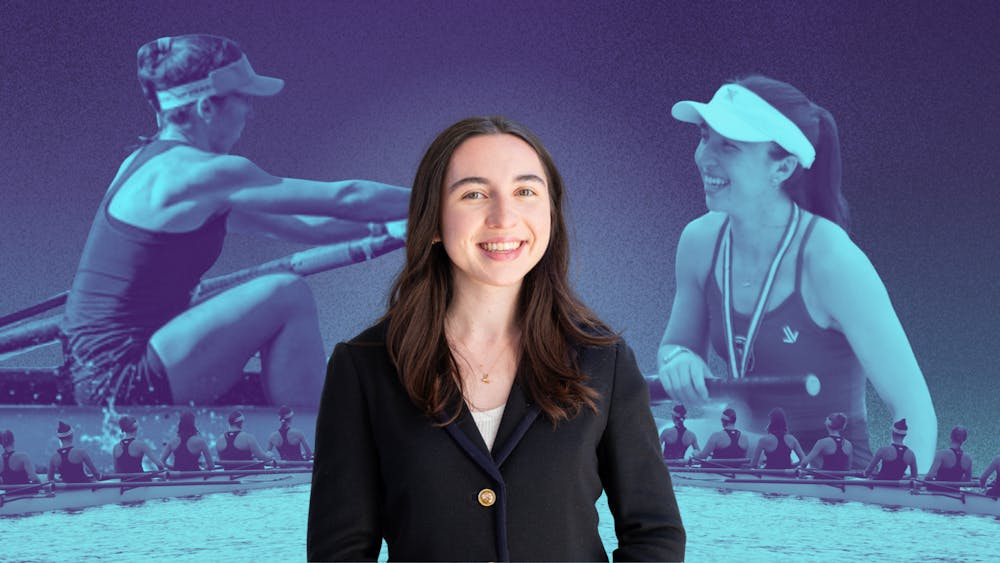
I am a quitter. Or at least that is what I told myself when I hung up my headset after only two months of coxing on the Virginia men's rowing team.
I arrived at the University convinced my identity was tied to the boat — after committing so much time to the sport as a rower in high school, I thought that my value was measured in splits and stroke rates.
And that is why, after I was told that 5-foot-3 was too short to row for the women's team, I spent the summer before my first year excited to explore the elusive coxswain position on the men's crew. Yet the feeling of commanding eight men through the cool mist of a 6 a.m. practice was different than being a rower — a difference I was not sure I felt comfortable in.
In a boat, there is no room for ambiguity — you are either in time or you are the reason the set is off. I loved that clarity and the mechanical, brutal honesty of everyone working for that synchronized clack of the oarlocks — a rhythmic, powerful heartbeat. But while I had been so sure over the summer that I needed to continue rowing, the fire started to putter out.
When I walked away after burnout I thought I was losing my connection to the water. In reality, I was finding my way to the shoreline, ready to tell the story instead of just shouting it.
I had never stepped away from a commitment before. I was raised to never make a promise unless I was going to honor it, and to my eighteen-year-old self, “honoring a commitment” meant staying until the end, no matter what. Stepping away felt like a betrayal of my upbringing.
Beyond my family's values, in sports culture, walking away is the ultimate sin. At Virginia men's rowing, that sin is made literal through a tradition that feels like a funeral. Signaling my choice to leave meant that I had to ring a bell in front of the entire team to signify that I was aware I was cutting off my chance to ever be in that room again.
I stood in front of over 20 men and reached for the bellrope, the moment feeling less like a departure and more like a public shaming. I rang that bell — the performance of failure designed to make you second-guess your own decision, and for a while, it worked. I walked out feeling like I was admitting I did not have what it took to keep up in their world, even if the real reason was that I knew there was more, somewhere, to explore. Still, without the boat, I felt adrift.
In the months that followed, I struggled to fit my passion for competitive sports into a new identity that did not involve active competition. I realized that being a woman who is deeply, technically passionate about sports can be a lonely exercise in existing in two worlds at once. My friends see a game as a vibrant backdrop for social life, a reason to celebrate, a Saturday spent in the sun — moments I also love, as I match my dress to my cowboy boots. But my brain is running a parallel track — while we're laughing in the stands, I am subconsciously memorizing roster changes and analyzing plays.
I felt like an outlier for wanting to talk about the statistics while others were only at the game for the atmosphere. I was someone who loved the technicality of the game, but I no longer had a seat to justify my passion. It was this specific displacement, this need to find people who spoke that language of competition, that led me to apply to The Cavalier Daily's sports desk in my second semester at the University.
Deciding to shoot my shot was terrifying. I felt like an imposter again, walking into a sports desk that, much like the boat, felt like another boy's club I had not yet earned the right to join. But my editors gave me a chance and taught me that the most important thing you can bring to a newsroom is not an encyclopedia of statistics, it is a love for the grind.
It is impossible to know everything about every sport, but it is entirely possible to have a commitment to learning. I realized that we all have to play to our strengths — and mine was not knowing every historical football matchup, but knowing exactly what it feels like to have your stomach churn as a volunteer holds your boat at the start.
I spent my first semester on the desk learning how to translate that pressure into words, from the softball beat to field hockey — sports where women's speed and physicality are the primary ingredients. As I became captivated by games that had been entirely foreign to me, I discovered that I could be completely immersed in and knowledgeable about sports beyond just the one I grew up with.
It was not until I got comfortable in my position that I felt compelled to return to the river. I re-started the rowing beat for the desk, but I felt like a spy, like I had snuck into the press box with a forged pass, just waiting for someone to realize I was just the girl who could not make it in the boat. But as I sat there, notebook in hand, and calculated which ACC crews were going to give Virginia a tough time, I realized that my “failure” was actually my greatest asset. Yes, I was a spectator, but I was also a translator who knew the secret language of the sport — the technicality of the catch, the physics of the drive and the mental toll of the athletes.
I now understand that there needs to be women writing these stories. We should not feel ashamed for being excited about a call or wanting to sit down and truly — attentively — watch a game with our friends, because those experiences can belong to anyone. Our passion is not a performance. We belong in the conversation, not just as female fans, but as experts and witnesses.
I may have stepped out of competing in the boat, but that does not mean I lost my voice when I rang that bell. I just changed the way I use it, traded my oar and a seat in the stern for a pen and a seat in the press box — and I am so glad to be the one telling stories now.
Read More

‘Very uncharacteristic’: No. 11 Virginia men’s soccer drops second straight game to open season
By Michael Liebermann | 9 hours ago“Sebastian Pop never makes that mistake,” Gelnovatch said. “Never makes that mistake. Never makes that mistake."

Solomon Beebe arrested on three counts of animal cruelty
By Emory Huffman | YesterdayBeebe faces three Class 1 misdemeanor charges across three incidents spanning Aug. 10 and Aug. 12.
Virginia field hockey returns for the 2026 season in position to take it all
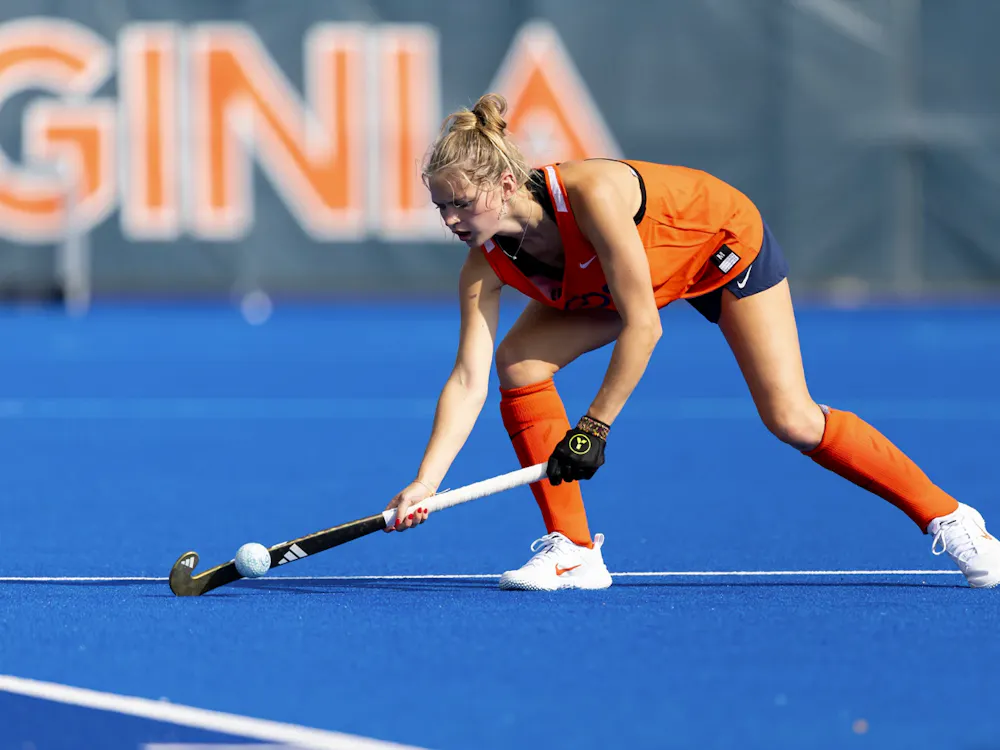
By Adair Reid | 3 days agoHaving not won an ACC Championship outright since 2016 and denied an NCAA Tournament run beyond semifinals, the Cavaliers should have more than enough firepower to break the ceiling of postseason woes, starting with the regular season slate ahead of them.