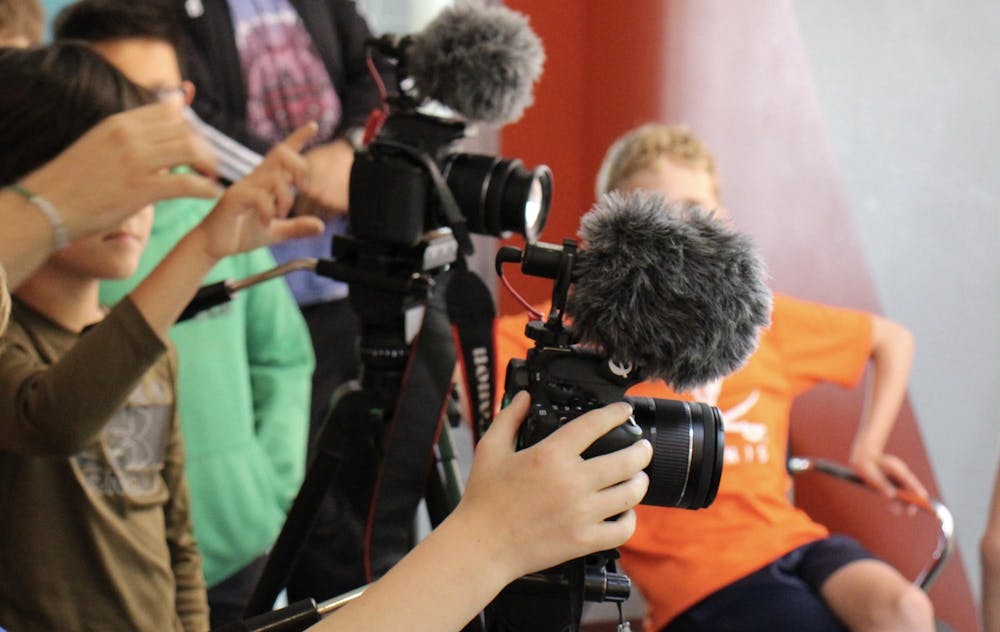
When walking on Charlottesville’s Downtown Mall, visitors and residents may be surprised to see groups of children wearing costumes, huddled around video cameras and supervised by just a few adults. But this unexpected sight is not a lone venture by some young cinephiles — it is the mark of Light House Studio’s Summer Film Academy, where young people ranging from third graders to college freshmen are able to explore the art of filmmaking under the supervision of trained professionals.
Since its debut 25 years ago, the Summer Film Academy has consistently offered local students access to film education and production every summer, catering to various levels of experience and interest in the medium. Some join the program with an active interest in filmmaking, while others simply come to enjoy the camp’s fun-filled atmosphere. But regardless of why students join the camp, all are given the unique experience of channeling their internal creativity into a visual film.
The program is dedicated to cultivating the students’ artistic visions, as every creative decision during production is made by those enrolled in the workshops. Campers are separated into groups by experience level, and various supervisors — called teaching artists, all of whom have experience in film industries — help academy members realize their vision by guiding the use of more specialized film equipment and techniques. Zack Marotta, the program’s education director, explained in a written statement to The Cavalier Daily that this mesh of youthful originality and seasoned experience creates truly remarkable results.
“When you combine the limitless, unpredictable imagination of, say, a 10-year-old with the skills of, say, a veteran cinematographer, actual magic happens,” Marotta wrote. “We give kids the tools they need to express themselves, then they … use those tools in ways we could never imagine.”
At the Summer Film Academy, separate workshops of elementary, middle and high schoolers all follow a similar structure throughout week-long programs. Students arrive, generate ideas and pitch them to teaching artists who help to concentrate and refine those ideas into a cohesive narrative. Students then shoot, edit and present their films at red-carpet style premieres held at the end of each session, allowing them to experience a perfect facsimile of a true film production.
For students in the elementary and middle school programs, the session experience is more centered around a basic introduction to filmmaking within a warm, welcoming environment. Kayla Saunders, Light House Studio’s teaching specialist, highlighted in a written statement to The Cavalier Daily the benefit for young children to experience the structure of teamwork and community created by a film set.
“Many times in our summer program, I have seen the shyest of kids come out of their shells,” Saunders wrote. “We have many students who come and are extremely supportive of their team members.”
This emphasis on teamwork is also fostered by the structure of the elementary and middle school programs. Rather than assign single students to the traditional roles of, for example, director or writer, every student gets to take a turn at said roles. Marotta noted that this not only helps children experience every part of the film’s creative process, but allows those students not explicitly interested in film to discover other forms of artistic expression they might enjoy.
“They’ve had a taste of storytelling, photography, lighting, costume design, acting, art design, digital editing, music and special effects,” Marotta wrote. “It’s rare that they don’t find at least one new creative outlet.”
As the age level rises in the Summer Film Academy, so too does the specialization and length of each session. While elementary schoolers choose from various themes like “Myths and Fairy Tales” or “MovieMakers: Superheroes,” middle schoolers can explore specific genres like film noir and general narrative film through specifically designed programs. High schoolers can participate in longer, two-week intensives which focus on dramatic narrative or attend workshops that teach industry trades like screenwriting or model making.
With such a variety of experiences available, Light House Studio is effectively able to offer an educational experience that compares to those offered by local high schools and even colleges, often at a lower price point and more hands-on level. Marotta wrote that the Summer Film Academy is able to provide local students with the specialized equipment and instruction they may not have otherwise had access to, either because of their financial background or other social circumstances such as incarceration or disability.
The issue of access and expense is one that often plagues young filmmakers, Marotta noted. He said he hopes that practices like showing every finished film in Light House Studio’s Vinegar Hill Theater at the end of each workshop, and submitting many of the films to film festivals throughout the country, will help young people understand that even films made on the smallest of budgets can have a large impact.
“The moment … when students see what they made on a real movie theater screen, with a packed audience reacting to it, and realize that their idea became an actual movie, is the whole point of what we do,” Marotta wrote. “The film industry is becoming more inaccessible … kids think that they can’t make a movie. We show them how to prove otherwise.”
Last year, films from the Summer Film Academy earned 34 festival acceptances and won 21 awards. The Summer Film Academy itself has earned an award for “Best Student Program” from the New York Festivals International Television & Film Awards, quantifying what Saunders characterized as a “great reputation” among Charlottesville residents because of the academy’s unique mission and warm community.
The city of Charlottesville has many film-focused programs accessible to adults, from the University’s Media Studies and Studio Art majors to the Virginia Film Festival and its various outreach networks. However, Light House Studio’s Summer Film Academy fills the gap for children and young adults who need a hand in starting their career in film, rather than continuing it.
By allowing children to experiment with film and artistic expression, Light House Studio is characterizing filmmaking as an accessible, understandable medium rather than an expensive, complicated art form, breaking the barrier that discourages many from pursuing film in the first place. If a short film made in one week, with one camera and a crew made entirely of kids, can be played on a movie theater screen and win awards, then the sky truly becomes the limit.
Sign-ups are still open for Light House Studio’s Summer Film Academy, available on their website.
Read More

Hoo’s Watching: Anatomy of a teen TV show
By Caroline Lee | 1 hours ago“Crew Girl” is not reinventing the wheel, nor is it particularly interested in doing so.
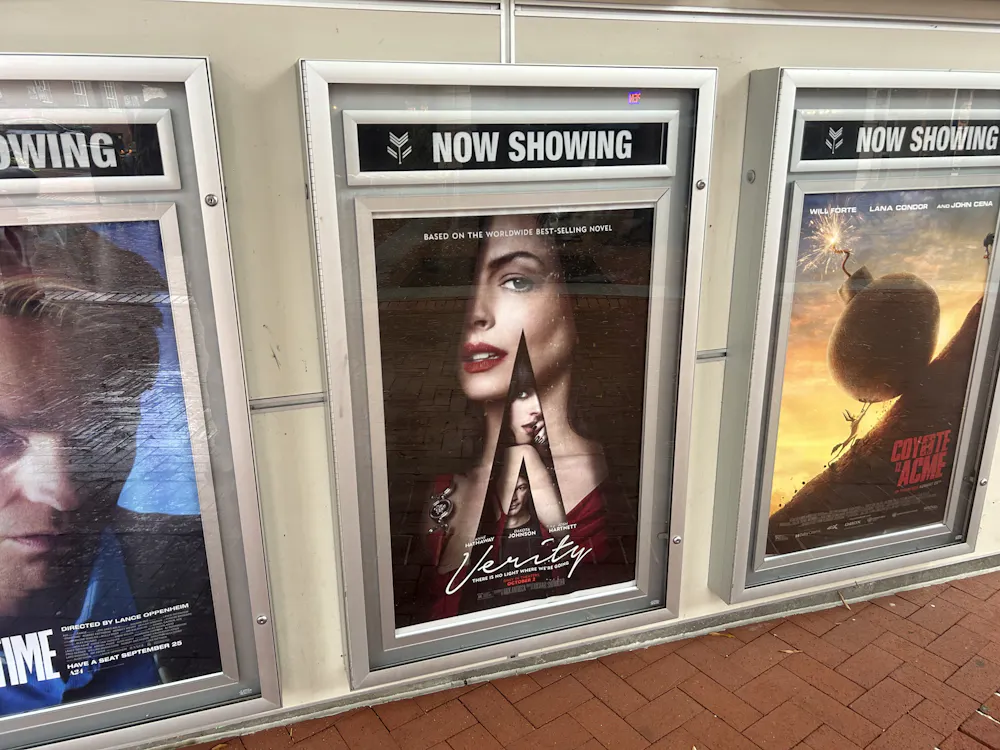
‘Verity’ falls short on its psychologically thrilling promise
By Julia Prevost | 11 hours ago“Verity” is entertaining in moments, particularly when its dialogue becomes so outrageous that disbelief gives way to amusement.

Virginia Film Festival unveils full lineup for 39th rendition
By Matthew Wang | 3 days agoThe Festival’s 39th rendition, which will run for five days from Oct. 21 to Oct. 25, will feature a myriad of films from Virginia and across the world, as well as live discussions and panels with celebrated filmmakers and industry professionals.