
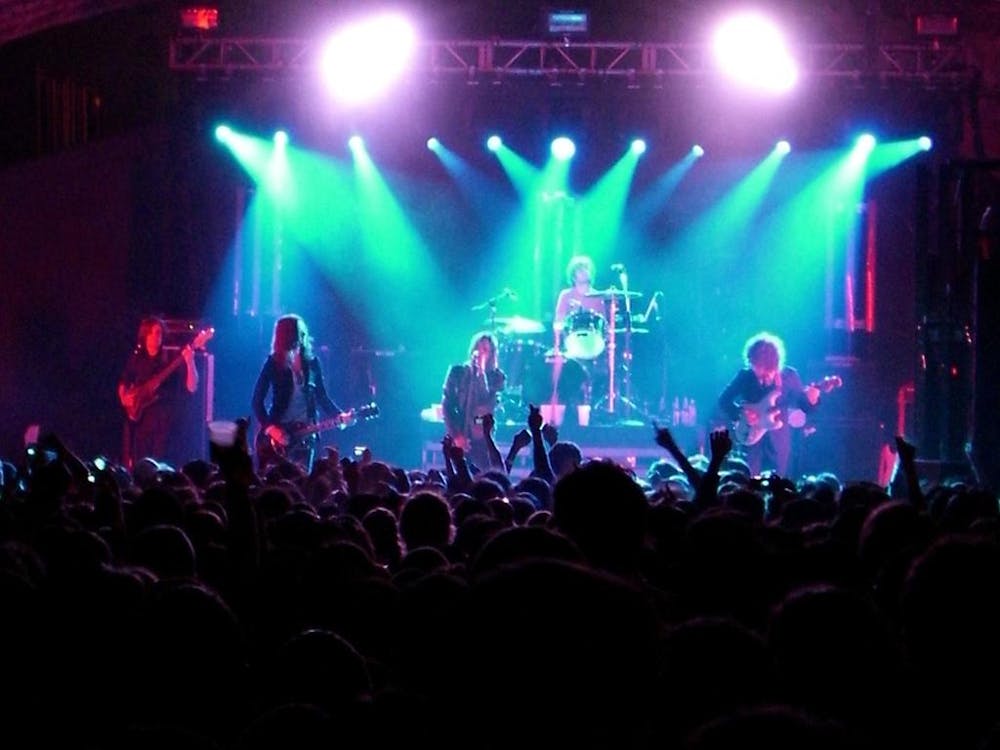
After a six-year-long drought of albums, indie rock band The Strokes returned with their newest project, “Reality Awaits,” July 24. Led by frontman and singer-songwriter Julian Casablancas, the band has shifted their sound several times over their nearly three-decade career — ranging from garage rock to bedroom pop to new wave — marking stages of evolution in the group and in music as a whole. Keeping with that tradition, “Reality Awaits” is intentionally inconsistent in its composition, keeping listeners guessing as to the style and substance of each sequential track. The band’s first album since 2020’s “The New Abnormal,” the New York-based group’s latest venture often undercuts its resounding instrumentation and poignant lyrics with overproduced vocals and dissonant harmonies.
The album’s production and release process has been nothing if not convoluted. Rumors of its production date back as early as 2022, with producer extraordinaire Rick Rubin — the bearded music guru who has produced music for artists ranging from Public Enemy to Lady Gaga — teasing the album on “The Joe Rogan Experience” podcast. In April 2026, the band announced the name and cover of the album, dated at the time for June 26. However, June 11, just two weeks before the album was scheduled for release, the band delayed the album by four weeks to match the premiere of the album with the record’s vinyl release, according to Strokes guitarist Albert Hammond Jr. July 24, four years of anticipation and an extra month of impatience came to an end for listeners as the wait for “Reality Awaits” was finally over.
Prior to the release of the full studio album, the group released two singles as hors d'oeuvres for audiences. “Going Shopping” — which dropped on the day after the album was announced — is a groovy, danceable track with melodies that harken back to earlier days of the band and lyrics that reflect Casablancas’ contemporary disdain for late-stage capitalism. The second single, “Falling out of Love,” is a slow, somber ballad about the erosion of one’s emotions with the chorus of “I denied, for a while / Fallin’ out of love for the first time / Some things are flawed by design / But I’m fine for the first time” among the band’s most thoughtful hooks to date. One striking characteristic of both tracks is the oppressive use of autotune on Casablancas’ voice, distorting the singer and making each song more abrasive to the ear. While Casablancas is not operatic, his voice has a signature emotive warmth to it that was lost on the album’s prefaces, which some listeners may have seen as portents for an over-produced, sonically unpleasant final release.
While the use of autotune wanes — or at least becomes more tasteful — over the course of the album, it is most prevalent on the album’s opening track, “Psycho S—t.” What begins as a slow, rhythmic melody accompanied by floaty guitar notes devolves into a harsh, abrasive metal song by its end. The song is the band’s attempt to lean into their categorization as a rock group, emulating the sounds of the '80s and '90s with heavy, headbanging electronic instrumentation. However, the musical virtuosity on display is undercut by Casablancas’ autotuned voice, making for a pitchy, borderline unpleasant listen. Placing this song first in the tracklist may scare off some listeners, but those who choose to stick around will be rewarded with more assonant, familiar sounds.
The following two tracks, “Dine N’Dash” and “Lonely in the Future” are primary examples of this improvement. On the former, drummer Fabrizio Moretti lays down propulsive, punchy percussion behind shockingly violent lyrics about getting away with a myriad of crimes. Casablancas’ voice — only minimally enhanced by autotune — is intimate and high-pitched, making for a dichotomy between the darkness of the words and the innocence of the person singing them. “Lonely in the Future,” is a winkingly self-indulgent track reflecting on the band’s success and influence not only on the rock genre, but on artists ranging from The Weeknd to Harry Styles, calling them out for failing to recognize the pioneering nature of The Strokes. Employing Casablancas’ signature biting sarcasm on a beat sonically reminiscent of “The New Abnormal,” listeners can find a perfectly enjoyable electronic track even by ignoring the underlying callouts.
Across each track, the album features some of the group’s best instrumentation to date, particularly from lead guitarist Nick Valensi, as well as by Hammond Jr. and Moretti. Tracks like “Liar’s Remorse” and “The Fruits of Conquest” are full of creative strokes as the band manages to compose a synergetic sound only achievable from years of familiarity with one another. For an album riddled with lyrical and vocal idiosyncrasies, listeners can always rely on the band to step up and put together groovy melodies that encourage the nodding of heads and the swaying of shoulders.
A clear throughline across the entirety of the album is the uncomfortability with one’s identity in an increasingly mediated, contentious and technology-dependent world. In the outro to “Dine N’Dash,” Casablancas says directly to the band, referring to their playing style “I think that's the minimum soft. And you go harder if you want but that's the minimum soft,” indicating a desire for change if not in society as a result of the music, then within the music itself. However, the theme often comes at the detriment of the music’s enjoyability. Casablancas’ decision to mask his voice behind autotune makes for an interesting statement about the role of technology in creating modern music, but does not necessarily translate to immense replay value. Fans of the band behind timeless classics like “Is This It” and “Someday” may struggle to place any song on this project in that same conversation.
As “Reality Awaits” winds down, one cannot help but feel that this marks the end of a chapter for The Strokes, if not the end of the band altogether. “Tyrants of the Mellow Moon,” the final song on the album, opens with the lines “So we go for one more ride / And that’s okay ‘cause I did my time,” followed by “Here we are for the final time,” in the second verse. The conclusive, wistful note on which the album ends is reminiscent of “Ode to the Mets,” the masterful final song on “The New Abnormal” reflecting on the band’s history and long suspected by fans to be their final song ever. With the close of yet another project, fans will be left wondering if The Strokes feel as if they still have a place in a modern music industry dominated by artificial intelligence-generated and AI-assisted music, vapid consumerism and theft without remorse.
Although different strokes may be for different folks, these Strokes are perhaps too different for many longtime listeners to recognize. The six-year hiatus from music only to return with a nine-track, 42-minute album plagued by autotune and an incohesive style comes as an overall disappointment for one of the signature bands of the 21st century. While The Strokes’ return to recording is certainly exciting, “Reality Awaits” was in reality not worth the wait.
Read More

September Book Club: Challenging books to train the brain
By Matthew Wang | 2 days agoThese three books make for a challenge to even seasoned readers, rebuilding the cognitive strength that may have waned over time off.

‘Teeny Tiny Trifecta 9’ gives locals a small taste of Charlottesville’s art
By Siddharth Sharma | 4 days ago“Teeny Tiny Trifecta” stands as a beacon, and potential launchpad, for artists around Charlottesville.

On Repeat: Songs to transport listeners back to the classroom
By Carly Smith | 4 days agoEven though themes of love and loss are extremely present in pop culture today, over time artists have also been inspired by the classroom while writing their pieces.


