Geraldine Ferraro, vice presidential nominee for the Democratic Party in 1984, addressed the issue of women in politics before a packed audience last night in the Newcomb Hall ballroom.
The event was part of the Center for Politics' National Symposium Series, and in line with this year's theme of "women in politics", Ferraro said her goal for the speech was to detail "how far [women] have come and how far [women] have yet to go."
Holly Hatcher, assistant director of programs for the Center for Politics, said this year they wanted to explore how the role of women in politics has changed.
"[We] want to inspire a younger generation of women to get involved in politics," she said.
Hatcher said Ferraro's vice presidential run was "the first time someone considered a woman becoming a potential president."
"The efforts of women in politics around the world is astounding," Ferraro said in her speech.
Ferraro explained that there has been great progress since women won the right to vote with the 19th Amendment. "But that's not good enough," Ferraro said.
Ferraro said that a greater influence from women would benefit politics, drawing parallels to the University. Ferraro said after the University allowed women to attend in 1970, it became one of the best public schools in the country.
"Opening doors increases excellence," Ferraro explained.
Ferraro also gave several predictions for the future of women in politics. After asserting that Nancy Pelosi would easily become the Speaker of the House after the mid-term elections, she spoke about the 2008 presidential elections. "When a woman finally runs for president, the change will be felt everywhere," Ferraro said, deeming 2008 to be that year.
Mentioning several candidates, including Condoleezza Rice, Ferraro concentrated on Hilary Clinton's chances.
"If she chooses to run, she will win the nomination and, I think, win the presidency," Ferraro said.
She added that democracy can't survive if everyone doesn't have a voice.
"I have no doubt that women will persist, and we will prevail."
An attendee pointed out that she didn't like either of the main political parties and asked, "Do I pick the lesser of two evils?" Ferraro dismissed that idea and instead recommended, "If you don't like the leaders, become one."
Read More

U.Va.’s planned data center expands $30 million amid statewide debate over energy use
By Jaylynn Perez | YesterdayThe project has grown since it was initially approved by the Board of Visitors in June 2025 as a $72 million, two-story data center facility.
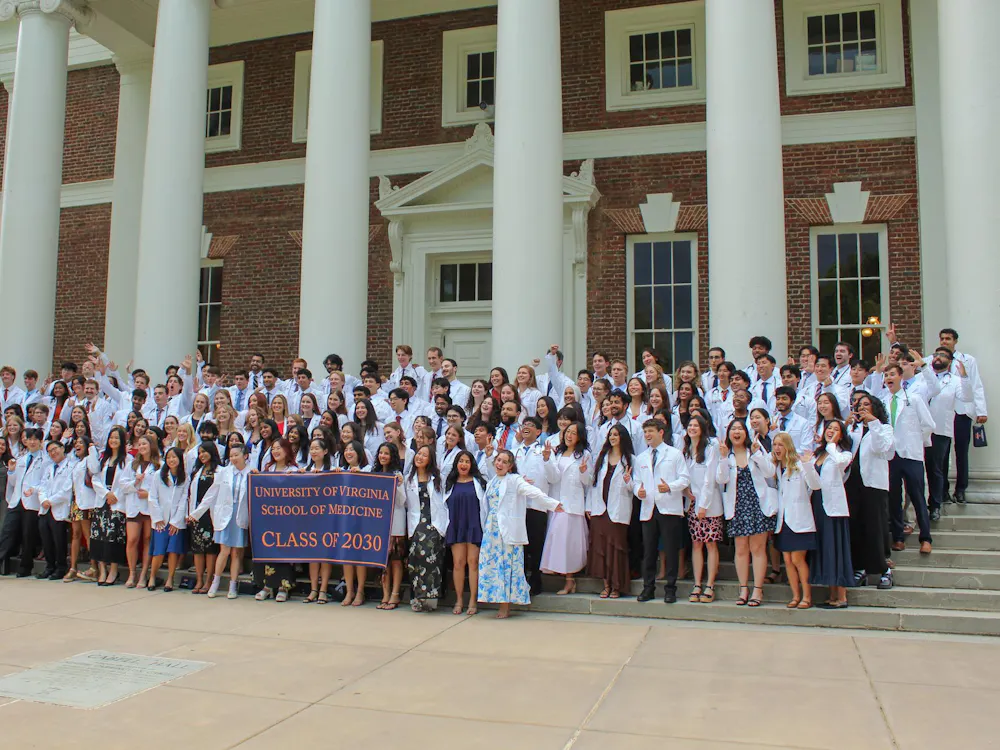
School of Medicine welcomes Class of 2030 with annual White Coat Ceremony
By Michael Racz | YesterdayThe ceremony is a longstanding tradition in medical schools across the country in which incoming first-year medical students receive their first white coat as they enter the medical profession.
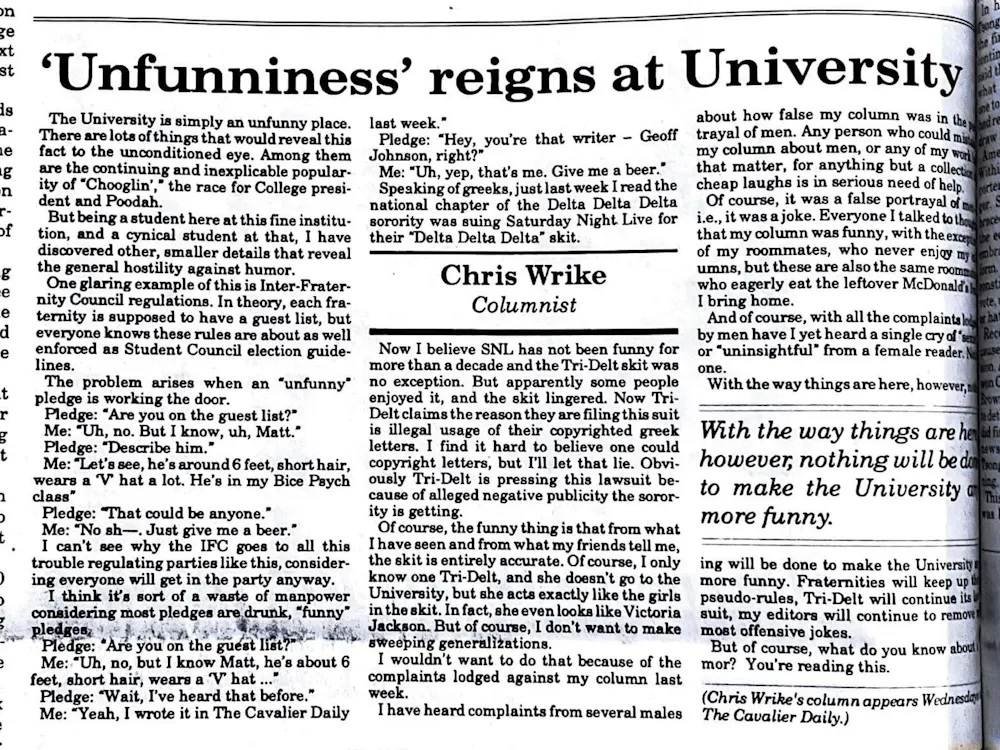
From the Archives: 1990s
By Tori Vonderheid and Livia Shrednick | 2 days agoUniversity physician Dr. Joel Trugman discovered that some children who had been diagnosed with cerebral palsy, an incurable movement disorder, instead have a rare biochemical disorder that is treatable.