What you're about to read is an experiment, an unprecedented event in the life of "Reality Check." Up to this point, all of the columns that have appeared in this space have been planned out well in advance. I ruminate a topic, jot down random notes and sentences in class instead of paying attention, formulate a mental outline and transcribe said outline onto paper -- all before sitting down to face the blinking cursor. The act of writing is a kind of catharsis for me; therefore, all of my columns undergo an intense, multi-step editing process before being released to the masses. There's a certain vulnerability in writing, especially when it's for public consumption. And so, I meticulously plan these columns to ensure I have something worthwhile to say and obsessively edit them to ensure I say it in a coherent manner.
But this column is going to be different. What you have before you is a completely unscripted installment of "Reality Check." I don't have any notes. There's no outline beside me. Any time an idea for this week's column popped into my head, I banished it completely. I refused to have a plan for this one. I just wanted to play it by ear, take a walk on the wild, unplanned side, live dangerously -- without an outline. So fasten your seatbelts. Who knows where we'll end up.
I'm beginning to wonder if it's possible to think too much. In college, we're supposed to approximate some level of higher education by pushing our minds to the limit, reaching for the stratosphere of intellectualism and striving for all-around enlightenment. It's a tall order
Read More

Notes from a shared address
By Summer Hoffman | 9 hours agoAfter one year of living with my partner, I can safely say that our living room is the best classroom I have ever sat in.

CASH provides tax season assistance for the Charlottesville community
By Lily Notter | 9 hours agoWith the program’s primary goal being to benefit students and the Charlottesville community, they work to maximize refunds clients receive and minimize what they owe in annual taxes.
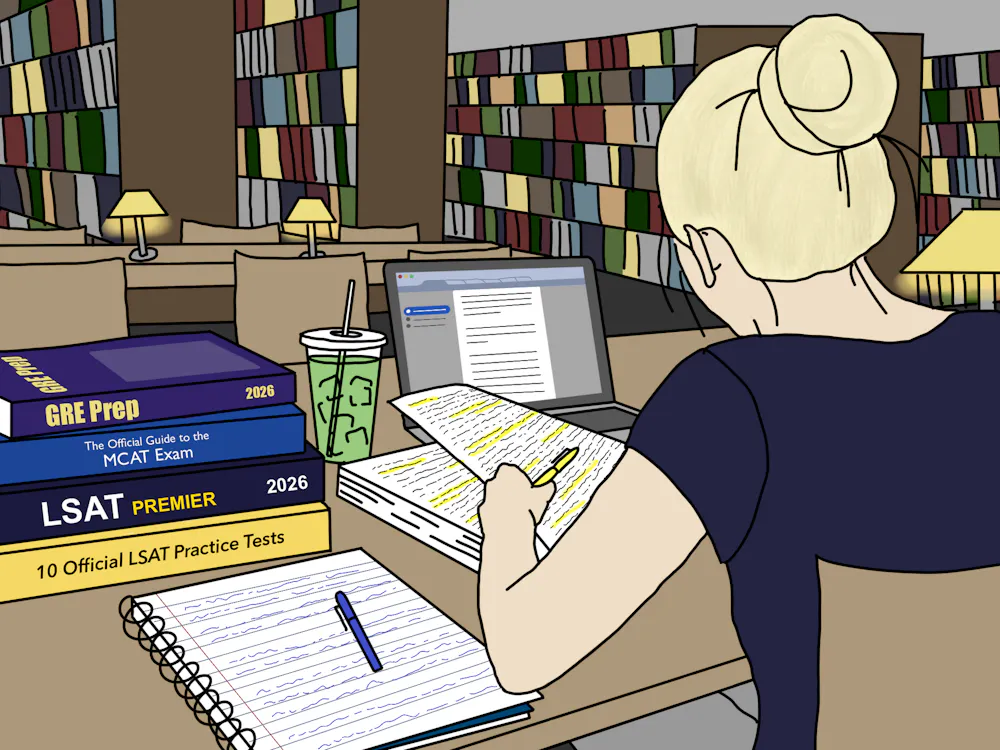
The graduate admissions exam grind
By Charley Thomas | 2 days agoJust when University students think they have left the prep-work perils and score obsessions of standardized testing back in high school, entrance exams for graduate program applications ring in round two.