
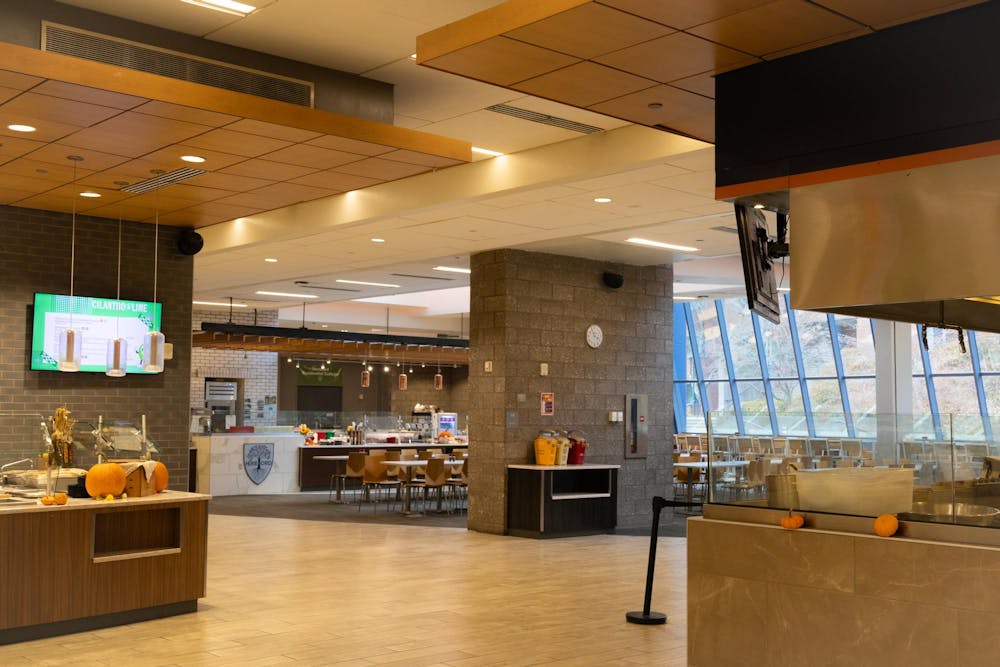
As the semester barrels towards finals week, campuses across the country see a familiar scene consisting of midnight trips to the library and students working around the clock. At the University, however, this scene carries a particular frustration. Dining halls and restaurants on the Corner close early, leaving students without access to reliable food options when they may need them most. It is one of the most visible inequities on Grounds — an institution that runs its libraries until 2 a.m. and its gyms until 11:59 p.m. cannot run its dining halls in step with the lives of its students who stay up past 11 p.m. If the University wishes to support students, it must expand meal hours, with at least one dining option open until 2 a.m., particularly during exam weeks.
At the University, first-years and students living on required meal plans — especially those without cars — cannot rely on packing snacks as a reliable substitute for a late meal. And for students who do choose to opt out of meal plans, the early closures do nothing but reinforce a system severely inaccessible to many and fail to convince them to rejoin the system. When the only options are overpriced delivery choices or distant drive-throughs, students can find themselves having to pick between splurging on low-quality fast food or powering through the night in hunger.
This inequity stems not only from access but from design — a meal plan system built for a 9-to-5 lifestyle no longer fits how students actually live. Students do not confine themselves to daylight hours, nor do they have the luxury of adjusting their schedules around dining hall closures. Students today juggle more than just classes — many have schedules stretching well into the night as work shifts run until close. This shift becomes more pronounced during midterms and finals, when academic demands accelerate and students spend extended hours in libraries. When dining options vanish during this period, the University unintentionally privileges one kind of schedule over another, reinforcing an outdated notion of how students work and live.
Students have not been silent about this gap. Responses on forums yearn for the return of the late-night and self-serve options at Runk Dining Hall that sustained starving students during their final review sessions. These testimonies highlight the demand for late-night meals and reveal the current system as insufficient. The demand for late night options may not always be immediately obvious, but the persistent nagging for more choice speaks volumes.
Extending dining hours, particularly during exam week, therefore, is not merely a matter of convenience — it is aligned with student needs. For example, while the standard hours at Runk may end around 9 p.m, many students working, commuting or simply studying later than usual may find themselves in a window where no meal plan option is available. The University could pilot a program keeping one dining hall open beyond midnight during periods of high demand, or even allow pop-up food trucks to open outside major libraries later at night for more convenient food options. By aligning dining services with the actual rhythms of students, the University would be meeting its mission of supporting student health, equity and academic success.
Of course, concerns about extended hours are not only financial — they are also human. Later service requires more staffing, higher utility costs and employees willing to work difficult overnight shifts — a real burden on a workforce whose labor already sustains the University’s daily operations. Detractors might question the wisdom behind prioritizing students’ convenience over the staff’s well being and the University’s finances. Yet, the University has shown that flexible staffing is possible when the need is clear. During Ramadan, U.Va. Dine coordinates pre-dawn meals for fasting students while fairly compensating employees. What this demonstrates is not that workers should be stretched further, but that when the University recognizes a legitimate need, it possesses the capacity to adapt its dining operations in limited, deliberate ways.
Such an expansion may be expensive, but food insecurity is linked to significant academic and mental health challenges. Would anyone be able to concentrate on an empty stomach? If extending one dining hall’s hours can prevent a handful of students from falling behind, the investment may pay off in improved retention, satisfaction and wellness. In sum, the University has an opportunity to realign with student needs, especially during the most stressful weeks of the semester. Expanding dining hall hours is a response to logistical realities and an affirmation that the institution values all students — not just those whose schedules fit neatly into dining windows. When students ask for better late-night options, the University should listen.
Muhammad Ali Rashid is a senior columnist for The Cavalier Daily. He can be reached at opinion@cavalierdaily.com.
The opinions expressed in this column are not necessarily those of The Cavalier Daily. Columns represent the views of the authors alone.
Read More
EDITORIAL: Student self-governance deserves our confidence
By Editorial Board | 3 days agoNow, just a month into the semester, new officeholders appear to be delivering results.

YOUNIS: SJP’s criticism is not hysteria — it is a challenge to U.Va.’s standards
By Ayat Younis | 6 days agoAny leader deserves scrutiny for their professional past, regardless of their background and especially if they have ties to brutal military-industrial complexes through the IDF.

ELJAZZAR: Do not be fooled by the Vanderbilt Report
By Farah Eljazzar | September 14, 2026A report chaired by a philosopher that aims to invoke objective inquiry is hypocritically holding itself to a lower evidentiary standard than it criticizes.


