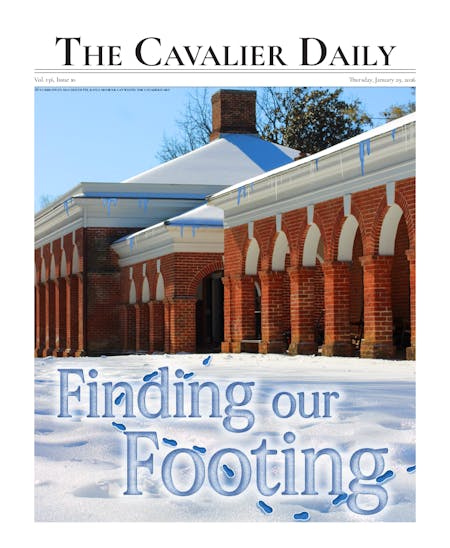
For students on Grounds, the University often feels permanent — traditions passed down through generations, buildings constructed decades ago and values assumed to endure long after any student graduates. That sense of permanence is what makes higher education across the country, and in Charlottesville specifically, so special. Students are able to learn independently, unburdened by the instability of the outside world, because the institution around them feels so constant and secure.
Right now, though, that stability at the University is performative at best — severely hindered by a growing pattern of political interference that is quietly destabilizing the foundations of both academia and the University itself.
The recent resignations of multiple Board of Visitors members at the request of Spanberger highlight a concerning trend. Election cycles, undergirded by growing political interest in higher education, are increasingly replacing long-term planning as the guiding force behind university governance and important academic conversations. As a result, the institutional stability, transparency and academic independence that enable the University to function are increasingly under threat.
Spanberger’s requests for resignations were potentially influenced by an interest in holding certain Board members accountable for their roles in forcing the departure of former University President Jim Ryan, largely because of his support for diversity, equity and inclusion initiatives. In conjunction with the legislature’s refusal to approve five of former Gov. Glenn Youngkin’s appointees, the move gave Spanberger 10 vacant Board seats to fill, allowing her to appoint the majority of the Board’s 17 spots. Notably, this turnover included the simultaneous resignation of the Board’s rector and vice rector, an odd occurrence given the fact that such leadership positions usually finish their terms. A typical governor would, on average, appoint four new members per year during their term, assuming normal turnover.
While accountability is both necessary and warranted, the speed and scale of this intervention feel more like a political flex than political reform — signaling the beginning of yet another era in which politics drives decisions, leaving the University and its students as collateral damage. Over the past year, the University has been caught in a state of constant political turbulence, marked by Ryan’s resignation, uncertainty surrounding the presidential search process and stakeholder involvement, contentious Board communications and now the sudden restructuring of the Board itself. Each of these moments has stemmed not from academic or structural failure, but from political transitions or interference, highlighting how frequently external factors are shaping internal University governance.
Rather than allowing the University time to recover through conversations with stakeholders or meaningful breathing room, Spanberger has just extended the political fog the University is clouded by. To her credit, she has signed an executive order directing a review of the Board selection and appointment process for all public college governing boards in the state. Although this move is a step in the right direction, notably absent is any guarantee of meaningful community involvement — a principle Spanberger highlighted in conversations with University students and by urging a pause to the presidential search. Reforming governance without actually consulting those being governed risks reproducing the instability currently threatening students, faculty and staff.
It would be naive to ignore that higher education governance usually changes with major political shifts, regardless of the institution. Filling the Board’s vacancies are part of Spanberger’s — or any governor’s — role. However, concern arises when the shift occurs too quickly without deliberate consensus — a move that sacrifices stability for speed and replaces long-term success with short-term political gain. After the growing outcry from students and faculty over the past few months, begging to be involved in the political conversations shaping the University, the Spanberger administration should have made a more meaningful effort to engage with stakeholders. Yes, the decisions echoed widely held stakeholder frustrations, particularly regarding the distrust of former Rector Rachel Sheridan and former Vice Rector Porter Wilkinson. And yes, the requests for resignations and the subsequent appointments were carried out opaquely. But neither of these facts justifies Spanberger’s timing, especially when no clear urgency of this scale was evident.
Without stakeholder involvement, certainty disappears. Major institutional initiatives are forced to pause, financial priorities hang in limbo and strategic planning becomes nearly impossible. Spanberger’s appointments had to happen at some point — the Board needed members. Even so, without deliberately implementing active stakeholder participation, instability is affecting everything from academic programming to students' confidence in the leaders who serve them.
What has occurred with the Board cannot be undone, but how the University moves forward can still be defined. Given the decisions made, there will be periods of resentment, distrust and skepticism that will supersede political opinions. It is not easy to mend a system so far fractured. But a solution to the transparency crisis unfolding at the University exists. The Board and the Spanberger administration must reaffirm their commitment to University stakeholder leadership and engagement, as well as their commitment to enacting meaningful change for students and faculty. By increasing open forums, incorporating stakeholder feedback into policy decisions and including student input in the review of the Board appointment and selection process, the administration can demonstrate a renewed commitment to academic priorities.
Ultimately, governance must be rooted in collaboration. Accountability must be balanced with meaningful decision-making. And institutional strength must take precedence over a political clock. To the Board, Spanberger administration, University officials and beyond — prove to us that higher education will not reset every four years.
Lucy Duttenhofer is an opinion columnist who writes about academics for The Cavalier Daily. She can be reached at opinion@cavalierdaily.com.
The opinions expressed in this column are not necessarily those of The Cavalier Daily. Columns represent the views of the authors alone.
Read More

WETMORE: A justification for Gov. Spanberger’s appointments
By Celeste Wetmore | YesterdayThe Board continued their search without pause in the face of these checks on their operations, demonstrating the detachment of its agenda from community wishes and concerns — and providing clear justification for Spanberger’s actions.

KURTZWEIL: A University removed from its leadership
By Paul Kurtzweil | YesterdayThe administration of the University acts without care of consequences because it knows there are none, and it is becoming incredibly frustrating to watch. The University community needs to alter its approach to these issues, or nothing will change.

SULLIVAN: Vote in student elections — no, seriously
By Scarlett Sullivan | 3 days agoThe mandate to engage with these benefits is as simple as a couple of clicks on the UBE email — students should vote in this upcoming 2026 student election.