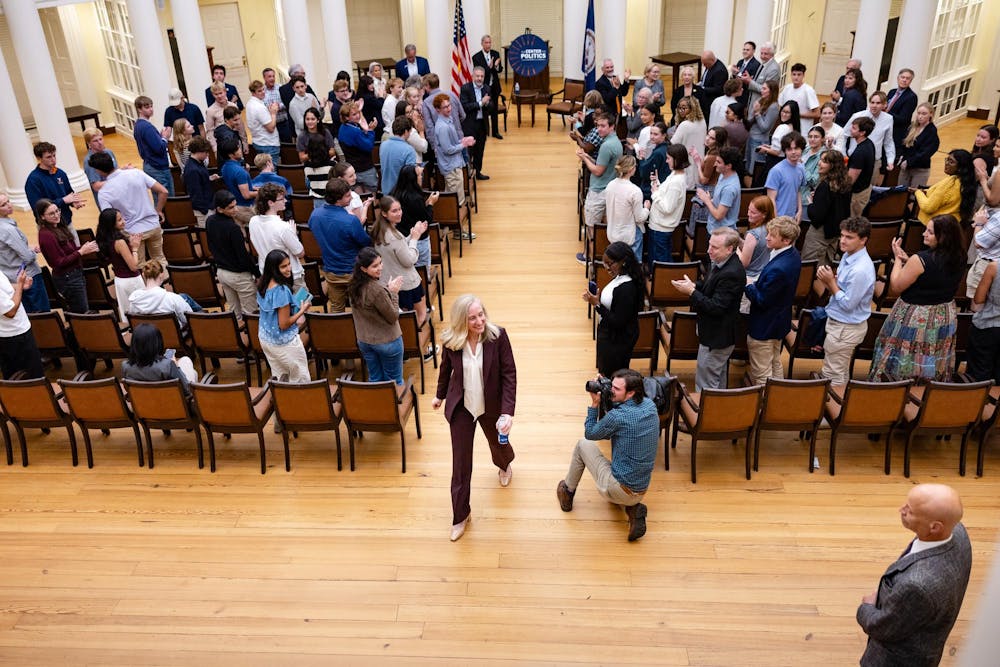
Throughout the last eight months, the Board of Visitors has caught waves of criticism and appeals for change, all of which finally came to a head with Gov. Abigail Spanberger’s inauguration into office two weeks ago. Spanberger’s recent prompting of five resignations from the Board of Visitors follows a series of disappointments in the Board, an indirectly yet inherently community-facing governing body that has repeatedly fallen short of reassuring its own audience — particularly since former University President Jim Ryan’s forced resignation in July. Her actions represent an impending fresh start for the University after months of political pressure, community disregard throughout the subsequent search for a 10th president and overall uncertainty about the future. Therefore, Spanberger’s Board renovation should have been expected after the Board’s recent actions. Rather than deepen instability, this decision will swiftly begin the healing process for the University community following months of tensions with the Board.
While Board members themselves are not subject to an election, each member is appointed by the Governor of the Commonwealth and confirmed by publicly elected officials in the Virginia General Assembly. This process emphasizes indirect constituent engagement with Board selection and maintenance, casting the organization as inherently public-facing. Throughout the presidential search process, faculty statements, student votes and alumni opinions testified to severe mistrust of the Board and directly called for increased transparency and a pause to the presidential search — appeals largely grounded in frustration that the 12-member Board was operating out of compliance with statutes that require 17 members. The Board continued their search without pause in the face of these checks on their operations, demonstrating the detachment of its agenda from community wishes and concerns — and providing clear justification for Spanberger’s actions.
In November of last year, Spanberger also urged former Rector Rachel Sheridan and former Vice Rector Porter Wilkinson to pause the search until Board vacancies could be filled by herself, a request rebuffed by former Gov. Glenn Youngkin. In light of these consistent slights, it is important to consider that the Board has historically made decisions as an independent body and was therefore within its means to appoint University President Scott Beardsley, an internal hire with a track record of service to the University. These technicalities aside, the Board must recognize that its decisions have a direct public perception and impact. Working against community appeals by pushing ahead with the presidential search established a legacy not of overreach but, worse, of disregard for our community and the Board’s responsibility to those impacted by its decisions.
The very weekend of her inauguration, Spanberger doubled down on the Board. She called for five resignations, including Sheridan and Wilkinson — who omitted conversations from Ryan and the University community while working with the Department of Justice prior to his resignation, as discussed in Ryan’s Nov. 14 letter to faculty senators. Spanberger’s decision to request resignations was not an impulsive display of authority, but rather, a corrective measure necessitated by months of institutional failure. Her University constituents had exhausted less disruptive alternatives — statements of appeal were ignored, votes of no confidence were dismissed and public concern was disregarded. At a certain point, a governing body that refuses to adequately respond to its audience ceases to function effectively. Therefore, Spanberger was well within not only her rights but responsibility as governor to renovate the makeup of the Board.
Spanberger’s actions reflect her representation of Virginia’s citizenry, including the in-state subset of the University community. Her first actions in office fulfill what many of those constituents have been calling for over the last several months. Yet, her decision has also been connoted as a “politicized power grab” by conservative groups such as the Jefferson Council. The Council’s concern is not unfounded — constant power turnover can foster instability. However, context makes it clear that Spanberger did not precipitate these resignations to rock the boat, but rather, to address the unrest catalyzed by now-unseated Board leaders who were complicit in Ryan’s ousting by the Justice Department.
The Board’s reputation has been tainted, its legitimacy questioned and controversial leaders unseated. Spanberger’s dismissal of Board members was an uncomfortable, and perhaps shocking, yet necessary step toward a new chapter for all. From here, the Board can re-establish its legitimacy alongside Beardsley and redefine its stance within the University community. In the future, the Board must balance independently exercising its power and long-term planning with remaining connected with its public — the present University community. Spanberger’s actions may be debatable, but her intent to return recognition and trust to her University constituents reflects the responsibility of her new role.
Celeste Wetmore is an opinion columnist who writes about academics for The Cavalier Daily. She can be reached at opinion@cavalierdaily.com.
The opinions expressed in this column are not necessarily those of The Cavalier Daily. Columns represent the views of the author alone.
Read More

HAWKINS: SJP’s animosity toward Darden’s new dean is patently absurd
By Joshua Hawkins | YesterdayNo, Grushka-Cockayne should not be forced to resign before Darden even opens its doors for the fall, and SJP should seriously reconsider suggesting such a dramatic step.

ELJAZZAR: The University’s growing lobbying budget should worry you
By Farah Eljazzar | 4 days agoA public research university having to negotiate for its independence is, on its face, an indictment of the system it operates within.
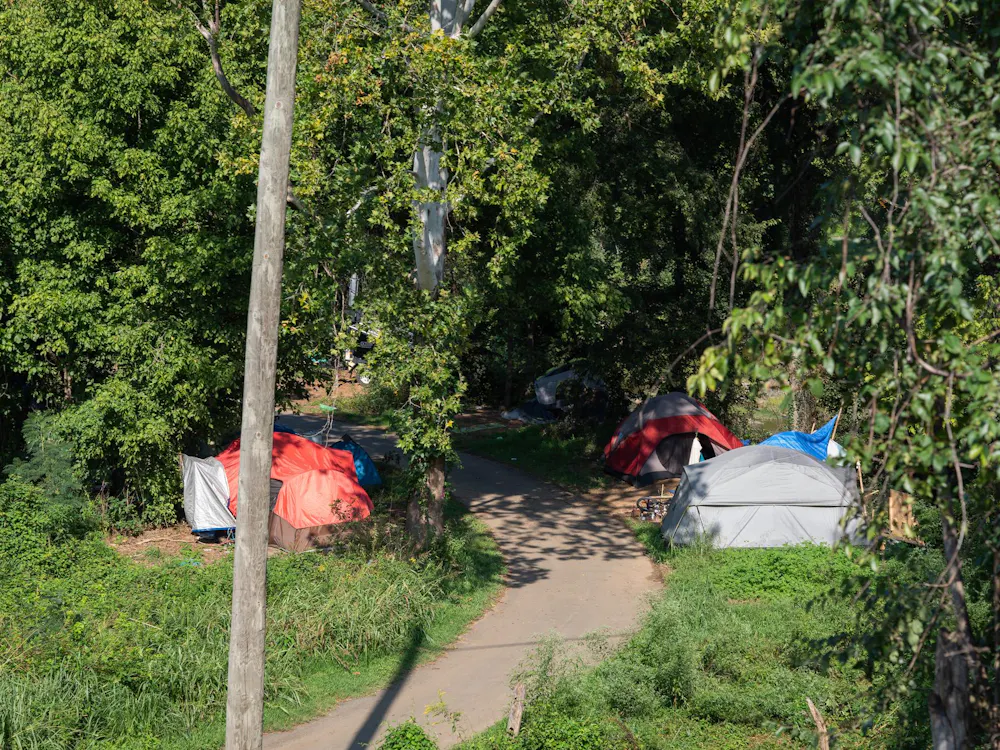
TAYLOR: The Free Bridge encampment removal and the issues with homelessness ‘solutions’
By Nat Taylor | August 19, 2026If we are to solve homelessness, temporary band-aid solutions like expelling or breaking up homeless communities will only displace more residents, alienate them from local governance and end up merely criminalizing this predicament.