Correction: A previous version of this article incorrectly stated that in the past, notification of an honor violation over the summer would typically be delayed until the start of the following fall semester. The Honor Committee makes every reasonable effort to notify students of violations as quickly as possible over the summer. The article has been updated to reflect this change.
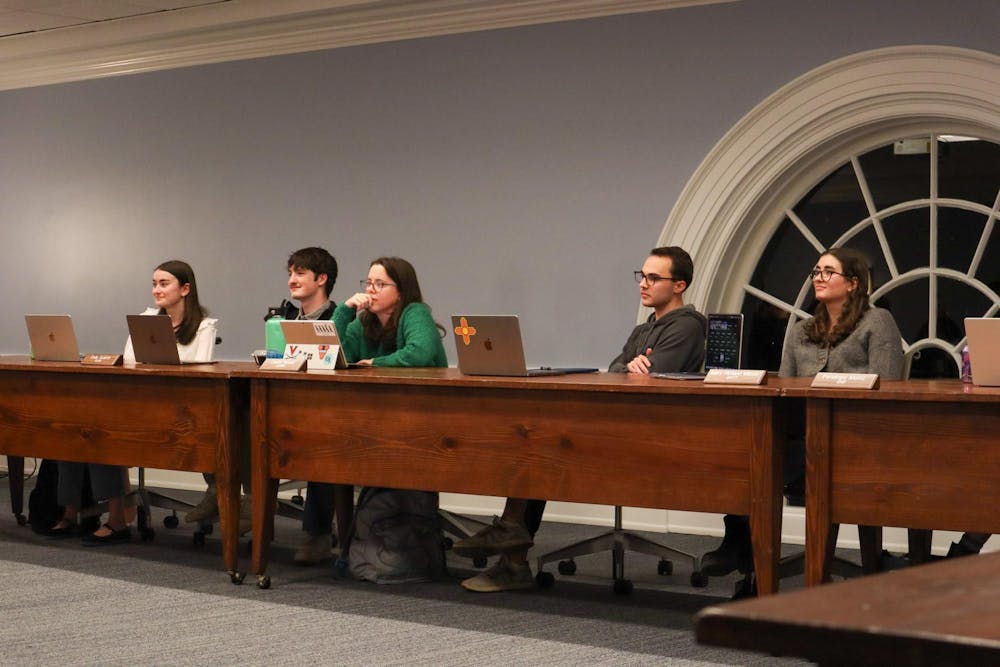
During Sunday evening's Honor Committee meeting, the Committee discussed efforts to finalize transition plans for the incoming Committee following the conclusion of the current term April 6. The Committee also plans to vote Sunday on an amendment to the bylaws which finalizes procedures for summer case processing. Representatives also discussed renaming the Restorative Ethics Seminar to address concerns raised by students about the vague naming and better clarify what occurs during the seminar.
The Committee opened its meeting by discussing preparations for the term transition April 6 — most notably by preparing what the Committee has coined “transition documents.” The transition documents are written by Committee representatives and vice chairs to assist the next term in understanding each role's responsibilities and provide suggestions. This year, the Committee assigned the drafting of transition documents to both the school representatives and the vice chairs, rather than solely the vice chairs as in previous years.
The University Board of Elections held elections Feb. 24-26 to determine new Committee representatives who will begin their terms April 6. Newly-elected representatives will vote internally March 29 to determine who will become the chair of the Committee as well as the vice chairs.
Jack Wallace, chair of the Faculty Advisory Committee and fourth-year College student, said that the transition documents are important for preparing the Committee’s upcoming term. The FAC is a subcommittee within the Honor Committee that serves to bridge the relationship between faculty and the Committee, and collect sentiments from academic divisions regarding honor at the University.
“[I] definitely want to think about transition materials for the next [FAC chair],” Wallace said. “I didn't really receive anything when I got the position, so I want to make sure that the next [chair] has things to guide them when they're going through their outreach next term.”
The Committee also finalized bylaw amendments formalizing summer case processing procedures, outlining three general procedures for the upcoming term. These procedures include notifying students of alleged violations, giving accused students the option to either pursue an Informed Retraction or defer their case and requiring that unresolved cases be postponed until the fall semester.
Over the past several meetings, the Committee developed a plan for managing summer cases. As part of the plan, the Committee accepted 16 new support officers to help advise accused students throughout the summer sanctioning process.
As part of the new summer procedures, honor support officers will first notify students of alleged honor violations as quickly as possible following spring semester finals and during the summer. Following this notification, accused students may then decide to either pursue an IR during the summer or defer their case until the fall semester.
An IR allows an accused student to accept responsibility for an honor violation and avoid permanent sanctions — such as permanent transcript notation or expulsion. Students are entitled to one IR during their time as a student at the University.
Students who pursue an IR will proceed through the sanctioning process over the summer, while those who do not or are ineligible to do so will be required to place their case on hold until sanctioning procedures resume in the fall semester.
Thomas Ackleson, Committee chair and fourth-year Engineering student, said that he will make a draft of the proposed summer case processing amendments to the bylaws before the next meeting so the Committee can vote on the changes before the conclusion of the term.
In addition to summer case processing, the Committee discussed renaming the Restorative Ethics Seminar — a student-led educational sanction for students found guilty of an honor violation — to the Honor Seminar. The seminar is designed to foster dialogue on the principles of honor and their role in the community of trust. According to Seamus Oliver, chair of the Policies and Procedures Committee and fourth-year College representative, students in the restorative seminar voiced concerns that the original name does not reflect what actually occurs during the seminar.
“[The seminar] is not particularly looking over or educating students on their ethics. This is not a philosophy course,” Oliver said. “It's an opportunity for students to sit with each other and facilitate their thoughts in the community of trust [and] how they can more fully recommit to it.”
The Committee agreed to change the name of the seminar to the “Honor Seminar” and will be working on reformatting the name in official documentation in the coming weeks. The name change does not reflect any change to the seminar’s content.
The Committee will vote on its next chair and vice chairs March 29. The current term will conclude April 6, when leadership will transition to the newly-elected representatives and the next Committee chair and vice chairs. The Committee’s last meeting of the term will be April 5. Students can attend meetings in person in Newcomb Hall 480 or on Zoom on Sundays at 7:00 p.m.
Michael Racz is a staff writer on the news desk. He is a second-year College student majoring in biology with plans to go to medical school. He enjoys writing about health topics and student self-governance.
Read More

Jefferson Trust awards $812,064 in Fall Major Cycle Grants
By Charlotte Gabriel | 16 hours agoThe Jefferson Trust awards both Flash Grants and Major Cycle Grants on a monthly and biannual basis, respectively.
At City Council meeting, staff preview snow removal efforts for anticipated winter weather
By Luca Bailey | 16 hours agoThey also heard from a Charlottesville community member who argued for the importance of large-scale development by-right, received updates on the new emergency homeless shelter at 2000 Holiday Drive and invested in several new affordable housing projects.
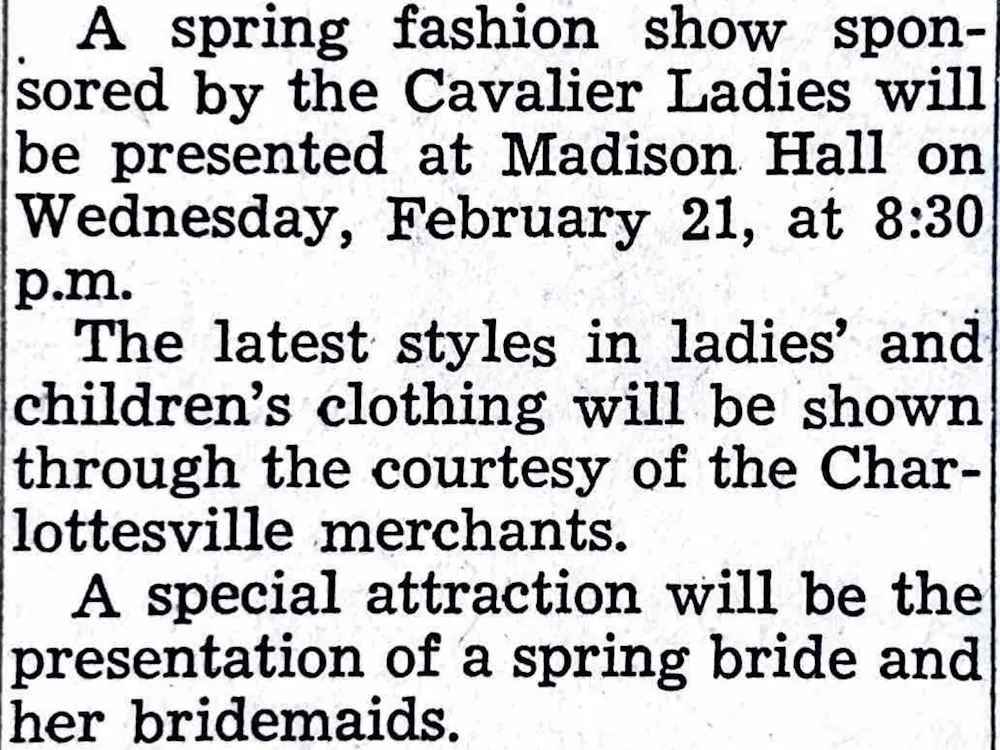
From the Archives: Fashion on Grounds
By CD Archive Staff | 17 hours agoMerchants found that many students also opt to blend traditional, preppy basics with punk elements.