
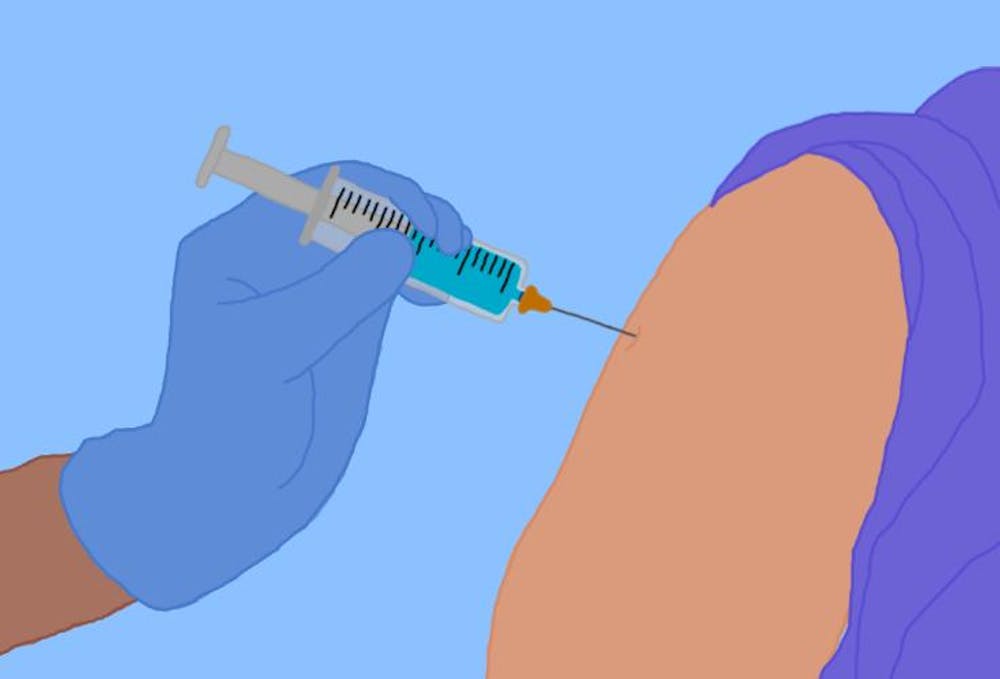
On Jan. 21, officials with the Virginia Department of Health reported the third confirmed case of measles in Virginia already in 2026 — with only five reported in all of 2025. Locally, since students returned from winter break, the Blue Ridge Health District, which included Albemarle County, has confirmed at least 30 cases of pertussis, or whooping cough. Together, these incidents constitute a worrying trend. Diseases previously thought to be eliminated by vaccination are now surging in Virginia. This shift could partially be attributed to the national trend of parents opting out of school-mandated vaccines using religious exemptions, which was initially created to ensure those with minority religious beliefs that oppose vaccines could still send their children to school. The abuse of these exemptions, though, undermines herd immunity and in turn, creates serious health risks for everyone. It is imperative that state officials remove the religious exemption to prevent the revival of these illnesses and protect the health of Virginia’s children.
Vaccine hesitancy largely began around the time of the Coronavirus when, for the first time since their introduction, vaccine rates fell. Among other things, the widespread use of social media facilitated false rumors about vaccines and anti-vaccination campaigns that claimed refusal to follow federal guidelines on them as a “civil right.” As a result of political dislike and false rumors surrounding these vaccines, some parents have increasingly exploited the religious exemption for school-mandated vaccines. In Virginia, the percentage of kindergartners with vaccine exemptions quadrupled in the past 10 years, per CDC data. This is not the result of an increase in religions opposing such devices, but rather an explosion of some parents abusing the system to express political and personal aversions to vaccines — studies suggest that a fractional minority of those who use this exemption actually have a deeply held religious belief. Clearly, the religious exemption can be associated with a strong drop in vaccine rates in recent years, which harms the most vulnerable in our population.
Immunocompromised individuals are disproportionately affected by the increased spread of preventable diseases driven, in part, by the increased use of the religious exemption. Many individuals with a weakened immune system do not have access to certain vaccines, as they often contain weakened live viruses that could be harmful to them. Although the religious exemption operates under the premise that getting vaccinated is a personal decision that affects just a parent or their child, it is clear that usage of this exemption has substantial consequences for the well-being of the general public, especially for those who may be deprived of this opportunity themselves. Although there are a few religions that do oppose vaccines, the religious exemption must be considered for removal to protect the broader population.
Furthermore, this shift towards vaccine hesitancy and refusal not only endangers those who are unvaccinated due to immunocompromised conditions, but also endangers the population as a whole. One major reason for this relates to the idea of herd immunity. When 95 percent or more of people in an area are vaccinated from a disease, it no longer spreads easily. Unfortunately, many states, including Virginia for kindergartners, are starting to dip below this baseline for common diseases like measles and whooping cough thought to have been problems of the past. Additionally, with the increased circulation of these diseases, new and concerning mutations can develop that are sometimes resistant to known treatments and vaccines. Thus, this jeopardizes even those who choose to use the religious exemption, making vaccines imperative for safeguarding the population against new resistant diseases.
This aversion to vaccines also stems from an irrational fear of extreme side effects — an incredibly rare phenomenon — or strong personal dislike of them. Many proponents of the religious exemption contend that it is a matter of personal liberty, arguing that its removal would deprive individuals of their First Amendment rights. However, no right is ever absolute, even the First Amendment. The Supreme Court supported this in Jacobson v. Massachusetts (1905). The result ruled that states may enact required vaccination laws, since individual power is not absolute in superseding compelling state interests. This constitutional reasoning is built on the fundamental moral idea that, for our society to become safer, we must sacrifice some personal liberties to guarantee the well-being of everyone. Thus, even those who hold beliefs against vaccines must sacrifice part of their absolute freedom to guarantee freedom from life-threatening diseases — indeed, some states currently have neither a religious or a personal exemption.
Ultimately, vaccine-preventable diseases are on the rise in Virginia, largely due to the failure to achieve herd immunity. This has unanticipated effects that harm state wellness, from dangerous mutations to harming immunocompromised individuals. Legal precedent has established that superseding the religious exemption is not only necessary but historically supported, thus, it is justifiable to remove the religious exemption, even if contentious to some religious followers. It is easy to forget the brutal realities of history when diseases like polio, smallpox and measles ravaged our population. Vaccines are an incredible modern innovation in medicine, having saved countless lives. It is simply inexcusable for the nation to devalue such an innovation and accept thousands of preventable deaths as the cost of liberty.
Nat Taylor is an opinion columnist who writes about politics for The Cavalier Daily. He can be reached at opinion@cavalierdaily.com.
The opinions expressed in this column are not necessarily those of The Cavalier Daily. Columns represent the views of the author alone.
Read More
EDITORIAL: Student self-governance deserves our confidence
By Editorial Board | 3 days agoNow, just a month into the semester, new officeholders appear to be delivering results.

YOUNIS: SJP’s criticism is not hysteria — it is a challenge to U.Va.’s standards
By Ayat Younis | 6 days agoAny leader deserves scrutiny for their professional past, regardless of their background and especially if they have ties to brutal military-industrial complexes through the IDF.

ELJAZZAR: Do not be fooled by the Vanderbilt Report
By Farah Eljazzar | September 14, 2026A report chaired by a philosopher that aims to invoke objective inquiry is hypocritically holding itself to a lower evidentiary standard than it criticizes.


