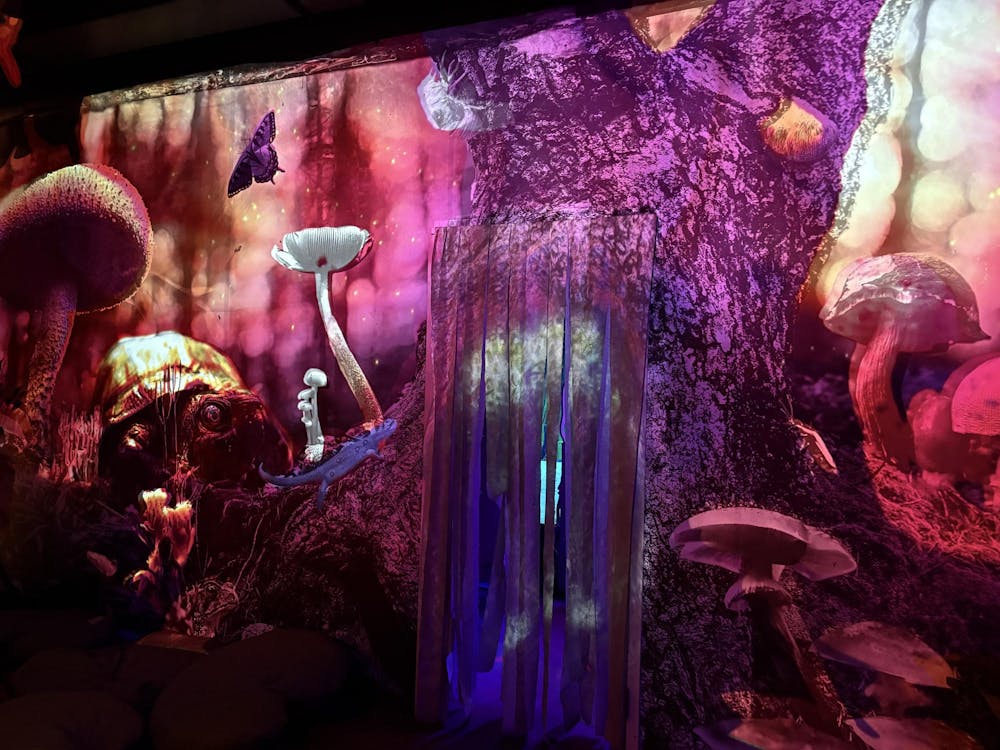
Those who venture far enough into downtown Charlottesville might just fall down the rabbit hole. Tucked away in IX Art Park lies a portal to another dimension where lush foliage, whimsical creatures and mysterious doorways are waiting to be discovered. This is The Looking Glass, Virginia’s first immersive art museum.
Established in 2019 by IX Arts Foundation — a nonprofit arts foundation that operates IX Art Park in Charlottesville — The Looking Glass is a permanent exhibit that takes visitors on a psychedelic journey through an enchanted forest. As an immersive space, it offers a multi-sensory experience with soothing soundscapes and ethereal lighting to fully absorb guests in the art. It also features interactive elements, like suspended chairs and functional doors, that encourage exploration and curiosity.
Kathryn Wingate, director of curation at IX Art Park, said that the founders of The Looking Glass were inspired by Meow Wolf in Santa Fe, N.M. — a museum part of a national brand of interactive art installations.
“It's inspired by one of the first immersive art spaces out there,” Wingate said. “They wanted to bring that back to Charlottesville, knowing that there's so many creatives here who do installation work and mixed media tactile work.”
Since its inception, The Looking Glass has expanded from a modest exhibit into a dense, expansive room that showcases the collective imagination of over a dozen local artists. Wingate explained how these creative minds have helped the space evolve over time.
“It was much smaller, much simpler than it looks today,” Wingate said. “I think it was twelve artists to begin with … and we've just been slowly adding more and more. Hopefully we'll continue to add more.”
The diverse skills of the artists are on full display throughout the exhibit, with their works coalescing into a mixture of organic beauty and high-tech splendor. This contrast is highlighted immediately upon entering — a hollowed out tree throne decorated with various masks sits next to a kaleidoscopic tunnel of neon colors. This enclosed passage, which acts as the centerpiece of the exhibit, leads to a vibrant tree of life illustration whose branches form a sprawling maze along the wall. Upon exiting the tunnel, visitors encounter a string light spiderweb and an intricately detailed miniature cottage located at the back of the room. Other highlights include a wall of projected sparkles that react to the movements of passersby and a forest mural with glass sculptures of various insects.
Those who are unable to visit the environment in person or simply want to learn more about the craft of each art piece can purchase the online virtual reality tour. This digital walkthrough features headshots and quotes from the artists behind each section, offering insight into their creative process.
With its entrancing atmosphere and exquisite level of detail, The Looking Glass offers a delightful dose of escapism. Notwithstanding the exhibit’s variety of artistic mediums and approaches, its cohesive aesthetic envelops visitors in a cozy sense of wonder. Wingate explained how the installation broadly seeks to stoke the flames of creative expression.
“I think our space inspires people to be creative, to not just come in and experience art and look at art, but also to make art with us and add to our space,” Wingate said. “We hope that this is a place where people feel safe to come and be weird … and to bring that part of themselves.”
The Looking Glass is also a shining example of IX Arts Foundation’s commitment to uplifting Charlottesville’s artistic community. Ewa Harr, the Foundation’s executive director, spoke on the overarching goal of IX Art Park.
“Our mission is to bring joy through art to the community,” Harr said. “So all of our programming tries to speak to that mission.”
That inspirational spirit is reflected in initiatives like Arts From Underground, a monthly late-night gathering that features artmaking activities and karaoke on the first Thursday of every month at The Looking Glass and The Rabbit Hole — the lounge and event space next door. Regular events like these are open to the public at no cost thanks to sponsorships from local car dealership Flow Toyota and radio station 106.1 The Corner. In addition, the Foundation hosts larger annual events like Fae Festival, an urban renaissance faire that takes over IX Art Park every summer with performers, vendors and costumed attendees.
Parallel to the art park as a whole, which is frequently updated with new murals and sculptures, The Looking Glass is an evolving installation, with pieces being updated and added over time. Now in its seventh year of operation, administrators are always looking to improve the exhibit’s offerings to best serve the community and attract visitors from all over Virginia.
“One of the things right now we're really working towards is community engagement and feedback,” Harr said. “We're thinking about doing some artist talks and panels … and also starting a conversation with the community about how we can continue to evolve the outdoor space to meet the needs and creative potential that we have here.”
Fans can hope that the museum will continue to grow larger and more elaborate over time. As it stands now, The Looking Glass is a bastion of creativity in Charlottesville and one of IX Art Park’s must-see attractions.
Read More
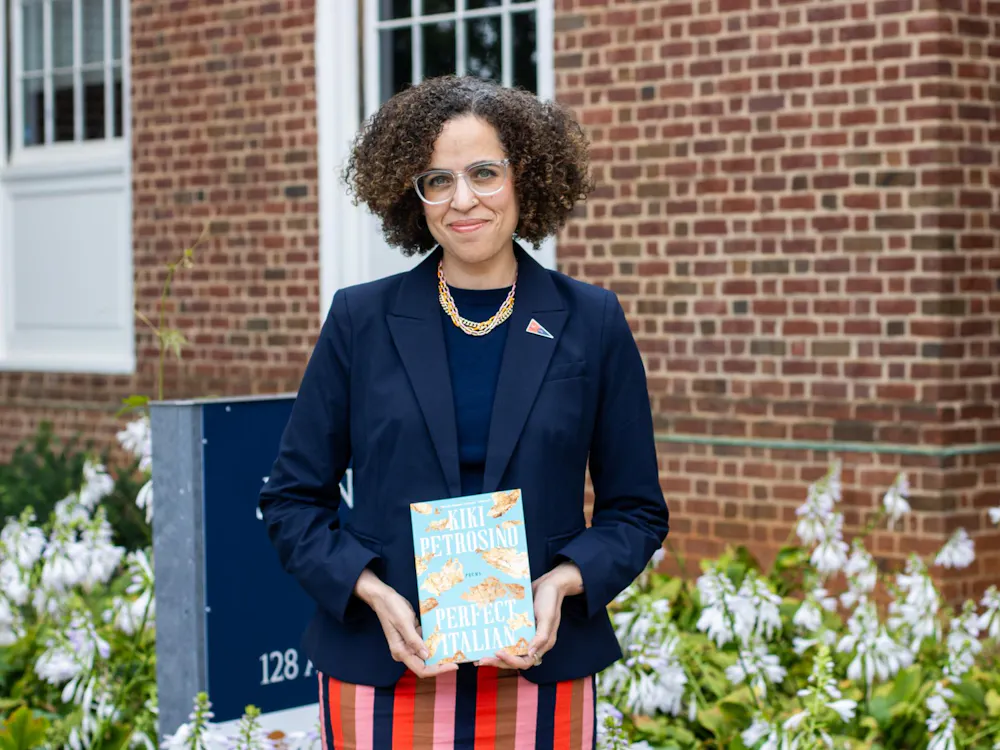
Professor Kiki Petrosino explores heritage, belonging and family in ‘Perfect Italian’
By Carly Smith | 2 days agoIn this work, Petrosino examines her own heritage and identity, using engaging yet deeply personal language, vivid imagery and carefully crafted syntax as ways to express her connection, and lack thereof, to her family’s history.

U.Va. Arts Welcome Picnic showcased the many ways to engage with art on Grounds
By Cece Sherman | 2 days agoUniversity creatives, student-led Contracted Independent Organizations and local organizations were welcomed by U.Va. Arts to the Betsy and John Casteen Arts Grounds Sunday for the annual Arts Welcome Picnic.

How generative AI is — and is not — affecting arts education
By Alena Touve | 2 days agoAs University arts professors begin teaching in the new semester, the industry-wide debate about AI’s role in art will frame how professors approach class discussions, assignments and preparing students for what awaits after graduation.