From extracurricular executive boards to classrooms to athletic competitions, female students have a visible and persistent drive all over the University — making it difficult to imagine that undergraduate admission did not become coeducational until 1970. But the ease with which many female students seem to preside over parts of the University community has not been without hard-wrought lessons in leadership, which for them, can take a different shape from their male peers.
The Women’s Leadership Development Program, however, offers a different perspective by equipping female students with the tools, mentorship and confidence to navigate leadership challenges. According to the Student Affairs website, the program was created in the spring of 1991 after Felicia Kantor, Student Council vice president and fourth-year student, faced sexism, both working in a law office as an intern, and during her campaign for a Student Council position as vice president.
She approached Shamim Sisson, the assistant dean of students in the Office of the Dean of Students at the time, with her concerns. Together, they created WLDP, constructing goals and programming to help uplift confident female leaders.
Students apply for the program in the fall semester, and if accepted, begin attending sessions in the spring. These sessions embody a “pay-it-forward” mentality, with its current co-chairs and session leaders being former participants who understand the impact of WLDP and seek to bring more female undergraduates into the program.
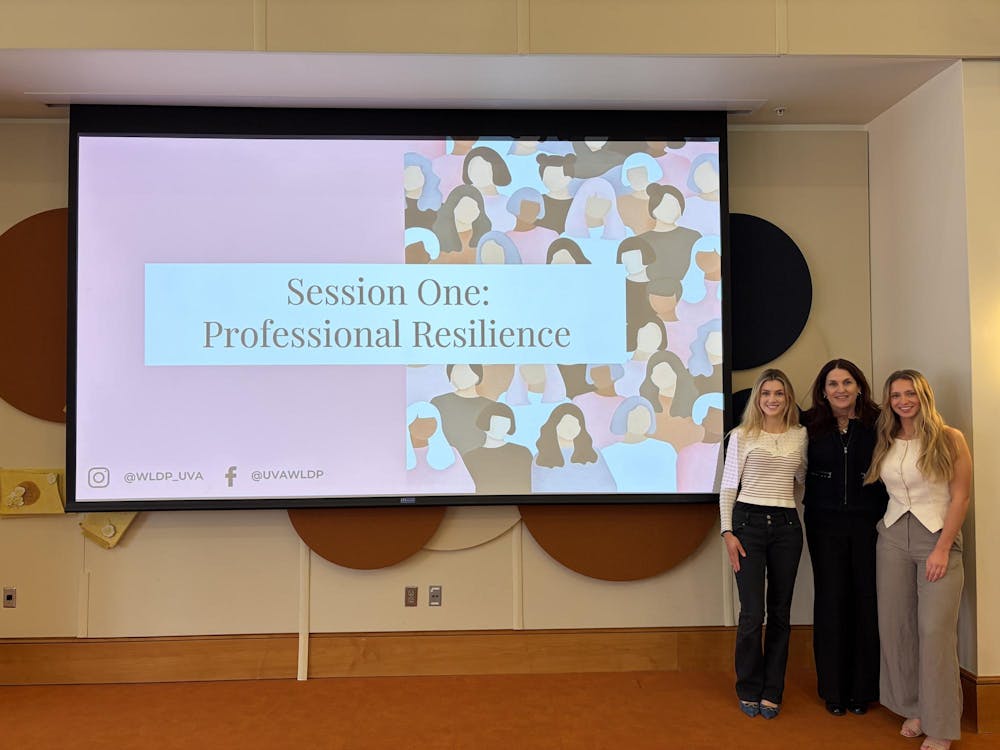
Each session has a different theme and is led by a different session leader, with topics spanning from professional resilience, the importance of diverse perspectives, mental health and wellness and even professional programs like LinkedIn workshops. Session leaders bring in speakers for panels, create PowerPoint slides and try to help participants learn about and take advantage of resources, which can get lost in the mix at the University.
Caroline Li, WLDP co-chair and fourth-year Commerce student, first became involved in the program during her first year. As an aspiring Commerce student, Li knew very few female students who could provide advice on their journey into the McIntire School of Commerce, and joined the program to get this additional guidance she was seeking.
“I wanted more mentorship. Just because you go in, especially in [McIntire], you kind of don't know how college works, or what you should be doing,” Li said. “A lot of it was trying to seek out older girls who've been through a similar path.”
Joey Chan, fellow co-chair and fourth-year Batten student, expressed similar motivations to getting involved with WLDP — helping female underclassmen make sense of the plethora of resources and potential decisions for majors or commitments. Chan emphasized how WLDP highlights resources for female students, who might otherwise never hear of them amid the thousands of offerings the University has.
“Obviously there's flyers around all the time and ads and Instagram posts, but they can be really overwhelming, and if you sign up for this program, it's a great way for you to be intentionally aware of these resources,” Chan said.
One of those underclassmen was third-year Batten student Camille Marshall, whose mother and University alumna Laura Marshall had been roommates with Kantor. Her personal connection and what she feels she has gained from WLDP have kept her involved, now as a session leader.
Camille Marshall highlighted how WLDP corrected some discrepancies she noticed in other leadership programs at the University when it came to female representation, one of her main motivations for becoming involved in the program.
“I had some experience in past leadership programs or clubs, and I did find them helpful, but I kind of noticed it's a lot of male guest speakers,” Marshall said. “A lot of the way that they [were] teaching leadership skills I found to be unrealistic for my position in the world.”
As a session leader, Camille Marshall is able to shape how session topics are taught, working with others to clarify what can be broad subject matter, like professional resilience. However, she also emphasized the value of being able to connect with participants outside of sessions, with more informal events hosted by the program.
“Me and the other session leader had a lot of discretion in how we wanted to execute that and how we wanted to define professional resilience and activities or discussions about it,” Camille Marshall said. “I think it's been really cool to see from last year to this year, a lot more organization, and … getting to know [WLDP members] better in different contexts.”
Camille Marshall also elaborated on what she has gained from the program, noting how WLDP accounts for differences between traditional female and male leadership styles. As a Batten student, she credited the program for making her better at bridging different leadership styles and contributing to her success among varied kinds of leaders.
“In a program like [the Frank Batten School of Leadership and Public Policy], where there are a lot of people with strong opinions … [there is] a lot of interacting with people who have a lot of different leadership styles,” Camille Marshall said. “I think being in a program like [WLDP] recognizes different leadership styles, and it's helped me better interact with people across a spectrum of leadership styles.”
Although Camille Marshall and Li applied their experience in WLDP to being students in the Batten and Commerce schools, Li emphasized that the program benefits wide ranges of female students, accommodating for all kinds of majors and career goals.
“This program kind of attracts people who are more into policy or more discussion-based [clubs], but we have a mixture,” Li said. “There's a lot of [STEM students] as well.”
By connecting female students across different programs with both each other and other women in the workforce, WLDP seeks to help its participants envision themselves in all kinds of leadership roles, over a half century after the University’s undergraduate admissions became coeducational.
“It is empowering to both meet and hear from women who are great leaders … and have found success in their fields,” Marshall said. “There's something to be said for meeting other students who are similarly ambitious and who really uplift and support each other.”

Adair Reid is the newsletter editor for the 137th term of The Cavalier Daily, former humor editor for the 136th term and staff writer on the sports desk. She is a fourth-year College student, majoring in English and Media Studies. She is from Richmond and enjoys writing about the University’s Olympic sports teams and the changing landscape of college athletics.
Read More

No-bake date bark brings a taste of joy to all sweet treat lovers
By Lily Notter | 16 hours agoWhether you eat these bars with friends, as a solo study snack or after family dinner, they are a delicious and nutritious addition to any day.

Delicious on a dime: Charlottesville’s best restaurant deals
By Lucy Larsen | 6 days agoFrom wraps and wings on the Corner to imported wine and tapas on the Downtown Mall, these are the perfect spots to treat both your taste buds and your wallet for under $25.

Play the organ
By Elizabeth Adams | September 25, 2026The college side quest does not need to be the multi-semester jaunt that my organ adventure has become, and it certainly doesn’t have to make sense.