Gov. Abigail Spanberger (D) vetoed 19 bills Tuesday — which includes 7 pairs of identical legislation introduced by opposite chambers — from the 2026 General Assembly legislative session. Tuesday’s vetoes add to bills already vetoed by Spanberger, including many marquee bills vetoed when the General Assembly reconvened April 22.
The bills vetoed Tuesday are wide-ranging — spanning from bills that would have created a new class action process in the Commonwealth to bills that would have reformed the governing boards for public institutions of higher education.
In a press release Tuesday, Spanberger wrote that she is in support of the intentions of many of the bills she vetoed. However, she explained that as governor, she is responsible for protecting Virginians from any consequences the bills could have and that therefore, many need to be reworked in future legislative sessions before becoming law.
“I support the intent of many of the bills I am vetoing, however, it is my responsibility as Governor to make sure all new laws can be successfully implemented and protect against unintended consequences that harm Virginians,” Spanberger said. “I look forward to continuing to work with bill patrons, state and local leaders and advocates on legislation addressing these issues in the future.”
Here is a closer look at Tuesday’s vetoed bills.
House Bill 1385 and Senate Bill 494 are two identical bills which were introduced during the 2026 General Assembly with intentions of reforming governing boards for public institutions of higher education throughout the Commonwealth. The bills would have increased term limits for board members from four to six years and would have required higher education institutions to define and implement models of shared governance across a respective institution’s organizational structures.
Spanberger wrote Tuesday that “recent challenges” have reinforced the importance of strong governing boards for institutions of higher education. She offered amendments to the bills when the General Assembly reconvened in April which she explained were intended to prevent further politicization of boards and remove provisions that did not have a “clear connection" to the issues these boards are facing.
“While the General Assembly rejected my amendments, I remain committed to enacting reforms that will strengthen higher education governance in Virginia,” Spanberger wrote.
Other bills vetoed Tuesday include House Bill 642 and Senate Bill 542, which intended to legalize the sale of cannabis products in the Commonwealth. Current Virginia law allows the possession of cannabis but not the retail sale of it and, as introduced in the 2026 legislative session, these bills were to “[establish] a framework for the creation of a retail marijuana market in the Commonwealth."
Spanberger’s veto statements for the bills express that in order for the retail sale of cannabis to be safe and for the regulations to be effective, the regulatory framework needs to be “fully prepared to provide strong oversight from day one.”
“[The regulatory framework must include] clear enforcement authority and sufficient resources for compliance, testing and inspections, and robust tools to crack down on bad actors who continue to profit from the illicit market,” Spanberger wrote.
Spanberger also vetoed House Bill 483 and Senate Bill 271 which aimed to lower prescription drug costs by preventing drug manufacturers from accepting payment for a drug higher than the fair market value set by the U.S. Secretary of Health and Human Services. Spanberger wrote in the press release that she believed the bills, as introduced, would have created a prescription drug pricing system similar to systems that have not worked in other states.
Furthermore, Spanberger assured Virginians in her press release that she shares the same goal as legislators who introduced these bills to lower prices of prescription drugs. However, she explained that “Prescription Drug Affordability Boards” are costly for the state government and have proven to be ineffective.
She therefore amended the bills to suggest the Prescription Drug Affordability Advisory Panel use reference-based pricing before the Commonwealth spends money to implement the prescription pricing system. Reference-based pricing establishes the price a health insurance company or state will pay for the drug rather than simply paying the amount requested by the manufacturer.
Like for HB 1385 and SB 494, Spanberger concluded her veto statement for HB 483 and SB 271 by noting she will continue working towards lowering prescription costs despite the General Assembly rejecting her amendments to the bill.
To create a new class action process in the Commonwealth, legislators introduced the identical House Bill 449 and Senate Bill 229 which would have permitted people with similar legal claims to file lawsuits together, with one or more plaintiffs representing all members of the lawsuit. The General Assembly did not accept her amendments, and Spanberger vetoed the bills.
“I support the General Assembly’s goal of providing a class action mechanism that can be used by plaintiffs in Virginia courts,” Spanberger wrote. “I offered amendments to ensure that when Virginia adopts its first-ever class action procedure, we do so in a tailored and judicious way — building on longstanding, federal precedent while providing regional circuit courts an opportunity to develop expertise. The General Assembly did not accept these amendments.”
Other bills vetoed Tuesday include, but are not limited to, bills that would have required the recording of child welfare interviews, exempted attorneys from some screening in courthouses and removed current limitations from election officials in the Commonwealth to allow them to accept private resources and services to support voter registration, education or outreach.
Legislation passed in the 2026 session, unless otherwise specified in the legislation, will become law July 1.
Lauren Seeliger is a news editor of the 137th term and enjoys covering U.Va. Health and University governance. Lauren is a fourth-year Behavioral Neuroscience student from Fairfield, Connecticut.
Read More

Jefferson Trust awards $812,064 in Fall Major Cycle Grants
By Charlotte Gabriel | 17 hours agoThe Jefferson Trust awards both Flash Grants and Major Cycle Grants on a monthly and biannual basis, respectively.

At City Council meeting, staff preview snow removal efforts for anticipated winter weather
By Luca Bailey | 17 hours agoThey also heard from a Charlottesville community member who argued for the importance of large-scale development by-right, received updates on the new emergency homeless shelter at 2000 Holiday Drive and invested in several new affordable housing projects.
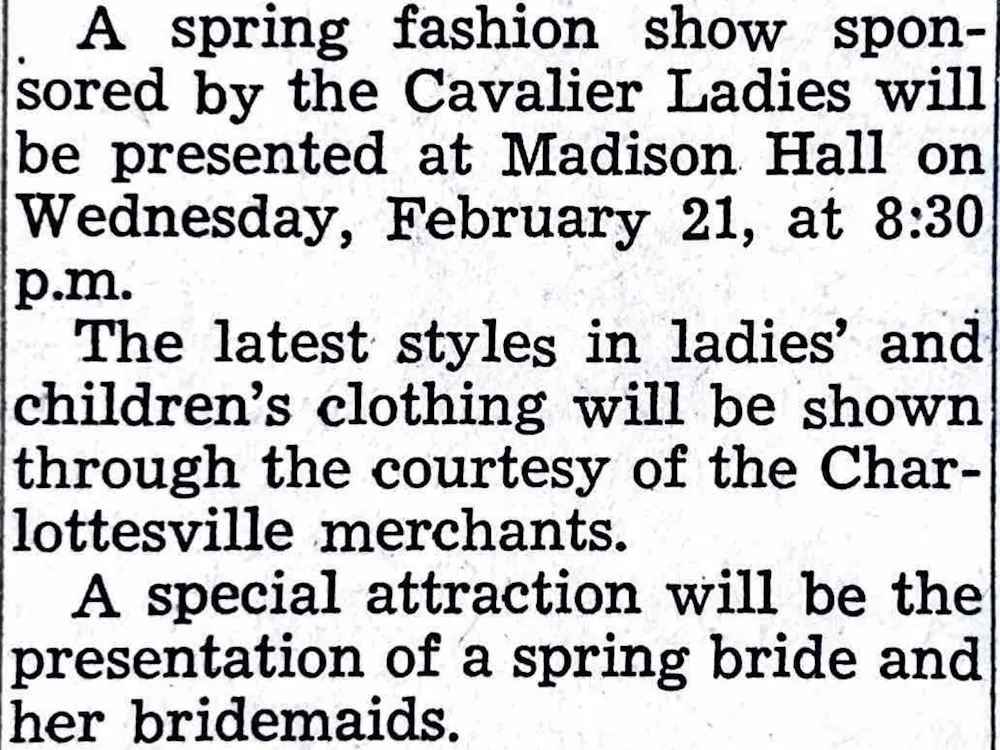
From the Archives: Fashion on Grounds
By CD Archive Staff | 17 hours agoMerchants found that many students also opt to blend traditional, preppy basics with punk elements.